- Top Pick: Espresso Coffee Shots, Stock, Caffeinated (Pack of 50)
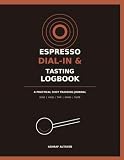
- Best Value: Espresso Dial-In Logbook: Compact Shot Tracker for Home Baristas — 50 Sessions, 200 Shot Logs + Fast Dial-In Guide
- Premium Choice: Master Commercial-Quality Espresso in Your Own Kitchen.: A Practical Guide to Beans, Grinders, Water Ratios, and Everyday Brewing Methods (The Ultimate Coffee & Brewing Library: Books 1–4 Book 2)
As an Amazon Associate we earn from qualifying purchases at no extra cost to you. Product prices and availability are accurate as of the date shown and are subject to change.



TL;DR: The golden espresso ratio is 1:2 (dose:yield) — 18g in, 36g out in 25–30 seconds. Ristretto runs 1:1.5; lungo runs 1:3. Dial your grinder, not your dose, to fix under- or over-extraction. Get this ratio right and every espresso, latte, and cappuccino becomes predictable and repeatable.
Espresso Ratio Recipe Guide: Nail the Perfect Shot Every Time
Mastering the espresso ratio recipe is the single highest-leverage skill in home barista craft. Before you worry about water temperature, pre-infusion, or pressure profiles, lock in your ratio. This guide gives you the numbers, the reasoning, and the workflow to dial in any espresso machine at home.
Quick Comparison
| Product | Brand | Price | Rating |
|---|---|---|---|
| DeLonghi 3oz Espresso Double Wall Thermal Glasses | — | $19.9 | 4.6/5 |
| JoyJolt Savor Double Wall Insulated Glasses Espresso Mu… | JoyJolt | $15.62 | 4.5/5 |
| Bodum 2.5oz Pavina Double Wall High-Heat Borosilicate G… | Bodum | $14.99 | 4.6/5 |
| PARACITY Espresso Cups Set of 2 with Wooden Ring | PARACITY | $11.99 | 4.4/5 |
| De’Longhi America 5513296651 Essential Collection Doubl… | — | $59.95 | 4.6/5 |
Top Tools for Dialing In Your Ratio
See also: How to Descale a Breville Espresso Machine Step by Step • How to Make Iced Coffee at Home (Not Bitter, Not Watery)
The Three Core Espresso Ratios
Espresso ratios are expressed as dose:yield — the weight of dry coffee going in versus the weight of liquid espresso coming out. Time is always the secondary variable you use to verify the extraction is on track.
| Style | Ratio | Example (18g dose) | Target Time | Flavor Profile |
|---|---|---|---|---|
| Ristretto | 1:1.5 | 18g in → 27g out | 20–25 sec | Thick, sweet, intense |
| Espresso (standard) | 1:2 | 18g in → 36g out | 25–30 sec | Balanced, complex |
| Lungo | 1:3 | 18g in → 54g out | 35–45 sec | Lighter, more bitter |
| Double espresso | 1:2 (36g dose) | 36g in → 72g out | 25–30 sec | Full-bodied double |
Why Ratio Matters More Than Volume
Traditional recipes say “pull a 30ml shot” — but volume is unreliable. Crema compresses differently depending on roast, freshness, and grind. Measuring by weight in grams removes that variable entirely. A 1:2 ratio always means the same extraction percentage regardless of what machine you use.
This is why serious home baristas use a precision grind-to-ratio workflow — weigh the dose before tamping, place the scale under the cup, tare, and pull. Stop when the yield hits your target. Repeat until your shot time lands in the 25–30 second window.
How to Dial In Using Ratio
Start with a fixed dose (18g is ideal for a standard 58mm double basket) and a target 1:2 ratio. Pull your first shot and check three things: yield weight, time, and taste.
- Shot pulls fast (<22 sec) and tastes sour: grind finer — the puck is under-restricting flow.
- Shot pulls slow (>35 sec) and tastes bitter: grind coarser — over-restricted, over-extracted.
- Time is right but flavor is off: adjust dose ±0.5g or check tamp pressure consistency.
- Channeling (thin stream on one side): check distribution and tamp levelness before touching grind.
Change only one variable per shot. Most dial-ins take 3–5 shots on a new bag of coffee. A quality burr grinder makes this process dramatically faster — stepped grinders add a guessing layer that flat burrs with stepless adjustment eliminate.
Ratio for Milk Drinks
Milk drinks require a stronger espresso base to cut through dairy. For a 12 oz latte (350ml milk), pull a 1:2 double shot at 36g dose / 72g yield — anything weaker will taste watery. For a 6 oz cappuccino, the same 36g double works; reduce milk volume, not espresso strength.
If you’re steaming milk for latte art, your steam wand technique matters as much as the espresso ratio. Thin microfoam from a well-stretched pour will blend with the shot cleanly. A ristretto base (1:1.5) is popular for flat whites — the reduced volume stays prominent even with more milk.
Dialing In Different Roast Levels
Light roasts are denser and harder to extract — they often benefit from a slightly higher dose (19–20g) and a 1:2.5 ratio to achieve full sweetness without under-extraction bitterness. Water temperature at 93–94°C also helps.
Dark roasts are more soluble — they extract quickly. A tighter 1:1.5 ristretto ratio prevents the bitter, ashy notes that come from over-extraction. Keep shot time under 25 seconds. Check your machine’s temperature stability if shots taste burnt even after grind adjustment — low-thermal-mass boilers swing temperature mid-shot.
Equipment That Makes Ratio Dialing Easier
You need three tools to work with ratios consistently: a grinder with repeatable adjustment, a scale that reads to 0.1g, and a timer. Everything else — pressure gauges, flow control, puck screens — comes after you’ve mastered the fundamentals.
For distribution consistency before tamping, a distribution tool reduces channeling caused by uneven puck density. Combined with a calibrated tamper at 15–20kg pressure, your puck prep will produce repeatable results that ratio dialing can actually build on. See our full guide to espresso machines under $500 for budget-friendly setups that support proper ratio work.
Frequently Asked Questions
What is the standard espresso ratio?
The standard espresso ratio is 1:2 — one part coffee by weight in, two parts liquid espresso out. For an 18g dose, you target 36g of espresso yield in 25–30 seconds. This is the baseline from which ristretto (1:1.5) and lungo (1:3) deviate.
Does the espresso ratio change by machine?
The target ratio stays the same (1:2 for standard espresso), but the grind setting and basket size differ by machine. A Breville Barista Express will pull the same ratio at a different grind number than a Rancilio Silvia. Always dial in grind for the specific machine and bean combination.
How do I measure espresso ratio without a scale?
You can estimate by volume — a 1:2 ratio is roughly 18g in and 36ml out (espresso is close to 1g/ml). But crema adds volume without weight, so volume measurement is 10–15% less accurate than weight. A basic scale is a worthwhile investment for anyone serious about consistency.
What ratio should I use for a latte?
Pull a 1:2 double shot (36g dose / 72g yield) as the base for a 12 oz latte. For a stronger coffee presence with more milk, some baristas use a 1:1.5 ristretto base. Avoid a lungo base in milk drinks — the diluted flavor gets lost in dairy.
Why does my shot pull fast even with a fine grind?
Fast shots despite fine grinding usually indicate channeling — water is finding a path of least resistance through the puck rather than flowing evenly. Check your distribution and tamp technique before grinding finer. A naked portafilter makes channeling immediately visible from the bottom of the basket.
Ready to decide? Our #1 pick for 2026 is the DeLonghi 3oz Espresso Double Wall Thermal Glasses.
Live price & availability on Amazon.