- Top Pick: Third Wave Water – Espresso Machine Profile, Five(5) Gallon Sticks
- Best Value: Possiave 12-Pack Water Filters Compatible with Breville BWF100 Machines
- Premium Choice: Third Wave Water Classic Light Roast For Brewing The Best Coffee, Classic Profile, 12 Single Gallon Sticks, As Seen On Shark Tank
Last updated: September 4, 2026
As an Amazon Associate we earn from qualifying purchases at no extra cost to you.





Disclosure: As an Amazon Associate we earn from qualifying purchases. This page contains affiliate links and we may earn a commission at no extra cost to you.
Espresso is roughly ninety percent water, and yet water is the last variable most home baristas think about. We obsess over beans, grinders, and tampers while feeding our machines whatever the tap provides — and the tap is rarely kind. Too many dissolved minerals and your boiler silts up with scale while shots taste dull and chalky; too few and extraction turns thin and sour while the water quietly corrodes brass and copper from the inside. The right water sits in a narrow band between those failures, and getting there is cheaper and easier than almost any other upgrade in this hobby.
Water chemistry for coffee comes down to two numbers. General hardness (GH) — mostly magnesium and calcium — does the extracting; those ions bind flavor compounds and carry them into the cup. Alkalinity (KH) is the buffer that steadies acidity; too much flattens a bright roast into cardboard, too little lets acidity spike and exposes the boiler. The specialty-coffee sweet spot is moderate hardness with modest alkalinity — and critically for espresso machines, scale risk rises with both. Inline and tank filters are how you hold that balance every day without thinking about it, which is where the six products below come in.
Get the water right and everything downstream improves at once: sweeter shots, stabler machine behavior, and a descaling schedule measured in seasons instead of weeks. Speaking of which, our bitter espresso troubleshooting guide shows how often “bad beans” turn out to be bad water wearing a disguise.
Quick Comparison
| Product | Price | Rating |
|---|---|---|
| 70L Cationic Resin Filter for Lelit | $11.69 | 4.9/5 |
| Possiave 12-Pack Charcoal Filters (Breville) | $15.99 | 4.8/5 |
| 12 Charcoal Water Filters for Breville | $9.95 | 4.8/5 |
| Breville BES008 Water Filter | $16.95 | 4.8/5 |
| De’Longhi DLSC002 Water Filter | $13.98 | 4.8/5 |
| 2-Pack Charcoal Filters for Breville | $7.99 | 4.8/5 |
Why Trust This Guide
See also: How Much Caffeine Is in a Cup of Coffee? • How to Descale a Breville Espresso Machine Step by Step
Our water advice is grounded in home testing: hardness and alkalinity strips on tap, filtered, and remineralized water, the same beans pulled across those waters, and long-term observation of what each regimen does to boilers and descaling intervals. Product picks are filters we have run in real tanks, judged on fit, flow, and the test-strip numbers they actually deliver.
70L Cationic Resin Filter for Lelit
Lelit ships many of its machines with an in-tank softening filter, and this 70-liter cationic resin cartridge is the upgraded replacement for the PLA930M fitting. Cation-exchange resin targets exactly the ions that become limescale, trading them out before water ever reaches the heat exchanger — genuine prevention rather than after-the-fact cleanup.
The 70-liter service life translates to months of daily doubles; mark the install date on the calendar because an exhausted resin filter softens nothing while looking identical. For owners of prosumer Lelit machines, where a scaled boiler is an expensive afternoon, this small cartridge is the cheapest insurance on the bench. Pair it with occasional test strips to confirm it is still earning its slot.
Possiave 12-Pack Charcoal Filters (Breville)
This twelve-pack of charcoal filters fits the BWF100 holder used across a wide swath of Breville espresso machines, and the bulk count is the point: a year or more of bi-monthly changes secured in one order. Activated charcoal polishes taste and odor — chlorine and its by-products are its specialty — so shots stop carrying the swimming-pool ghost some municipal taps add.
Charcoal’s limits matter as much as its strengths: it does little against dissolved hardness minerals, so in hard-water country pair it with descaling discipline or pre-filtered water. For good-but-chlorinated city water, though, a fresh charcoal puck in the tank is most of the battle, and the per-filter price here makes never skipping a change painless.
12 Charcoal Water Filters for Breville
A second bulk-pack option for the Breville tank, this dozen undercuts most rivals on per-filter cost while doing the same essential job: adsorbing chlorine, off-tastes, and odors before they reach the thermocoil and your cup. Filters this cheap remove the only real excuse for running a machine on naked tap water.
Fit is the thing to confirm — check your model against the listing, since Breville has used a few holder designs across generations of the Barista line. Owners of the Barista Express BES870XL should soak and rinse each new filter per the manual before installing. Set a recurring two-month reminder and the tank quietly takes care of itself.
Breville BES008 Water Filter
The BES008 is Breville’s first-party filter for its espresso machines, and the case for the original part is straightforward: guaranteed fit in the tank holder, manufacturer-specified media, and zero compatibility roulette. For a part that sits in your drinking water for two months at a stretch, some owners reasonably prefer the name on the box to match the machine.
Performance territory is the same as the compatible packs — taste and odor polishing with modest mineral effect — at a higher per-unit price, which is the entire tradeoff. A sensible pattern we see often: start with the genuine article to confirm what fresh filtration does for your particular tap, then decide whether the bulk compatibles continue the job.
De’Longhi DLSC002 Water Filter
De’Longhi’s DLSC002 serves the brand’s espresso machines with a drop-in tank filter that conditions water as it feeds the thermoblock. De’Longhi machines dominate the entry tier where owners are least likely to think about water, which ironically makes this filter one of the highest-leverage accessories in the lineup — small machines with narrow water paths feel scale earliest.
Installation is tool-free: soak, seat in the tank receptacle, and replace on the recommended cadence or sooner with hard water. If your De’Longhi has started running slower, louder, or cooler, a filter plus a proper descale with a compatible solution usually restores it to factory manners. Note the model fit list before ordering; not every De’Longhi tank has the receptacle.
2-Pack Charcoal Filters for Breville
This two-pack is the toe-in-the-water option for Breville owners: the same charcoal filtration as the bulk dozens, in a small order that lets you verify fit and taste improvement before committing to a year’s supply. At the price of a couple of café lattes it is the cheapest meaningful water upgrade on this page.
Run one for its two-month term and taste the difference in a plain shot — most people on chlorinated municipal water notice it in the first cup. If the improvement registers, the per-filter economics say switch to a twelve-pack next order. If your water’s problem is hardness rather than taste, no charcoal pack solves that; jump to the resin and remineralization strategies in the tips below.
What to Look For in Espresso Water Quality
Whether you are buying filters or building water from scratch, these are the factors that decide what ends up in your boiler and your cup:
- Hardness in range — aim for moderate general hardness; enough magnesium and calcium to extract sweetness, not enough to fur the boiler. Test strips make this a thirty-second check.
- Alkalinity in check — a modest buffer steadies acidity without flattening flavor; high-alkalinity taps mute bright roasts and accelerate scale together.
- The right filter type — charcoal fixes taste and chlorine; ion-exchange resin fixes hardness; reverse osmosis strips everything and needs remineralization. Match the tool to your tap’s actual fault.
- Replacement cadence — every filter has a service life in liters; an expired filter is cosmetic. Calendar reminders are part of the system.
- Machine compatibility — tank filters are model-specific; verify holder fit before buying in bulk.
- Corrosion safety — pure RO or distilled water alone is too aggressive for boilers and tastes hollow; if you strip minerals, add the right ones back.
Tips for Getting the Most Out of Your Espresso Water
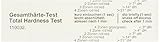
Start by measuring, not guessing. A few dollars of aquarium-grade GH/KH test strips tells you in one evening whether your tap is hard, soft, buffered, or chlorinated — and that diagnosis dictates everything. Chlorinated but moderate water just needs charcoal. Hard water wants softening resin or a different source. Very soft water needs minerals added, not removed. Skipping this step is how people buy the wrong filter and conclude water does not matter.
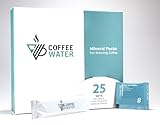
If your tap is hopeless, build water instead. The home-barista standard is a jug of distilled or RO water plus a measured remineralization — commercial mineral packets or a simple recipe of epsom salt and baking soda — yielding identical, machine-safe, sweet-extracting water every single time. It costs pennies per liter and removes an entire axis of variation from your espresso. That consistency compounds with everything else you dial: the recipes in our ratio guide behave the same on Tuesday as they did on Sunday, because the water did.
And remember water quality is method-agnostic: the same chemistry that sweetens espresso transforms filter brews — our V60 versus Chemex comparison and pour-over kettle guide both assume decent water as the starting line. Whatever source you settle on, keep the machine’s tank fresh: empty and refill rather than topping up stale water, and clean the tank monthly. Good water, kept good, is the quietest upgrade in coffee — and if you are choosing your next machine, serviceability and filtration fit deserve a line in your notes; our espresso machine buying guide weighs both.
Frequently Asked Questions
Can I just use bottled water in my espresso machine?
Some bottled waters work well, but read the mineral label: many spring waters are harder than tap and will scale your boiler faster. Look for total dissolved solids in a moderate range with low-to-modest alkalinity. Purified water plus a remineralization packet is cheaper and more consistent than hunting for the perfect bottle.
Is distilled water safe for espresso machines?
Pure distilled water is a poor choice on two counts: it extracts badly, giving thin and sour shots, and its hunger for ions can encourage corrosion in metal boilers over time. Some manufacturers explicitly advise against it. Distilled as a base plus added minerals, however, is one of the best waters you can run.
Do tank filters mean I never have to descale?
No — they stretch the interval, sometimes dramatically, but charcoal filters barely touch hardness and even softening resin has a finite capacity. Keep a descaling schedule tuned to your measured water and your machine’s alerts. Filters are prevention; descaling is the periodic audit that catches what slipped through.
Does water really change the taste of espresso that much?
Dramatically — it is the solvent doing the extracting. The same beans pulled on flat, over-buffered hard water and on balanced moderate water taste like different coffees: one dull and chalky, the other sweet and defined. Most people who run the comparison once never go back to unconsidered tap.