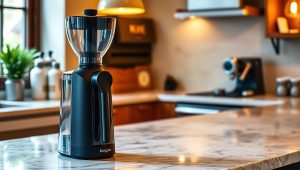
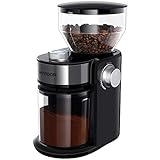
- Top Pick: SHARDOR Electric Coffee Grinder, 70g Large Capacity Spice Grinder with Visual Timing Knob for Precise Grind, Quiet Coffee Bean Grinder for Espresso, French Press, Herbs and Grains, Black
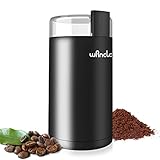
- Best Value: Grande Italia Espresso Ground (Ex Fine Ground, 10 oz)
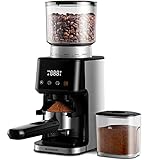
- Premium Choice: Espresso Coffee Machine with Grinder and Frother, Cold Brew, 20 Bar
As an Amazon Associate we earn from qualifying purchases at no extra cost to you. Product prices and availability are accurate as of the date shown and are subject to change.



TL;DR: Espresso grind size is the primary variable controlling shot quality. Too fine = over-extracted, bitter, slow pour. Too coarse = under-extracted, sour, fast pour. This guide maps the variables, explains the chemistry, and gives you a repeatable dial-in process.
Espresso Grind Size: The Complete Guide to Dialing In Your Shot
Every espresso problem traces back to one of three variables: dose, yield, or time. And grind size is the lever that controls all three simultaneously. Understanding how particle size affects extraction chemistry is what separates guessing from systematic dial-in. This guide gives you the full framework.
- Quick Comparison
- Top Picks at a Glance
- The Chemistry Behind Grind Size
- What Espresso Grind Size Actually Looks Like
- Reading Your Shot: The Diagnostic Framework
- The Standard Dial-In Process
- Burr Geometry and Grind Quality
- Grind Size by Espresso Machine Type
- Retention and Workflow
- Frequently Asked Questions
- About the Author
Quick Comparison
| Product | Brand | Price | Rating |
|---|---|---|---|
| KRUPS Precision Electric Coffee Grinders | KRUPS | $19.99 | 4.4/5 |
| Cuisinart Coffee Grinder | Cuisinart | $53.99 | 4.2/5 |
| Breville Barista Express Espresso Machine BES870XL | — | $689.99 | 4.5/5 |
| OXO Brew Conical Burr Coffee Grinder – Silver | — | $98.99 | 4.3/5 |
| OXO Brew Conical Burr Grinder – Matte Black | — | $109.95 | 4.3/5 |
Top Picks at a Glance
See also: How to Clean an Espresso Grinder Burrs (2026): Step-by-Step • Espresso Grinder Hopper Capacity How Much Size Guide With Measurements (2026)
The Chemistry Behind Grind Size
Espresso extraction is a dissolution process. Hot water under 9 bar of pressure selectively dissolves soluble compounds from coffee particles. The extraction sequence — in roughly this order — is: acids, sugars, oils, bitter compounds. A well-extracted shot ends before the bitter compounds dominate, capturing the sweet and acidic range.
Grind size controls the surface area-to-volume ratio of each particle and, through puck resistance, the contact time between water and coffee. Finer grind = more surface area + more puck resistance = longer contact time + higher extraction. Coarser grind = less surface area + less resistance = shorter contact time + lower extraction.
Target extraction yield for espresso: 18–22% of the dry coffee mass dissolved into the liquid. Below 18% = under-extraction (sour, sharp, thin). Above 22% = over-extraction (bitter, dry, astringent).
What Espresso Grind Size Actually Looks Like
Espresso grind sits at approximately 200–400 microns — so fine that individual particles are barely visible to the naked eye. Run it between your fingers and it feels like fine sand or even powder at the finer end. Compare: drip coffee is roughly 700–1000 microns (coarse salt texture). Filter coffee sits in between.
The practical test: pour a small amount of ground coffee onto a flat surface and press lightly with your finger. Espresso grind should hold the fingerprint shape momentarily before collapsing. If it clumps and sticks, it may be too fine. If it scatters instantly with no cohesion, it may be too coarse.
Reading Your Shot: The Diagnostic Framework
| Shot behavior | Likely cause | Adjustment |
|---|---|---|
| Pour starts immediately, runs fast (<20 sec) | Grind too coarse | Grind finer by 1–2 notches |
| Pour barely starts, drips slowly (>35 sec) | Grind too fine | Grind coarser by 1–2 notches |
| Pale blond crema from the start | Under-extraction | Finer grind or higher dose |
| Dark, oily, thick flow then nothing | Channeling or over-fine | Coarser + even distribution |
| Sour, sharp, thin taste | Under-extracted | Finer grind |
| Bitter, dry, hollow taste | Over-extracted | Coarser grind |
| Sweet, balanced, lingering finish | Dialed in | Record the setting |
The Standard Dial-In Process
Start with a fixed recipe: 18g dose in, 36g yield out (1:2 ratio), target 25–30 seconds from first drop to end of pour. Adjust one variable at a time. The sequence:
- Pull a shot and record time from first drop to end (or to 36g yield)
- If time is under 20 seconds: grind finer by one notch, pull again
- If time is over 35 seconds: grind coarser by one notch, pull again
- When time is in range: taste. Adjust grind based on flavor profile, not time alone
- Lock in the grind setting and record it for this specific coffee/roast
Note: grind settings are not universal. Every new bag of coffee — even the same blend from the same roaster — will need a small re-dial. Roast date, bean density, and moisture content all affect required grind size. Freshly roasted coffee (under 7 days off-roast) often needs slightly coarser grind due to CO2 off-gassing.
Burr Geometry and Grind Quality
Not all grinders produce the same particle distribution at the same setting. Burr geometry matters significantly. Flat burrs (like the TIMEMORE Sculptor 078S) produce a bimodal distribution — a tight peak of target-size particles with a small population of very fine particles (fines). Conical burrs produce a slightly broader distribution. For espresso, flat burrs generally produce more consistent, predictable puck resistance.
Fines — the ultra-fine particles present in any grind — disproportionately affect extraction. They extract very quickly and can cause localized over-extraction hotspots in the puck. High-quality flat burr grinders minimize fine production, which is why they justify the price premium for espresso use. For a full comparison, see our guide to Burr Coffee Grinder Best.
Grind Size by Espresso Machine Type
| Machine type | Pressure | Typical grind range | Notes |
|---|---|---|---|
| Consumer semi-automatic (Gaggia Classic Evo Pro) | 9 bar | Fine (250–350 microns) | Standard espresso range |
| Semi-commercial (Rancilio Silvia) | 9–11 bar | Fine to very fine | More sensitive to grind changes |
| Pressurized portafilter machines | Varies (pre-pressurized) | Medium-fine acceptable | Forgiving — designed for pre-ground |
| Lever machines | Variable (9 bar peak) | Fine, coarser than pump | Profile changes favor slightly coarser |
The Gaggia Classic Evo Pro and Rancilio Silvia are the benchmark machines at their price points for understanding true espresso grind interaction. Both use non-pressurized baskets that expose every grind variable directly. See our see rancilio silvia vs gaggia classic pro and the full see best espresso machine home.
Retention and Workflow
Grinder retention — old grounds left inside the burr chamber between uses — contaminates your fresh grind with stale particles. For espresso, even small amounts of retention affect shot consistency. Single-dose grinders with low retention (like many flat burr grinders) address this directly. If your grinder retains significantly, purge 2–3g of coffee before your actual dose.
Frequently Asked Questions
How do I know if my espresso grind is too fine or too coarse?
Pull a shot and time it: too fine means it takes over 35 seconds to reach your target yield — the puck is too restrictive. Too coarse means the shot runs in under 20 seconds — insufficient resistance. But always cross-reference with taste: a sour, sharp shot = under-extracted (coarser needed); bitter, dry = over-extracted (finer needed). Time is a proxy; flavor is the signal.
Does espresso grind size change with roast level?
Yes, significantly. Dark roasts are more porous and less dense due to longer roasting — they extract faster and typically need a coarser grind to prevent over-extraction. Light roasts are denser, need finer grind for the same extraction yield. When switching between roast levels, expect to re-dial your grinder completely, not just one or two notches.
Why does my espresso grind need to change every day?
Ambient humidity affects coffee particle behavior. High humidity (rainy days) causes particles to absorb moisture, swell slightly, and pack more tightly — effectively behaving finer, slowing the shot. Low humidity does the opposite. High-precision espresso setups account for this. Slight daily adjustments of one notch are normal and expected in most climates.
Can I use a blade grinder for espresso?
Not effectively. Blade grinders chop randomly, producing a wide range of particle sizes. For espresso — where puck resistance must be uniform — the mixed particle sizes create channels (fast paths through the puck) and uneven extraction. The result is reliably inconsistent. A burr grinder is not optional for espresso; it’s the baseline equipment requirement.
What happens if I use pre-ground espresso coffee?
Pre-ground coffee is typically optimized for a generic grind size and will rarely match your machine’s ideal setting. More importantly, ground coffee stales rapidly — within 15–30 minutes of grinding, volatile aromatic compounds begin to dissipate. Pre-ground coffee sold in bags may be weeks or months past grinding. You’ll notice flat, dull shots with weak crema. Fresh-ground is not a preference — it’s a functional requirement for quality espresso. For the full analysis, see our comparison: burr coffee grinder best.
Ready to decide? Our #1 pick for 2026 is the KRUPS Precision Electric Coffee Grinders.
Live price & availability on Amazon.