Last updated: September 7, 2026
🛒 Best Price Today on Amazon
Prime members get fast, free shipping on everything above, plus member-only deals. New members get a 30-day free trial — cancel anytime.
Top Use French Press Ratios Timing Picks for 2026
Here are our current top use french press ratios timing picks, compared on real Amazon owner reviews, price, and features. Live prices update below.
As an Amazon Associate we earn from qualifying purchases at no extra cost to you. Product prices and availability are accurate as of the date shown and are subject to change.




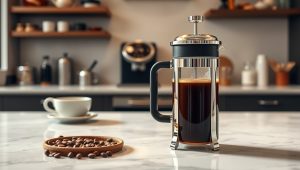
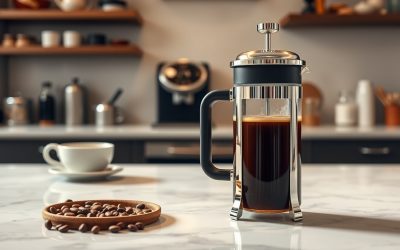
Learning how to use a French press properly takes about five minutes, yet most people who own one have never been shown the basics: the right ratio, the right grind, and the right timing. Get those three things correct and a French press produces a rich, full-bodied cup that rivals far more expensive brewing setups. Get them wrong and you end up with the muddy, bitter sludge that gives this brewer an unfair reputation. This guide walks through the complete technique step by step, plus the small adjustments that take your press pot from decent to genuinely excellent.
What You Need
See also: How to Descale a Breville Espresso Machine Step by Step • How to Make Iced Coffee at Home (Not Bitter, Not Watery)
- A French press — any size works; the technique scales. If you are still shopping, our roundup of the best French press coffee makers covers reliable options at every budget.
- Coarsely ground coffee — roughly the texture of breadcrumbs or coarse sea salt.
- Hot water — just off the boil, around 195 to 205°F. If you do not have a thermometer, boil water and wait about 30 seconds.
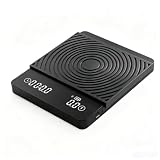
- A scale (recommended) — weighing coffee and water is the single biggest upgrade to consistency.
- A timer and a spoon.
Grind quality matters more than people expect. Blade grinders produce a mix of boulders and dust, and the dust slips through the mesh filter and over-extracts into bitterness. A burr grinder on a coarse setting fixes this — our burr vs blade grinder comparison explains why it matters so much for French press in particular.
The Right French Press Ratio
Start with a 1:15 coffee-to-water ratio — one gram of coffee for every 15 grams (milliliters) of water. That lands in the sweet spot for most palates: strong and full-bodied without being syrupy. Here is what that looks like at common sizes:
| Press size | Water | Coffee (1:15) | Approx. dose |
|---|---|---|---|
| 3-cup (12 oz) | 350 g | 23 g | 4 tablespoons |
| 4-cup (17 oz) | 500 g | 33 g | 5-6 tablespoons |
| 8-cup (34 oz) | 1000 g | 67 g | 11-12 tablespoons |
Prefer it stronger? Move toward 1:12. Lighter? Stretch to 1:17. Adjust the ratio rather than the steep time, because time changes extraction (and bitterness) while ratio changes strength. For a deeper dive into how proportions shape flavor across brew methods, see our coffee to water ratio guide.
Step-by-Step French Press Technique
- 1. Preheat the press. Swirl hot water around the empty carafe, then dump it. A cold carafe drops your brew temperature immediately.
- 2. Add coffee. Weigh your coarse grounds into the press.
- 3. Bloom (optional but worthwhile). Pour about twice the coffee’s weight in water, give it a gentle stir, and wait 30 seconds. Fresh coffee releases trapped gas that otherwise blocks even extraction — our coffee bloom technique guide explains the why.
- 4. Pour the remaining water. Fill to your full water weight, then place the lid on with the plunger pulled all the way up to retain heat. Do not plunge yet.
- 5. Steep 4 minutes. Set a timer and leave it alone.
- 6. Break the crust. At 4 minutes, stir the floating crust of grounds gently once or twice, and skim off any foam if you like a cleaner cup.
- 7. Plunge slowly. Press down with steady, gentle pressure over 15 to 20 seconds. If it takes real force, your grind is too fine; if the plunger free-falls, it is too coarse.
- 8. Pour immediately. Decant all the coffee right away — even after plunging, coffee left sitting on the grounds keeps extracting and turns bitter.
Troubleshooting Your Cup
Bitter or harsh: your grind is too fine, your steep ran long, or you let the coffee sit in the press after plunging. Coarsen the grind and decant promptly. Sour or weak: grind slightly finer, confirm your water was hot enough, or tighten the ratio toward 1:14. Muddy and silty: some sediment is the nature of metal-mesh filtration and part of the French press’s full body, but excessive sludge means too many fines — a better grinder is the fix. Flat and stale-tasting: the coffee itself is the problem; whole beans ground just before brewing, stored well, transform the cup. Our guide on how to store coffee beans covers keeping them fresh. If you are weighing the press against other manual methods, our French press vs pour over comparison breaks down where each one shines.
Beyond Hot Coffee: Other Things Your Press Can Do
A French press is the most versatile brewer in most kitchens. It makes outstanding cold brew: combine coarse grounds and room-temperature water at about 1:8, steep 12 to 18 hours, and plunge — full instructions in our guide to making cold brew in a French press. It also doubles as a milk frother: add warm milk, pump the plunger rapidly for 20 to 30 seconds, and you have foam for a cappuccino-style drink, a trick covered in our guide to steaming milk without an espresso machine. Cleaning is simple: dump the grounds (compost or trash, not the drain), rinse, and give the mesh filter a weekly deep clean by unscrewing the plunger assembly and washing each screen.
Frequently Asked Questions
What is the best coffee-to-water ratio for a French press?
Start at 1:15 — one gram of coffee per 15 grams of water, which is about two level tablespoons per 6 ounces. Move toward 1:12 for a stronger cup or 1:17 for a lighter one, keeping the 4-minute steep constant.
How long should French press coffee steep?
Four minutes is the standard for hot brewing with a coarse grind. Under 3 minutes tends to taste sour and thin; much past 5 minutes drifts into bitterness. Adjust strength with the ratio, not the timer.
Why is my French press coffee bitter?
The most common causes are a grind that is too fine, steeping too long, water that is at a rolling boil, or letting brewed coffee sit on the grounds after plunging. Coarsen the grind and decant immediately after pressing.
Can I use pre-ground coffee in a French press?
You can, but most pre-ground coffee is a medium grind meant for drip machines, which over-extracts in a press and slips through the filter. If you buy pre-ground, ask for a coarse French press grind, or better, grind fresh at home.
What grind size is best for French press?
Coarse — about the texture of breadcrumbs or coarse sea salt. A uniform coarse grind from a burr grinder keeps sediment low and extraction even, which is most of the battle in French press brewing.