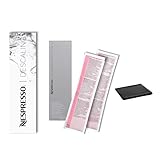
- Top Pick: Nespresso Descaling Kit Solution, Compatible with all Nespresso models, 2 Pack
- Best Value: Nespresso Descaling Kit Solution, Fits all Models, 2 Packets, Descaling Solution for All Models, Includes Cleaning Cloth, Clear
- Premium Choice: Essential Vales Descaling Solution (6 Uses) Coffee Machine Descaler Cleaner – Compatible with Breville Keurig Nespresso Delonghi – Liquid To Descale Coffee & Espresso Machines
Last updated: September 7, 2026
🛒 Best Price Today on Amazon
Prime members get fast, free shipping on everything above, plus member-only deals. New members get a 30-day free trial — cancel anytime.
Top Descale Nespresso Machine Right Way Picks for 2026
Here are our current top descale nespresso machine right way picks, compared on real Amazon owner reviews, price, and features. Live prices update below.
As an Amazon Associate we earn from qualifying purchases at no extra cost to you. Product prices and availability are accurate as of the date shown and are subject to change.



Knowing how to descale a Nespresso machine is the difference between a brewer that pours hot, full-flavored coffee for years and one that slows to a sputtering trickle. Every time your machine heats water, dissolved minerals — mainly calcium and magnesium — precipitate out and build up as limescale inside the boiler and water lines. Left alone, scale insulates the heating element, drops your brew temperature, restricts flow, and eventually clogs the machine entirely. The good news: descaling is a 20-minute job that requires no tools. This guide covers the right products, the general process for both Original and Vertuo lines, and the mistakes that can damage your machine.
Why and How Often to Descale
See also: How to Descale a Breville Espresso Machine Step by Step • How to Make Iced Coffee at Home (Not Bitter, Not Watery)
Nespresso recommends descaling roughly every 600 capsules or every 3 to 6 months, whichever comes first. The real driver is your water hardness: hard well or municipal water builds scale several times faster than soft or filtered water. Watch for the warning signs — slower flow, shorter pours, lukewarm coffee, louder pumping, or a flashing descale alert on models that have one. Coffee that suddenly tastes off can also signal scale, since lower brew temperatures under-extract the capsule. Water quality matters on both ends of this problem: starting with better water slows scale buildup dramatically, a topic we cover in depth in our espresso water quality guide.
What to Use (and What to Avoid)
Use a descaling solution made for coffee machines — Nespresso sells its own kit, and third-party citric- or lactic-acid based descalers work well too. Our roundup of the best espresso machine descalers compares the common options.
Avoid vinegar in a Nespresso. While vinegar is a fine descaler for simple drip brewers — see our guide to cleaning a coffee maker with white vinegar — Nespresso specifically advises against it. Vinegar can attack seals and internal components in capsule machines, leaves a stubborn odor in the closed water path, and may void your warranty if damage results. The few dollars saved are not worth it.
Descaling a Nespresso Original Machine
Models in the Original line (Essenza, Pixie, CitiZ, Inissia, Creatista and others) follow the same general sequence, though the exact button combination to enter descaling mode varies by model — check your manual or Nespresso’s site for your specific machine. The process:
- 1. Prepare. Eject any capsule, empty the capsule container and drip tray, and place a container that holds at least 1 liter under the spout.
- 2. Mix the solution. Pour the descaling agent into the water tank and add water per the product’s directions (typically around 0.5 liters total).
- 3. Enter descaling mode. On most Original machines this involves pressing and holding both coffee buttons for a few seconds with the machine on; the buttons blink to confirm.
- 4. Run the solution through. Start the cycle and let the full tank pass through the spout into your container. Some machines pause; just restart the flow until the tank is empty.
- 5. Rinse. Wash the tank thoroughly, fill with fresh water, and run the entire tank through again. Repeat the rinse if you detect any chemical smell.
- 6. Exit descaling mode per your manual, wipe the machine down, and let it rest a few minutes before brewing.
Descaling a Nespresso Vertuo Machine
Vertuo machines (Vertuo Next, Plus, Pop, Lattissima variants) use the same chemistry with a slightly different ritual. On most Vertuo models you enter descaling mode by ejecting the capsule, locking the head, and pressing the button rapidly several times, then holding it — again, the exact sequence is model-specific, so confirm in your manual. From there the flow is identical: solution in the tank, run it through into a large container, then rinse with at least one full tank of fresh water. The Vertuo Next in particular is known to get cranky when scale builds up, showing erratic lights or refusing to spin up — regular descaling prevents most of it, something we noted in our Nespresso Vertuo Next review. If you are comparing machines across the lineup, our guide to the best Nespresso Vertuo machines breaks down the models.
Keeping Scale Away Longer
Descaling removes scale; smart habits slow its return. Use filtered or low-mineral bottled water in the tank — though avoid pure distilled water alone, as some machine sensors rely on a little mineral content. A simple pitcher filter or an inline option from our espresso machine water filter roundup pays for itself in fewer descales. Empty and refresh the water tank every day or two rather than topping up old water, rinse the drip tray and capsule bin regularly, and run a short water-only flush after milk drinks on Lattissima-style machines. If you use refillable capsules, give them an occasional deep clean too — our guide to the best reusable Nespresso pods covers maintenance. And remember that descaling is only one part of machine care; our broader espresso machine maintenance guide covers the rest of the routine.
Frequently Asked Questions
How often should I descale my Nespresso machine?
Every 3 to 6 months or roughly every 600 capsules, and more often if your water is hard. Slower flow, cooler coffee, or a descale alert are signs you are overdue.
Can I use vinegar to descale a Nespresso?
No. Nespresso advises against vinegar because it can damage seals and internal components and leaves a lingering odor. Use a citric- or lactic-acid descaling solution made for coffee machines instead.
My machine has no descale button — how do I start the cycle?
Every Nespresso model has a button-combination to enter descaling mode rather than a dedicated button, and it varies by machine. Check the manual or Nespresso’s support site for your exact model, then follow the standard solution-then-rinse process.
Why is my Nespresso pouring less coffee than before?
Shrinking pour volume is the classic symptom of scale restricting the water path. Run a descale cycle; in most cases flow returns to normal. If it does not, run a second cycle, then a thorough rinse.
Is descaling the same as cleaning?
No. Descaling dissolves mineral buildup inside the water system, while cleaning removes coffee oils and residue from surfaces, the capsule area, and the drip tray. A healthy machine needs both on a regular schedule.