- Top Pick: Ezebesta Dual-Sided Espresso Hand Tamper 51mm and 58mm Dual Ended Tamper Coffee Ground Press Barista Tool for Portafilter Machine
- Best Value: 51mm Espresso Tamper-Premium Barista Coffee Tamper Coffee Tamper Classic Series Stainless Steel Espresso Tamper Coffee Press Tool Tamper Espresso Handle, 90x51mm, Solid wood, Stainless steel
- Premium Choice: Normcore V4 Coffee Tamper 53.3mm – Spring-Loaded Tamper – Barista Espresso Tamper with 15lb / 25lb / 30lbs Replacement Springs – Anodized Aluminum Handle and Stand – Flat Base, Black
As an Amazon Associate we earn from qualifying purchases at no extra cost to you. Product prices and availability are accurate as of the date shown and are subject to change.
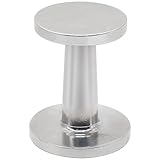


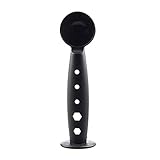

TL;DR: An espresso tamper is the last piece most home baristas buy and the one that immediately exposes every other problem in their workflow. Wrong size = channeling. Wrong pressure = inconsistency. This guide covers diameter matching, base types, calibrated vs. manual, and what actually matters vs. what’s marketing.
Espresso Tamper Guide: Everything You Need to Know Before You Buy
The tamper shipped with most espresso machines is a 49mm plastic puck designed for a 58mm basket. It fits loosely, tamping unevenly, and guarantees channeling — water finding the path of least resistance through the puck instead of extracting evenly. Upgrading to a proper-fitting tamper is the cheapest fix for a long list of espresso problems. Here’s how to buy correctly.
- Quick Comparison
- Top Picks at a Glance
- Tamper Diameter: The Most Critical Spec
- Tamper Base Types: Flat vs. Convex vs. Ripple
- Spec Comparison Table
- Calibrated Tampers: Worth the Premium?
- Self-Leveling Tampers: The Real Upgrade
- Handle Ergonomics: Underrated Variable
- The Tamp-to-Extraction Chain
- Frequently Asked Questions
- About the Author
Quick Comparison
| Product | Brand | Price | Rating |
|---|---|---|---|
| De’Longhi DLSC058 Coffee Tamper | — | $26.99 | 4.8/5 |
| De’Longhi DLSC080 Black Wood Espresso Coffee Tamper | — | $29.95 | 4.8/5 |
| Fino Dual-Sided Espresso Tamper | Fino | $8.93 | 4.6/5 |
| MATOW 53mm Coffee Distributor and Tamper | MATOW | $35.99 | 4.7/5 |
| New Star Foodservice 28829 Commercial Grade Stainless S… | NewStarFoodservice | $12.1 | 4.6/5 |
Top Picks at a Glance
See also: Best Espresso Accessories for New Owners in 2026: Tested and Ranked • 6 Best Blind Filters for Backflushing
Tamper Diameter: The Most Critical Spec
A tamper must match your portafilter basket diameter to within 0.1-0.5mm. Too small and water channels around the edge. Too large and it won’t seat properly. Most home machines use one of these basket sizes:
- 58mm: Industry standard for prosumer and commercial machines. Breville, La Marzocco, ECM, Rocket, Profitec, Lelit. Most popular home category.
- 54mm: Breville Bambino, Bambino Plus, Barista Express Impress. Common entry-level size.
- 53mm: DeLonghi Dedica and related models. Non-standard — verify before buying.
- 49mm: Older DeLonghi and Saeco entry-level machines. Least common for current models.
Check your machine manual or measure the basket interior directly with calipers — don’t assume from brand alone, as some brands use different baskets across their lineup. If you own a detailed breville barista express bes870xl review, you’re on 54mm. If you’ve upgraded to a Rancilio Silvia Vs Gaggia Classic Pro, you’re on 58mm.
Tamper Base Types: Flat vs. Convex vs. Ripple
The base shape affects how the puck surface forms and how water distributes during extraction:
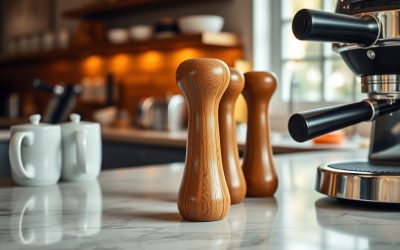
- Flat base: Industry standard. Produces an even, level puck surface. Best for consistent results when technique is correct. The reference baseline for learning proper tamping.
- Convex (curved): Slightly domed — pushes grounds outward toward basket walls. Some baristas find it more forgiving of minor leveling errors. Marginal real-world difference vs. flat for home use.
- Ripple/wavy: Creates channels in the puck surface intentionally to improve water distribution. Mixed evidence — some roasters swear by it for certain beans, others find negligible impact. Niche choice, not a beginner recommendation.
For most home baristas: flat base, correct diameter. Everything else is secondary. The biggest variable affecting extraction quality is how level your tamp is — which is technique, not tamper shape.
Spec Comparison Table
| Feature | Entry Level | Mid-Range | Premium |
|---|---|---|---|
| Material | Plastic / chrome-plated | Stainless steel | Aircraft aluminum or stainless |
| Handle material | Plastic | Stainless / wood | Machined aluminum / rosewood |
| Calibration | None — manual feel | None | Calibrated spring mechanism |
| Diameter accuracy | ±1mm (poor) | ±0.5mm | ±0.1-0.2mm |
| Weight | 100-150g | 200-300g | 300-500g |
| Leveling assistance | None | None | Some models (self-leveling) |
| Price range | $10-20 | $25-60 | $60-200+ |
| Best for | First upgrade from plastic stock | Serious home barista | Dialing-obsessed / competition prep |
Calibrated Tampers: Worth the Premium?
Calibrated tampers have a spring mechanism that “clicks” or releases at a set pressure — typically 15kg or 30lbs. The premise: consistent pressure equals consistent extraction. The reality is more nuanced.
Pressure consistency matters far less than levelness. An uneven 30kg tamp creates more channeling than a level 15kg tamp. Calibrated tampers help beginners build pressure consistency early, but intermediate baristas usually develop consistent pressure through feel within a few weeks of practice. The calibrated mechanism is most useful for:
- Multiple people using the same machine with different hand strength
- Teaching situations where pressure feedback accelerates learning
- Removing one variable when systematically dialing in grind size
For solo home use on a single machine: a precision-diameter flat tamper at $25-40 outperforms a calibrated $80 tamper used with poor leveling technique. Invest in a tamping mat and practice level tamping first.
Self-Leveling Tampers: The Real Upgrade
Self-leveling tampers have a rotating or articulating base that self-aligns perpendicular to the basket regardless of handle angle — solving the levelness problem directly. Brands like Normcore, Pesado, and Pullman offer versions at $50-120. For home baristas who’ve already solved pressure consistency but still get occasional channeling from uneven tamps, this is the genuine upgrade path.
Paired with a precision scale for dose consistency and a quality best-in-class burr coffee grinder best for grind uniformity, a self-leveling tamper completes the trifecta of extraction variables you can directly control at home.
Handle Ergonomics: Underrated Variable
If you pull 2-3 shots daily, handle ergonomics matter over months. Cylindrical handles with no grip differentiation cause wrist pronation issues in some users. T-bar handles distribute force differently — some find them more natural for level tamping. Palm tampers (flat disk with a palm grip) eliminate wrist entirely. Honest advice: hold before buying when possible; hand size and grip preference vary too much for universal recommendations.
Weight is also real: a heavier tamper (300-500g) provides momentum that helps maintain even pressure through the stroke. Lighter plastic tampers require more deliberate control. Not a dealbreaker, but worth noting if you’re choosing between similarly-priced options.
The Tamp-to-Extraction Chain
Tamping is one step in a chain. If your shots still channel after upgrading to a proper-fitting tamper, the problem is likely upstream:
- Grind distribution: Clumps in the basket cause uneven density before tamping. A distribution tool or WDT (Weiss Distribution Technique) solves this.
- Dose consistency: Variable dose changes the puck depth and required tamp pressure each shot. A 0.1g precision scale eliminates this variable.
- Grind size: Too coarse = under-extraction regardless of tamping. Too fine = over-extraction. See the complete espresso grind size guide.
- Basket quality: Cheaper baskets have uneven hole distribution that causes channeling independent of tamping. IMS or VST precision baskets solve this at $30-50.
Context: if you’ve upgraded your tamper, grinder, and technique and still pull inconsistent shots, the comparison between espresso, lungo, and ristretto extraction ratios may help diagnose whether you’re under- or over-extracting systematically.
Frequently Asked Questions
What size tamper do I need for my espresso machine?
Measure your portafilter basket interior diameter with calipers or a ruler. Most home machines use 58mm (Breville prosumer, Rancilio, Gaggia Classic Pro, ECM) or 54mm (Breville Bambino series, Barista Express). DeLonghi Dedica uses 53mm. Your machine manual lists the portafilter size. When in doubt, measure — buying the wrong diameter is the most common tamper purchasing mistake.
How much pressure should I use when tamping espresso?
30lbs (approximately 15kg) is the traditional guideline, but research shows pressure matters far less than levelness. Anywhere from 20-40lbs produces similar extraction if the puck surface is perfectly level. Focus first on consistent, level technique — use a mirror or tamping station to check your angle. Pressure calibration is a refinement, not the foundation.
Does an expensive tamper actually improve espresso quality?
A correct-diameter tamper improves quality dramatically over an undersized stock tamper — that’s real. Beyond correct sizing, diminishing returns set in quickly. A $30 well-fitted stainless tamper used with good technique outperforms a $150 tamper used carelessly. The machine, grinder, and beans have far more impact on cup quality than tamper price above the baseline of correct fit. See how the the head-to-head breakdown comparison contextualizes where to invest at different budget levels.
What is channeling in espresso and how does a tamper fix it?
Channeling occurs when water finds a low-resistance path through the coffee puck rather than extracting evenly across the entire surface. Causes: uneven tamping, clumped grounds, undersized tamper leaving a gap at the basket wall, or puck with density inconsistencies. A correct-diameter tamper eliminates the wall gap. Even tamping pressure eliminates density irregularities. Proper grind distribution before tamping eliminates clumps. All three work together — fixing one while ignoring the others produces partial improvement.
Should I get a tamper with a built-in distribution tool?
Combination distribution-tamper tools (like the OCD or similar single-piece designs) are convenient but force a specific workflow sequence. Dedicated tools used separately give more control over each step. For beginners: a combination tool reduces variables and steps, which is genuinely useful. For intermediate home baristas who’ve developed their workflow: separate tools give better feedback and control. The same principle applies to combination tools elsewhere — convenience often trades against adjustability.
Bottom line: Buy the correct diameter, flat base, stainless steel, at $25-50. That’s the spec. Everything beyond that — calibration, self-leveling, premium materials — is a refinement for people who’ve already optimized the upstream variables.
Ready to decide? Our #1 pick for 2026 is the De'Longhi DLSC058 Coffee Tamper.
Live price & availability on Amazon.