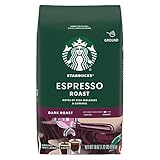
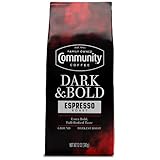
- Top Pick: Starbucks Dark Roast Ground Coffee — Espresso Roast — 100% Arabica — 1 bag (18 oz.)
- Best Value: illy Intenso Ground Espresso Coffee, Bold Roast, Intense, Robust and Full Flavored With Notes of Deep Cocoa, 100% Arabica Coffee, No Preservatives, 8.8 Ounce Can (Pack of 1)
- Premium Choice: Death Wish Coffee Organic Espresso Roast Ground Coffee, Fair Trade, 14 oz
Last updated: October 21, 2026
As an Amazon Associate we earn from qualifying purchases at no extra cost to you.



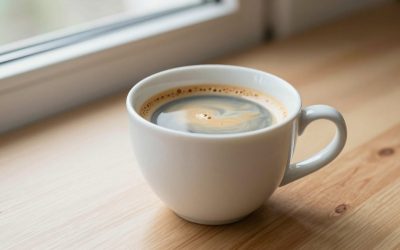
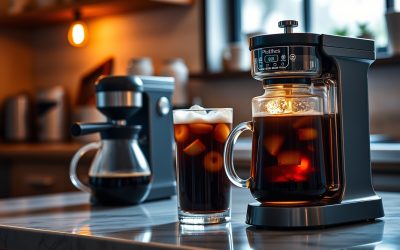
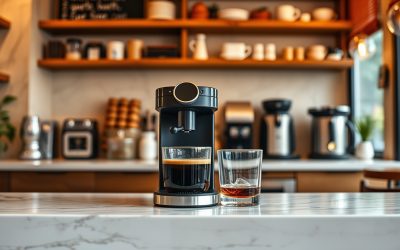
So, what is espresso, exactly? It is not a specific bean, a roast level, or simply “strong coffee” — espresso is a brewing method: hot water forced through finely ground, compacted coffee at roughly nine bars of pressure, producing a small, concentrated shot topped with a layer of golden foam called crema. That pressurized extraction happens in under half a minute and creates a drink with more body, intensity, and aromatic complexity per ounce than any other common brew method. This guide explains how espresso works, what makes a good shot, how it compares to drip coffee, and what you need to make it at home.
🛒 Best Price Today on Amazon
Prime members get fast, free shipping on everything above, plus member-only deals. New members get a 30-day free trial — cancel anytime.
Quick Comparison
| Product | Brand | Price | Rating |
|---|---|---|---|
| Espresso Cups Set of 2 | RUENVUE | Check on Amazon | 5/5 |
| 2.5oz Espresso Cups Set of 4 | Ayemol | Check on Amazon | 5/5 |
| 5oz Espresso Cups Set of 2 | Truvito | Check on Amazon | 4.9/5 |
| 30 Pack Heavy Base Shot Glasses Bulk | Vivimee | Check on Amazon | 4.8/5 |
How Espresso Is Made
See also: How Much Caffeine Is in a Cup of Coffee? • How to Descale a Breville Espresso Machine Step by Step
Every espresso shot follows the same core sequence:
- Grind: coffee is ground very fine — close to table salt — so the pressurized water meets enough resistance to extract properly. Grind setting is the most sensitive variable in espresso; our grind size dial-in guide covers it in depth.
- Dose and tamp: the grounds (typically 16 to 18 grams for a double shot) are leveled and compressed into a flat, even puck inside the portafilter basket.
- Extract: the machine pushes water heated to about 195 to 205°F through the puck at around nine bars of pressure.
- Stop at ratio: the classic recipe is a 1:2 ratio — for 18 grams of ground coffee, you stop the shot at about 36 grams of liquid espresso — which usually takes 25 to 30 seconds.
Those numbers — 1:2, 25 to 30 seconds, 195 to 205°F — are the backbone of espresso. Hit them consistently and you are most of the way to delicious shots. Miss them and you get sour, salty under-extraction or harsh, ashy over-extraction; our guide to why espresso tastes bitter diagnoses the most common failures.
What Is Crema?
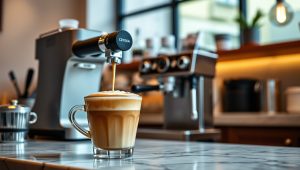
Crema is the tan, velvety foam that crowns a fresh shot. It forms when pressurized water emulsifies coffee oils and carries dissolved carbon dioxide out of freshly roasted beans, creating thousands of tiny bubbles. Crema signals fresh coffee and adequate pressure, but it is not a quality guarantee by itself — robusta beans and very dark roasts produce thick crema that can still taste harsh. Think of crema as one clue among many, alongside aroma, sweetness, and balance.
Espresso vs Drip Coffee
| Feature | Espresso | Drip Coffee |
|---|---|---|
| Brew pressure | ~9 bars | Gravity only |
| Brew time | 25–30 seconds | 3–6 minutes |
| Grind | Fine | Medium |
| Serving size | 1–2 oz shot | 8–12 oz cup |
| Caffeine | ~63 mg per 1 oz shot | ~90–120 mg per 8 oz cup |
| Texture | Syrupy, intense, with crema | Lighter, cleaner |
Note the caffeine row: ounce for ounce espresso is far more concentrated, but a full mug of drip coffee usually contains more total caffeine than a single shot. We unpack this surprisingly persistent myth in how much caffeine is in a shot of espresso.
The Espresso Drink Family
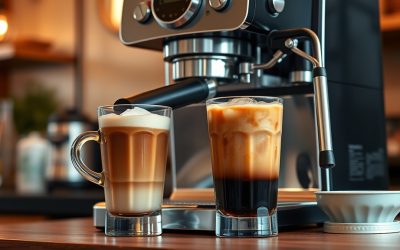
Espresso is the foundation of nearly every cafe menu item. Add steamed milk in different proportions and textures and you get the classics: the latte, cappuccino, flat white, cortado, and macchiato. Add water and you have an americano; add ice cream and you have an affogato. Understanding the base shot makes every one of these drinks better — start with our cappuccino vs latte comparison to see how milk ratios change the experience.
What You Need to Make Espresso at Home
True espresso requires pressure, which means dedicated equipment:
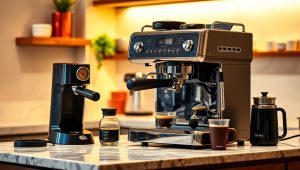
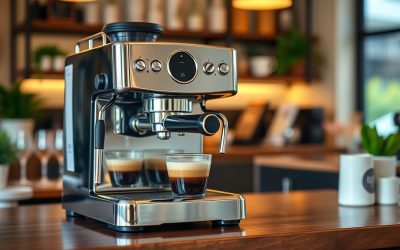
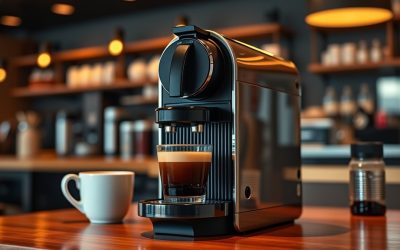
- An espresso machine — from compact entry-level models to prosumer dual boilers. Our espresso machine buying guide maps the options by budget and skill level.
- A capable grinder — arguably more important than the machine itself, because espresso demands fine, consistent, adjustable grinding.
- Fresh beans — roasted within the past few weeks and rested a few days after roast. Our roundup of the best coffee beans for espresso highlights crowd-pleasing options.
- Basic accessories — a scale, a tamper, and ideally a distribution tool; our essential espresso accessories guide lists what actually matters.
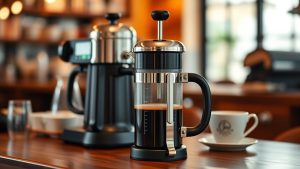
Moka pots and AeroPress brewers make wonderful strong coffee, but they operate at a fraction of nine bars, so the result — while delicious — is technically not espresso. Once your gear is set, our espresso extraction tips and water temperature guide will sharpen your shots quickly.
Why Espresso Tastes the Way It Does
Pressure changes everything. Because water is forced through the puck rather than dripping through, espresso extracts not only soluble flavor compounds but also emulsified oils and microscopic coffee particles that gravity methods leave behind. Those oils and fines give espresso its signature heavy body and lingering finish, and they carry aromatics that make a single ounce smell like an entire cafe. The trade-off is sensitivity: with such a short, intense extraction, small errors in grind, dose, or temperature swing flavor dramatically. That sensitivity is precisely what makes home espresso a rewarding craft — every variable you master shows up in the cup.
Frequently Asked Questions
Is espresso just strong coffee?
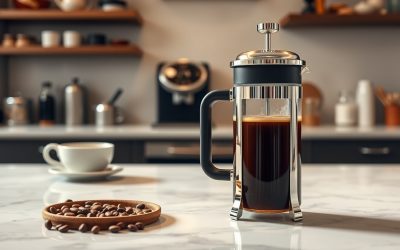
No. Espresso is defined by its brewing method — fine grounds extracted under roughly nine bars of pressure in 25 to 30 seconds — not by strength alone. You can brew strong coffee in a French press, but without pressure it will not have espresso’s crema, syrupy body, or concentration.
Is there a special espresso bean?
Any coffee can be brewed as espresso. “Espresso roast” on a bag simply means the roaster tuned that coffee — usually a medium-dark profile — to taste balanced under pressurized extraction. Light roasts work too, though they often need a finer grind and longer ratio to avoid sourness.
How much caffeine is in espresso?
A typical single shot contains roughly 63 milligrams of caffeine. A double shot, now the standard in most cafes, lands around 125 milligrams — comparable to a regular cup of drip coffee.
Why does my espresso taste sour or bitter?
Sourness usually means under-extraction: grind finer, lengthen the shot, or check that your water is hot enough. Bitterness usually means over-extraction: grind coarser, shorten the shot, or lower the dose. Adjust one variable at a time and taste.
Can I make espresso without an expensive machine?
Capable entry-level machines exist at modest prices, and manual lever brewers can produce true pressurized shots inexpensively. Pair whatever machine you choose with a good grinder — a great grinder with a budget machine beats the reverse every time.