- Top Pick: TBGENIUS French Press Coffee Maker, 21 oz, Thickened Borosilicate Glass
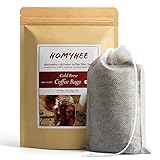
- Best Value: HOMYHEE No Mess Cold Brew Coffee Filters – 100 Count Disposable Fine Mesh Brewing Bags for Concentrate/Iced Coffee Maker, French/Cold Press Kit, Hot Tea in Mason Jar or Pitcher, 4 x 6 Inches
- Premium Choice: Brew This Book: Make Coffee Shop Lattes, Cold Brews, Frappes and More at Home for a Fraction of the Price
Last updated: October 20, 2026
As an Amazon Associate we earn from qualifying purchases at no extra cost to you.



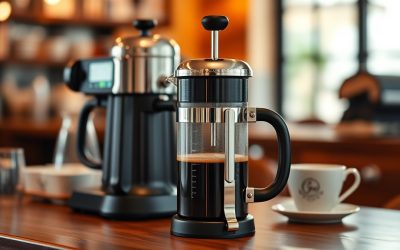
If you already own a French press, you own a cold brew maker. Making cold brew in a French press requires no new equipment, no paper filters, and no skill beyond stirring and waiting — the carafe holds the steeping grounds, and the built-in mesh plunger handles the straining. This guide covers the exact ratio and steep time, a two-stage filtering trick that keeps the cup remarkably clean, and the handful of mistakes that lead to gritty or bitter batches.
🛒 Best Price Today on Amazon
Prime members get fast, free shipping on everything above, plus member-only deals. New members get a 30-day free trial — cancel anytime.
Quick Comparison
| Product | Brand | Price | Rating |
|---|---|---|---|
| Ziruma Non-Toxic French Press | Ziruma | Check on Amazon | 4.8/5 |
| TOMAKEIT 1L/34 Oz French Press Coffee Maker | TOMAKEIT | Check on Amazon | 4.8/5 |
| LANTE French Press Coffee Maker | LANTE | Check on Amazon | 4.8/5 |
| Bodum 34 oz Douro Double Wall French Press Coffee Maker | Bodum | Check on Amazon | 4.8/5 |
Why a French Press Is Perfect for Cold Brew
See also: How Much Caffeine Is in a Cup of Coffee? • How to Descale a Breville Espresso Machine Step by Step
Cold brew is an immersion method: coffee grounds sit fully submerged in cold water for many hours while flavor extracts slowly and gently. A French press is purpose-built for immersion brewing — it is essentially a steeping vessel with a strainer attached. The same qualities that make it great for hot coffee (full contact, full body, no paper stripping the oils) translate directly to cold brewing. If you are shopping for one, our roundup of the best French press coffee makers favors larger 34- to 51-ounce models, which are ideal for batch cold brew.
The cold process also flatters the French press’s one weakness. Hot French press coffee can carry sediment and heaviness, but cold water extracts fewer fines-clouding compounds, and careful straining (below) removes most of the rest. The result is smoother than most people’s hot press pots — naturally sweet and low in acidity, the signature cold brew profile we describe in our cold brew vs iced coffee comparison.
The Ratio and the Grind
For a standard 34-ounce (1 liter) French press, a practical recipe is:
- Concentrate: 1 part coffee to 5 parts water — about 140 grams (roughly 1.75 cups) of coarse grounds to 700 grams of water, leaving headroom for the grounds to expand and the plunger to rest.
- Ready-to-drink: 1 part coffee to 8 parts water — about 90 grams of grounds to 720 grams of water.
Grind matters as much as ratio. Use a coarse grind — coarse sea salt or breadcrumb texture — both to slow extraction over the long steep and to keep particles from slipping through the mesh filter. A consistent burr grinder makes a visible difference in cup clarity; our burr vs blade comparison explains why, and our cold brew ratio guide has conversions for every container size. Chocolatey medium and medium-dark roasts from our best coffee for cold brew guide are the classic choice.
Step-by-Step Instructions
Step 1: Add coffee and water
Place the coarse grounds in the empty press, then pour cold or room-temperature filtered water over them slowly. Stir gently with a wooden spoon or spatula (metal can crack glass carafes) until every ground is wet.
Step 2: Steep — lid on, plunger up
Set the lid on top with the plunger pulled all the way up; it acts as a dust cover, not a press. Steep at room temperature for 12 to 18 hours or in the refrigerator for 16 to 24 hours. Counter steeping extracts faster and rounder; fridge steeping is slower but keeps the batch cold and food-safe from the start.
Step 3: Plunge gently — and only halfway matters
When time is up, press the plunger down slowly. Do not force it or churn it; aggressive plunging stirs up fine particles and squeezes bitter compounds out of the saturated grounds, the same mistake that ruins hot press coffee.
Step 4: Decant immediately
This step separates good cold brew from great cold brew: pour all the coffee out of the press right away. Leaving liquid in contact with the grounds — even plunged — continues extracting and turns the batch woody and bitter by the next day.
Step 5: Optional second filter
For a sparkling-clean cup, pour the decanted coffee through a paper filter or a fine sieve into your storage bottle. This two-stage approach (mesh, then paper) removes the silt the press inevitably lets through.
Step 6: Store and serve
Refrigerate in a sealed container for up to two weeks (concentrate) or about one week (ready-to-drink). Serve over ice, cut concentrate roughly 1:1 with water or milk, and dress it up however you like.
Common Mistakes to Avoid
- Grinding too fine. Fine grounds over-extract, clog the mesh, and leave sludge in every glass.
- Plunging hard. Slow and gentle keeps fines and bitterness out of the finished brew.
- Storing in the press. Always decant after steeping — the press is a brewer, not a pitcher.
- Steeping far past 24 hours. Longer is not stronger; it is just woodier.
- Using stale pre-ground coffee. The long steep amplifies staleness as much as freshness.
French Press vs Dedicated Cold Brew Makers
A dedicated brewer offers convenience — built-in fine filters, spigots, fridge-friendly shapes — and our guide to the best cold brew coffee makers covers the standouts. But functionally, a French press produces the same quality with one extra straining step, and it remains the most versatile brewer in the kitchen: hot immersion coffee one day, cold brew the next, and even frothed milk in a pinch. If you are weighing brew methods more broadly, our French press vs pour over comparison maps the trade-offs.
Frequently Asked Questions
How long should cold brew steep in a French press?
Twelve to eighteen hours at room temperature, or sixteen to twenty-four in the refrigerator. Start tasting at the early end of the range; you can always steep the next batch longer.
Do I push the plunger down during steeping?
No. Leave the plunger fully raised while the coffee steeps so the grounds circulate freely. Press it down slowly only at the end, immediately before pouring everything out.
Why is my French press cold brew gritty?
Either the grind is too fine, the plunge was too forceful, or you skipped the second filter. Grind coarser, press gently, and finish through a paper filter for a clean cup.
Can I make cold brew in a small 12-ounce French press?
Yes — scale the ratio down (about 35 grams of coffee to 175 grams of water for concentrate) and steep the same length of time. Small presses simply yield two or three servings instead of a week’s supply.
Is French press cold brew as good as a dedicated cold brew maker?
The coffee itself is every bit as good, since both are simple immersion brews. Dedicated makers win on convenience and filtration; the French press wins on cost and versatility, especially with the optional paper-filter finish.