Last updated: October 20, 2026
The short answer: a cappuccino is a small, foam-heavy drink built on roughly equal parts espresso, steamed milk and milk foam, while a latte is a larger drink with far more steamed milk and only a thin cap of foam. Pick a cappuccino for a strong coffee taste and an airy texture, and a latte when you want something mellow and creamy. The two usually share the same espresso, so the difference lives in the cup size, the milk and the foam, and this guide breaks each of those down with numbers.
Quick Verdict
- Choose a cappuccino for a 5 to 6 oz (150 to 180 ml) drink where espresso, milk and foam each take about a third.
- Choose a latte for 8 to 12 oz (240 to 350 ml) of mostly steamed milk with a thin layer of foam.
- Caffeine depends on the shots: a typical 12 oz drink of either kind lands around 130 mg when it has a double shot.
- A 12 oz whole-milk latte runs about 190 kcal against roughly 120 kcal for a 12 oz cappuccino in USDA-linked figures.
- Making a cappuccino at home takes a little more aeration; a latte is more forgiving, and it works in a mug you already own.
Key Specs
See also: Bloody Mary Recipe: Classic, Spicy, and Easy • Copycat Starbucks Drink Recipes You Can Make at Home
| Spec | Cappuccino | Latte |
|---|---|---|
| Classic cup size | 5 to 6 oz (150 to 180 ml) | 8 to 12 oz (240 to 350 ml) |
| Ratio | About 1:1:1 espresso, milk, foam | About 1:3 to 1:5 espresso to milk (Wikipedia range) |
| Milk (one source) | About 1.7 to 2 oz steamed milk | About 6 to 7 oz steamed milk |
| Foam depth (one source) | About 15 to 20 mm | About 3 to 5 mm |
| Espresso | Single or double | One or two shots |
| Texture | Thick, airy, dense | Velvety, smooth |
| Milk stretch time (one guide) | About 5 to 8 seconds | About 3 to 5 seconds |
| Calories, 12 oz whole milk | About 120 kcal | About 190 kcal |
The sources do not agree on every number. Some break a cappuccino into exact thirds by volume, others describe the foam as taking more than a third. Treat the 1:1:1 ratio as approximate and tied to the small cup.
Who It Is For (and Who Should Skip It)
The cappuccino fits people who like to taste the coffee, enjoy a light, textured foam, and like a drink that is finished in ten minutes. It is also the better choice for small cups, because it is designed around one. If you own a small porcelain cup, a cappuccino is the drink that uses it properly.
The latte fits people who drink coffee slowly, add flavors, or find a cappuccino too bold. Skip the cappuccino if you dislike foam on your upper lip or you want to carry the drink around for an hour; the foam collapses and the drink cools fast. Skip the latte if what you want is a coffee-forward punch, because a 12 oz serving dilutes one shot heavily.
What It Does Well
Strong coffee flavor in a small drink
A traditional cappuccino is 5 to 6 oz, so even a single shot is a large share of what you drink. In Italy the espresso part is about 1 oz, and equal parts milk and foam fill the rest of the cup, according to Wikipedia. A cappuccino tastes stronger than a latte because less milk dilutes the shot, not because it has more caffeine. Milk adds none.
Texture you can see
The thick foam gives the drink structure. Sip through it and you taste the coffee beneath, and the foam leaves a sweet, creamy finish. A well-made cappuccino has a dome, a glossy surface and bubbles too small to see.
Wet and dry can be adjusted
You can order or make the drink wet (more steamed milk, less foam, closer to a small latte, sweeter and milder) or dry (mostly foam over the espresso with barely any liquid milk, stronger espresso flavor). The cup size does not change; only the ratio of steamed milk to foam does. Café usage varies, so say what you mean rather than relying on the term.
Where the names come from
Cappuccino traces to the Capuchin friars, with the drink named for its color, which supposedly resembles their brown hoods. “Capuchin” itself comes from a word meaning “little hood.” Dates vary by source, from an early Viennese drink to the 1930s espresso machine era. Latte is short for the Italian “caffe e latte,” and in Italy a bare “latte” gets you a glass of milk, so say “caffe latte” when you order there.
Where It Falls Short
- Size mismatch. Large chains often serve cappuccinos at 12 oz or more. At that size it is essentially a foamy latte, and the traditional 1:1:1 balance is gone.
- Foam collapses. A cappuccino gets worse as it sits, so it does not suit a slow morning.
- More technique at home. Making dense foam requires aerating the milk for roughly 5 to 8 seconds in one guide, then texturing to break up the big bubbles. Too little air gives a latte; too much gives a stiff foam that sits like whipped cream.
- Less milky comfort. If you want a creamy, dessert-like drink, the cappuccino can feel thin and sharp.
- Counts differ between sources. Ratios, milk ounces and foam depths vary, so a barista may build your drink differently from the numbers above.
How It Compares
| Drink | Size | Milk and foam | Strength of taste | Pick it if |
|---|---|---|---|---|
| Cappuccino | 5 to 6 oz traditional | Equal milk and foam | Strong | You like airy foam and bold coffee |
| Wet cappuccino | Same cup | More milk, less foam | Medium | You want a sweeter, milder cappuccino |
| Dry cappuccino | Same cup | Mostly foam | Strongest | You want espresso with a foam cap |
| Latte | 8 to 12 oz | Mostly milk, thin foam | Mild | You want a long, creamy drink |
| Flat white | 5 to 6 oz | Thin microfoam through the drink | Strong and smooth | You want milk without foam |
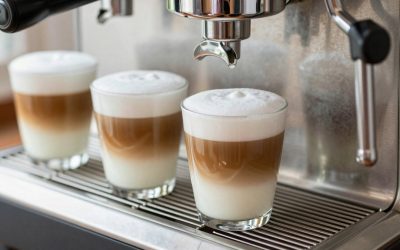
| Latte macchiato | 250 to 350 ml | Layered, milk poured first | Mild to medium | You want a layered look |
Caffeine and calories
USDA-linked figures use about 63 mg of caffeine for a 1 oz shot, so a double is about 126 mg, and a 12 oz cappuccino or latte with two shots lands near 130 mg. Other sources cite 68 to 75 mg per shot, so the numbers vary slightly. Calories come from the milk: roughly 120 kcal for a 12 oz whole-milk cappuccino and 190 kcal for a latte in one dataset, and 130 versus 210 in another. Espresso adds only 2 to 3 kcal per shot.
Latte macchiato and the flat white
A latte macchiato reverses the pour: steamed milk first, then espresso, which settles into layers with foam on top. It is not an espresso macchiato, which is a shot with just a spoonful of milk. A flat white sits between the two main drinks: the same small size as a cappuccino, but with thin microfoam folded through the milk.
Steaming Milk for Each Drink
For a cappuccino (5 to 6 oz cup)
- Pull a single or double shot into a preheated 5 to 6 oz cup.
- Purge the wand for about a second, then hold the tip just below the surface, slightly off center.
- Stretch the milk for roughly 5 to 8 seconds, listening for a steady tss-tss sound, until the milk has grown by about 20 to 30 percent.
- Lower the tip about a centimeter, spin the milk into a vortex, and stop around 140 to 150 °F (60 to 65 °C).
- Tap, swirl and spoon or pour so a dome of foam sits on top.
For a latte (12 oz cup)
- Pull one or two shots into a larger preheated cup.
- Stretch the milk for about 3 to 5 seconds, then texture it into smooth, glossy microfoam.
- Steam to around 150 to 160 °F (65 to 70 °C), but stop near 150 °F on a thermometer since the milk keeps heating.
- Pour steadily so the thin foam rests on the surface.
Heating above roughly 160 °F (71 °C) risks scalding, which removes sweetness and adds a cooked note. Milk reaches peak perceived sweetness near 140 °F, which is why many baristas stop earlier than beginners expect.
Wet, Dry and Size Variations
Because the labels are loose, it helps to specify what you want. Ask for a wet cappuccino and you will usually get something close to a small latte: more steamed milk, less foam, sweeter and milder. Ask for a dry one and you get mostly foam over espresso with barely any liquid milk, a stronger coffee flavor. One source says a dry cappuccino skips the steamed milk entirely, while another says it only has less liquid milk, so confirm with the barista. At home you control this by how long you stretch the milk: a longer stretch makes more foam and a drier drink, a shorter one makes a wetter drink.
Size changes the drink more than the name
A cappuccino in a 6 oz cup and one in a 16 oz cup are different drinks. In the larger cup the espresso stays the same while the milk grows, so the balance slides toward a latte. If a chain sells you a 12 oz cappuccino, it is closer to a latte with extra foam. For the classic proportions, use a cup in the 5 to 6 oz range, or build a wet cappuccino in 8 oz.
Italian ordering notes
In Italy, a bare “latte” gets you a glass of milk, and a caffe latte is about three-quarters hot milk with a shot of espresso and a little foam, usually served in a tall glass. Milky coffees are mostly a morning habit there, which is why cappuccino after lunch marks you as a visitor, though you will still be served.
Which One Should You Make at Home?
Start with the latte if you are new to steaming, since a few seconds of extra air will not ruin it. Move to the cappuccino once you can hear the stretch phase and judge volume growth. Whatever the machine, the cup is the quiet variable: a 12 oz mug will make any cappuccino taste like a latte. A set of small cups gives you the right proportions without measuring.
Alternatives Worth Considering
Lareina 8 Ounce Porcelain Cappuccino Cups – why consider them
As an Amazon Associate we earn from qualifying purchases at no extra cost to you.

This set of four porcelain cups comes with matching saucers, spoons and a metal stand, and the listing states an 8 ounce capacity per cup. That is a good fit for a wet cappuccino, a small latte or a flat white poured with generous room at the top. The caveat is size: the traditional cappuccino is 5 to 6 oz, so an 8 oz cup leaves visible space and lets the drink cool faster. Whatever the material, rinse the cup with hot water before pouring so the drink starts warm. Measure your own cups before buying: pour water to the brim to see the true capacity, then plan for a cappuccino to fill about two thirds of an 8 oz cup. If you serve guests, the stand and saucers make the set convenient; if you make one drink a day, a single cup you already own will work just as well.
Questions
Which is stronger, a cappuccino or a latte?
A cappuccino tastes stronger because less milk dilutes the espresso. The caffeine is the same if both use the same number of shots.
Does a cappuccino or latte have more calories?
The latte, because it contains more milk. At 12 oz with whole milk, one dataset puts the latte near 190 kcal and the cappuccino near 120 kcal.
Can I make both without an espresso machine?
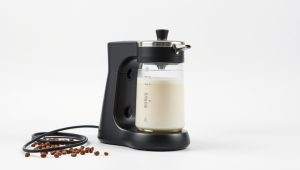
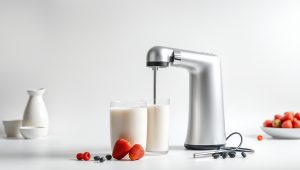
You can approximate both with strong brewed coffee and warmed, frothed milk, for example from an automatic frother with separate foam and hot-milk settings. The coffee will be less concentrated than espresso, so use less milk for the cappuccino-style version and more for the latte-style one.
What is the difference between a latte and a latte macchiato?
The pour order. A latte puts espresso in first and milk on top. A latte macchiato pours espresso into steamed milk, creating layers.
Is a large cappuccino the same as a latte?
Often close. A 12 oz cappuccino with latte-sized milk is basically a foamier latte, which is why size matters more than the name.
How much espresso goes into each drink?
A traditional cappuccino uses a single shot of about 1 oz in Italy, while many cafes use a double. A latte uses one or two shots. Choose based on how strong you want the finished cup, not on the drink name.
Why does my homemade cappuccino foam collapse?
Large bubbles, old or cool milk, or a long wait before drinking. Tap and swirl the pitcher after steaming, then pour within about 20 seconds.
Update History
- October 20, 2026 – Updated with specification checks and a revised product comparison.
- Check the product page for current specifications and availability before buying.
Sources
- Wikipedia entries on the cappuccino, latte, milk coffee and latte macchiato
- Beanbox guide to cappuccino ratios
- Drink Duel cappuccino and latte comparison
- CaffCalc (USDA FoodData Central figures) and other caffeine and calorie comparisons
- Etymonline entry for cappuccino
- Brew Bench Gear milk steaming guide
- Home-Barista milk temperature discussion
- Retailer listing for the Lareina cappuccino cup set