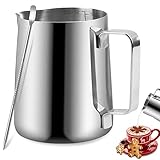
- Top Pick: Milk Frothing Pitcher, 8.5oz/12oz/20oz/32oz/50oz/66oz Milk Frother Cup Stainless Steel, Espresso Accessories, Milk Steaming Pitchers Coffee Cappuccino Latte Art Barista Milk Jug Cup with Art Pen,12oz
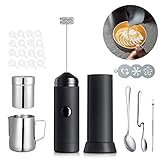
- Best Value: Milk Frother Handheld Art Set – with Milk Frother Pitcher, Powder Cocoa Shaker, Latte Art Pen, Coffee Stencils, Coffee Spoons
- Premium Choice: HOWFIELD Milk Frothing Pitcher 12oz Stainless Steel for Cappuccino Latte Art
Last updated: October 20, 2026
As an Amazon Associate we earn from qualifying purchases at no extra cost to you.


Disclosure: As an Amazon Associate we earn from qualifying purchases. This page contains affiliate links and we may earn a commission at no extra cost to you.
Latte art looks like a pouring trick, but it is won or lost thirty seconds earlier, at the steam wand. The hearts and rosettas you admire at a good café are only possible with microfoam — milk that has been stretched and spun into a glossy, paint-like texture with bubbles too small to see. Stiff, dry, bubble-bath foam will sit on top of your espresso like a meringue and refuse to draw anything. Wet, thin milk will dive under the crema and vanish. The window between the two is narrow, but it is absolutely learnable in a couple of weeks of deliberate practice.
The technique has two phases. First comes stretching: with the steam tip just below the surface, you introduce air during the opening seconds — a gentle paper-tearing hiss, not a scream — to build volume. Then comes texturing: you sink the tip slightly, angle the pitcher so the milk whirlpools, and let the vortex shear those bubbles into silk while the milk climbs to temperature. Cut the steam at roughly 55 to 65°C (130 to 150°F), give the pitcher a firm tap and swirl, and you should have wet paint. In this guide we break down each step, the mistakes that produce bad foam, and the gear — pitchers and thermometers — that makes the learning curve dramatically shorter.
You do not need much equipment, but the two pieces you do need matter: a proper spouted pitcher and, while you build instinct, a thermometer.
Quick Comparison
| Product | Price | Rating |
|---|---|---|
| MHW-3BOMBER Steaming Pitcher | Check on Amazon | 4.7/5 |
| 12oz Stainless Frothing Pitcher | Check on Amazon | 4.7/5 |
| Milk Frothing Thermometer | Check on Amazon | 4.6/5 |
| KT THERMO 2-Inch Dial Thermometer | Check on Amazon | 4.6/5 |
| Dailyart Pitcher with Thermometer | Check on Amazon | 4.6/5 |
| Tuni 12oz Steaming Pitcher | Check on Amazon | 4.6/5 |
Why Trust This Guide
See also: How Much Caffeine Is in a Cup of Coffee? • How to Descale a Breville Espresso Machine Step by Step
This guide draws on daily milk steaming in a home espresso routine, side-by-side use of the pitchers and thermometers recommended here, and a habit of testing technique advice against what actually pours in the cup. We compare verified product details and long-term owner experiences rather than repeating marketing claims, and we update recommendations when better tools appear.
MHW-3BOMBER Steaming Pitcher
MHW-3BOMBER has built a devoted following among competition-minded baristas, and this steaming pitcher shows why: the spout geometry is the star. A sharp, well-defined pour spout is what turns good microfoam into a crisp rosetta, because fine line work depends on a controlled, narrow ribbon of milk. Combined with a comfortable handle and balanced weight, this is the pitcher in this roundup that most rewards a developing pourer.
It costs three to four times what a basic pitcher does, and that premium buys finesse rather than function — milk steams the same in both. Our take: it is a justifiable first pitcher if you are committed to learning art specifically, and a wonderful upgrade once your foam is reliably glossy but your hearts come out as blobs. At that stage, the spout genuinely is the bottleneck, and this fixes it. For a broader look at the style, our roundup of stainless latte art pitchers compares the spout shapes side by side.
12oz Stainless Frothing Pitcher
This is the honest, no-frills workhorse: a 12-ounce stainless pitcher at a single-digit price. The 12oz size is the right call for home machines — it steams enough milk for one latte or cappuccino without the waste of half-filling a 20oz café jug, and the smaller volume is easier for entry-level steam wands to spin into a proper whirlpool. Anyone steaming on a Breville or similar single-boiler machine, like the one in our Barista Express review, will find this size matches the wand’s power nicely.
The compromises are exactly what the price implies: the spout is functional rather than sculpted, so expect serviceable hearts and tulips before fine rosettas, and the thinner steel transmits heat to your hand quickly — which, to be fair, doubles as a crude thermometer. As a first pitcher or a dedicated practice jug you can abuse with water-and-dish-soap pour drills, it is unbeatable value.
Milk Frothing Thermometer
Temperature is the silent half of milk technique. Milk sweetness peaks in the 55 to 65°C window as lactose becomes more perceptible; push past about 70°C and proteins scorch, sweetness collapses, and the texture turns thin and eggy. Until your palm learns the milestones, a clip-on dial thermometer like this one removes the guesswork — clip it to the pitcher rim, steam as normal, and cut the steam as the needle approaches your target zone.
The known limitation of dial thermometers is lag: the reading trails the true milk temperature by a couple of seconds, so stop slightly before your number, not on it. Treat the tool as training wheels rather than permanent equipment. Most steamers find that after a few weeks of pairing the dial reading with how the pitcher base feels against their palm, the thermometer retires to the drawer — which is precisely the sign it did its job.
KT THERMO 2-Inch Dial Thermometer
The KT THERMO takes the same clip-on concept and executes it with a larger 2-inch dial, and that extra legibility matters more than it sounds. Mid-steam, you are watching the whirlpool, listening to the hiss, and feeling the pitcher — a face you can read in your peripheral vision in under a second is the difference between a thermometer you actually use and one that distracts you into bad technique.
It is a couple of dollars more than the smaller dial above, and the same physics apply: expect a short lag, anticipate your cutoff, and verify accuracy occasionally with an ice-water check, recalibrating if your model allows it. One extra trick that makes either thermometer earn its keep: log your numbers. Steaming to the same temperature every single morning removes one variable from your drinks — the same discipline that makes shot timing meaningful, as we explain in our espresso ratio recipe guide.
Dailyart Pitcher with Thermometer
The Dailyart bundle answers the beginner’s obvious question — “which pitcher and which thermometer?” — with a single thirteen-dollar box: a stainless steaming pitcher with a matched thermometer. As a starter kit it is genuinely sensible. The two tools are designed to work together, the price barely exceeds buying a bare pitcher, and you walk away equipped for both halves of the milk problem, texture and temperature, on day one.
The tradeoffs mirror its parts: the spout is beginner-grade, and bundled thermometers are rarely the most precise instruments on the shelf, so confirm yours reads plausibly against the ice-water test before trusting it. We see this kit as the lowest-friction on-ramp — if latte art becomes your thing, you will eventually add a sharper-spouted pitcher and keep this one for practice runs and for steaming alternative milks, which are worth keeping separate from dairy anyway.
Tuni 12oz Steaming Pitcher
The Tuni rounds out the lineup as the cheapest pitcher here, a 12oz/350ml stainless jug that nails the fundamentals: enough capacity for a single latte, a pour spout, and metal walls you can feel the temperature through. If your machine came with no pitcher — or worse, with a 20oz monster your wand cannot spin — this is the smallest possible spend that makes proper technique mechanically possible.
At this price you accept the same realities as the other budget jug: a soft spout profile and thin steel. One more honest note for shoppers without an espresso machine at all: a pitcher only matters if you have steam. If you are frothing for drip coffee or stovetop espresso, a standalone electric wand is the better first purchase — our handheld milk frother review covers that route — and the Tuni then becomes the vessel you froth and pour from.
What to Look For in Milk Frothing Gear
Milk gear is cheap compared to machines and grinders, but the details decide whether it helps or fights you. Here is what actually matters.
- Pitcher size matched to your drinks — Steam needs room to expand the milk by 20 to 50 percent. A 12oz pitcher suits one latte on a home machine; jump to 20oz only if you regularly steam for two drinks at once.
- Spout sharpness — A crisp, narrow spout gives the thin, controllable ribbon that fine latte art requires. Rounded budget spouts pour wider and limit you to basic shapes.
- Stainless steel construction — Steel survives daily knocks, transmits temperature to your palm, and rinses clean of milk proteins. Avoid glass or plastic for steaming entirely.
- Temperature feedback — A clip-on thermometer (or eventually your hand on the pitcher base) keeps you in the 55 to 65°C sweet spot where milk tastes sweetest and pours best.
- Handle comfort and balance — You will pour with wrist control, not arm strength. A handle that lets the pitcher pivot smoothly matters once you start attempting rosettas.
- Easy-clean interior — Milk residue builds fast. Smooth, seamless interiors and dishwasher-safe construction keep hygiene effortless across daily use.
Tips for Getting the Most Out of Milk Frothing
Start with the milk itself, cold and fresh. Whole dairy milk is the most forgiving teacher — its fat and protein balance produces stable, glossy foam with a wide margin for error. Among alternatives, oat “barista editions” behave most like dairy; almond and soy demand cooler temperatures and gentler stretching. Always start with refrigerator-cold milk, because cold buys you time: the stretching phase has to finish before the milk passes about 37°C, and warm milk slams that window shut. Purge the wand before and after every steam, and wipe it instantly — baked-on milk is the fastest way to ruin a steam tip.
Practice the pour separately from the steam. A few drops of dish soap in water whips into a convincing microfoam substitute, so you can drill wiggle-and-cut motions over the sink without wasting a drop of milk or espresso. When you do pour for real, remember the canvas matters as much as the paint: a shot with rich, intact crema gives your milk contrast to draw on, while a bitter, blonded shot pours muddy — if your base is the problem, our guide to fixing bitter espresso comes first. Begin each pour high and thin to tuck milk under the crema, then drop the pitcher close to the surface and speed up to paint.
Finally, give yourself feedback loops. Pour into clear glassware occasionally — the layering tells you instantly whether your foam is integrating or separating, and our double-wall espresso glass picks double nicely as practice vessels for cortado-sized pours. Film your pours on a phone propped against the backsplash; the mistakes you cannot feel in the moment are obvious on replay. Two weeks of one deliberate practice session a day beats six months of absent-minded steaming.
Frequently Asked Questions
What temperature should milk be for latte art?
Aim to finish steaming between 55 and 65°C (about 130 to 150°F). In that range lactose reads as noticeably sweet and the foam stays glossy and pourable. Beyond roughly 70°C, milk proteins denature, sweetness collapses, and the texture turns stiff and dry — scorched milk simply will not draw. If you use a clip-on dial thermometer, cut the steam a few degrees early to account for its lag.
Why is my milk foam full of big bubbles?
Big bubbles mean too much air introduced too aggressively, usually from holding the steam tip too high above the milk surface or stretching for too long. Keep the tip just below the surface so you hear a gentle, intermittent paper-tearing sound for only the first few seconds, then sink it and let the whirlpool grind the existing bubbles smooth. A firm tap of the pitcher on the counter and a vigorous swirl at the end polishes out the stragglers.
Can I make latte art with a handheld frother or French press?
You can make pleasant foam, but true latte art is a stretch. Handheld wands and French-press plunging aerate milk without the shearing vortex a steam wand creates, so the result is foamier and less paint-like. Heating the milk first and whipping only briefly gets you closest, and simple shapes like a basic heart are occasionally achievable. For consistent rosettas and tulips, steam-textured microfoam is the realistic requirement.
Which milk is best for latte art?
Cold whole dairy milk is the easiest and most forgiving: its fat adds gloss and its protein builds a stable microfoam structure. Reduced-fat milk actually foams readily but tastes thinner and the bubbles are less silky. Among plant milks, barista-formulated oat milk is the clear standout for steaming behavior, while almond and soy can split or turn grainy if overheated — keep them under about 60°C and stretch gently.