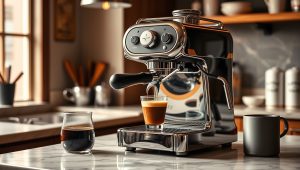
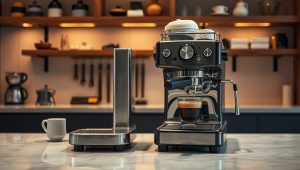
- Top Pick: Gaggia Anima Coffee and Espresso Machine, Includes Steam Wand for Manual Frothing for Lattes and Cappuccinos with Programmable Options,Black
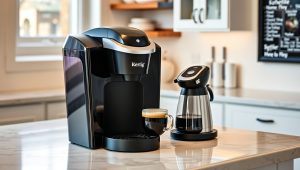
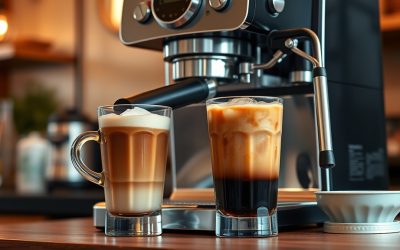
- Best Value: COWSAR 20bar Automatic Espresso Machine with Grinder & Manual Milk Frother, Auto-Clean Function Espresso Maker, Professional Expresso Coffee Machines with Button Controls for Cappuccino, Latte, Black
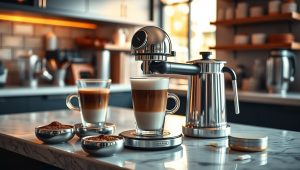
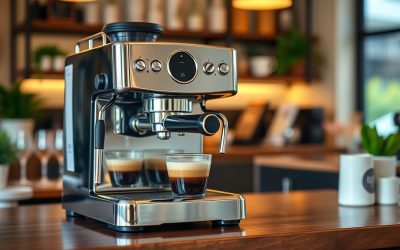
- Premium Choice: SECPOEDR 20Bar Semi Automatic Retro Espresso Machine with Milk Frother
Last updated: October 20, 2026
As an Amazon Associate we earn from qualifying purchases at no extra cost to you.


Disclosure: As an Amazon Associate we earn from qualifying purchases. This page contains affiliate links and we may earn a commission at no extra cost to you.
Every home barista eventually faces the fork in the road: manual or automatic? On one side sit lever presses and hand-pumped portables — machines that make you the pump, the pressure profile, and the quality control. On the other side sit electric semi-automatics and automatics that handle pressure and temperature for you, ask only that you grind and tamp well, and produce a latte before you are fully awake. Neither side is “real” espresso and the other an imitation; both can pull genuinely excellent shots. They simply demand different things from you, and the right answer depends on what you want your mornings to feel like.
The honest framing is this: manual machines trade convenience for control and cost savings, while automatics trade money and counter space for speed and repeatability. In this guide we break down how the two approaches actually differ in the cup, walk through the manual presses we think earn a place on the counter, and explain who genuinely should buy each style. If you want the broader market picture across every budget first, our best home espresso machines guide pairs well with this one.
One myth to retire immediately: automatics are not “cheating,” and manuals are not “hipster suffering.” They are different tools for the same drink.
Quick Comparison
| Product | Price | Rating |
|---|---|---|
| MS1 Mini Lever Press (Wood Base) | Check on Amazon | 5.0/5 |
| M5 Portable Manual Maker | Check on Amazon | 4.8/5 |
| Dual-Lever Pressure Profiling Set | Check on Amazon | 4.6/5 |
| AeroPress Original | Check on Amazon | 4.6/5 |
| Flair 49 PRO Lever Machine | Check on Amazon | 4.5/5 |
| CREMA Steam Lever (Breville) | Check on Amazon | 4.5/5 |
Why Trust This Guide
See also: How Much Caffeine Is in a Cup of Coffee? • How to Descale a Breville Espresso Machine Step by Step
We brew on both sides of this divide — lever presses and electric semi-automatics — in a daily home routine, and our comparisons reflect actual use, manufacturer specifications, and patterns in long-term owner feedback. We have no stake in which style you choose, and we flag the frustrations of each as plainly as the strengths.
MS1 Mini Lever Press
The MS1 makes the manual case in its most charming form: a compact lever press on a wooden base that looks more like a café objet than an appliance. You load the portafilter with a fine grind, add hot water, and pull the lever — your arm generates the brewing pressure, and the leverage gives you fine-grained command over the flow. For drinkers who find ritual half the pleasure of espresso, this is the style of machine that turns brewing into the best two minutes of the morning.
The tradeoffs are the manual genre’s usual ones. There is no steam wand, so milk drinks need a separate frothing solution, and there is no built-in heater — your kettle controls the temperature, which means preheating the press matters, especially in a cold kitchen. Shot-to-shot consistency lives entirely in your technique. As a first lever machine or a beautiful second setup for an office, it earns its spot; as a four-latte family workhorse, it does not pretend to be one.
M5 Portable Manual Maker
The M5 is the cheapest path in this roundup to true high-pressure espresso, and it comes with a genuinely clever inclusion: a 2-in-1 bottomless portafilter. Bottomless brewing exposes the underside of the basket, so you can watch the extraction directly — spritzers and dead spots in your puck prep have nowhere to hide. That makes the M5 not just an espresso maker but an instructive one; it will teach you more about distribution and tamping in a month than a covered spout would in a year.
It needs no electricity, which makes it a favorite for travel and camping, and at this price it is an easy experiment for the espresso-curious. Be realistic about the limits: you supply hot water and muscle, the small format means modest doses, and milk frothing is on you. If you discover you love the manual workflow, you will likely graduate to a heavier lever press — and if you want to see how deep that path goes, our manual lever espresso machine review maps the territory.
Dual-Lever Pressure Profiling Set
This dual-lever press is the manual argument taken to its logical end: a hand-powered machine built around 12-bar capability and deliberate pressure profiling. Two levers multiply your mechanical advantage, smoothing the pull and letting you ramp pressure gently at the start of the shot, hold it through the middle, and taper at the end — the same profiling tricks that cost thousands in electric form. For tinkerers who want to taste what pressure manipulation does to a light roast, this is the most affordable serious laboratory there is.
There is still no steam, still no heater, and the workflow rewards a good scale, a capable grinder, and patience. Pair it with a brew pressure readout if you really want to learn — our espresso pressure gauge guide explains what those numbers mean mid-shot — and this set becomes a masterclass in extraction.
AeroPress Original
Let’s be precise, because the AeroPress is the most honest product in this lineup about what it is: a brilliant hand-pressed brewer that makes a concentrated, espresso-style coffee — not true espresso. Human arms on its wide cylinder generate roughly one bar of pressure, nowhere near the nine-plus bars that create genuine crema and espresso body. What it does produce is a clean, rich, low-bitterness concentrate that takes ninety seconds, cleans up in ten, and tastes far better than its price suggests.
That makes the AeroPress the right answer to a specific question: “Do I actually want stronger, better coffee, or do I want espresso the discipline?” If lattes and a quick bold cup are the goal, this plus a milk frother may be all you need, and you save hundreds. If the goal is real crema and the lever ritual, the AeroPress is still worth owning as the travel and backup brewer — almost every espresso enthusiast we know keeps one in the cupboard anyway.
Flair 49 PRO Lever Machine
The Flair 49 PRO is, for our money, the benchmark sweet spot of the manual category: an all-manual 49mm lever machine with a handled portafilter, robust metal construction, and the capability to pull café-grade shots with real crema once your grind is dialed. The smaller 49mm format is friendlier than full 58mm manual setups — doses are modest, the puck is easier to prepare evenly, and the lever effort is manageable for nearly anyone.
Compare it head-on with an electric semi-automatic in the same price neighborhood, like the Barista Express we cover in our Breville BES870XL review, and the fork in the road gets vivid. The Breville gives you a pump, a heater, a grinder, and a steam wand in one box; the Flair gives you a slower, quieter, more involving pull with fewer parts to break and shots that reward skill with genuine nuance. Choose by temperament: tinker and savor, or press and go.
CREMA Steam Lever (Breville)
This one is for readers who land on the automatic side of the question. The CREMA replacement steam lever is an ergonomic upgrade part for Breville espresso machines, swapping the stock steam control for a smoother, more comfortable lever action. It is a small quality-of-life improvement, but steam control is something you touch on every single milk drink, and owners who steam multiple lattes daily feel the difference in a week.
We include it here to make a point the manual-versus-automatic debate often misses: choosing an automatic does not mean the tinkering ends. Semi-automatic owners upgrade tampers, baskets, and controls the way lever owners chase technique. Confirm fitment with your exact Breville model before ordering — replacement parts are model-specific — and treat it as the kind of small, satisfying upgrade that keeps a machine you already own feeling current instead of fueling upgrade envy.
What to Look For When Choosing Between Manual and Automatic Espresso
The right machine style follows from your habits, not from anyone’s ideology. Weigh these factors honestly before you spend.
- Daily drink count — One or two contemplative shots favor a lever press; a household queue of lattes favors an automatic with a boiler and steam wand that never tires.
- True pressure capability — Real espresso needs roughly six to nine bars at the puck. Quality levers and pump machines both get there; ultra-cheap “espresso” gadgets and one-bar pressers do not, whatever the box art implies.
- Milk strategy — Manual presses almost never steam milk. If cappuccinos matter, budget for a standalone frother or steamer, or let that requirement push you toward a semi-automatic.
- Tolerance for ritual — A lever shot involves kettle, preheat, grind, load, and pull. If that sounds delightful, you are a manual person. If it sounds like a chore before caffeine, believe yourself.
- Grinder budget — Both styles live or die by grind quality, and manual machines are arguably less forgiving. Reserve a meaningful share of your budget for burrs before bodywork.
- Space, noise, and travel — Levers are compact, silent, and some are genuinely portable; automatics claim permanent counter real estate and hum while they work.
Tips for Getting the Most Out of a Manual or Automatic Machine
Whichever side you choose, the recipe is the great equalizer. Espresso is a ratio game — dose in, beverage out, time elapsed — and a manual lever follows the same math as a four-figure automatic. Start at a 1:2 ratio in 25 to 30 seconds and adjust by taste; our espresso ratio recipe guide walks the whole method. Manual users should add one habit on top: preheat everything. Lever cylinders, portafilters, and cups shed heat fast, and a lukewarm brew path is the number-one reason first lever shots disappoint.
Diagnose by taste, not by gadget envy. Sour, fast shots mean grind finer or pull longer; harsh, ashy shots usually mean the opposite — or a stale bag, or a dirty screen. The full troubleshooting tree lives in our guide to why espresso turns bitter, and it applies equally to both camps. Manual brewers get one extra diagnostic gift: on a bottomless portafilter you can literally watch a channeling puck spray sideways, which turns an abstract grind problem into something you can see and fix tomorrow morning.
Finally, buy for the person you are, not the barista you imagine becoming. The best machine is the one you will still enjoy using in February of year three. If you are torn, the inexpensive manual options here are a low-risk way to discover your temperament — worst case, the AeroPress becomes your travel brewer and the lesson cost less than a tank of gas.
Frequently Asked Questions
Is manual espresso actually better than automatic?
Not inherently. A well-pulled shot from a quality lever press and one from a well-tuned semi-automatic are both excellent, and blind tasting rarely crowns a consistent winner. Manual machines offer more direct control over pressure and flow, which skilled users can exploit; automatics offer consistency with far less effort. The honest answer is that technique, fresh beans, and grind quality matter more than which style of machine applies the pressure.
Are manual espresso machines harder to learn?
Yes, moderately. Beyond the grind and tamp skills every espresso method demands, manual machines add temperature management and the pull itself to your responsibilities, so expect a couple of weeks of uneven shots while your routine settles. Many people find that learning curve to be the fun part — and the bottomless portafilters common on manual presses give you visual feedback that actually accelerates learning.
Can a manual espresso machine make lattes and cappuccinos?
The espresso half, yes — the milk half, no. Almost no manual press includes a steam wand, so you will need a separate solution: a standalone milk frother, a stovetop steamer, or simply heated milk for flat-white-style drinks. If steamed milk drinks are the main event in your household, that missing wand is the strongest single argument for choosing a semi-automatic instead.
Do manual machines save money in the long run?
Generally, yes. Capable manual presses start under a hundred dollars, have no pumps, boilers, or electronics to fail, and most wear parts are cheap gaskets you can replace yourself in minutes. Automatics cost more up front and carry more long-term failure points. The savings shrink, though, once you add the quality grinder both styles require and a milk frother if you need one — budget for the system, not just the press.