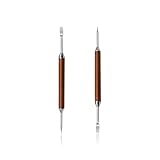
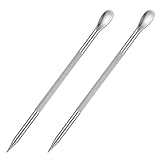
- Top Pick: Latte Art Tools Set (3PCS), Coffee Art Pen Stainless Steel for Cappuccino & Espresso, Barista Latte Decorating Kit for Beginners, Home Cafe Coffee Accessories
- Best Value: 2-Pack Latte Art Pen Set, Stainless Steel Coffee Drawing Tool with Wood Handle, Double-Ended Barista Accessories for Creating Professional Espresso Tools, Home & Travel & Cafe Use
- Premium Choice: YBEATY 2PCS Latte Art Pen Set Coffee Drawing Tool with Wood Handle Latte Art Pen with Coffee ArtStencils Double-Ended Barista Accessories for CoffeeBar Creating Professional Espresso Tools Home Cafe
As an Amazon Associate we earn from qualifying purchases at no extra cost to you. Product prices and availability are accurate as of the date shown and are subject to change.





TL;DR: Learning latte art requires three things: properly textured milk, espresso with good crema, and consistent technique. The right tools — a quality milk pitcher, thermometer, and optionally a latte art pen — remove variables so you can focus on skill development. This guide covers exactly what beginners need to start pulling recognizable patterns.
Latte Art Tools for Beginners: Complete Kit Guide and Technique Tips
Latte art is the visible result of milk texture precision. The latte art tools beginners need aren’t complex — but choosing the wrong pitcher size, skipping a thermometer, or using a low-crema espresso will sabotage even disciplined technique. This guide covers every tool in a starter latte art kit, what each one does, and what to prioritize when you’re starting out.
- Quick Comparison
- Latte Art Starter Tools
- The Latte Art Foundation: What Actually Needs to Happen
- Essential Tool #1: Milk Steaming Pitcher
- Essential Tool #2: Milk Thermometer
- Essential Tool #3: A Steaming-Capable Espresso Machine
- Optional Tool: Latte Art Pen / Etching Tool
- Optional Tool: Knock Box
- Beginner Practice Plan
- FAQ
- About the Author
- Frequently Asked Questions
Quick Comparison
| Product | Brand | Price | Rating |
|---|---|---|---|
| TIESOME 3 Pack Latte Art Pen Set | TIESOME | $3.49 | — |
| 2 PCS Stainless Steel Coffee Latte Art Pen | Zelphvt | $5.49 | — |
| Mifoci 24 Pcs Espresso Accessories Kit Include 51mm Cof… | Mifoci | $27.95 | — |
| 3-Piece Baking and Coffee Tool Kit with 16pcs Flour Dus… | Ujukoxc | $8.99 | — |
| Milk Frothing Pitcher 350ml/600ml/900ml/1500ml (12oz/20… | Adorever | $6.97 | 4.7/5 |
Latte Art Starter Tools
See also: Best Espresso Accessories for New Owners in 2026: Tested and Ranked • 6 Best Blind Filters for Backflushing
The Latte Art Foundation: What Actually Needs to Happen
Before buying any tools, understand what latte art requires at a physics level. Steamed milk separates into two components: liquid milk at the bottom and microfoam (velvety, fine-bubbled milk foam) on top. Latte art is created by pouring microfoam into espresso in a controlled way — the foam floats on the denser espresso crema, allowing shapes to form as you control the pour angle, speed, and wrist movement.
Three prerequisites must be met before tool quality matters:
- Espresso with intact crema. No crema means no surface for foam to float on. If your machine produces weak crema, address machine calibration, freshness of beans, and grind size before focusing on milk technique. See our best home espresso machine guide for machines that produce reliable crema.
- Properly textured milk. The milk must be steamed to silky microfoam — no large bubbles, glossy texture, 60-65°C (140-149°F). Overshooting temperature (above 70°C/158°F) kills the sweetness and creates dry foam that won’t integrate. Understeaming leaves distinct foam and milk layers that merge unpredictably during the pour.
- Consistent pour control. This is technique — no tool substitutes for practice. But the right pitcher gives you the control geometry to develop technique faster.
Essential Tool #1: Milk Steaming Pitcher
The milk pitcher is the most important latte art tool. Its size, spout shape, and handle position directly affect your ability to control pour speed and direction. A wrong-sized pitcher is the most common beginner mistake.
Size matters critically: Use a 12oz (350ml) pitcher for single drinks (cappuccino, flat white, latte). This allows enough milk to create proper vortex circulation during steaming without overfilling. A 20oz pitcher for single drinks makes milk temperature hard to judge by feel and reduces steaming precision.
Our full latte art milk pitcher guide covers spout shapes, handle angles, and specific model recommendations. Key takeaway: look for a pitcher with a sharp, narrow spout — wide spouts dump foam without control. Rattleware and Motta are reliable beginner choices.
| Pitcher Size | Best For | Milk Volume to Fill |
|---|---|---|
| 12oz / 350ml | Single latte, cappuccino, flat white | Fill to spout base (~150-180ml) |
| 20oz / 600ml | Two drinks, large lattes | Fill to spout base (~300ml) |
| 32oz / 1L | Batch steaming, barista competitions | Not recommended for beginners |
Essential Tool #2: Milk Thermometer
A clip-on thermometer eliminates guesswork during steaming. Hook it to the pitcher’s inner wall where the probe sits submerged in milk — watch the temperature as you steam and stop the wand at 60-65°C (140-149°F). This is the sweet spot: hot enough to taste proper, cool enough that proteins haven’t degraded and foam structure remains silky.
Many experienced baristas judge temperature by touch — the pitcher should become too hot to hold comfortably (around 60°C), and steaming stops at that point. Beginners should use a thermometer until they have 100+ steaming repetitions and can reliably hit target temperature by feel. Skipping the thermometer during learning makes it nearly impossible to diagnose why milk texture varies.
Look for: a thermometer with a clip fitting pitchers 2-4mm thick, scale showing 0-100°C with 5-degree increments, and a probe long enough to reach mid-pitcher depth. Instant-read digital versions are more accurate but less convenient than analog clip-ons during active steaming.
Essential Tool #3: A Steaming-Capable Espresso Machine
This is the non-negotiable. A machine with a steam wand that produces consistent, dry steam pressure is required for latte art. Automatic frothers (the Pannarello-style wands included with budget machines) inject air automatically — they produce large-bubbled foam good for cappuccino aesthetics but unable to make the microfoam latte art requires.
A manual steam wand (a bare tube tip with one or two small holes) gives the barista complete control over air incorporation. Position the tip just below the milk surface at the start to incorporate a small amount of air, then submerge and use wrist angle to create a rolling vortex that integrates the foam. See our milk frother comparison and milk steaming pitcher size guide for detailed steaming mechanics.
Optional Tool: Latte Art Pen / Etching Tool
A latte art etching pen (or thermometer-style metal skewer) lets you draw designs in the foam surface after pouring. This is “etching” or “drawn” latte art — distinct from free-pour art which is created entirely during the pour. Etching is significantly easier for beginners and allows complex designs that free-pouring can’t achieve.
Etching pens are cheap (under $10) and immediately satisfying for beginners who haven’t yet mastered free-pour milk control. Use dark chocolate sauce, caramel, or espresso crema as contrast medium on the white foam surface, then draw through it with the pin. Hearts, rosettas, and swirls are achievable within the first week of practice.
Optional Tool: Knock Box
Not directly a latte art tool, but essential for workflow when practicing multiple shots in a session. A knock box lets you dump spent portafilter pucks quickly without mess, maintaining your flow between practice attempts. Our knock box guide covers sizing and materials for home use.
Beginner Practice Plan
Skill development follows a predictable progression:
- Weeks 1-2: Master milk texturing. Steam 3-5 pitchers daily targeting glossy microfoam with no visible bubbles. Always start with fresh cold milk — never re-steam.
- Weeks 3-4: Practice the base pour. Pour from high (to mix), then low (to float foam). Achieve even white coverage before attempting shapes.
- Month 2: The heart. Single forward push with a cutthrough. First free-pour pattern; master before rosettas.
- Month 3+: Rosetta and tulip. Rosetta requires wrist oscillation. Tulip uses layered foam pushes — easier than rosetta, equally impressive.
FAQ
What tools do I need to start making latte art as a beginner?
The minimum: a milk steaming pitcher (12oz/350ml), a clip-on thermometer, and an espresso machine with a manual steam wand. An etching pen adds an easy win while you develop free-pour technique. A quality burr grinder for consistent espresso is equally important but often overlooked as part of the latte art kit.
Can I practice latte art without an espresso machine?
You can practice milk texturing with a standalone milk steamer or by using a French press to create foam, then pouring into any dark-colored liquid. However, real latte art practice requires actual espresso crema — the foam needs to float on the crema surface. Practicing on espresso from the start is better since it mirrors real conditions and shows you immediately when milk texture is correct vs. too dry or too wet.
What milk is best for latte art beginners?
Whole milk is the most forgiving for beginners — its fat content creates stable, velvety microfoam with a wide margin for steaming errors. 2% milk works but produces slightly less creamy texture. Oat milk (barista-grade, like Oatly Barista) is the best non-dairy option and steams well for latte art. Avoid thin milks (skim, almond) while learning — they produce foam that breaks down too quickly to manipulate.
How long does it take to learn latte art?
A consistent heart is achievable within 2-4 weeks of daily practice (3-5 attempts per day). The rosetta typically takes 2-3 months to execute reliably. Barista-competition level latte art takes years. The most common barrier isn’t pour technique — it’s inconsistent milk texturing. Nail the steaming first and the pour patterns follow much faster.
What is the best latte art pitcher for beginners?
A 12oz (350ml) stainless steel pitcher with a sharp, narrow spout and comfortable handle. Rattleware, Motta, and Rhino are well-regarded brands at accessible price points. Avoid pitchers with wide round spouts — they make directional control of foam much harder. Our dedicated milk pitcher guide covers specific models with spout geometry analysis for latte art performance.
Frequently Asked Questions
What tools do I actually need to start?
A sharp-spouted 12 oz pitcher, a thermometer until you learn the feel, and a machine with a real steam wand. Etching pens, stencils and syringe kits are decorative shortcuts that do not teach you to pour, and free-poured hearts arrive faster without relying on them.
Why will my milk not pour a pattern?
Almost always texture rather than technique. If the surface shows visible bubbles it will not flow. Introduce air only during the first few seconds while the milk is still cold, then submerge the tip and spin the milk to fold those bubbles into glossy microfoam.
Which milk should a beginner use?
Whole dairy milk is easiest thanks to its fat and protein balance. Among plant milks only barista-formulated oat and soy hold structure reliably, while standard almond, coconut and rice milk separate. Start with whole milk so failed pours are your technique, not the ingredient.
Does the espresso base matter?
Very much. You need real crema to pour onto. A properly extracted double from a fresh medium roast gives a stable brown canvas, whereas a stale or gushed shot leaves a thin watery surface the milk sinks straight through. Pour promptly, because crema breaks down within a minute.
Which pattern should I learn first?
The heart. It only requires pouring high and thin to start, then dropping the pitcher close so the white blooms out, and cutting through the middle as you lift away. Rosettas and tulips add a wiggle and multiple pours once your heart is consistent.
Ready to decide? Our #1 pick for 2026 is the TIESOME 3 Pack Latte Art Pen Set.
Live price & availability on Amazon.