- Top Pick: Normcore Espresso Tamping Mat I Food Safe Rubber Coffee Tamper Mat I Portafilter Mat For Baristas I Coffee Tamp Mat I Waterproof, Heat Resistant Tamping Pad and Tamp Station
- Best Value: Apexstone Silicone Coffee Tamper Mat 8 Inch X 6 Inch, Espresso Silicone Mat, Espresso Tamper Mat, Coffee Tamp Mat
- Premium Choice: Ezebesta Coffee Tamper Mat for Portafilter – Silicone Tamping Pad -Espresso Machine Accessories (Black)
Last updated: October 20, 2026
As an Amazon Associate we earn from qualifying purchases at no extra cost to you.




Disclosure: As an Amazon Associate we earn from qualifying purchases. This page contains affiliate links and we may earn a commission at no extra cost to you.
Watch a barista tamp on a bare countertop and you will wince twice: once for the portafilter spouts grinding against the laminate, and once for the countertop itself. Tamping puts real downward force through a metal basket and two narrow spouts, and something has to absorb it. A tamping mat is the unglamorous answer — a slab of food-grade silicone that protects the counter, steadies the portafilter so your tamp lands level, and gives your bench a defined station where the messy part of espresso happens.
Mats sound like the simplest product in coffee, but design choices matter more than you would expect. Thickness determines how much shock the mat absorbs and whether the portafilter sits stable or wobbles. A molded spout recess holds the portafilter at a consistent angle, which quietly improves tamp consistency — and consistent tamps are one of the unsung fixes in our guide to bitter, uneven espresso. Corner-style mats wrap the edge of the counter so you can tamp against the bench edge the way commercial baristas do.
We compared six popular mats across the two dominant styles — flat pads and corner mats — from budget basics to the Normcore options that have become the default recommendation in home-barista circles. Here is how they stack up.
🛒 Best Price Today on Amazon
Prime members get fast, free shipping on everything above, plus member-only deals. New members get a 30-day free trial — cancel anytime.
Quick Comparison
| Product | Price | Rating |
|---|---|---|
| Food-Grade Silicone Tamping Mat | Check on Amazon | 5.0/5 |
| Normcore Tamping Mat | Check on Amazon | 4.8/5 |
| watchget 8″ x 6″ Tamping Mat | Check on Amazon | 4.8/5 |
| Silicone Tamping Pad for Portafilter | Check on Amazon | 4.8/5 |
| Normcore Corner Tamping Mat | Check on Amazon | 4.8/5 |
| 10.5″ x 6″ Silicone Tamper Mat | Check on Amazon | 4.8/5 |
Why Trust This Guide
See also: 6 Best Knock Box Mats (October 2026) Reviews & Picks • 6 Best Profitec Accessories (October 2026) Complete Guide
We assess bench gear by how it performs in a real home espresso routine: stability under tamping force, how materials hold up to coffee oils and daily wiping, and whether the design fits the way home baristas actually work. We avoid restating marketing claims, and when two products differ only in size or shape, we say exactly that.
Food-Grade Silicone Tamping Mat
This mat nails the fundamentals at a fair price: food-grade silicone, enough thickness to take a firm tamp without bottoming out against the counter, and a surface texture that keeps the portafilter from skating while you apply pressure. Food-grade certification matters more for a tamping mat than people assume — the mat lives under loose grounds you may sweep back into the dosing workflow, and it gets wiped alongside food-contact surfaces.
It is a flat pad rather than a corner design, which makes it the right pick for island benches and machines that sit away from a counter edge. Pair it with a consistent tamping routine and a scale — dose consistency and tamp consistency together do more for shot quality than any single upgrade, a theme that runs through our espresso ratio guide.
Normcore Tamping Mat
Normcore has built its reputation on workflow accessories that feel a class above their price, and this mat follows the pattern. It is the kind of object that makes a home setup feel like a deliberate station rather than a cluttered corner.
You pay nearly double the price of the basic pads for those refinements, and the honest question is whether your routine notices. If you pull one shot each morning, a nine-dollar pad protects the counter just as well. If you are dialing in new beans weekly, swapping baskets, and generally treating espresso as a hobby rather than a caffeine delivery system, the better stability and durability earn the difference. It sits especially well in a setup where the espresso bench doubles as a drinks station for flavored lattes and weekend experiments.
watchget 8″ x 6″ Tamping Mat
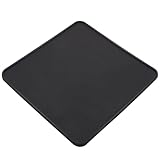
The watchget mat is a black food-grade silicone pad at eight by six inches — a footprint that comfortably hosts the portafilter plus a tamper standing beside it, without colonizing half the bench. That middle size is the sweet spot for most home setups: big enough that a missed tamp still lands on rubber, small enough to lift and rinse in the sink without folding it like a towel.
At eighteen dollars it is priced against the Normcore rather than the budget pads, and the choice between them comes down to shape preference — this is a classic flat pad, while Normcore’s molded profile cradles the portafilter more positively. Either way, a defined tamping station does wonders for mess control: grounds end up on the mat, not scattered toward your milk frother and cups.
Silicone Tamping Pad for Portafilter
At nine dollars, this black silicone pad is the entry point for tamping protection, and there is no shame in entering here. It does the two essential jobs — shields the counter from spout dents and stops the portafilter sliding mid-tamp — and silicone of any grade shrugs off coffee oils and rinses clean. For a new machine owner who just spent their budget on the machine itself, this is the accessory to add in the same order.
The compromises are subtle rather than dramatic: thinner material transmits more shock to the counter under an aggressive tamp, and the lighter mat can shift on very smooth stone benches. Wipe the underside dry occasionally so it grips. If you find yourself upgrading later, the pad demotes gracefully to a kettle trivet or a grinder mat — nothing wasted, much like starter milk pitchers that become rinse jugs once a proper steamer setup arrives.
Normcore Corner Tamping Mat
The corner mat is the commercial-bar pattern brought home: an L-shaped profile that hooks over the edge of the counter, so you can brace the portafilter against the bench edge and tamp straight down with your elbow over the work. That geometry is genuinely better ergonomics — the ninety-degree wrist-and-elbow position produces more level tamps with less effort than tamping on a flat surface in the middle of a bench, and it protects the vulnerable counter edge that flat mats ignore.
The requirement is obvious: you need a counter edge near your machine. Island setups and machines pushed deep against a splashback cannot use the corner profile, and for them the standard Normcore mat is the equivalent product. For everyone else, this is arguably the most workflow-improving twenty dollars on this list, especially for taller users who find flat-bench tamping forces an awkward shoulder hunch.
10.5″ x 6″ Silicone Tamper Mat
This is the long-format option: ten and a half inches by six gives you a full workstation strip where portafilter, tamper, and distribution tool all live on rubber. If your routine involves WDT stirring, a dosing funnel, and a brush — the full ritual — the extra real estate keeps every tool on a wipeable surface and off the bare counter.
Thickness is the trade for that footprint at this price; like the other budget pad, it cushions normal tamping fine but is not the dense slab the Normcore products are. It suits the methodical barista with a spacious bench — the same person who logs shots and tweaks one variable at a time, espresso’s version of the discipline that pour-over folks bring to our brew method comparisons.
What to Look For in a Coffee Tamping Mat
Every product here is a rubber rectangle to the casual eye, but four or five design decisions separate a mat you will love from one that curls in a drawer. Check these before buying.
- Material and food safety — Food-grade silicone or dense rubber is the standard. It must tolerate hot portafilters, resist coffee oil staining, and rinse clean. Avoid anything with a fabric or foam layer that absorbs liquid.
- Thickness and density — Thicker, denser mats absorb tamping shock and keep the portafilter from rocking. Thin pads protect against scratches but transmit force to the counter under a firm tamp.
- Flat versus corner profile — Corner mats hook over the bench edge for the ergonomic commercial tamping position, but require an accessible counter edge. Flat mats work anywhere.
- Footprint for your routine — Just tamping? A small pad suffices. Running a WDT tool, funnel, and brush? A long-format mat keeps the whole ritual on one wipeable surface.
- Grip on both faces — The mat must grip the counter as firmly as it grips the portafilter. A mat that slides mid-tamp is worse than no mat, because it invites an angled tamp.
- Edge behavior over time — Cheap compounds curl at the corners after months of heat and washing. Curled edges catch the portafilter and collect grounds underneath. Denser rubber resists this.
Tips for Getting the Most Out of Your Tamping Mat
Position the mat deliberately rather than wherever it landed on day one. The ideal spot puts your tamping station directly below your shoulder when standing square to the bench, so force travels straight down your arm through the tamper. If you use a corner mat, that means the counter edge closest to your grinder, minimizing the distance a loaded portafilter travels. Small workflow geometry changes like this compound: less reaching means fewer spilled grounds and more repeatable tamps over hundreds of shots.
Clean the mat like brewing equipment, not like a doormat. Coffee oils build an invisible film on silicone that eventually turns rancid — the same enemy you fight on the group head and in the portafilter. A weekly wash with dish soap and hot water, plus a wipe-down of the underside so trapped grounds do not grind into the countertop, keeps it neutral. Silicone holds odors from harsh chemical cleaners, so soap and water is genuinely the right call.
Finally, let the mat anchor a tamping technique check. Because the mat fixes your portafilter position, it makes inconsistencies visible: watch where your tamper sits in the basket after each tamp for a week. If it tilts the same direction every time, you have found a posture habit to fix — cheaper than any new gear, and worth more in the cup than most upgrades. Once your pucks come out level and your shots stop channeling, you have earned a celebratory affogato.
Frequently Asked Questions
Do I really need a tamping mat, or will a towel work?
A folded towel protects the counter but defeats half the purpose: it is unstable, so the portafilter rocks as you tamp and your puck surface tilts. A purpose-made mat gives a firm, grippy platform that improves tamp consistency while protecting the bench — and it does not need laundering.
What is the advantage of a corner tamping mat?
A corner mat hooks over the bench edge so you can tamp at the counter’s edge with your elbow directly above the portafilter — the position commercial baristas use. It produces straighter, more level tamps with less wrist strain. The only requirement is an accessible counter edge near your machine.
How do I clean a silicone tamping mat?
Hot water and dish soap, weekly, both sides. Coffee oils film onto silicone and turn rancid if ignored, just as they do on the group head. Avoid harsh or scented cleaners — silicone retains odors. Dry the underside fully so the mat grips the counter instead of sliding.
Does mat thickness actually matter?
Yes, in two ways. Thicker, denser mats absorb the shock of a firm tamp so your counter never feels it, and they hold the portafilter steadier, which keeps your tamp level. Thin budget pads still prevent scratches and are fine for gentle tampers, but heavy-handed baristas will appreciate the dense slabs.