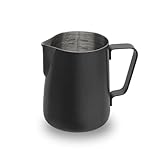
- Top Pick: Milk Frothing Pitcher, 8.5oz/12oz/20oz/32oz/50oz/66oz Milk Frother Cup Stainless Steel, Espresso Accessories, Milk Steaming Pitchers Coffee Cappuccino Latte Art Barista Milk Jug Cup with Art Pen,12oz
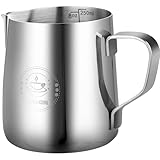
- Best Value: Milk Frothing Pitcher, 600ml (20oz) Milk Frother Cup Stainless Steel Jug Steaming Pitcher, Milk Coffee Cappuccino Latte Art Barista Steam Pitchers Milk Jug Cup with Decorating Pen
- Premium Choice: Milk Frothing Pitcher, 350ml/12oz Milk Frother Cup Stainless Steel Jug Steaming Pitcher, Milk Coffee Cappuccino Latte Art Barista Steam Pitchers Milk Jug Cup with Decorating Pen
As an Amazon Associate we earn from qualifying purchases at no extra cost to you. Product prices and availability are accurate as of the date shown and are subject to change.



TL;DR: Milk steaming pitcher size determines how much texture and heat control you have. Use a 12 oz pitcher for single drinks (latte, flat white), a 20 oz for doubles or larger drinks. Wrong size = overheated milk and collapsed foam.
Milk Steaming Pitcher Size Guide: Choose the Right One for Your Drinks
The milk steaming pitcher size you choose matters more than most home baristas realize. It’s not just about volume — it’s about the ratio of milk to steam wand tip, how much room you have to create a whirlpool, and whether the milk reaches ideal temperature before you overshoot. Pick the wrong pitcher and you’re fighting your equipment on every drink.
- Quick Comparison
- The Core Rule: Fill Halfway, Steam Comfortably
- Pitcher Size by Drink Type
- Top Milk Pitchers for Home Espresso
- Shape and Spout Design: More Than Aesthetics
- Material: Stainless Steel vs. Alternatives
- Steaming Technique That Depends on Pitcher Size
- When to Use Multiple Pitchers
- FAQ: Milk Steaming Pitcher Size
- About the Author
- Frequently Asked Questions
Quick Comparison
| Product | Brand | Price | Rating |
|---|---|---|---|
| De’Longhi DLSC060 Milk Frothing Jug | — | $19.95 | 4.8/5 |
| Milk Frothing Pitcher 350ml/600ml/900ml/1500ml (12oz/20… | Adorever | $6.97 | 4.7/5 |
| Milk Frothing Pitcher | Adorever | $28.99 | 4.7/5 |
| 20 oz Black Espresso Steaming Pitcher | Apexstone | $12.99 | 4.8/5 |
| Milk Frothing Pitcher 20oz | ZOWIEKING | $12.99 | 4.7/5 |
The Core Rule: Fill Halfway, Steam Comfortably
See also: How to Froth Oat Milk with Steam Wand (2026): Step-by-Step • What Size Milk Pitcher for Two Lattes? Size Guide With Measurements (2026)
Every pitcher should be filled to the base of the spout — roughly halfway. This leaves enough headroom for milk to expand as foam develops. A 12 oz pitcher holds about 6 oz of milk, which is right for a single 8–10 oz latte. A 20 oz pitcher holds 10 oz, appropriate for a larger 16 oz drink or a double latte.
Under-filling a large pitcher forces you to tilt aggressively just to submerge the steam wand tip, making vortex creation erratic. Over-filling any pitcher risks milk spilling as foam expands. The halfway rule is non-negotiable at any level of skill.
Pitcher Size by Drink Type
| Drink | Milk Volume | Ideal Pitcher Size | Notes |
|---|---|---|---|
| Macchiato / Cortado | 2–3 oz | 6 oz | Compact; requires precise wand placement |
| Flat White | 3–4 oz | 6–12 oz | 12 oz easier for beginners |
| Cappuccino (dry) | 3–4 oz | 12 oz | Need room for dry foam expansion |
| Latte (8 oz) | 5–6 oz | 12 oz | Standard home espresso drink |
| Latte (12–16 oz) | 8–10 oz | 20 oz | Most common cafe size |
| Batch steaming (2 drinks) | 10–12 oz | 20–32 oz | Split after steaming for consistency |
Top Milk Pitchers for Home Espresso
Shape and Spout Design: More Than Aesthetics
Pitcher shape affects latte art capability directly. A sharp, narrow spout gives you a fine, controlled milk stream for rosettas and tulips. A wide, rounded spout pours a broader stream — better for beginners or for drinks where art isn’t the priority. Most barista-grade pitchers now use a sharp spout taper.
Pitcher width also matters. A wider base creates a more stable vortex during steaming. Narrower pitchers (especially 6 oz models) require more precise wand angle to get the whirlpool going. For milk art technique development, check our dedicated latte art milk pitcher buyers guide which covers spout shapes and pour angles in detail.
Material: Stainless Steel vs. Alternatives
Stainless steel (18/10 or 18/8) is the industry standard for good reason:
- Thermal feedback: You feel the temperature change through the metal wall. When the pitcher becomes too hot to hold comfortably (around 140°F / 60°C), stop steaming — you’re at the ideal serving temperature.
- Durability: Handles drops, dishwashers, and daily cafe-level use without warping or degrading.
- Non-reactive: No flavor transfer; easy to clean residual milk fats.
Glass and ceramic pitchers exist but sacrifice the hand-temperature feedback that is one of steaming’s most useful cues. Non-stick coatings degrade over time and can impart off-flavors.
Steaming Technique That Depends on Pitcher Size
The steam wand tip should sit just below the milk surface, slightly off-center. In a 12 oz pitcher, this means the tip is roughly 1/2 inch below the milk line, positioned at the 4 o’clock position relative to the spout. As foam develops, the milk level rises — keep the tip at the surface, not submerged.
In smaller pitchers (6 oz), there’s very little room to maneuver. The tip goes in shallower and the angle becomes more critical. This is why small pitchers reward experienced baristas — the margin for error is narrower.
If your machine is a beginner-friendly model, review our best home espresso machine guide and cross-reference its steam wand type (single-hole vs. multi-hole tip) when choosing pitcher size — some wands work better with specific volumes. For technique on getting the most from your steam wand, the milk frother guide covers wand alternatives as well.
When to Use Multiple Pitchers
Professional baristas often keep two pitchers at the station: a 12 oz for single drinks and a 20 oz for doubles. Having both means you never compromise by over- or under-filling. For home setups making varied drinks throughout the day, investing in a second pitcher (they cost $15–30) is one of the highest-ROI upgrades you can make.
FAQ: Milk Steaming Pitcher Size
What size milk pitcher do I need for a home espresso machine?
A 12 oz (350 ml) pitcher covers most home use cases — single lattes, cappuccinos, and flat whites. If you regularly make larger 12–16 oz drinks or steam for two people at once, add a 20 oz pitcher to your kit.
Does pitcher size affect latte art quality?
Yes. Too large a pitcher for the volume being poured means the milk stream is unpredictable because the pitcher isn’t balanced properly. The ideal is a pitcher that sits comfortably in your dominant hand with its center of gravity over the cup when tilted at pouring angle.
Can I steam milk in a regular measuring cup or jug?
Technically yes, but you lose the temperature feedback from the metal wall and the controlled spout shape. You’ll produce serviceable foam but not textured microfoam suitable for latte art. A proper stainless pitcher is worth the small investment.
How do I know when milk is at the right temperature without a thermometer?
Wrap your palm around the pitcher base. When it becomes uncomfortably hot to hold — but you can still touch it for 1–2 seconds — you’re around 140–150°F (60–65°C), which is ideal. Above that you’re over-steaming and denaturing milk proteins, which kills sweetness and creates a flat, watery texture.
What is the best milk pitcher for a Breville Barista Express?
The Breville Barista Express pairs well with a 12 oz (350 ml) stainless pitcher for its standard single-shot drinks. The machine’s steam wand has a single-hole Pannarello tip by default — you’ll get better results with an aftermarket multi-hole tip and a proper 12 oz pitcher for microfoam. See our full Breville Barista Express review for steam wand upgrade tips.
Frequently Asked Questions
What size pitcher do I need for one latte?
A 12 oz or 350 ml pitcher holding about 6 oz of milk is the standard for a single 8 to 10 oz latte or cappuccino. Milk expands by roughly a third when properly stretched, so filling past the base of the spout guarantees an overflow.
How full should I fill the pitcher?
To the bottom of the spout and no higher. That mark exists because it leaves headroom for expansion and puts the milk at the depth where the steam tip can create a proper vortex. Underfilling is nearly as bad, since the tip cannot stay submerged.
When do I need a 20 oz pitcher?
When making two drinks at once, or when your machine’s steam wand is long enough that a small pitcher forces an awkward angle. A 20 oz or 600 ml pitcher steams about 10 to 12 oz of milk comfortably and is the usual second pitcher in home setups.
Does a smaller pitcher pour better latte art?
It gives more control for detail work and is easier to handle one-handed, which is why baristas use small pitchers for cortados and macchiatos. But a pitcher too small for the drink means steaming twice, and re-steamed milk never textures properly the second time.
Does shape matter more than size?
They interact. A tall narrow pitcher spins milk faster but is harder to pour accurately, while a wide low pitcher pours more forgivingly yet needs a well-angled wand to build a vortex. Match the pitcher to your drink volume first, then choose the shape you prefer.
Ready to decide? Our #1 pick for 2026 is the De'Longhi DLSC060 Milk Frothing Jug.
Live price & availability on Amazon.