- Top Pick: Maestri House S2 Espresso Coffee Scale with Timer 0.1g Precision Shot Scale
- Best Value: Antonki 2 Pack Digital Timer for Kids Classroom Kitchen Timers for Cooking
- Premium Choice: AVINIA Digital Kitchen Timers, Visual timers Large LED Display Magnetic Countdown Countup Timer for Classroom Cooking Fitness Baking Studying Teaching, Easy for Kids and Seniors Black
Last updated: October 20, 2026
As an Amazon Associate we earn from qualifying purchases at no extra cost to you.






Disclosure: As an Amazon Associate we earn from qualifying purchases. This page contains affiliate links and we may earn a commission at no extra cost to you.
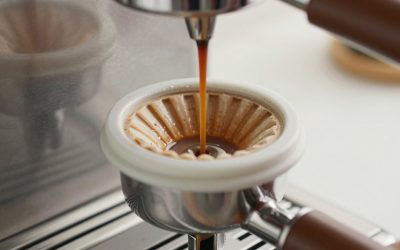
Time is the variable that betrays an espresso shot first. Before you taste the sourness of under-extraction or the bite of an over-pulled shot, the clock has already told you: a double that finishes in eighteen seconds ran too fast, one that crawls past forty ran too slow. That is why every dial-in conversation starts with “how long did it run?” — and why a shot timer, almost always built into a precision scale these days, is the instrument that turns espresso from luck into feedback. Our espresso ratio guide leans on exactly this dose–yield–time triangle.
The modern market has largely merged the timer into the scale, and for good reason: time without weight is half the story. A 30-second shot means nothing until you know whether it yielded 30 grams or 50. The best current designs add flow-rate readouts, magnetic mounting, and auto-start sensors that catch the first drip so the number you record reflects the shot, not your reflexes.
We compared six options across the spectrum — compact scale-timers from twenty dollars, magnetic and 3-in-1 designs, a flow-rate flagship, and one deliberate outlier: a standalone timer that wanders into espresso search results from a very different hobby, included here so you know exactly what it is before you click.
Quick Comparison
| Product | Price | Rating |
|---|---|---|
| Libra Espresso Scale with Timer | Check on Amazon | 4.9/5 |
| Garnen Mini Espresso Scale | Check on Amazon | 4.9/5 |
| 2-in-1 Scale & Dosing Cup | Check on Amazon | 4.8/5 |
| PACT Club Timer III | Check on Amazon | 4.8/5 |
| LAYBIRD MagAttach 3-in-1 Scale | Check on Amazon | 4.8/5 |
| Smart Scale with Flow Rate Indicator | Check on Amazon | 4.7/5 |
Why Trust This Guide
See also: 6 Best Knock Box Mats (October 2026) Reviews & Picks • 6 Best Profitec Accessories (October 2026) Complete Guide
We compare timing tools on the specifications and design choices that shape daily espresso work — precision, form factor, trigger behavior, and workflow fit — using each maker’s published figures rather than invented test numbers. When a product does not belong in an espresso kitchen at all, we say so plainly instead of writing around it.
Libra Espresso Scale with Timer
The Libra makes its case with materials: an anodized aluminum body in a category dominated by plastic, wrapped around the standard 2-kilogram, 0.1-gram precision platform. Metal construction matters more on a drip tray than on a desk — espresso scales get splashed, knocked by portafilters, and parked next to a hot group, and an aluminum chassis shrugs off the life that cracks ABS cases. The compact footprint is sized for the tray rather than the bench, which is exactly right.
At forty-five dollars it asks double the price of the budget tier for the same headline numbers, so the buy decision is really about ownership: if a scale is a consumable to you, buy cheap and replace it; if you want one object that survives years of daily shots and still looks deliberate on the machine, the Libra is that object. It pairs naturally with the rest of a considered station — the kind of bench where the milk gear got the same scrutiny.
Garnen Mini Espresso Scale
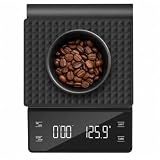
The Garnen is the value anchor of this roundup: 0.1-gram precision, built-in timer, compact espresso-friendly dimensions, twenty-one dollars. For a first timing scale there is no reason to spend more — every skill that matters, from hitting a target dose to reading shot time against yield, is fully learnable on this hardware. The mini format slips between drip tray and spouts where bulkier kitchen scales simply do not fit.
What the budget price omits is the convenience layer: no flow-rate display, no magnetic mounting, simpler casework. None of that blocks progress; it just means a button press where pricier scales automate. Our standing advice for beginners is to spend the difference on fresh beans and practice — a month of daily measured shots teaches more than any flagship scale, and the lesson transfers to every brew method, espresso or the slower rituals in our French press versus pour over comparison.
2-in-1 Scale & Dosing Cup
This is the cleverest workflow idea in the field: a precision scale built into the bottom of a dosing cup, with a magnetic design holding the pieces together. Single-dosing baristas — the people who weigh every dose into a cup, grind, then transfer to the portafilter — currently juggle three objects; this collapses two of them into one. Weigh the beans in the cup, pour them into the grinder, and the same tool times and weighs the shot afterward.
The integrated design carries integrated risks: a dropped dosing cup is now a dropped scale, and the combined unit must fit both your grinder’s throat and your drip tray. But for the single-dose workflow that has taken over the hobby — the same movement behind zero-retention grinders and bellows — it is a genuinely fresh answer rather than another identical black square. Heavy single-dosers — the crowd already weighing every dose to the decigram — will recognize the appeal immediately.
PACT Club Timer III
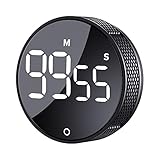
Full transparency: the PACT Club Timer III is not an espresso product. It is a standalone shot timer from the shooting-sports world — a range instrument that times shots of the ballistic kind — and it surfaces in espresso searches purely because the phrase “shot timer” belongs to both hobbies.
Could you time espresso with a standalone timer? Technically — any stopwatch works. But a timer without a scale records half the data that matters, and at this price you could buy the Libra, the Garnen, and a year of excellent beans instead. If you arrived here from the range rather than the café, it is a well-regarded tool in its own field; if you came for coffee, choose any scale-timer on this page and you will be better served for a fraction of the cost.
LAYBIRD MagAttach 3-in-1 Scale
The MagAttach’s signature is in its name: magnetic mounting that lets the scale attach to the machine rather than balancing on a crowded drip tray, with a 3-in-1 design built to serve espresso and pour over alike. Magnetic attachment solves a real annoyance — drip trays are small, wet, and frequently removed for emptying, and a scale that clicks into a consistent position every time removes one variable from the morning. The precision platform underneath handles espresso’s 0.1-gram demands.
At seventy dollars it is the second-most expensive item here, and the premium buys positioning and versatility rather than better weighing. The dual-mode pitch lands best for the household genuinely running both espresso and filter brewing daily, where one quality instrument replaces two. If your pour over habit is occasional, a single budget scale stretched across both jobs — wiped down between the espresso bench and the cold brew jar — remains the frugal play.
Smart Scale with Flow Rate Indicator
Flow rate is the next frontier of home espresso measurement, and this scale brings it under forty dollars: alongside weight and time, the display shows grams-per-second as the shot pours. That number is a diagnosis in real time — a shot that starts at a trickle and surges is channeling; one that flows fast from the first second is ground too coarse. Auto-tare and an easy-mode interface round out a package aimed at making sophisticated feedback feel ordinary.
The honest caveat is that flow-rate readouts reward users who already think in dose-yield-time terms; for a first scale the extra number can be noise rather than signal. But for the intermediate barista plateaued on taste alone, watching flow is often the breakthrough — the moment uneven extraction stops being a mystery flavor and becomes a visible spike on a screen. It is the same shift from guessing to seeing that runs through our bitter espresso troubleshooting guide.
What to Look For in an Espresso Shot Timer
The shot-timer market is really the espresso-scale market, and the differences that matter hide below the headline specs. Check these six things against your own routine before buying.
- Scale and timer together — Time alone is half a measurement. Choose a timing scale, not a standalone timer, so every shot records dose, yield, and seconds in one glance.
- 0.1-gram resolution — The espresso standard. Whole-gram kitchen scales cannot see the half-gram dose changes that move a shot.
- Drip-tray fit — Measure the clearance between your tray and the portafilter spouts. Compact and slim formats exist because many machines leave very little room.
- Trigger behavior — Manual buttons are dependable; auto-start sensors free your hands but deserve a week of verification against your own count before you trust the logs.
- Workflow extras that match you — Magnetic mounting suits cramped trays; dosing-cup hybrids suit single-dosers; flow-rate displays suit intermediate baristas chasing channeling. Pay only for the one you will use.
- Durability versus price — Plastic budget scales do the same math as aluminum flagships. Decide whether you are buying an instrument for years or a consumable for seasons, and spend accordingly.
Tips for Getting the Most Out of Your Shot Timer
Anchor your timing to first drip or first button-press and never switch mid-journey. The classic beginner trap is comparing a shot timed from the pump starting against one timed from the first drops hitting the cup — those differ by five seconds or more of pre-infusion and dead time, which is the entire window you are trying to tune. Pick one convention, write it down with your recipe, and every number you record afterward stays comparable. Auto-start scales choose for you; learn what event triggers yours.
Let time follow grind, not the other way around. When a shot runs fast, the fix is a finer grind, not a longer hold on the button; when it runs slow, coarser. Time is the gauge, grind is the lever, and yield ends the shot — kill it at your target weight regardless of the clock, then read the seconds as information about the next adjustment. Chasing a time by cutting shots short or letting them run long mixes up the instrument with the recipe, and produces exactly the muddled results that send people back to guessing.
And log a week before you change anything. Ten shots of honest numbers — dose, yield, time, plus a word about taste — will show you your real consistency, which for most home baristas swings far more than they believe. The pattern in that little log points at the true weak link: wild time swings at identical settings usually mean distribution problems or stale beans, not grinder failure. Measurement is cheap; conclusions drawn from one shot are expensive. The same patience pays off when you graduate to milk drinks and start timing your steam, too — texture is a clock skill as much as the shot is, as our cold foam guide shows from the other direction.
Frequently Asked Questions
How long should an espresso shot take?
The conventional window for a double shot is roughly 25 to 32 seconds to reach a 1:2 ratio — for example 18 grams in, 36 grams out. Treat it as a starting range, not a rule: lighter roasts often prefer longer, slower extractions, and the right time is ultimately whichever one tastes balanced at your target yield.
Do I start timing when I press the button or at the first drip?
Either convention works — what matters is never mixing them. Button-press timing includes pre-infusion and dead time; first-drip timing isolates the visible pour. Pick one, note it with your recipe, and keep it. Auto-start scales decide for you; check which event actually triggers yours.
Is a standalone shot timer worth buying for espresso?
No — for espresso, timing only earns its keep alongside weight, and modern scales bundle both for twenty dollars. Standalone “shot timers” in search results are usually shooting-sports range timers, a different product for a different hobby. Any phone stopwatch beats buying one for coffee.
What does a flow-rate display add over plain time and weight?
Flow rate shows how the shot develops second by second instead of only its totals. A surging or spiking flow exposes channeling and distribution problems that a clean 30-second total can hide. It is most useful for intermediate baristas troubleshooting inconsistency; beginners can safely start without it.