Last updated: October 20, 2026
As an Amazon Associate we earn from qualifying purchases at no extra cost to you.


Disclosure: As an Amazon Associate we earn from qualifying purchases. This page contains affiliate links and we may earn a commission at no extra cost to you.
Freshly roasted coffee does something most kitchen containers were never designed for: it breathes. For days after roasting, beans release carbon dioxide trapped during the roast — enough gas to puff a sealed bag tight as a balloon. Seal those beans in an ordinary airtight jar and the pressure builds; leave the jar loose and oxygen pours in to stale them. The one-way CO2 valve is the elegant fix, a tiny check valve that lets gas out without letting air in. It is the same technology on the better retail bags, built into a container you keep forever.
Valve canisters matter most to a specific kind of coffee buyer: the one chasing roast dates. If your beans arrive within a week of roasting — from a local roaster or a subscription — they are still actively degassing when you decant them, and the valve earns its keep immediately. That freshness chase is worth it, by the way; gas in the bag means aroma in the cup, and it is half the reason a properly stored fresh bean outperforms supermarket stock in everything from straight shots to cold brew.
We compared five valve-equipped canisters across sizes from a single retail bag to a 38-ounce bulk vault, plus a replacement valve set that can revive a tired container instead of replacing it. Here is what separates them.
🛒 Best Price Today on Amazon
Prime members get fast, free shipping on everything above, plus member-only deals. New members get a 30-day free trial — cancel anytime.
Quick Comparison
| Product | Price | Rating |
|---|---|---|
| Veken Coffee Canister with Window | Check on Amazon | 4.8/5 |
| 1800ml Canister with Date Tracker | Check on Amazon | 4.8/5 |
| Stainless Canister with Scoop & Date Tracker | Check on Amazon | 4.7/5 |
| Coffee Gator 6″ Canister | Check on Amazon | 4.7/5 |
| 20-Piece CO2 Valve Replacement Set | Check on Amazon | 4.7/5 |
| 38oz Canister with Date Tracker | Check on Amazon | 4.7/5 |
Why Trust This Guide
See also: 6 Best Knock Box Mats (October 2026) Reviews & Picks • 6 Best Profitec Accessories (October 2026) Complete Guide
We judge storage products against the chemistry they claim to manage — CO2 degassing, oxygen ingress, light, and moisture — and against the practical habits of real coffee buyers. Our comparisons rest on stated capacities, mechanisms, and prices rather than untestable marketing language, and we say clearly which features matter for which buying patterns.
Veken Coffee Canister with Window
Veken’s windowed stainless canister is the crowd-pleaser of the category: airtight body, sealing lid, and a viewing window that tells you at a glance when supplies run low. For valve-canister shoppers it is the approachable entry — a well-made vessel from a brand with a long track record in this niche, at a price that does not punish you for buying two. The window is the honest trade-off: convenience at the cost of a little light exposure, easily neutralized by cupboard storage.
Where it fits best is the steady household: a bag or so of beans at a time, finished within two or three weeks, refilled on a rhythm. If that is you, the difference between this and the premium vaults is small in the cup. If you are instead stockpiling kilo bags or letting beans sit a month-plus, pair it with deeper reserve storage — our airtight freezer storage guide walks through the two-tier approach that keeps bulk buys fresh.
1800ml Canister with Date Tracker
The headline features here are capacity and accounting: 1800 milliliters swallows a large bag with room to spare, the lid carries a date tracker you dial to the roast or opening date, and a transparent window shows the level. The date tracker deserves more credit than it gets — staling is invisible day to day, and the dial turns “how old are these beans?” from a guess into a fact. For households that rotate between espresso beans and a second coffee for other brewing, one dialed-in canister per coffee ends the mystery completely.
The window again trades light protection for convenience, and at this larger size there is a subtler issue: a big canister running one-quarter full holds a lot of staling air above the beans. Size discipline fixes it — buy what you will finish, or decant into something smaller as the level drops. Get the rhythm right and you will taste the payoff in anything milk-based, where stale beans hide least; fresh coffee plus properly textured milk is the whole game in our frother and steamer roundup.
Stainless Canister with Scoop & Date Tracker
This 304-stainless canister hits the strongest feature-per-dollar ratio in the roundup: one-way CO2 valve, date tracker, included scoop, under eighteen dollars. It is pitched at ground coffee as much as whole bean, and that is worth pausing on — ground coffee stales several times faster than whole beans, so if anyone in your house insists on pre-ground, a valve canister with a date dial is not a luxury, it is triage. The scoop keeps moist fingers out of the grounds, which matters more for grounds than beans.
The honest counsel remains: grind whole beans fresh if you possibly can — the single biggest flavor upgrade in home coffee, before any container enters the picture. But real households are compromises, and for the pre-ground contingent, or as a second canister for decaf, this is exactly the right tool at exactly the right price. It also makes a tidy home for non-coffee scoopables; more than one reader keeps their mushroom coffee blend in one of these.
Coffee Gator 6″ Canister
Coffee Gator effectively built the consumer valve-canister category, and this six-inch model shows the accumulated polish: a robust stainless body, a properly seated one-way valve in the lid, and sizing that matches how people actually buy coffee. The brand’s ubiquity has a practical upside the newcomers cannot match — spare parts, replacement lids, and a long public track record of the valves still venting properly years into ownership.
At twenty-eight dollars it asks a premium over the near-identical-on-paper budget options, and that premium is mostly for the pedigree. Reasonable people can land either way. Either way you are miles ahead of the supermarket bag with its top rolled down, which is where most French press and pour over drinkers unknowingly lose their best flavor.
20-Piece CO2 Valve Replacement Set
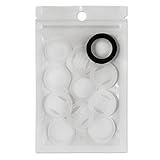
The quiet failure mode of every valve canister is the valve itself: years of coffee dust and oils eventually gum the check mechanism, and a fouled valve either stops venting or, worse, stops sealing. This twenty-piece replacement set is the six-dollar answer — fresh degassing valves that retrofit into canister lids and even into DIY storage projects. For anyone who owns two or three valve canisters already, keeping a strip of spares in the drawer extends their lives indefinitely.
Check your canister’s valve diameter against the set before ordering, since valve footprints vary between brands. The deeper point this product makes: the valve is a consumable, like a group gasket or a water filter cartridge, and treating it that way — inspect yearly, replace when in doubt — costs pennies against the price of replacing whole canisters. Six dollars to refresh three containers is the kind of maintenance math we wish more of this hobby offered.
38oz Canister with Date Tracker
The 38-ounce model is the bulk option: a 304-stainless vault with a one-way valve and date tracker sized for the serious household — two-pound bags, warehouse-club buys, or the espresso-plus-drip family running through coffee at pace. Decanting a big bag into one container beats leaving it clipped shut, and the date dial matters even more at this scale because large quantities linger longer.
The large-canister caveat applies double here: as the level drops, the air above the beans grows, and by the last quarter you are storing more oxygen than coffee. Heavy consumers who empty it in two weeks will never notice; slower drinkers should treat it as the reserve tank in a two-tier system, refilling a small daily canister from it once a week. Done that way, even the final scoops stay lively enough for a respectable whipped coffee — the drink that forgives nothing stale.
What to Look For in a Coffee Canister with CO2 Valve
Valve canisters cluster around similar designs, but the details below decide whether yours actually preserves coffee or just looks like it does.
- A genuine one-way valve — The valve must vent internal gas while blocking inbound air. Decorative “aroma holes” without a check mechanism are worse than no valve at all.
- Seal quality everywhere else — The valve only helps if the lid gasket seals tight. Press the lid on and listen for the slight resistance of trapped air; a loose lid makes the valve irrelevant.
- Date tracking — A roast-date dial on the lid converts freshness from folklore to fact. If your canister lacks one, masking tape and a marker do the same job.
- Size matched to consumption — Big canisters store big air gaps as they empty. Buy the size you finish in two to three weeks, or run small-daily plus large-reserve.
- Stainless interior, opaque body — 304 stainless wipes clean of coffee oils and blocks light completely. Windows are a convenience trade; place windowed canisters out of direct sun.
- Replaceable valve — Valves foul with dust and oil over years. A canister whose valve can be swapped for pennies outlives one whose lid must be replaced wholesale.
Tips for Getting the Most Out of Your CO2 Valve Canister
Decant on arrival, not on first use. The valve canister does its best work in the beans’ first week, when degassing is most vigorous and aroma loss is fastest — exactly the period many people leave the beans sitting in the retail bag “until I finish the old ones.” Move the new bag into the canister the day it arrives, dial the date tracker to the roast date, and let the old beans wait in a smaller sealed jar instead. The fresh coffee has more to lose.
Wash the canister between batches, not yearly. Every refill deposits another layer of coffee oil on the walls and lid, and those oils go rancid on a schedule measured in weeks — meaning a never-washed canister eventually seasons every fresh batch with a ghost of stale ones. Warm water and unscented dish soap, a thorough dry, and a glance at the valve to confirm it is clear takes five minutes per bag. While you are at it, leave the gasket seated; repeatedly peeling gaskets out for cleaning wears them faster than the coffee does.
Finally, resist the display-shelf temptation. Valve canisters look handsome lined up in the sun next to the machine, and that arrangement quietly costs you flavor twice — heat from the boiler and light through any window. A closed cupboard at room temperature within arm’s reach is the right home. Treat the canister as part of the brewing chain, as deliberate as your grind setting or your shot timing, and the last cup from every bag will taste far closer to the first.
Frequently Asked Questions
What does the CO2 valve on a coffee canister actually do?
Freshly roasted beans release carbon dioxide for days to weeks after roasting. A one-way valve lets that gas escape so pressure cannot build inside the sealed canister, while its check mechanism blocks oxygen from flowing back in. You get the benefits of a hard seal without trapping the degassing pressure.
Do I need a valve canister if my coffee is already two weeks past roast?
The valve matters less then, because most degassing happens in the first week or two. A plain airtight, opaque canister protects older beans nearly as well. Buy the valve canister if you regularly receive coffee within days of roasting — that is when it clearly outperforms a simple seal.
Can I store ground coffee in a CO2 valve canister?
Yes, and ground coffee arguably benefits more — it stales several times faster than whole beans, and fresh grounds also degas rapidly right after grinding. Use the smallest canister that fits your supply, keep it full, and finish grounds within a week or two for anything resembling peak flavor.
How long do the valves last, and can they be replaced?
Valves typically work for years before coffee dust and oils gum the check mechanism. Inspect yours when you wash the canister; if venting or sealing seems doubtful, inexpensive replacement valve sets restore most lids for well under a dollar per valve. Match the valve diameter to your lid before ordering.