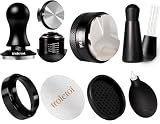
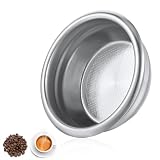
- Top Pick: Coffee Dosing Cup 58mm, Stainless Steel Dosing Cup Compatible with All 58mm Portafilter, Coffee Powder Cup, Coffee Powder Feeder, Coffee Machine Accessories
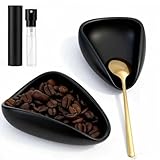
- Best Value: Ceramic Coffee Bean Dosing Cup + Sprayer Gift Set, Spoon Rest, Mini Coffee Spoon Holder for Tea Spoons Stirrers, Coffee Station Decor, Espresso Coffee Bar Accessories & Essentials(Not Include Spoon)
- Premium Choice: Normcore 58mm Dosing Cup – Espresso Coffee Dosing Cup Compatible with 58mm Portafilter – Non-stick coating Black – 304 Stainless Steel – Espresso Machine Accessory – Tall Version
Last updated: October 21, 2026
As an Amazon Associate we earn from qualifying purchases at no extra cost to you.





Disclosure: As an Amazon Associate we earn from qualifying purchases. This page contains affiliate links and we may earn a commission at no extra cost to you.
Single-dosing — weighing exactly one shot’s worth of beans, grinding it, and using all of it — has quietly become the default workflow of serious home espresso, and the humble dosing cup is its load-bearing accessory. The routine is simple: beans go into the cup on a scale, the cup carries them to the grinder, and on the other end a portafilter-sized dosing cup catches the grounds and flips them cleanly into the basket. No hopper going stale, no half-doses of yesterday’s beans hiding in the chute, no snowdrift of grounds across the counter. For anyone switching beans frequently — a decaf evening here, a new single origin there — it’s transformative housekeeping.
Dosing cups split into two families that this list deliberately mixes. Bean-side cups, often ceramic or wood, are essentially beautiful weighing vessels: wide enough to pour from, kind to your scale, pleasant to handle every morning. Grounds-side cups are machined to match your portafilter — a 58mm cup nests right on the basket rim, so the flip transfers every particle with zero spill. Several picks here also bundle an RDT spray bottle, because a single misting of water on beans before grinding is the cheapest fix in coffee for static cling and grounds that leap out of the cup like fleas.
None of this works without numbers, of course — a dosing cup is only as useful as the scale under it, and our coffee scale with timer review covers that prerequisite. And if you’re building the full single-dose bench, the natural companion is a grinder designed for the workflow; our zero-retention single-dose grinder review explains why low retention and dosing cups are two halves of the same idea.
Quick Comparison
| Product | Price | Rating |
|---|---|---|
| watchget Ceramic Dosing Cup | Check on Amazon | 4.8/5 |
| watchget Ceramic Dosing Tray | Check on Amazon | 4.8/5 |
| 58mm Stainless Dosing Cup | Check on Amazon | 4.7/5 |
| Normcore 58mm Dosing Cup | Check on Amazon | 4.6/5 |
| Walnut Dosing Cup + RDT Set | Check on Amazon | 4.6/5 |
| Lulupack Cup & Spray Set | Check on Amazon | 4.6/5 |
Why Trust This Guide
See also: 6 Best Knock Box Mats (October 2026) Reviews & Picks • 6 Best Profitec Accessories (October 2026) Complete Guide
We run single-dose workflows on our own benches daily, and we assess these tools on what can be verified — materials, fit to standard portafilter sizes, what ships in the box — plus how they survive real mornings of weighing, flipping, and rinsing. Dosing cups are simple objects; our job is separating genuinely well-executed ones from drawer clutter, and we tell you plainly which is which.
watchget Ceramic Dosing Cup
This little ceramic vessel is the bean-side classic: a smooth, weighty cup that sits stable on a scale, pours into a grinder throat without scattering, and looks like it belongs in a kitchen rather than a workshop. watchget pitches it for coffee doses and loose-leaf tea alike, which is honest — it’s fundamentally a beautifully shaped measuring cup, and that generality is a feature.
Ceramic has practical virtues beyond charm: it’s naturally static-free, so light roasts don’t cling to the walls the way they do in plastic, and it rinses clean of oils in seconds. The fragility is the obvious tradeoff — drop it on tile and you’re buying another — and it does nothing on the grounds side of the workflow. As the weighing vessel in a morning ritual, though, it’s a ten-dollar upgrade you’ll touch every day.
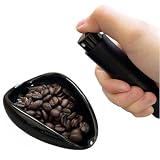
watchget Ceramic Dosing Tray
The sibling product swaps the cup shape for a low, open tray — and the shape change is more meaningful than it looks. A tray lets you see and spread the beans in a single layer, which is exactly what you want for the quality-control step single-dosers swear by: spotting the occasional defective bean or stray stone before it meets your burrs. It doubles as a hand-warmer-pretty vessel for loose-leaf tea, same as its cup sibling.
Pouring from a tray into a narrow grinder throat takes slightly more care than pouring from a cup, which is the honest knock. Plenty of enthusiasts end up owning both — tray for inspecting and presenting, cup for the daily shuttle run. At under ten dollars each, that’s not an extravagant conclusion, just a sign of how cheap it is to make this corner of the workflow pleasant.
58mm Stainless Dosing Cup
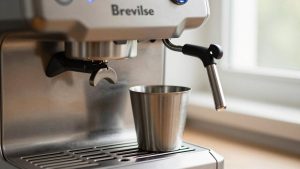
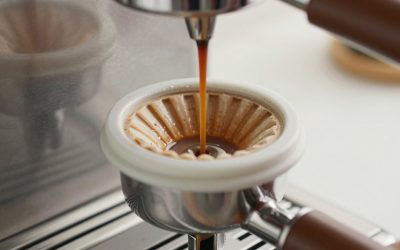
Here’s the grounds-side workhorse: a stainless cup machined to sit on any 58mm portafilter, so you grind into the cup, nest it over the basket, and flip — every particle lands inside, nothing on the counter. At under ten dollars it’s the cheapest way to make a grinder and a portafilter cooperate, especially with grinders whose chutes were clearly designed for a different machine’s geometry.
Stainless shrugs off drops, rinses instantly, and develops none of ceramic’s chip anxiety. A faint static cling is its one weakness — thin metal walls love light-roast fines — which is precisely what an RDT misting solves upstream. If your current technique involves holding the portafilter under the chute at an angle while grounds drift past it, this single object will feel like hiring an assistant.
Normcore 58mm Dosing Cup
Normcore’s version of the 58mm dosing cup is the premium take on the same idea, and the extra spend shows up in the details that govern daily feel: precise rim fit on the basket so the flip seals cleanly, a finish that resists fines sticking, and walls shaped to funnel grounds into a tidy center mound rather than a lopsided pile. It’s the difference between a tool that works and one that’s satisfying.
Is satisfaction worth roughly two and a half times the generic’s price? That depends on how many times a day you flip. For a daily double-shot household, the cumulative niceness is real — this is a tool you operate hundreds of times a year — and Normcore’s machining record across its tamper and WDT lines earns benefit of the doubt. For occasional use, the budget stainless above does the same job with less ceremony.
Walnut Dosing Cup + RDT Set
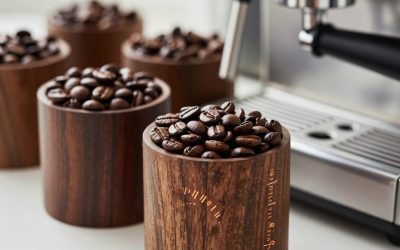
This set leads with warmth: a walnut-bodied dosing cup paired with an RDT spray bottle, covering both the transfer and the static problem in one purchase. The Ross Droplet Technique deserves its initials-level fame — one or two misted droplets on the beans before grinding all but eliminates static, so grounds stop clinging to chutes, cups, and your forearm. Bundling the bottle with the cup acknowledges how these two tools work as a pair.
Walnut brings the usual wooden-tool contract: it’s lovely, light, and naturally anti-static, and in exchange it wants to be wiped dry rather than soaked. The fit and finish position this as the aesthetic middle path — nicer than bare stainless, less precious than ceramic. For the home barista assembling a bench that photographs as well as it functions, this is the charming, practical pick.
Lulupack Cup & Spray Set
The Lulupack set takes the same cup-plus-RDT formula and executes it at a friendly price with a 20ml spray bottle — small enough to live beside the grinder permanently, which is exactly where an RDT bottle belongs. The cup handles bean weighing and grounds transfer duties, and the kit as a whole is clearly aimed at someone setting up a single-dose workflow from scratch rather than upgrading one piece.
That starter positioning is its strength: for twenty dollars you leave with the complete static-free dosing loop — weigh, mist, grind, catch, flip — instead of discovering each missing piece across three separate orders. Seasoned single-dosers with established favorites won’t switch for this; newcomers get the whole lesson in one box. Fill the bottle with filtered water, mist sparingly, and the static disappears like a solved riddle.
What to Look For in an Espresso Dosing Cup
A dosing cup is a mug with a job description. These are the specs that decide whether it does the job or joins the drawer.
- Portafilter fit (grounds-side cups) — a transfer cup must nest on your basket’s rim for a clean flip; 58mm cups fit the commercial standard, and smaller machines need matching sizes. A loose fit spills exactly when it matters.
- Grinder throat compatibility — the cup has to sit stably under (or pour cleanly into) your grinder. Check the geometry of your chute before assuming any cup works.
- Material tradeoffs — ceramic and wood resist static and look wonderful but chip or dislike water; stainless is immortal and rinseable but clings to fines. Pick the failure mode you can live with.
- Scale-friendliness — flat, stable base and modest weight, so taring and weighing on a small scale stays effortless. A tippy cup ruins the whole point.
- RDT inclusion — bundled spray bottles are genuinely useful, not padding; static is the dosing workflow’s main enemy and a misting solves it for pennies.
- Cleanability — coffee oils build up fast on a daily-use vessel. Smooth interiors without tight corners rinse clean; textured or seamed designs slowly go rancid.
Tips for Getting the Most Out of Your Dosing Cup
Build the loop and never deviate: tare the cup on the scale, weigh beans to a tenth of a gram, mist once if static is your nemesis, grind, then nest and flip into the basket with one decisive motion. The flip is technique — hesitant half-tips spill, confident flips don’t — and after a week it’s muscle memory. Keep the cup’s landing spot consistent too; a dosing cup that lives in the same six inches of bench is one you’ll actually use at 6 a.m.
Mind the maintenance debt that daily tools accumulate. Rinse stainless cups after each session and ceramic ones daily; wipe wooden cups dry the moment they’re done. Once a week, give whatever you use a proper wash to strip coffee oils — a rancid film in a dosing cup taints every dose that passes through it, and it happens too gradually to notice until a fresh cup shocks you. Refill the RDT bottle with clean filtered water rather than topping it up forever.
And let the precision pay forward into the drinks. A weighed, fully transferred dose is what makes your ratio honest, which is what makes the cup repeatable — whether that cup is a flat white finished with help from our frother and steamer guide, an oat milk latte, a whipped coffee built on proper espresso, or a glass of cold foam over ice. Dosing discipline even sharpens your non-espresso brewing — the weighing habit transfers straight to French press and pour over alike.
Frequently Asked Questions
Do I really need a dosing cup, or is it just another gadget?
If you single-dose — weigh beans per shot rather than running a full hopper — a dosing cup removes the two messes of the workflow: scattering beans on the scale-to-grinder trip and spilling grounds on the grinder-to-basket trip. If you keep a loaded hopper and grind by timer, you genuinely don’t need one.
What is RDT and why do dosing cup sets include spray bottles?
The Ross Droplet Technique: misting beans with a tiny amount of water before grinding. The moisture dissipates static charge, so grounds stop clinging to the chute, the cup, and everything else. One light spray per dose is enough, it’s safe for burr grinders used sensibly, and it’s the cheapest mess-reduction trick in espresso.
Ceramic, stainless, or wood — which dosing cup material is best?
Stainless for durability and easy rinsing, ceramic for natural static resistance and looks, wood for warmth and anti-static charm with a wipe-dry-only care rule. They all hold beans equally well; choose by which maintenance habit and aesthetic fits your bench.
Will a 58mm dosing cup work with my smaller machine?
For the flip transfer, no — the cup needs to nest on your portafilter’s rim, so a 58mm cup mismatches 51mm and 54mm baskets. You can still use any cup for weighing and pouring beans, but for spill-free grounds transfer, match the cup to your portafilter’s true size.