Last updated: October 20, 2026
As an Amazon Associate we earn from qualifying purchases at no extra cost to you.




Disclosure: As an Amazon Associate we earn from qualifying purchases. This page contains affiliate links and we may earn a commission at no extra cost to you.
Espresso is roughly ninety-eight percent water, yet water is the ingredient most home baristas think about least. The filter cartridge sitting in your machine’s reservoir does two jobs at once: it polishes the taste of your tap water by pulling out chlorine and off-flavors, and it slows the scale buildup that quietly strangles boilers, solenoids, and flow paths. Skip filter changes for a year and you will not notice anything — until the day your machine runs slow, the pump strains, and a descale becomes an emergency rather than maintenance.
The frustrating part of shopping for these filters is compatibility. Breville, De’Longhi, and KitchenAid each use their own cartridge formats, and within each brand the genuine article competes against third-party packs that cost a fraction per cartridge. Sometimes the third-party option is the smart buy; sometimes the original is worth the premium for fit and peace of mind. Bad water chemistry also masquerades as barista error — if your shots taste flat or harsh no matter what you adjust, read our breakdown of why espresso turns bitter before blaming your technique.
Below we compare six widely used reservoir filters and replacement packs for the most common home espresso machines, with honest notes on where the multi-packs shine and where the brand-name cartridge still earns its keep.
Quick Comparison
| Product | Price | Rating |
|---|---|---|
| Possiave 12-Pack Charcoal Filters (Breville-compatible) | Check on Amazon | 4.8/5 |
| 4-Pack DLSC002-Compatible Filters (De’Longhi) | Check on Amazon | 4.8/5 |
| 12-Pack Charcoal Filters for Breville | Check on Amazon | 4.8/5 |
| De’Longhi DLSC002 Original Filter | Check on Amazon | 4.8/5 |
| Breville BES008 Water Filter | Check on Amazon | 4.8/5 |
| KitchenAid Espresso Machine Filter | Check on Amazon | 4.7/5 |
Why Trust This Guide
See also: 6 Best Knock Box Mats (October 2026) Reviews & Picks • 6 Best Profitec Accessories (October 2026) Complete Guide
We evaluate filters on the things that actually matter for a home machine: format compatibility, cost per cartridge over a year of changes, and how each option fits a realistic maintenance routine. We do not make laboratory claims about filtration chemistry we cannot test, and we flag clearly which products are brand originals and which are third-party compatibles.
Possiave 12-Pack Charcoal Filters
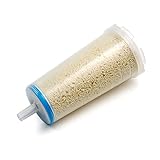
The single biggest reason home baristas run expired filters is that replacements feel like a grudge purchase; at this price you can change the cartridge every eight weeks without thinking about it. These are activated-charcoal compatibles built to fit Breville reservoir machines that take the BWF100 format, and a year’s supply still costs less than a single tin of decent beans.
The trade-off with any compatible cartridge is consistency — fit and flow can vary slightly between batches in ways that branded production lines control more tightly. Inspect each cartridge before installing, soak it as directed, and you will rarely have an issue. For a heavily used machine that pulls multiple shots daily and steams milk for the household’s lattes, frequent cheap changes beat infrequent premium ones.
4-Pack DLSC002-Compatible Filters for De’Longhi
De’Longhi owners — particularly those running Magnifica-series bean-to-cup machines — go through filters quickly because those machines do everything through one water path: espresso, hot water, and the milk system. This four-pack of DLSC002-format compatibles covers most of a year of changes for a typical household. Bean-to-cup machines are especially worth protecting because their internal plumbing is more intricate than a manual machine’s, and a descale on one is a longer, fussier job.
At six dollars per cartridge it sits between the cheap Breville packs and the De’Longhi original. The case for it is simple: same format, meaningful savings, delivered in a quantity that matches a real maintenance calendar. The case against is the same as for any compatible — if your machine is new and under warranty, some owners prefer to keep genuine parts in it until the warranty runs out, which is a reasonable position.
12-Pack Charcoal Filters for Breville
At under ten dollars for a dozen cartridges, this is the value play of the entire roundup — roughly eighty cents per filter. For Breville owners whose machines take the standard reservoir cartridge, that price makes the ideal schedule genuinely affordable: change every two months, or monthly if your tap water is hard or heavily chlorinated. Fresh charcoal does its best work in the first weeks of use, so frequent swaps deliver better-tasting water than stretching each cartridge.
As with any bargain multi-pack, manage expectations on fit and finish: give each cartridge a rinse and the recommended soak before it goes in the tank. If you brew with multiple methods, filtered reservoir water is also what you should be pouring into your kettle — water quality shows up just as clearly in a pour over, as anyone who has read our French press versus pour over comparison can attest.
De’Longhi DLSC002 Original Filter
This is the genuine De’Longhi cartridge, and the argument for it is the argument for any original part: it is the exact component the machine was designed and tested around. Fit is precise, the documented change interval aligns with the machine’s own filter reminder where fitted, and there is no compatibility judgment call to make. At fourteen dollars per cartridge it is the most expensive way to filter a tank of water in this roundup, by a wide margin over the compatible four-pack.
The sensible strategy many owners settle on: genuine cartridges while the machine is under warranty, then a switch to compatibles once it expires. Whichever you choose, do not let a filter sit past its service life — an expired cartridge is worse than none at all, because it slowly releases what it has absorbed and becomes a damp place for things to grow.
Breville BES008 Water Filter
The BES008 is Breville’s own filter assembly for its espresso line, including holder hardware rather than a bare cartridge — useful when the original holder has cracked or been lost in a move. If you own a popular Breville like the Barista Express, this is the no-questions-asked replacement that drops straight into the tank; our Breville Barista Express review goes into how much that machine benefits from consistent water treatment given its compact thermocoil heating system.
Per-cartridge cost is the obvious downside next to the twelve-packs above, so the smart play is often to buy the genuine assembly once for the holder, then refill the schedule with compatibles. Whichever path you take, write the install date on the calendar — the cartridge does not remind you, and taste drift from an old filter is too gradual to notice day to day.
KitchenAid Espresso Machine Filter
KitchenAid’s fully automatic espresso machines use their own filter format, and at thirty dollars this is the priciest single option here. That stings, but context matters: fully automatic machines route every function — grinding aside — through internal water circuits that are expensive to service. A filter change is dramatically cheaper than a technician visit, and automatic machines are typically bought by households that value convenience over tinkering, where preventing problems beats fixing them.
If you own one of these machines, the filter is not the place to economize until compatible options mature for the format. Set a recurring reminder, buy two at a time so a spare is always on the shelf, and treat the cost as part of the machine’s running expenses — the same way owners of machines with built-in milk systems budget for cleaning solution alongside their frother and steamer habits.
What to Look For in an Espresso Machine Water Filter
Filter shopping is mostly about avoiding mistakes — the wrong format, a stale stockpile, a false sense of protection. Run through this checklist before you buy.
- Exact format compatibility — Match the cartridge to your machine model, not just the brand. Breville, De’Longhi, and KitchenAid each use distinct formats, and some brands use different cartridges across product lines. Check the model number printed on your current cartridge.
- Realistic change interval — Most reservoir cartridges are designed for roughly two months of typical use. Hard water, heavy use, or a household of milk-drink fans shortens that. Buy pack sizes that match your actual calendar.
- Genuine versus compatible — Originals offer precise fit and warranty comfort; compatibles offer dramatic savings. A common-sense split is genuine during warranty, compatible after.
- Scale protection is not absolute — Reservoir filters reduce scale formation; they do not eliminate it. If your water is very hard, you still need periodic descaling, and you may want to start from bottled or blended water instead.
- Storage and freshness — Charcoal cartridges should be stored sealed and dry. Do not stockpile more than a year ahead, and always do the pre-soak the instructions call for so the cartridge starts saturated and air-free.
Tips for Getting the Most Out of Your Espresso Machine Water Filter
Start by learning what is actually in your tap water. A cheap hardness test strip, or your utility’s published water report, tells you whether you live in a soft-water area where the filter mostly handles taste, or a hard-water area where scale is the real enemy. That single piece of information sets your change interval, your descaling schedule, and whether you should consider blending tap water with distilled. Espresso machines are happiest with moderate mineral content — water that is too pure pulls flat, dull shots, while water that is too hard fills the boiler with rock.
Make the filter change a ritual tied to something you already do. The classic pairing is filter change plus deep-clean weekend: swap the cartridge, backflush the group, scrub the screen, and wipe out the reservoir — the tank itself develops a slippery biofilm if it never gets emptied and dried. Coffee quality is a chain, and water is the first link; the freshest beans from your favorite roaster cannot survive stale water, just as great water cannot rescue stale beans kept loose in the bag — proper storage matters as much as what comes out of the tap, especially for slow-extraction methods like the ones in our cold brew bean guide.
Finally, never let the filter become an excuse to skip descaling entirely. The cartridge slows scale; it does not stop it. Watch for the early symptoms — slower flow from the group, a pump that sounds strained, shots running hotter or cooler than usual — and descale on the manufacturer’s schedule regardless of how diligent your filter changes are. The combination of fresh cartridges and routine descaling is what keeps a home machine pulling consistent shots for a decade.
Frequently Asked Questions
How often should I replace my espresso machine’s water filter?
Most reservoir cartridges are designed for about two months of typical home use. Change more often — monthly — if your water is hard, your household pulls several shots a day, or you notice the water starting to taste of chlorine again. An expired cartridge stops helping and can start hurting.
Do third-party compatible filters work as well as genuine ones?
Good compatibles use the same activated-charcoal approach and fit the same housings, and for most owners they perform their job well at a fraction of the price. Genuine cartridges offer tighter manufacturing consistency and are the conservative choice while a machine is under warranty. Many owners use genuine first, then switch.
Does a water filter mean I never have to descale?
No. Reservoir filters reduce the rate of scale formation but do not remove all dissolved minerals. You still need to descale on your manufacturer’s recommended schedule — the filter simply stretches the interval and protects taste between descales.
Can I just use bottled water instead of a filter?
You can, with care. Pure distilled water is actually bad for espresso — it extracts poorly and some machine sensors will not read it. Look for bottled water with moderate mineral content, or blend distilled with tap. For most households, a filtered reservoir is cheaper and less hassle than hauling bottles.