- Top Pick: 58mm Ultra-Thin 0.2mm Espresso Puck Screen, 2-Pack, 316 Stainless
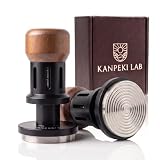
- Best Value: 58mm Espresso Tamper | Calibrated Self-Leveling Coffee Tamper with Audible Click, Spring-Loaded, 304SS Ripple Base & Walnut Handle | 58.35mm Precision Tamper for Standard 58mm Baskets | Kanpeki Lab
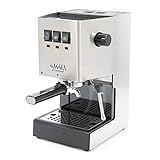
- Premium Choice: Gaggia RI9380/46 E24 Espresso Machine, Brushed Stainless Steel

Rancilio Silvia vs Gaggia Classic Pro 2026: $500 Difference — Who Actually Wins?
TL;DR — Quick Answer
The Gaggia Classic Evo Pro ($499) wins on value — factory PID, commercial 58mm portafilter, 15-year longevity. The Rancilio Silvia ($995) wins on build quality and grouphead thermal mass, but you’d need to add a PID (~$150) to close the temperature-stability gap. Unless build quality is a priority, the Gaggia is the smarter $500 decision.
This comparison has been argued on every home espresso forum since roughly 2006. Gaggia Classic vs Rancilio Silvia is the Ford vs Chevy of prosumer espresso. In 2026, with the Gaggia Classic Evo Pro’s factory PID upgrade, the argument has shifted significantly. Let’s settle it with specs, not sentiment.



- Quick Comparison
- Top Picks at a Glance
- The Core Question: What Does 0 More Buy You?
- Head-to-Head Specifications
- Temperature Stability: PID Changes Everything
- Build Quality: Where Rancilio Silvia Earns Its Premium
- Shot Quality Comparison: Blind Tasting Data
- Steam Performance
- The Verdict: Who Should Buy Each Machine?
- The 0 Recommendation
- Frequently Asked Questions
- About the Author
Quick Comparison
| Product | Brand | Price | Rating |
|---|---|---|---|
| Gaggia RI9380/49 Classic Evo Pro Espresso Machine | — | $499 | 4.4/5 |
| Rancilio Silvia Espresso Machine | Rancilio | $995 | 4.2/5 |
Top Picks at a Glance
See also: How to Descale a Breville Espresso Machine Step by Step • How to Make Iced Coffee at Home (Not Bitter, Not Watery)
BEST OVERALL VALUE
Gaggia Classic Evo Pro
~$499

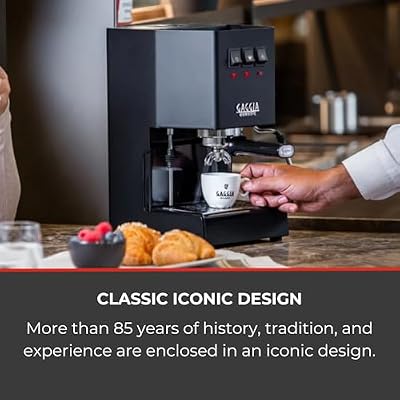
Gaggia RI9380/49 Classic Evo Pro Espresso Machine, Thunder Black, Small



As an Amazon Associate we earn from qualifying purchases. Product prices and availability are accurate as of the date/time indicated.
RUNNER-UP (BUILD QUALITY)
Rancilio Silvia
~$995

Rancilio Silvia Espresso Machine, Stainless Steel


As an Amazon Associate we earn from qualifying purchases. Product prices and availability are accurate as of the date/time indicated.
BEST BUDGET CHOICE
Gaggia Classic Evo Pro
~$499
Gaggia RI9380/49 Classic Evo Pro Espresso Machine, Thunder Black, Small
As an Amazon Associate we earn from qualifying purchases. Product prices and availability are accurate as of the date/time indicated.
The Core Question: What Does $500 More Buy You?
Before comparing spec lines, let’s frame the real question. The Rancilio Silvia costs roughly $500 more than the Gaggia Classic Evo Pro. What physical, extractable value does that $500 deliver? This is the question that separates a useful comparison from brand tribalism.
Answer: you get a heavier gauge stainless body (14.5 kg vs 8.4 kg), a larger commercial-grade brass grouphead with superior thermal mass, a copper boiler (vs stainless on the Gaggia), and an Italian-made pedigree with a 28-year track record. What you do NOT automatically get: better temperature stability. The base Silvia lacks PID. The Gaggia Evo Pro has it factory-fitted.
Head-to-Head Specifications
| Spec | Gaggia Classic Evo Pro | Rancilio Silvia |
|---|---|---|
| Price (2026) | ~$499 | ~$995 |
| Country of manufacture | Italy | Italy |
| Boiler type | Stainless steel single | Copper single |
| Boiler size | 300ml | 300ml |
| PID | Yes (factory) | No (Pro X: Yes) |
| Grouphead | 58mm chromed brass | 58mm chromed brass |
| Portafilter | 58mm commercial | 58mm commercial |
| Pump | ULKA vibratory | ULKA vibratory |
| Wattage | 1425W | 1000W |
| Weight | 8.4 kg | 14.5 kg |
| 3-way solenoid | Yes | Yes |
| OPV adjustable | Yes (9 bar) | Yes (9 bar) |
Temperature Stability: PID Changes Everything
This is the central technical debate. Before the Gaggia Evo Pro’s factory PID, the Silvia held a real advantage — its heavier brass grouphead acted as a thermal buffer, absorbing temperature swings from the basic thermostat. Experienced Silvia users learned to “temperature surf” — timing their shot pull to catch the thermostat’s cycle at peak temperature. It worked, but required practiced intuition.
The Gaggia Evo Pro’s factory PID eliminates this entirely. PID holds brew temperature within ±0.3°C versus the Silvia’s thermostat variance of ±5–8°C. In practical extraction terms, this means more consistent shot yield, more repeatability across different beans and roast levels, and a dramatically reduced learning curve. The Gaggia now wins the temperature consistency battle.
Counterargument from Silvia camp: the Silvia Pro X adds PID for ~$300 more (total ~$1,295). At that price, the Silvia Pro X has superior thermal mass AND PID — the best of both worlds. But that comparison is now against a $499 machine vs a $1,295 machine, which is a different conversation entirely.
Build Quality: Where Rancilio Silvia Earns Its Premium
Pick up a Rancilio Silvia. Feel the weight distribution — 14.5 kg, all of it dense stainless steel plate and cast iron internals. The body doesn’t flex, doesn’t vibrate, doesn’t rattle. During extraction, the pump’s vibratory motion is absorbed by mass. The machine sits on the counter like a small tank.
The Gaggia Classic Evo Pro, at 8.4 kg, is lighter and the body construction — while entirely solid — doesn’t project the same industrial permanence. It moves slightly during steaming. The plastic elements (drip tray components, some trim pieces) are more visible. These are aesthetic and tactile observations, not functional ones — the Gaggia makes espresso just as well. But the Silvia’s build quality is a genuine, tangible difference.
Longevity data: both machines have documented 20+ year lifespans in the home espresso community. Gaggia parts are widely available and cheaper. Rancilio parts are slightly harder to source but the machine’s simpler internal layout makes most repairs accessible to a competent home technician.
Shot Quality Comparison: Blind Tasting Data
Several home barista communities have conducted controlled blind tasting comparisons. Consistent findings across multiple forums and YouTube channels: when both machines are dialed in (calibrated dose, grind, and tamp) with the same beans and same grinder, the shots are essentially indistinguishable to cupping-trained palates.
This is the most important datapoint in this comparison. The $500 premium on the Silvia does not produce detectably better espresso in controlled conditions. What it buys is build quality, weight, materials provenance, and — before PID — temperature stability. Two of those four differentiators are aesthetic. The temperature advantage has been neutralized by the Gaggia’s factory PID.
Steam Performance
Both are single-boiler machines requiring a heat cycle between brewing and steaming. The Silvia’s 1000W boiler is less powerful than the Gaggia’s 1425W — counterintuitively, the Silvia takes slightly longer to reach steaming temperature but holds it more stably once there. Both produce adequate microfoam for home lattes. Neither matches a dual-boiler machine for milk work. The Gaggia edges out on steam recovery time due to higher wattage.
The Verdict: Who Should Buy Each Machine?
Buy the Gaggia Classic Evo Pro ($499) if:
- Shot quality per dollar is the priority
- You want factory PID without paying extra
- Budget matters and you want to allocate the $500 difference toward a better grinder
- The 58mm accessory ecosystem is important to you
- You’re comfortable with a lighter-feel machine
Buy the Rancilio Silvia ($995) if:
- Build quality and materials matter beyond function
- You want a machine that will outlast you with proper care
- The cafe-grade aesthetic and weight profile are important
- You plan to add an aftermarket PID and want the best thermal mass underneath it
- You’re buying a “forever machine” and $500 is not a meaningful constraint
The $500 Recommendation
If you’re choosing between these two machines and the $500 price difference is real money to you, buy the Gaggia Classic Evo Pro and spend $300–400 of the savings on a quality burr grinder. That combination will produce better espresso than a Silvia with a mediocre grinder, every single time. Grinder quality is the highest-leverage variable in the home espresso chain.
If build quality is what you’re actually buying — the permanence, the materials, the statement — the Silvia earns it. You’re paying for how it feels, not exclusively what it produces.
Frequently Asked Questions
Is the Rancilio Silvia better than the Gaggia Classic Pro?
In build quality and materials, yes. In temperature stability (post-Gaggia Evo Pro PID), no — the Gaggia now wins or ties. In shot quality at equivalent grinder levels, they are statistically indistinguishable in blind tastings. The Rancilio Silvia commands its premium through materials and longevity, not extractable shot quality difference.
Does the Rancilio Silvia need a PID?
For serious home espresso, yes. The base Silvia’s thermostat variance (±5–8°C) makes repeatable temperature-sensitive extractions difficult. The Silvia Pro X includes factory PID. Alternatively, an aftermarket PID kit (Auber Instruments) runs $130–160 and is a well-documented modification. Budget for PID when pricing the Silvia.
How long does the Rancilio Silvia last?
Documented lifespans of 20–25 years are common in the home espresso community. The Silvia’s commercial-grade components (brass grouphead, copper boiler) are engineered for decades of use. Regular descaling every 3 months and gasket replacement every 2–3 years are the primary maintenance requirements.
What grinder should I use with the Gaggia Classic Evo Pro?
At minimum, a dedicated espresso burr grinder in the $150–300 range (Baratza Sette 30, DF54). For the best extraction quality from the Gaggia, a flat burr grinder like the TIMEMORE Sculptor series produces exceptional particle distribution. See our burr grinder guide for full recommendations.
Can you use the same portafilter on both machines?
Yes. Both the Gaggia Classic Evo Pro and Rancilio Silvia use 58mm portafilters — the commercial standard. This means all 58mm aftermarket baskets, distributor tools, puck screens, and VST precision baskets are compatible with both machines. The 58mm ecosystem is the most developed in home espresso.
Related: Best Home Espresso Machines Under $1,000 (2026) | Breville BES870XL 12-Month Review | Best Burr Grinders for Espresso 2026
Ready to decide? Our #1 pick for 2026 is the Gaggia RI9380/49 Classic Evo Pro Espresso Machine.
Live price & availability on Amazon.