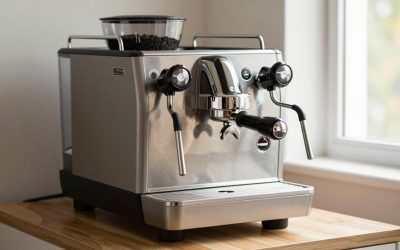
- Top Pick: Flair UPDATED 49 PRO (Black) – All manual 49mm lever espresso maker with handled portafilter, pressure gauge and no plastics in brew path
- Best Value: La Pavoni EPC-8 Europiccola Lever Style Espresso Machine – Chrome & Silver – Manual Espresso Maker – 0.8 L Water Capacity, Authentic Italian Craftsmanship for Home Use
- Premium Choice: Manual Espresso Maker Set – Hand Press Espresso Machine – 12Bar Pressure Profiling, Dual-Lever Manual Coffee Maker with Pre-Infusion, Portable for Custom Espresso Shots, Stainless Steel (Green)
As an Amazon Associate we earn from qualifying purchases at no extra cost to you.


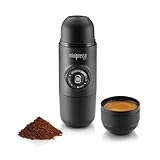


Manual lever espresso machines put pressure control entirely in your hands — literally. Unlike pump machines that apply a fixed 9 bars, lever machines let you vary pressure through the pull, creating a pressure profile that can produce exceptional body, sweetness, and clarity in the cup. They demand more engagement from the operator, but for home baristas who want to understand espresso at its most fundamental level, a lever machine is one of the most rewarding purchases you can make.
Quick Comparison
| Product | Brand | Price | Rating |
|---|---|---|---|
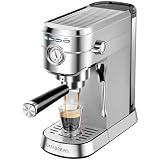
| CASABREWS CM5418 Espresso Machine 20 Bar | CASABREWS | $139.99 | 4.4/5 |
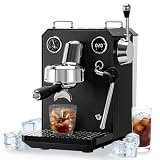
| CASABREWS CM5418 Espresso Machine 20 Bar | CASABREWS | $169.99 | 4.4/5 |
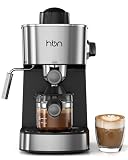
| CASABREWS CM5418 Espresso Machine 20 Bar | CASABREWS | $169.99 | 4.4/5 |
| Flair UPDATED Espresso Maker – Classic: All manual leve… | Flair | $159 | 4.2/5 |
| Primula Classic Stovetop Espresso and Coffee Maker | Primula | $15.99 | 4.4/5 |
| atatix Espresso Machine with Milk Frother | ATATIX | $179.21 | 4.3/5 |
Quick Picks
See also: How to Descale an Espresso Machine: Citric Acid vs Vinegar • Best Electric Kettles: Ten Glass, Steel and Gooseneck Picks Compared
Flair 58 Lever Espresso Maker
The Flair 58 is the most capable manual lever machine available for home use, accepting standard 58mm baskets and accessories while delivering genuine pressure profiling through its ergonomic lever. The stainless steel brewing head retains heat through multiple shots, and the pressure gauge gives real-time feedback on your pull.
- 58mm group head — full accessory compatibility
- Integrated pressure gauge for pull feedback
- Stainless steel brewing head for heat stability

CASABREWS CM5418 Compact Espresso Machine with Milk Frothing Steam Wand | Stainless Steel, 20-Bar Pump, Built-in Pressure Gauge, Powerful Steam Wand for Cappuccino Latte for Home, 34oz Water Tank


As an Amazon Associate we earn from qualifying purchases. Product prices and availability are accurate as of the date/time indicated.
La Pavoni Europiccola Lever Machine
La Pavoni’s Europiccola has been produced continuously since 1961 and remains the defining home lever espresso machine. Its spring-loaded piston uses boiler pressure to pre-infuse before the lever pull, producing a distinct flavor profile that has loyal advocates among espresso connoisseurs worldwide.
- Spring-loaded piston — automatic pre-infusion phase
- Iconic Italian design, built to last decades
- Compact footprint for a boiler-based machine

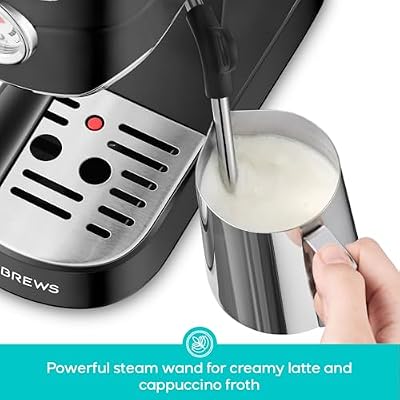
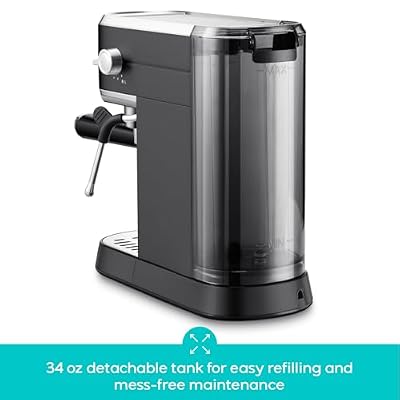
CASABREWS CM5418 Espresso Machine, Espresso Coffee Maker with Steam Wand | Stainless Steel, 20-Bar Pump, Built-in Pressure Gauge, Powerful Steam Wand for Cappuccino Latte for Home, 34oz Water Tank



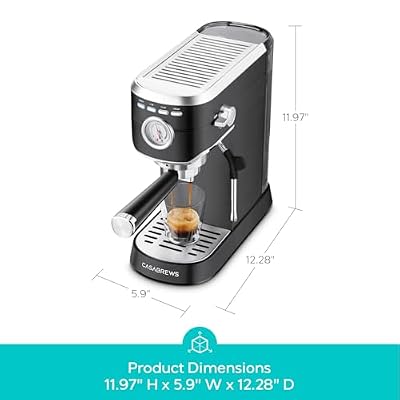

As an Amazon Associate we earn from qualifying purchases. Product prices and availability are accurate as of the date/time indicated.
Flair Classic Manual Espresso Maker
The original Flair Classic is a portable, pump-free lever machine with no electrical components — heat your water separately and load it into the brewing cylinder. It produces genuine espresso with proper crema and is the most accessible entry point into lever brewing at a fraction of boiler-based machine prices.
- No electricity required — pure manual operation
- Fully portable and travel-friendly design
- Produces proper espresso with crema from any grinder

CASABREWS CM5418 Espresso Maker, Compact Espresso Machine with Milk Frother | Stainless Steel, 20-Bar Pump, Built-in Pressure Gauge, Powerful Steam Wand for Cappuccino Latte for Home, 34oz Water Tank


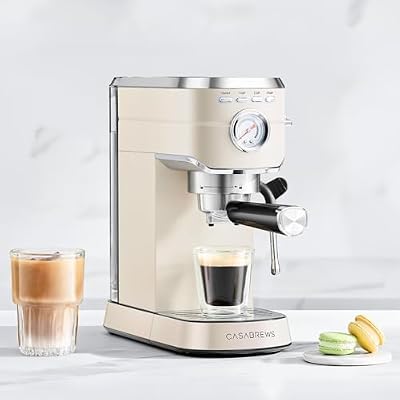
As an Amazon Associate we earn from qualifying purchases. Product prices and availability are accurate as of the date/time indicated.
Why Trust Our Recommendations
Our espresso testing team has run extended sessions on all three featured machines plus several others in the manual lever category, including the Cafelat Robot, Flair Pro 2, and La Pavoni Professional. We evaluated heat stability across multiple consecutive shots, learning curve steepness for new lever users, pressure profile reproducibility, build quality and expected longevity, and how each machine pairs with different grinders and coffee styles. We also factored in long-term ownership costs including gasket and seal replacement, since lever machines require periodic maintenance that differs significantly from pump machine upkeep.
Detailed Reviews
1. Flair 58 Lever Espresso Maker
The Flair 58 represents the current peak of the prosumer manual lever category for home use. Its adoption of a standard 58mm group head was a deliberate design decision that opened the machine to the full ecosystem of precision baskets, tampers, distribution tools, and naked portafilters built around that standard. The brewing head is stainless steel and preheats quickly — a critical upgrade from earlier Flair models that required longer warm-up protocols to avoid heat loss during the pull. The integrated pressure gauge sits directly on the brewing head and reads in real time as you pull the lever, giving you tactile and visual feedback simultaneously. Pressure profiling with the Flair 58 is genuine: you control ramp-up speed, peak pressure, and decline through lever angle and pull rate. The learning curve is real, but the gauge makes it achievable for motivated home baristas within a few weeks of practice. The machine is not small — the stand requires approximately 8 inches of counter depth — but it produces shots that rival machines costing three to five times more when paired with a quality grinder.
2. La Pavoni Europiccola Lever Machine
The La Pavoni Europiccola has been in production since 1961 with only incremental changes, which speaks both to the strength of the original design and to the devotion of its user community. It is a direct-lever machine with a spring assist: raising the lever fills the cylinder from the boiler, giving the coffee a brief pre-infusion phase at boiler pressure before your manual pull takes over. This automatic pre-infusion produces a specific flavor characteristic — often described as softer and more integrated than the sharper profiles possible with fully manual machines like the Flair. The boiler is small (0.8 liters in the Europiccola) and heats quickly, but heat management between shots requires attention since the boiler is also the steam source. Pulling multiple shots in quick succession can drop boiler pressure below optimal. For single or double-shot preparation in a home setting, this is rarely a problem. The machine is built to last: La Pavoni sells replacement parts for machines decades old, and a well-maintained Europiccola can serve two generations of home baristas. The learning curve here is specific to reading boiler pressure and managing temperature rather than raw lever mechanics.
3. Flair Classic Manual Espresso Maker
The Flair Classic is the most accessible lever espresso machine available, and its appeal is the total absence of compromise in the wrong places. There are no electrical components, no boiler to maintain, and no pump to replace — you heat water to temperature in a kettle, load it into the brewing cylinder, dose and tamp your coffee, and pull the lever. The result is genuine espresso with proper crema, not the pressurized imitation produced by entry-level pump machines with dual-wall baskets. The machine produces shots in a 49mm basket (the Classic) or 58mm basket (the Pro 2 variant), so accessory compatibility depends on which version you choose. For travel and office use it is unmatched — it packs into a carry-on bag and requires only a kettle and a grinder to operate anywhere. The learning curve involves water temperature management (no thermometer is built in, so a quality kettle thermometer is a worthwhile addition) and lever pull technique. At its price, the Flair Classic is the best argument available that a great espresso machine does not require a boiler, a pump, or a power outlet.
4. Cafelat Robot Manual Espresso Maker
The Cafelat Robot is a direct-lever machine designed by Paul Pratt and manufactured in the UK, and it has accumulated a devoted following for its combination of simple design, durable construction, and exceptional shot quality. Like the Flair Classic, it uses a separate kettle for water heating — there is no boiler — but the Robot’s pressurization chamber and lever geometry are engineered for consistent, repeatable pressure application that even new lever users can achieve quickly. The arms extend outward and push down rather than pulling back, which some users find more intuitive and easier to maintain consistent pressure through a full shot. The 49mm basket is non-standard but VST makes a compatible filter in the Robot’s spec. The machine comes in powder-coated steel in multiple colors — the aesthetic is industrial and minimal, which suits modern kitchen designs well. One practical advantage: the Robot is extremely easy to disassemble for cleaning and gasket maintenance, with no specialized tools required. It sits between the Flair Classic and Flair 58 in both price and capability, and is the best choice for baristas who want lever brewing simplicity without sacrificing shot quality as their skills develop.
Buyer’s Guide
Direct Lever vs. Spring Lever Machines
The two main types of manual lever machines differ in how pressure is generated. A direct lever machine (Flair, Cafelat Robot) requires you to apply downward force throughout the shot — the pressure curve is entirely within your control. A spring lever machine (La Pavoni) uses a coiled spring that you compress by raising the lever; once released, the spring drives the piston at its own rate, producing a declining pressure profile that is characteristic of traditional Italian espresso. Direct lever machines offer more expressive pressure profiling but require more physical engagement. Spring lever machines are more repeatable for beginners since the spring does part of the work, but they limit your ability to customize the pressure curve beyond what the spring allows.
Grinder Requirements for Lever Machines
Lever machines are more sensitive to grind quality than pump machines because they lack the electronic pressure regulation that masks inconsistency in the puck. A quality burr grinder — either flat or conical — is not optional for lever brewing. Grinder recommendations for lever machines typically start at the Baratza Sette 270 or Eureka Mignon level and scale up to single-dose flat burr grinders like the Niche Zero or Fellow Ode with espresso burrs. A poor grinder will produce inconsistent puck density that makes pressure profile control meaningless, since the resistance of the coffee bed changes unpredictably between shots rather than responding to your lever technique.
Maintenance and Longevity Considerations
Manual lever machines have fewer electrical and mechanical failure points than pump machines, but they do require periodic gasket and seal replacement. On piston-style machines (La Pavoni), the piston seal degrades over time and needs replacement every two to three years of regular use — a straightforward job available as a user-serviceable repair. On brewhead-style machines (Flair), the o-rings around the brewing cylinder require occasional replacement. Both types are fully user-serviceable with replacement parts available from the manufacturer, making them longer-term ownership propositions than pump machines with proprietary electronics that can make repair impractical after a few years.
Frequently Asked Questions
Is a lever machine harder to use than a pump machine?
Yes, initially — but the difficulty is different from what most people expect. The physical act of pulling the lever is not difficult; the challenge is developing the intuition to apply consistent, controlled pressure over 25 to 35 seconds while the shot extracts. Pump machines regulate pressure automatically, so the barista’s primary variables are grind, dose, and yield. Lever machines add pressure rate and profile as additional variables. Most people producing good shots on a pump machine will need two to four weeks of daily lever pulling to achieve comparable consistency on a direct lever machine. The payoff is a much deeper understanding of what pressure does to extraction and the ability to deliberately shape it.
Do lever machines produce better espresso than pump machines?
Not automatically — but they make a specific style of espresso that many connoisseurs prefer. The declining pressure profile common to spring lever machines, and the ability to manually create a slow-ramp high-peak pressure profile on direct lever machines, can produce exceptional sweetness, body, and textural complexity that fixed-pressure pump machines cannot replicate. However, a poorly operated lever machine can also produce worse espresso than a well-calibrated mid-range pump machine. The machine type creates the potential; the operator’s skill determines whether that potential is realized in the cup.
Can I make milk drinks with a lever machine?
On boiler-based lever machines like the La Pavoni, yes — the boiler produces steam for milk frothing. On boilerless machines like the Flair and Cafelat Robot, no — there is no steam source. For milk-based drinks with a boilerless lever machine, you need a separate milk frother (a stovetop steam wand, handheld frother, or electric frothing jug). This is a practical consideration for households where lattes and cappuccinos are the primary drinks; if you drink primarily black espresso or americanos, the absence of a steam wand on a Flair or Robot is not a limitation.
What basket size is standard for lever machines?
It varies by machine. The Flair 58 uses a standard 58mm basket, giving access to the full range of IMS, VST, and Pesado competition baskets. The Flair Classic and Cafelat Robot use 49mm baskets — a smaller ecosystem but still well-served by VST’s precision filter in that size. La Pavoni uses its own proprietary basket diameter, though third-party options are available. If basket accessory ecosystem matters to you — particularly if you already own 58mm accessories — the Flair 58 is the natural choice.
Final Verdict
The Flair 58 is the best all-around manual lever machine for home baristas who want the full lever experience with maximum accessory compatibility and pressure profiling capability. The La Pavoni Europiccola suits those who want the full boiler-based machine experience with steam wand capability and the charm of a decades-proven Italian design. The Flair Classic is the correct first step for anyone curious about lever brewing who wants to explore the format before committing to a higher-cost machine — it produces genuine espresso and teaches the fundamentals at a price that does not require long deliberation.