Bialetti - Moka Express: Iconic Stovetop Espresso Maker, Makes Real Italian Coffee, Moka Pot 1 Cup (2 Oz - 60 Ml), Aluminium, Silver


TL;DR: The Italian moka pot is the most misunderstood brewer in home coffee. Most people scorch it. Master heat control, grind size, and fill level, and you get a dense, syrupy cup that rivals entry-level espresso. This guide covers every variable.
Italian Coffee Pot Moka Brewing Guide: The Complete Tutorial for a Perfect Cup Every Time
The moka pot — invented by Alfonso Bialetti in 1933 — remains in production almost unchanged. Over 200 million units sold globally. Yet the majority of people who own one consistently make bitter, burnt coffee from it. The reason isn’t the brewer. It’s technique. This guide fixes that.
Quick answer: Our top pick in 2026 is the Bialetti Moka Express Iconic Italian Stovetop Espresso … — our #1 rated choice. See the full ranked comparison, alternatives and buying advice below.
Quick Comparison
| Product | Brand | Price | Rating |
|---|---|---|---|
| Bialetti Moka Express Iconic Italian Stovetop Espresso … | Bialetti | $54.99 | 4.6/5 |
| Bialetti – Moka Express: Iconic Stovetop Espresso Maker | Bialetti | $29.99 | 4.6/5 |
| Bialetti – Moka Express: Iconic Stovetop Espresso Maker | Bialetti | $69.99 | 4.6/5 |
| Bialetti – New Venus Induction | Bialetti | $69.36 | 4.4/5 |
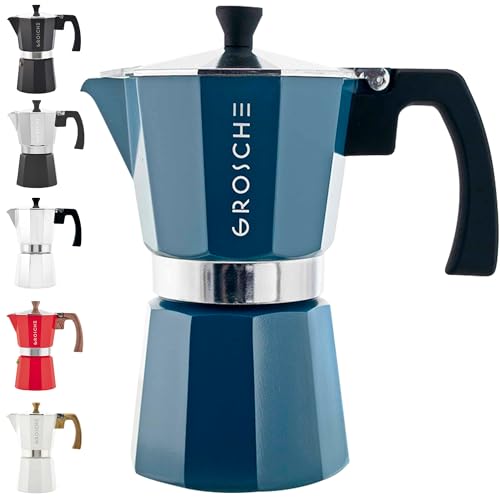
| GROSCHE Milano Moka Pot | Stovetop Espresso Percolator … | GROSCHE | $44.99 | 4.4/5 |
Top Picks at a Glance
See also: How to Choose an Espresso Tamper: Complete Buying Guide (2026) • Best Espresso Machines for Lattes and Cappuccinos
Understanding Moka Pot Physics
The moka pot is a pressure brewer, but the pressure it generates — typically 1–2 bar — is far below true espresso (9 bar). What drives extraction is steam pressure from the boiler chamber forcing hot water upward through the coffee puck, through the collector tube, and into the upper chamber.
The critical insight: water temperature at the point of contact with coffee is determined by heat applied to the base. Apply too much heat — the almost universal mistake — and water arrives at the puck already at or above 100°C, scalding the grounds and producing the bitter, ashy flavor people associate with moka coffee. Apply controlled, moderate heat, and water contacts coffee at approximately 90–95°C. The chemistry is entirely different.
Step-by-Step Brewing Method
Step 1: Pre-Heat Your Water
Fill the lower chamber with pre-boiled water — not cold tap water. This is the single highest-impact change most moka pot users can make. Cold-start brewing means the water heats slowly, spending extended time at lower temperatures inside the boiler. During this phase, the brass components leach metallic flavors into the water before extraction even begins. Pre-heating eliminates that window entirely.
Fill to just below the pressure valve. Never cover the valve — it’s a safety release. The Cocinare Gooseneck Kettle lets you heat precisely to 95°C and pour cleanly into the small boiler opening without spilling. For more on kettles and heat precision, see our learn about gooseneck electric kettle pour over guide.
Step 2: Grind to Medium-Fine
Moka grind sits between espresso and drip — call it medium-fine, roughly 400–500 microns. Espresso-fine grind chokes the filter basket and forces over-extraction. Too coarse and your brew runs thin and acidic. When in doubt, start coarser and dial finer by half-notch increments.
Consistent grind distribution matters here. Burr grinders produce even particles that pack consistently in the basket. Blade grinders produce mixed particle sizes, creating fast and slow extraction zones in the same puck — the root cause of the inconsistent bitterness many moka users experience. See our comparison: see burr coffee grinder best.
Step 3: Fill the Basket — No Tamping
Fill the filter basket level and even. Do not tamp. The moka pot relies on uniform resistance through the puck — tamping creates a compressed disc that forces water to find the path of least resistance, which is channeling around the edges. Just fill, level with your finger or a flat edge, and leave it.
Wipe the basket rim clean before sealing. Coffee grounds between the gasket and rim break the seal and cause spray during brewing.
Step 4: Low Heat, Open Lid
Set the burner to low-medium. On a gas range, the flame should not lick the sides of the moka pot — only the base. On induction, start at 40–50% power. Keep the lid open. This lets you monitor the extraction visually: you’re watching for a slow, steady honey-colored flow from the spout. Aggressive, bubbling, spluttering flow = heat too high.
Step 5: Remove at First Splutter
The moment you hear the characteristic splutter — the steam-driven gurgle that signals the boiler is running low on water — remove the moka pot from heat immediately. Run the base under cold water or place it on a cold surface. This stops extraction. Leaving it on heat through the full splutter means the last 20% of the brew is steam-distilled, bitter concentrate mixing with the good coffee.
Common Mistakes and Fixes
| Mistake | Result | Fix |
|---|---|---|
| Cold water start | Metallic, bitter cup | Pre-boil water before filling boiler |
| High heat | Burnt, ashy taste | Low-medium heat, slow brew |
| Tamping grounds | Channeling, uneven extraction | Level fill only, no compression |
| Too-fine grind | Over-extraction, slow flow | Coarsen 2–3 notches |
| Brewing to empty | Bitter steam-distilled finish | Remove at first splutter |
| Overfilling boiler | Pressure valve trigger, mess | Fill to just below valve |
Moka Coffee vs. Espresso: Understanding the Difference
Moka coffee is sometimes called “stovetop espresso” but that’s a loose approximation. True espresso at 9 bar produces a crema — a CO2-stabilized emulsion of oils and fine particles — that moka at 1–2 bar cannot replicate. Moka coffee is dense and strong, but without crema, and with a slightly different chemical profile due to the lower pressure extraction.
That said, for a $30–50 brewer, the result is remarkable. If you’re considering stepping up to true espresso, our guide to best espresso machine home maps the upgrade path. The learn about rancilio silvia vs gaggia classic pro comparison is the natural next article if you’re serious about the upgrade.
Moka Pot Size Guide
| Size | Water capacity | Output | Best for |
|---|---|---|---|
| 1-cup | 60 ml | 30–40 ml coffee | Solo drinker, concentrated shots |
| 3-cup | 200 ml | 100–130 ml coffee | Solo or couple |
| 6-cup | 300 ml | 200–240 ml coffee | Small household (2–3 people) |
| 9-cup | 550 ml | 400 ml coffee | Family or entertaining |
Moka Pot Maintenance
Never use soap. The aluminum (or stainless) builds a thin patina of coffee oils that actually improves flavor over time — detergent strips it. Rinse with hot water only. Disassemble fully after each use, let it air-dry. Replace the rubber gasket every 1–2 years when it becomes stiff or cracked; that’s the only consumable.
Frequently Asked Questions
Why does my moka pot coffee taste bitter?
Most likely: heat too high, or you’re brewing past the first splutter. Try pre-heating your water, lowering the flame, and pulling the pot off heat the instant you hear the first gurgle. Those three changes together typically eliminate bitterness entirely.
Can I use an Italian moka pot on an induction stove?
Only if it’s stainless steel. Standard aluminum moka pots are not induction compatible. Bialetti and other brands make induction-specific versions with stainless bases. If you have a gas or electric coil stove, any moka pot works fine.
How much coffee goes in a moka pot?
Fill the filter basket level without compressing. The basket is sized to the brewer — you’re not measuring by weight here, you’re filling to the brim. For a 3-cup Bialetti, that’s approximately 15–17g of ground coffee. Don’t under-fill either: a partially filled basket means the water-to-coffee contact is uneven and the extraction suffers.
Should I use espresso roast in a moka pot?
Traditionally yes — Italian moka culture uses medium-dark to dark roasts, which produce the syrupy, chocolatey character the brewer is famous for. But lighter roasts work well too, especially with the low-and-slow technique above. They produce brighter, more acidic cups. Experiment. The brewer doesn’t dictate the roast.
How long should a moka pot brew take?
On low-medium heat with pre-heated water: 3–5 minutes from placing on the stove to the first splutter. If it’s taking longer than 7 minutes, your grind may be too fine or your heat too low. Under 2 minutes usually means heat is too high. Aim for the 3–5 minute window as a starting benchmark.
Ready to decide? Our #1 pick for 2026 is the Bialetti Moka Express Iconic Italian Stovetop Espresso ….
Live price & availability on Amazon.