Gaggia Classic Pro Espresso Machine Review 2026: The Honest Verdict After Years of Home Use
Quick Answer / TL;DR
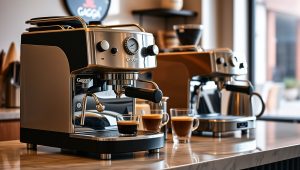
The Gaggia Classic Pro is the most respected entry-level home espresso machine in the enthusiast community — and it has been for over a decade. At roughly $450–$500, it bridges the gap between toy machines and prosumer gear with commercial-grade components: a 58mm commercial portafilter, a three-way solenoid valve, and a steam wand that can actually texture milk. It rewards learning, punishes impatience, and produces espresso that genuinely improves as your technique develops. Best pick: ASIN B07RQ3NL76.
The Gaggia Classic Pro occupies a specific and important position in the home espresso market: it’s the machine serious beginners graduate to when they’ve outgrown their first machine, and the machine experienced baristas return to when they want a reliable daily driver that doesn’t demand constant attention. That’s a narrow and crowded space to occupy — and the Classic Pro has held it for years against younger competitors with more marketing budget and flashier feature lists.
As an Amazon Associate we earn from qualifying purchases at no extra cost to you. Product prices and availability are accurate as of the date shown and are subject to change.



This review is the standalone deep-dive the Classic Pro deserves. We’ve covered it in comparison posts before, but here we examine every dimension of the machine — build quality, brewing performance, steam capability, maintenance, and which type of home barista it fits best — in full detail.
- Quick Comparison
- Top Pick: Gaggia Classic Pro
- Build Quality: What You’re Actually Getting at This Price
- Gaggia Classic Pro vs. Competitors at the Same Price
- Brewing Performance: What the Classic Pro Can and Cannot Do
- Steam Capability: Honest Assessment
- FAQ: Gaggia Classic Pro Espresso Machine
- About the Author
- Frequently Asked Questions
Quick Comparison
| Product | Brand | Price | Rating |
|---|---|---|---|
| Gaggia RI9380/46 E24 Espresso Machine | — | $453.79 | 4.4/5 |
| Gaggia RI9380/49 Classic Evo Pro Espresso Machine | — | $499 | 4.4/5 |
| Breville Bambino Espresso Machine BES450BSS | — | $299.95 | 4/5 |
Top Pick: Gaggia Classic Pro
See also: How to Replace Espresso Machine Water Filter (2026): Step-by-Step • How to Adjust Espresso Machine Brew Temperature (2026): Step-by-Step
THE MACHINE ITSELF
Gaggia Classic Pro Espresso Machine
The community benchmark for entry-level serious espresso. Commercial 58mm portafilter, three-way solenoid, real steam wand. The machine that rewards the learning process and keeps rewarding you as your skill develops.

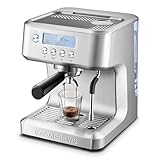
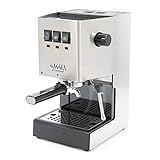
Gaggia RI9380/46 E24 Espresso Machine, Brushed Stainless Steel


As an Amazon Associate we earn from qualifying purchases. Product prices and availability are accurate as of the date/time indicated.
ESSENTIAL GRINDER PAIRING
Baratza Sette 270 Grinder
The Classic Pro is only as good as its grinder. The Sette 270’s stepless adjustment and consistent fine grind output are matched to the Classic Pro’s brewing demands. Don’t buy the machine without planning the grinder.

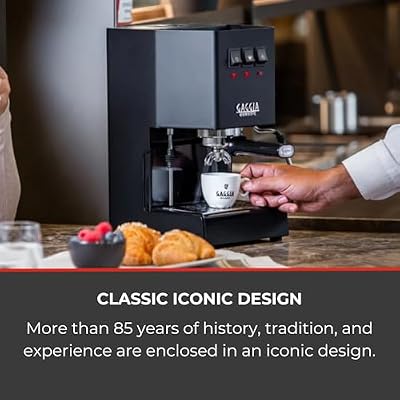
Gaggia RI9380/49 Classic Evo Pro Espresso Machine, Thunder Black, Small



As an Amazon Associate we earn from qualifying purchases. Product prices and availability are accurate as of the date/time indicated.
MUST-HAVE ACCESSORY
Precision Espresso Tamper 58mm
The Classic Pro ships with a plastic tamper that belongs in the trash. A calibrated 58mm tamper is the first accessory purchase every Classic Pro owner should make — it directly affects shot consistency.

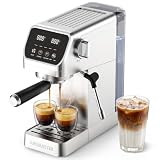
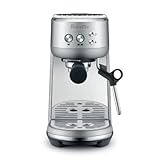
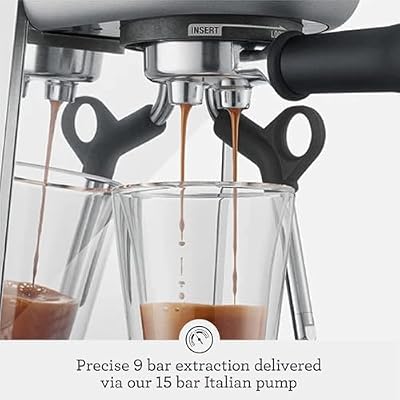
Breville BES450BSS Bambino Espresso Machine, Brushed Stainless Steel




As an Amazon Associate we earn from qualifying purchases. Product prices and availability are accurate as of the date/time indicated.
Build Quality: What You’re Actually Getting at This Price
The Gaggia Classic Pro’s build quality is the first thing that separates it from machines in its price range. The stainless steel body is not cosmetic — it’s structural. The machine feels heavy and solid on the counter because it is: the boiler, grouphead, and chassis are steel throughout, not plastic components with steel cladding. Pick up any $200 entry-level espresso machine and then pick up a Classic Pro — the weight difference is immediate and tells you exactly where the quality is invested.
The 58mm commercial portafilter is the most important component specification. Nearly every professional espresso machine in the world uses a 58mm portafilter — which means the entire ecosystem of aftermarket baskets, tampers, distribution tools, and accessories designed for commercial machines fits the Gaggia Classic Pro directly. You can buy a precision VST basket, a calibrated tamper, a WDT tool — all the same accessories used in competition barista setups — and they work with a $450 home machine. This ecosystem compatibility is a major part of why the Classic Pro has such a strong enthusiast community.
The Three-Way Solenoid Valve
The three-way solenoid valve is the component that separates serious home espresso machines from toys. When brewing ends, the solenoid releases residual pressure from the grouphead through a drain tube rather than allowing it to sit in the portafilter. This does two things: it produces a dry puck after extraction (the spent grounds cake together cleanly, making cleanup fast and mess-free), and it prevents the portafilter from spraying pressurized water when you remove it immediately after a shot. Machines without a three-way solenoid require waiting 30–60 seconds after pulling a shot before safely removing the portafilter. The Classic Pro has had this feature since the original Classic — it’s a commercial-spec component at a home machine price.
Gaggia Classic Pro vs. Competitors at the Same Price
| Machine | Price Range | Portafilter | Solenoid Valve | Steam Wand | Boiler Type | Best For |
|---|---|---|---|---|---|---|
| Gaggia Classic Pro | $450–$500 | 58mm commercial | Yes — 3-way | Commercial panarello-removable | Single boiler | Learning espresso craft |
| Breville Bambino Plus | $450–$500 | 54mm | Yes | Auto steam (4-hole) | Thermojet | Convenient daily use |
| Rancilio Silvia Pro X | $1,100+ | 58mm commercial | Yes | Commercial single-hole | Dual boiler | Serious home baristas |
| DeLonghi La Specialista | $500–$700 | 51mm proprietary | Yes | Manual steam | Thermoblock | Convenience + auto features |
| Flair 58 (manual lever) | $350–$400 | 58mm | No (manual) | None | No boiler | Maximum espresso control, no milk |
Brewing Performance: What the Classic Pro Can and Cannot Do
The Classic Pro brews at 9 bars of extraction pressure — the standard for espresso. The stock OPV (over-pressure valve) is factory-set at approximately 12 bars, which is higher than optimal and a well-documented quirk. Many owners adjust the OPV to 9 bars using a simple spring replacement — a $5–$10 modification that meaningfully improves shot quality by delivering correct extraction pressure throughout the shot rather than the spike-then-drop pattern the stock OPV creates. This modification is reversible and one of the most recommended Classic Pro upgrades in the community.
Brew temperature on the Classic Pro is managed through temperature surfing — a technique of timing when you start your shot relative to the boiler’s heating cycle to hit the optimal brew temperature window. The machine doesn’t have a PID controller at stock (unlike the Breville Bambino), which means brew temperature isn’t electronically regulated. Temperature surfing takes some learning but becomes habitual quickly. A PID controller can be retrofitted — it’s one of the most popular Classic Pro upgrades and costs $100–$150 including installation — but many experienced Classic Pro users brew excellent espresso without one through consistent temperature surfing technique.
Shot quality ceiling: very high, with the right grinder and technique. The Classic Pro is capable of producing shots that compete with prosumer machines costing two to three times more. The constraint is always the grinder — a Classic Pro paired with a quality grinder (Baratza Sette, Eureka Mignon, DF64) is a different machine than a Classic Pro paired with a cheap grinder. Budget at least as much for the grinder as for the machine.
Gaggia RI9380/46 E24 Espresso Machine, Brushed Stainless Steel
As an Amazon Associate we earn from qualifying purchases. Product prices and availability are accurate as of the date/time indicated.
Steam Capability: Honest Assessment
The Classic Pro ships with a panarello steam wand — a plastic sleeve over the steam tip that auto-froths milk without technique. Most serious home baristas remove the panarello sleeve immediately to access the single-hole commercial steam tip underneath, which requires manual milk texturing technique but produces café-quality microfoam for latte art.
Steam power on the Classic Pro is adequate for home use — it can texture one 8–12oz pitcher of milk in 45–60 seconds, which is the right timeframe for a single-boiler machine. It will not match the steam power of dual-boiler machines (Breville Dual Boiler, Profitec Pro 300) that dedicate a separate boiler to steam. For making one to two milk drinks in sequence, the Classic Pro handles it well. For a household where multiple milk drinks are pulled in quick succession, the single boiler’s heat recovery time between shots and steaming becomes a limiting factor.
For related machine comparisons and gear, see our full reviews on Rancilio Silvia vs Gaggia Classic Pro, Breville vs Gaggia vs Rancilio comparison, and our guide to espresso tampers — because the Classic Pro’s first upgrade is always the tamper.
FAQ: Gaggia Classic Pro Espresso Machine
Is the Gaggia Classic Pro good for beginners?
Yes, with a caveat: it’s the right beginner machine if you want to genuinely learn espresso craft, not if you want push-button convenience. The Classic Pro has no automated features — no automatic dosing, no pre-infusion, no auto steam. You control grind, dose, tamp, extraction time, and milk texture manually. This is exactly what teaches you espresso. If you want a machine that makes decent espresso with minimal input, the Breville Bambino Plus or a super-automatic machine is a better fit. If you want to develop a skill, the Classic Pro is among the best teachers in its price range.
Does the Gaggia Classic Pro need a PID controller?
No — but adding one improves temperature consistency and removes the temperature surfing variable from your workflow. Stock, the Classic Pro requires timing your shot start to hit the correct boiler temperature window, which adds a step to your routine. A PID retrofit eliminates this and holds brew temperature within ±1°C throughout extraction. Many experienced Classic Pro users brew excellent espresso without PID through consistent temperature surfing. For beginners still learning the variables, a PID retrofitted machine (or buying the Gaggia Classic Evo Pro which has a PID stock) simplifies one dimension and lets you focus on grind and technique.
What grinder pairs best with the Gaggia Classic Pro?
The community consensus is a dedicated espresso grinder with stepless or fine-step adjustment in the $200–$400 range. Popular pairings include the Baratza Sette 270, Eureka Mignon Specialita, and DF64 single-dose grinder. The key requirement is the ability to make very fine grind adjustments — espresso dial-in requires small step changes between test shots, and a grinder with coarse steps makes this frustrating. The grinder matters as much as the machine for espresso quality — underspending on the grinder and overspending on the machine is the most common and most costly mistake new espresso buyers make.
How does the Gaggia Classic Pro compare to the Breville Bambino Plus?
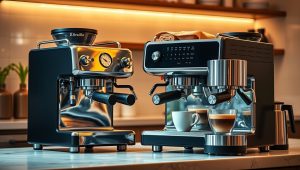
Different machines for different priorities. The Bambino Plus offers faster heat-up (3 seconds via Thermojet), automated milk texturing, and lower learning curve — it’s more convenient for daily use. The Classic Pro has a 58mm commercial portafilter (vs. 54mm on the Bambino), a traditional boiler that experienced baristas prefer for consistency, and the full ecosystem of 58mm accessories. Shot quality ceiling is comparable when both are properly tuned with a quality grinder. The Bambino is better for convenience; the Classic Pro is better for learning and long-term engagement with espresso craft.
Is the Gaggia Classic Pro worth the price in 2026?
Yes, firmly. At $450–$500, it remains one of the highest value propositions in home espresso. The 58mm commercial portafilter, three-way solenoid, commercial steam tip access, and all-metal build at this price point have no direct competitor. Newer machines in this range offer more automation but typically use proprietary portafilter sizes or lower-grade components. The Classic Pro’s longevity — machines from 10+ years ago are still being serviced and used by the community — validates the build quality investment. Parts availability is excellent; Gaggia has maintained service support across Classic generations.
Frequently Asked Questions
Does the Gaggia Classic Pro actually brew at 9 bar?
Not from the factory. The over-pressure valve is set near 12 bar, which drives water through the puck faster than ideal. The widely documented OPV adjustment brings it down to 9 bar and noticeably improves sweetness and control. It is a fifteen-minute job with a nut driver, though it touches warranty coverage.
Does it have a PID?
No, it uses a mechanical thermostat, so brew temperature drifts a few degrees across the heating cycle and owners learn to temperature surf using the heating light. Third-party PID kits are widely available and represent the single biggest upgrade for anyone chasing repeatable results with light roasts.
How long does it need to warm up?
The small aluminum boiler is technically ready in about a minute, but the brass group head is not. Give it 20 to 30 minutes with the portafilter locked in, then flush a few ounces of water. Skipping this is the most common cause of sour, thin-tasting shots.
Is the steam power good enough for milk drinks?
Yes, for one drink at a time. It switches to steam mode in roughly 30 to 45 seconds and delivers dry steam through a commercial-style wand. Afterward you must run water through the group to cool the boiler back to brew temperature before pulling another shot.
Should I use the pressurized or the standard basket?
It ships with pressurized baskets that generate artificial crema and tolerate a mediocre grinder. Once you own a real espresso grinder, switch to standard 58mm baskets: you lose the fake crema and gain genuine control over extraction, though a weak grinder will immediately produce gushers.
Ready to decide? Our #1 pick for 2026 is the Gaggia RI9380/46 E24 Espresso Machine.
Live price & availability on Amazon.