Last updated: October 20, 2026
The home espresso market is dominated by a handful of brands that consistently outperform competitors at their price points. Whether you’re spending $300 or $3,000, the brand you choose determines build quality, parts availability, customer support, and the realistic lifespan of your machine. This guide compares the major espresso machine brands competing in 2026, ranking each within their tier and identifying which manufacturer best matches different user types.
- Quick Comparison
- Side-by-Side: Espresso Machine Brands Compared
- How Espresso Machine Brands Compete
- Breville (Sage in UK)
- La Marzocco
- Rancilio
- Gaggia
- Rocket Espresso
- Nespresso
- De’Longhi
- Lelit
- What Actually Differs Between Brands
- How to Choose Between Brands
- Brand Comparison at a Glance
- Which Brand Should You Choose? Five Common Buyers
- Two Machines That Show the Brand Differences
- Frequently Asked Questions
- Final Thoughts
- About the Author
- Related Articles
Quick Comparison
| Product | Brand | Price | Rating |
|---|---|---|---|
| Roobi Espresso Cleaning Disc Compatible with Breville. … | Roobi | $24.99 | 5/5 |
| 58mm Portafilter Double Spout Fits E61 | KUCHZUBE | $35.99 | 5/5 |
| Espresso Machine Grouphead Cleaning Brush – CAFEMASY 2 … | CAFEMASY | $19.99 | 5/5 |
| Stainless Steel Coffee Grind Size Ruler – Laser-Engrave… | eazttouz | $11.99 | 5/5 |
| Necessia Premium Cortado Glasses 4.5oz – Set of 2 | Necessia | $16.99 | 4.9/5 |
Side-by-Side: Espresso Machine Brands Compared
See also: How to Descale an Espresso Machine: Citric Acid vs Vinegar • Best Electric Kettles: Ten Glass, Steel and Gooseneck Picks Compared
This table compares the brands on the hardware facts that shape daily use: portafilter size, the heating designs each brand offers, and typical home price bands. Prices are rough bands for current home models and change often.
| Brand | Typical home price band | Portafilter | Heating designs offered | Best for | Watch for |
|---|---|---|---|---|---|
| Breville | Under $300 to $3,000+ | 54mm (Bambino, Barista series); 58mm (Dual Boiler, Oracle) | Thermojet/thermocoil, dual boiler | Beginners, built-in grinders, fast heat-up | Shorter lifespan on entry models; more electronics to fail |
| Gaggia | About $450–$600 (Classic Evo Pro); super-automatics higher | 58mm on the Classic | Single boiler (Classic); super-automatic line | Budget 58mm learning machine, modding | No PID as standard; small boiler for milk |
| Rancilio | About $1,000 (Silvia) to $2,200 (Silvia Pro X) | 58mm | Single boiler, dual boiler | Durable, café-style build at mid budgets | Base Silvia has no PID; slow steam switchover |
| Lelit | About $700 to $3,000+ | 58mm on most models | Single boiler, heat exchanger (Mara X), dual boiler (Elizabeth, Bianca) | Prosumer features per dollar, flow control on Bianca | Smaller US dealer network |
| Rocket | About $2,000 to $4,000+ | 58mm E61 | Heat exchanger (Appartamento), dual boiler (R58, R Nine One) | Classic Italian E61 machines and looks | E61 warm-up of about 20–30 minutes |
| La Marzocco | About $3,500 and up | 58mm | Dual boiler | Buy-once enthusiasts, commercial-grade parts | Price; service mostly through dealers |
| De’Longhi | Under $200 to $2,000+ | 51mm (Dedica); none on super-automatics | Thermoblock, super-automatic | Push-button convenience | Less control over the shot |
| Nespresso | Under $200 to about $600 | None (capsules) | Thermoblock | Speed and zero technique | Ongoing capsule cost; no fresh-ground option |
How Espresso Machine Brands Compete
Espresso machines aren’t commodity products. Two machines with similar specs can produce dramatically different shots based on group head design, boiler engineering, steam wand quality, and temperature stability. Brand reputation reflects accumulated engineering decisions across these factors, not just marketing. The brands ranked below have earned their positions through years of consistent performance.
Breville (Sage in UK)
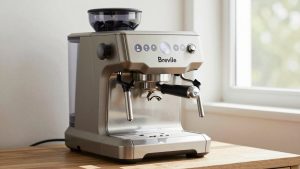
Breville dominates the prosumer market, particularly in the $400-$1,500 range. Their innovation engine produces machines with features that used to require commercial equipment: PID temperature control, automatic pre-infusion, integrated burr grinders, and steam wands powerful enough for milk drinks.
Strengths
- Best value in feature density per dollar
- Excellent customer service (warranty replacements common)
- Widely available parts and repair information
- Beginner-friendly without sacrificing advanced features
Weaknesses
- Plastic components in lower-end models reduce longevity (3-5 years typical)
- Built-in grinders in Barista Express line don’t match dedicated grinders
- Resale value drops faster than European brands
Best Models
Bambino Plus (budget winner under $500), Barista Express (best all-in-one for under $700), Barista Touch (smart features for $1,000-$1,200), Dual Boiler (best non-rotary for serious enthusiasts at $1,500-$1,800), Oracle Touch (super-auto luxury at $2,500+).
La Marzocco
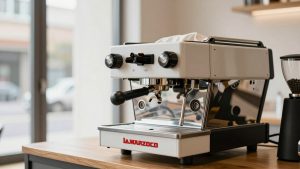
La Marzocco is the only manufacturer that built their reputation in commercial espresso, then translated that engineering to home machines. Their Linea Mini ($5,000+) is essentially a single-group commercial machine in a home-friendly footprint. La Marzocco machines are built to last 20+ years with proper maintenance.
Strengths
- Commercial-grade build quality and component reliability
- Rebuildable parts — same machine can be serviced for decades
- Outstanding shot consistency and temperature stability
- Strong resale value (often 60-75% of original price after 5-10 years)
Weaknesses
- Entry price exceeds most home users’ budgets
- Overkill for casual coffee drinkers
- Service network limited compared to mass-market brands
Best Models
Linea Mini (for serious home enthusiasts willing to invest), Linea Micra (smaller footprint and budget — still $3,500+), GS3 (single-group commercial in home form — $7,000+).
Rancilio
Rancilio’s Silvia has been the home espresso enthusiast’s entry point since 1998. The current Silvia Pro X represents the brand’s evolution — dual boiler, PID, and the legendary Silvia steam wand that taught a generation of home baristas to texture milk.
Strengths
- Bombproof Italian construction
- Massive aftermarket modding community
- Outstanding steam wand performance
- 20+ year machine lifespans common with maintenance
Weaknesses
- Original Silvia has unstable temperature (modding required)
- Less feature-rich than Breville at similar prices
- Smaller display and basic controls compared to modern competitors
Best Models
Silvia (entry semi-automatic for serious learners — $900), Silvia Pro X (dual boiler upgrade — $1,800), commercial Class line for prosumers.
Gaggia
Gaggia invented the modern espresso machine in 1947. Their home machines continue that lineage with the Classic Pro — a fully metal, semi-automatic machine that’s the standard recommendation for someone wanting a “real” espresso machine on a beginner budget.
Strengths
- Best metal construction at the $500-$700 price point
- Commercial-style portafilter (58mm) compatible with serious accessories
- Strong modding scene for upgrades
- Rebuildable internals last decades
Weaknesses
- Stock thermostat lacks temperature stability (PID mod recommended)
- Steam wand requires modification for best milk texturing
- No integrated grinder or modern smart features
Best Models
Classic Pro (the classic — $500-$700), Classic Evo Pro (slight refinements — same price range), Cadorna line for super-auto seekers.
Rocket Espresso
Rocket Espresso builds high-end Italian prosumer machines that compete directly with La Marzocco at lower price points. Their Appartamento line ($1,800-$2,200) introduces serious users to E61 group heads, copper boilers, and the kind of build quality that justifies the investment.
Strengths
- E61 group heads (legendary temperature stability)
- Beautiful Italian aesthetics
- Heat exchanger or dual boiler options
- Strong dealer network for service
Weaknesses
- Slow warmup (15-25 minutes for full temperature stability)
- No built-in grinder option
- Premium price requires investment in matching grinder ($500+)
Best Models
Appartamento (entry E61 — $1,800), R58 (dual boiler — $3,000+), R Nine One (top-tier home — $4,000+).
Nespresso
Nespresso’s pod system created an entirely different category. Original Line machines (Pixie, Lattissima, Atelier) extract under high pressure from sealed pods, producing surprisingly café-quality espresso for users prioritizing convenience over ritual.
Strengths
- Consistent results without technique
- Wide variety of capsule flavors and intensities
- Compact countertop footprint
- Very low maintenance burden
Weaknesses
- Ongoing capsule costs add up significantly
- Limited customization compared to traditional espresso
- Environmental impact of capsule waste (despite recycling programs)
- Can’t match a properly pulled shot from fresh-ground beans
De’Longhi
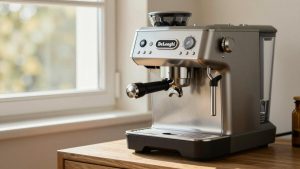
De’Longhi dominates the super-automatic (bean-to-cup) market with the Magnifica, Dinamica, and Eletta lines. They handle grinding, dosing, tamping, and extraction automatically — ideal for households where multiple users want espresso without technique requirements.
Strengths
- Best value in super-automatic category
- Reliable ceramic burr grinders
- One-touch milk drinks on premium models
- Wide service network globally
Weaknesses
- Limited control over extraction variables
- Plastic components in mid-tier models
- Internal milk systems require careful cleaning
- Shot quality below similarly priced semi-automatic + grinder combos
Lelit
Lelit is the smartest play for prosumers who want La Marzocco-style engineering at half the price. Their Mara X and Bianca machines deliver E61 stability, dual boilers, and rotary pumps that compete with machines costing $1,500-$2,000 more.
Strengths
- Best value in the $1,500-$2,500 prosumer range
- E61 group heads with PID temperature management
- Rotary pumps in higher-end models (commercial-grade)
- Active development with regular new releases
Weaknesses
- Smaller dealer network than Italian heritage brands
- Parts availability slower than Breville or Rancilio
- Less brand recognition reduces resale value vs. La Marzocco/Rocket
What Actually Differs Between Brands
Brand reputation is mostly shorthand for a handful of engineering choices. Knowing these makes it easier to compare a Breville with a Lelit, or a Gaggia with a Rancilio, on equal terms.
Portafilter size: 54mm vs 58mm
58mm is the commercial standard and is used by Gaggia’s Classic, Rancilio, Lelit, Rocket, La Marzocco and Breville’s Dual Boiler and Oracle. It gives the widest choice of baskets, tampers and accessories. Breville’s Bambino and Barista series use 54mm, which works well but limits upgrade options. A larger basket diameter is not automatically better coffee; it mainly affects accessory choice and how forgiving the puck is.
Heating system
- Thermocoil/thermojet (Breville entry models): heats water on demand. Very fast warm-up, compact, but less thermal mass.
- Single boiler (Gaggia Classic, Rancilio Silvia): one boiler for brewing and steaming, so you wait to switch between the two.
- Heat exchanger (Rocket Appartamento, Lelit Mara X): a steam boiler with a brew-water tube running through it. Brew and steam at the same time, but brew temperature needs managing on some models.
- Dual boiler (Breville Dual Boiler, Rancilio Silvia Pro X, Lelit Bianca, La Marzocco): separate brew and steam boilers, each at its own temperature. The most control, at the highest cost.
Temperature control (PID)
A PID controller holds the brew water at a set temperature instead of letting it swing between thermostat limits. Breville builds PID into most of its range. The Gaggia Classic Evo Pro and the base Rancilio Silvia use thermostats, which is why PID kits are popular mods for both. Most current Lelit, Rocket and La Marzocco machines include PID or a similar electronic control.
Pump and noise
Almost every machine under about $2,000 uses a vibratory pump, which is compact but louder. Rotary pumps are quieter and can be plumbed into a water line; they appear mostly on higher-end dual boilers such as the Rocket R58. If noise matters, check the pump type before the brand.
Parts, service and repair
Italian prosumer brands use many standard parts, such as E61 groups, gaskets and valves, that any espresso technician can source. Breville uses more proprietary parts and electronics, but its customer service and warranty handling are widely available in the US. If you plan to keep a machine for 10 years or more, ask a local repair shop which brands they service before you buy.
Who owns whom
Brand names do not always mean separate companies. Breville bought grinder maker Baratza in 2020 and Lelit in 2022. Gaggia is part of Philips through Saeco. Rancilio belongs to Ali Group. Nespresso machines are built under license by partners, including Breville and De’Longhi, so the same capsule system can carry either name.
How to Choose Between Brands
Match brand to your priorities:
- Best feature value: Breville (Bambino Plus, Barista Touch lines)
- Longest lifespan investment: La Marzocco, Rancilio, Rocket
- Best convenience (super-auto): De’Longhi, Jura, Breville Oracle Touch
- Best capsule system: Nespresso Original Line
- Best prosumer value: Lelit (Mara X), Profitec, Quick Mill
- Heritage and tradition: Gaggia, Rancilio, La Pavoni
Brand Comparison at a Glance
Quick reference table for major decisions:
- Beginner under $500: Breville Bambino Plus or Gaggia Classic Pro
- Intermediate $500-$1,000: Breville Barista Express or Gaggia Classic Pro + dedicated grinder
- Serious enthusiast $1,000-$2,500: Lelit Mara X, Rocket Appartamento, Breville Dual Boiler
- Premium home $2,500-$5,000: La Marzocco Linea Micra, Rocket R58, Lelit Bianca
- Ultimate home setup $5,000+: La Marzocco Linea Mini, GS3, or Slayer Steam
- Convenience-first: De’Longhi Eletta Explore or Breville Oracle Touch
Which Brand Should You Choose? Five Common Buyers
- “I want good lattes with minimal fuss and no separate grinder.” Breville. A built-in grinder model gives you one box, quick heat-up and guided settings. Plan for a dedicated grinder later if you get serious.
- “I want to learn real espresso on a budget and keep the machine for years.” Gaggia Classic Evo Pro plus a capable espresso grinder. It uses a 58mm portafilter and is easy to repair, and its thermostat and small boiler are the trade-offs.
- “I make two or three milk drinks back to back every morning.” A heat exchanger or dual boiler machine from Lelit, Rocket, Rancilio (Silvia Pro X) or Breville (Dual Boiler). Steaming while brewing saves real time.
- “I want the best espresso possible and will keep the machine 15+ years.” La Marzocco, or a top Lelit or Rocket dual boiler if you want more control for the money.
- “Several people in the house just want coffee at the push of a button.” A De’Longhi super-automatic, or Nespresso if convenience matters more than fresh-ground beans.
Two Machines That Show the Brand Differences
If you are torn between an entry Italian machine and a prosumer one, these two models show the gap well.
Gaggia Classic Evo Pro — Best entry point into 58mm espresso
A compact single-boiler machine with a commercial-style 58mm portafilter, a commercial steam wand and a three-way solenoid valve, so it can be backflushed. It has no PID, so temperature varies a little shot to shot, but it rewards learning and is widely modded and repaired.
Rocket Appartamento TCA — Best classic E61 prosumer machine
A heat exchanger machine with a 1.8L insulated boiler, a 58mm E61 group and Rocket’s TCA control, which lets you set boiler pressure in small steps to shift brew temperature. It brews and steams at the same time, but like most E61 machines it needs roughly 20–30 minutes to warm up fully.
Frequently Asked Questions
Is La Marzocco worth the premium?
For most home users, no. For coffee enthusiasts who’ll keep the machine 15-20+ years and want commercial-grade consistency, yes. The cost-per-year over ownership often beats cheaper machines that need replacement.
Are Breville machines reliable?
Breville mid-range and high-end machines are reliable for 5-8 years with proper maintenance. Lower-end models have shorter lifespans due to plastic components. Warranty service is industry-leading.
Should I get Nespresso or learn real espresso?
Nespresso suits users prioritizing convenience and consistency over craft. Traditional espresso rewards investment in time, technique, and equipment with measurably better shots. Many households have both for different occasions.
What brand has the best steam wand?
Rancilio Silvia’s steam wand is legendary among home baristas. Among premium brands, La Marzocco, Rocket, and Lelit all produce excellent milk steaming.
Is De’Longhi better than Breville?
They serve different markets. De’Longhi excels at super-automatics (push-button bean-to-cup). Breville excels at semi-automatic prosumer machines. For pure shot quality, Breville’s prosumer line outperforms De’Longhi at similar prices.
Which espresso machine brand lasts the longest?
Machines built from standard commercial parts usually last longest because they can be rebuilt. La Marzocco, Rancilio, Rocket, Lelit and the Gaggia Classic commonly run 15 years or more with gasket, valve and descaling maintenance. Entry Breville models are typically expected to last fewer years, though warranty support is strong.
Final Thoughts
The “best” espresso machine brand depends on your priorities — feature density (Breville), build quality (La Marzocco, Rancilio), convenience (De’Longhi, Nespresso), or prosumer value (Lelit). All brands ranked here will serve you well within their target market. The bigger mistake than choosing the wrong brand is buying a machine that exceeds your skill ceiling or maintenance commitment. Match the brand to where you actually are in your espresso journey, then upgrade as your skills and enthusiasm grow.