Last updated: October 20, 2026
As an Amazon Associate we earn from qualifying purchases at no extra cost to you.



Disclosure: As an Amazon Associate we earn from qualifying purchases. This page contains affiliate links and we may earn a commission at no extra cost to you.
A super-automatic espresso machine makes one promise: press a button, get a drink, touch nothing else. Grinding, dosing, tamping, extraction, and often milk are all handled internally, which is why this category has become the default for busy households who love good coffee but have no interest in a morning ritual that requires a scale and a steady hand. The catch is that “super-automatic” spans an enormous range — from three-hundred-dollar machines that automate the basics to Swiss appliances that cost as much as a used motorcycle — and the differences are not always obvious from a product photo.
This round-up deliberately covers that whole spread. At the top, the Jura E6 and De’Longhi Dinamica Plus represent the established European approach. In the middle, the Ninja Luxe Café Premier brings a fresh, very American take that is not strictly a super-automatic but automates the parts beginners fear. At the value end, two touch-screen fully automatics around the $350–430 mark show how much one-button convenience now costs. And we include the Breville Barista Express as the deliberate counterpoint: the semi-automatic that asks whether you really want full automation at all.
For the broader decision framework — pods versus semi versus super — our espresso machine buying guide is the place to start, and our best home espresso machines page ranks across all categories.
Quick Comparison
| Product | Price | Rating |
|---|---|---|
| Fully Automatic 20 Bar Machine with Grinder & Touch Screen | $429.99 | — |
| Jura E6 Platinum | $1,899.00 | — |
| Breville Barista Express BES870XL | $689.99 | — |
| Super Automatic 20 Bar with Conical Burr Grinder | $349.99 | — |
| De’Longhi Dinamica Plus | $1,425.23 | — |
| Ninja Luxe Café Premier 3-in-1 | $599.00 | — |
Why Trust This Guide
See also: How to Descale an Espresso Machine: Citric Acid vs Vinegar • Best Electric Kettles: Ten Glass, Steel and Gooseneck Picks Compared
We rank machines by how they hold up in daily service — milk-system hygiene, grinder behavior with real-world beans, recovery time between drinks, and the cost of keeping them alive — rather than by spec-sheet bravado. Where a machine on this list is one we know mainly through its category and design rather than long personal use, we frame our take accordingly and avoid invented numbers.
Jura E6 Platinum
The E6 is Jura’s focused machine: it concentrates on doing espresso and a tight menu of milk drinks exceptionally well rather than offering forty presets. Jura’s pulse extraction pulls the shot in short bursts, and the difference shows in the cup — denser body and a sweetness that mainstream super-automatics rarely reach. The self-maintenance ecosystem of cleaning tablets and Claris filters means the machine effectively services itself if you obey its prompts.
Who it suits: the espresso-first drinker who wants one superb button rather than a screen full of mediocre ones. The trade-offs are price, a milk system simpler than Jura’s flagships, and the brand’s sealed-box philosophy — you maintain it on Jura’s terms, not yours. As a long-term appliance, few machines in this round-up are easier to live with. Our brand comparison digs into how Jura’s approach differs from the tinkerer brands.
De’Longhi Dinamica Plus
The Dinamica Plus is De’Longhi’s upper-mid flagship and the most menu-rich machine here: a color touch interface, user profiles so each person’s drink is remembered, and app connectivity for building custom recipes. Its automatic milk carafe produces properly textured foam and detaches to store in the fridge, which daily latte drinkers come to love. De’Longhi machines also tend to be more forgiving about bean variety than stricter European rivals.
Who it suits: households where multiple people drink different milk drinks and want their own presets — this is where the Dinamica Plus earns its price over simpler machines. The trade-off against the Jura is a step down in shot character in exchange for a step up in interface and personalization. If your home leans toward connected appliances, see our smart espresso machine review for how much the app layer actually adds.
Ninja Luxe Café Premier 3-in-1
The Ninja Luxe Café is the category disruptor: one machine that makes espresso, drip coffee, and rapid cold brew, with a built-in grinder and guided assistance that weighs and adjusts so beginners are not left guessing. Strictly speaking it is a barista-assist machine rather than a true super-automatic — you still handle a portafilter — but the automation removes the intimidating parts, and the versatility is unmatched on this page. One appliance replacing an espresso machine, a drip brewer, and a cold brew pitcher is a genuinely compelling pitch for a small kitchen.
The trade-off is focus: it does three things well rather than one thing superbly, and traditionalists will miss the full manual control of a dedicated setup. For a household split between espresso drinkers and drip loyalists, it is the obvious peacekeeper.
Breville Barista Express BES870XL
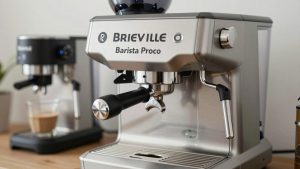
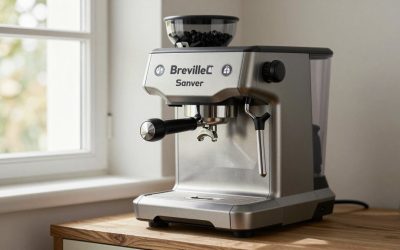
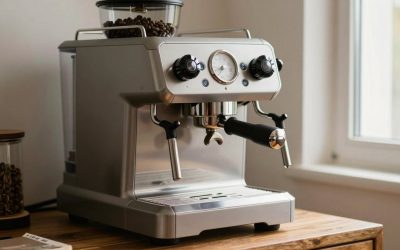
The Barista Express is not a super-automatic, and that is exactly why it belongs here. For less than half the Jura’s price you get an integrated burr grinder, a proper portafilter, and a real steam wand — everything needed to pull genuinely excellent espresso, if you supply the skill. It is the best-selling answer to the question this whole category raises: do you want the machine to be the barista, or do you want to become one?
Choose it if the process appeals to you even slightly — the learning curve is two weeks of imperfect but drinkable shots, and the ceiling is far above anything one-button machines produce. Skip it if you know, honestly, that at 6:45 a.m. you will resent every step. Our full Barista Express review covers it in depth.
Fully Automatic 20 Bar Machine with Grinder and Touch Screen
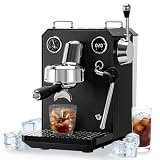
This touch-screen fully automatic represents the new wave of value machines: bean-to-cup brewing, a milk frothing system, and an interface that looks like it belongs on a machine twice the price. For a household that wants one-button lattes without a four-figure outlay, it covers the essential promise — fresh-ground espresso-style drinks with near-zero effort — and the touch interface makes the drink menu approachable for guests and teenagers alike.
Go in with calibrated expectations. Value-brand super-automatics typically trail the European machines in grinder refinement, milk texture, and — most importantly — long-term parts support. It is best bought as a five-year convenience appliance rather than a decade-long investment, and on that basis the math works.
Super Automatic 20 Bar with Conical Burr Grinder
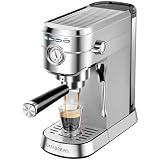
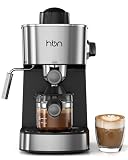
The most affordable true bean-to-cup machine in this round-up, built around a conical burr grinder and a straightforward drink menu. At this price the pitch is simple: skip the pod system, grind real beans fresh, and press one button — for many buyers upgrading from capsules, that alone transforms the morning cup. Fresh grinding is the single biggest quality jump in coffee, as our grinder versus pre-ground test shows.
The honest trade-offs mirror its sibling above: simpler milk handling, louder operation, and an unknown service story compared with Jura or De’Longhi. As a first super-automatic, or for an office corner where the machine is a convenience rather than a passion, it is a sensible, low-risk way in.
What to Look For in a Super-Automatic Espresso Machine
The category sells convenience, so judge every machine by how well that convenience survives daily life:
- Milk system design — Carafe systems you can rinse in seconds beat tube systems you must flush and disassemble. Milk hygiene is where neglected machines fail first.
- Grinder type and adjustment range — Look for burr grinders (ceramic or steel) with enough fine adjustment to produce a proper espresso body, not just fast brown water.
- Removable brew group — A brew unit you can pull and rinse weekly is a massive long-term reliability advantage over sealed designs at lower price points.
- Drink memory and profiles — Multi-person households genuinely use saved profiles; solo drinkers can skip the feature and save money.
- Consumables and parts ecosystem — Filters, tablets, gaskets, carafes: a machine with cheap, available spares outlives a nominally better one without them.
- Recovery time between drinks — If you queue three drinks every morning, a machine that needs a pause between them will annoy you for years.
Tips for Getting the Most Out of a Super-Automatic Espresso Machine
Buy better beans than you think the machine deserves. Super-automatics get blamed for mediocre coffee that is really mediocre input — a fresh, well-roasted medium bean transforms these machines, while supermarket beans roasted months ago will taste flat through a five-thousand-dollar grinder. Keep only a week of beans in the hopper and store the rest sealed, away from heat and light.
Then spend one evening in the settings. Nearly every machine on this page lets you adjust strength, volume, and temperature per drink, and the factory defaults are tuned for the average palate, not yours. Shortening the default volume slightly is the single most common tweak that makes super-automatic espresso taste dramatically more like café espresso.
Finally, respect the rinse prompts and clean the milk path the same day it is used, every time. The machines that reach old age are not the expensive ones — they are the maintained ones. Empty the drip tray and grounds bin before they force you to, run requested cleaning cycles immediately, and use filtered water. An hour of maintenance per month is the entire price of a decade of one-button lattes.
Frequently Asked Questions
Is a super-automatic espresso machine worth it over a pod machine?
If you drink more than one coffee a day, usually yes. Freshly ground beans taste better than any capsule, per-cup cost drops sharply, and modern machines are nearly as convenient as pods. The break-even arrives faster than most people expect once you price a year of capsules.
What is the real difference between a $400 and a $1,900 super-automatic?
Grinder refinement, milk texture, build and parts longevity, and shot quality at the margins. The expensive machine is not five times better per cup — it is better in ways that compound over years: serviceability, consistency, and a milk system you will still enjoy cleaning in year five.
Do super-automatic machines make real espresso?
Yes — they grind fresh and extract under pressure, which meets any reasonable definition. The top machines produce shots close to a skilled barista’s; budget models land closer to a strong, crema-topped coffee. In milk drinks, most palates cannot reliably tell the difference.
How long do super-automatic espresso machines last?
Maintained well, premium European machines commonly serve a decade or more, helped by service networks and available parts. Value-brand machines are realistically five-year appliances. Across every brand, milk-system neglect and skipped cleaning cycles end more machines than any manufacturing defect does.