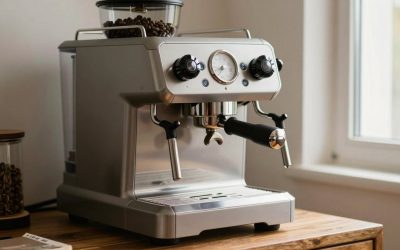
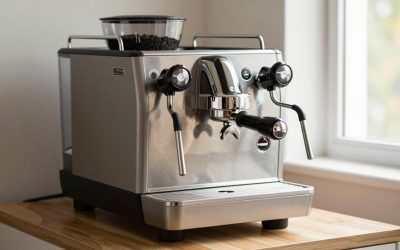
- Top Pick: La Pavoni EPC-8 Europiccola Lever Style Espresso Machine – Chrome & Silver – Manual Espresso Maker – 0.8 L Water Capacity, Authentic Italian Craftsmanship for Home Use
- Best Value: La Pavoni PC-16 Professional Espresso Machine – 16-Cup Capacity Lever Espresso Maker – Chrome Finish- Solid Brass 38oz Boiler – Dual Frothing Systems & Mounted Pressure Gauge – Made in Italy
- Premium Choice: La Pavoni Esperto Abile 16-Cup Lever Espresso Machine – Chrome Finish with Custom Rosewood Handles, 54-Ounce Nickel-Plated Boiler, Dual Frothing Systems & Group Pressure Gauge – Made in Italy
Last updated: October 21, 2026
As an Amazon Associate we earn from qualifying purchases at no extra cost to you.


Disclosure: As an Amazon Associate we earn from qualifying purchases. This page contains affiliate links and we may earn a commission at no extra cost to you.
No espresso machine photographs like a La Pavoni. The copper and brass, the exposed lever, the little eagle on the boiler cap — it is espresso as sculpture, a design that has outlived every trend since the mid-twentieth century. But the La Pavoni lever is not a museum piece: it is a working spring-free manual machine that puts extraction pressure literally in your hand, and the people who master one tend to keep it for life and pass it on.
This review centers on the La Pavoni Professional PB-16, the copper-and-brass flagship of the home range, and surrounds it with the rest of a realistic lever ecosystem: the IMS competition basket that modernizes its extraction, the replacement power switch that every long-term owner eventually meets, Flair’s 49 PRO and Classic as the modern manual alternatives, and — for scale and dreaming — La Pavoni’s two-group commercial Bar-Star. Together they tell the full story of what lever ownership actually looks like.
For the category-wide view, our manual lever machine overview covers how levers compare with pump machines, and the 2026 buying guide places them in the broader market. Here we get specific.
Quick Comparison
| Product | Price | Rating |
|---|---|---|
| La Pavoni Professional PB-16 (Copper/Brass) | $1,679.00 | 5.0/5 |
| La Pavoni Power Switch Replacement | $16.98 | 4.8/5 |
| Flair 49 PRO Lever Espresso Maker | $359.00 | 4.5/5 |
| IMS Competition Basket for La Pavoni | $19.94 | 4.3/5 |
| Flair Classic Lever Espresso Maker | $159.00 | 4.2/5 |
| La Pavoni Bar-Star 2-Group Commercial | $7,579.20 | 4.0/5 |
Why Trust This Guide
See also: How to Descale an Espresso Machine: Citric Acid vs Vinegar • Best Electric Kettles: Ten Glass, Steel and Gooseneck Picks Compared
We brew on manual levers as part of our regular rotation, which means our opinions come from burned knuckles and dialed-in mornings, not catalog copy. We evaluate machines on thermal behavior, workflow, build, and the long-term ownership realities — parts, gaskets, quirks — and where our time with a product is limited, we keep claims to what its design and documented track record support.
The Star: La Pavoni Professional PB-16
La Pavoni Professional PB-16
The Professional PB-16 at $1,679.00 is the larger-boiler variant of La Pavoni’s legendary home lever, finished in copper and brass that turns a kitchen corner into a café altar. The mechanism is gloriously direct: the boiler pressurizes, you lift the lever to draw water over the puck, and your arm provides and shapes the extraction pressure. There is no pump to hide behind and no firmware between you and the coffee — every shot is a small performance, and the machine gives you complete authorship of it.
The 38-ounce boiler class of the Professional matters for daily living: more water means more shots and more steam between refills than the smaller home models, which suits households where the machine serves more than one person. Steam from the boiler is genuinely capable once you learn its rhythm, and milk drinks from a Pavoni — poured from a proper jug like the ones in our latte art pitcher guide — feel earned in the best way.
The honest tradeoffs: the learning curve is real, with heat management being the classic challenge — small boilers climb in temperature across a session, so your third shot brews hotter than your first until you learn to manage it. Capacity is hands-on and unhurried, and the machine demands maintenance literacy. These are the terms of lever ownership. Accept them and the PB-16 may be the last espresso machine you ever buy.
The Ecosystem and the Alternatives
IMS Competition Basket for La Pavoni
The single highest-value upgrade for any post-millennium Pavoni lever is this $19.94 IMS competition basket. Stock baskets do the job, but IMS’s precision-drilled hole pattern and geometry promote noticeably more even flow through the puck — and on a lever, where there is no pump pressure to bulldoze through uneven extraction, basket quality is amplified.
Owners typically report easier dialing and cleaner, sweeter shots after the swap, and at this price it is the closest thing to a free lunch in lever espresso. Confirm fitment for your machine’s generation — this one is made for the post-millennium home levers — and pair it with deliberate puck prep to collect the full benefit. Our pre-infusion guide explains why gentle pre-wetting plus an even basket is the lever’s magic combination.
La Pavoni Power Switch Replacement
Every decades-long relationship includes repairs, and on Pavoni home levers the bipolar power switch is a known wear point. This $16.98 replacement — the green switch used across Professional and Romantica models — is the part you will be glad you ordered before you needed it.
The deeper point this product makes: La Pavoni machines are designed to be repaired, not replaced. Switches, gaskets, seals, and screens are all available and owner-serviceable with basic tools. That repairability is precisely how fifty-year-old Pavonis remain in daily service, and it is a genuine part of the value calculation against sealed modern appliances.
Flair 49 PRO
The Flair 49 PRO at $359.00 is the strongest modern argument that lever espresso need not cost four figures. It strips the concept to its essence — no boiler, no electricity, just a lever pressing hot water through a 49mm puck — and executes it with impressive machining and a proper handled portafilter in its updated form.
Against the Pavoni, the Flair trades away steam, session capacity, and the heirloom-object presence; you heat water separately and brew one deliberate shot at a time. What it keeps is the part that matters most: full manual pressure control and the tactile education that comes with it. As a first lever or a travel companion to a Pavoni, it is superb.
Flair Classic
The Flair Classic at $159.00 is the entry ticket — the same electricity-free lever concept in a simpler, case-packable package. For anyone Pavoni-curious but unsure whether manual workflow suits their mornings, the Classic answers the question for less than a tenth of the PB-16’s price.
Its constraints are the category’s constraints: single shots, per-shot assembly, no steam. But the fundamentals it teaches — grind discipline, preheating, smooth pressure — transfer directly to any lever you graduate to. Plenty of Pavoni owners started exactly here.
La Pavoni Bar-Star 2-Group Commercial
The Bar-Star 2V-R at $7,579.20 is a two-group volumetric commercial machine with a 14-liter boiler — equipment for an actual café, included here to show where the brand’s engineering heritage lives. This is what La Pavoni builds when the brief is hundreds of drinks a day, and the home levers inherit their seriousness from this lineage.
Should a home user buy one? Almost certainly not — it is plumbed-in, oversized, and overkill for domestic volume. But for a coffee cart, a small café, or the rare home bar that genuinely entertains at scale, it represents the brand’s commercial bona fides. Everyone else should admire it from the comfort of a PB-16. For more on how heritage marques stack up, see our 2026 brand comparison.
What to Look For in a Lever Espresso Machine
Levers are a distinct discipline. Evaluate any machine — vintage or modern — on these axes:
- Boiler size and session capacity — Bigger boilers hold temperature steadier across multiple shots and offer more steam. Small boilers heat faster but drift hotter through a session.
- Heat management — The classic lever challenge. Look for machines with known routines for temperature control, and a community that has documented them.
- Parts and repairability — A lever should be a lifetime machine. Gaskets, seals, switches, and baskets must be purchasable, or you are buying a future ornament.
- Basket and group standard — Upgrade paths like IMS baskets exist only for established formats. Obscure groups strand you with stock parts forever.
- Build materials — Brass, copper, and steel survive decades and look better doing it. Weight is your friend in a machine you wrestle with daily.
- Your honest temperament — Levers reward patience and ritual. If you want one-button speed, a lever will become furniture within a month.
Tips for Getting the Most Out of a La Pavoni Lever
Master the temperature story first. A Pavoni’s small boiler runs cooler on the first shot and hotter as the session continues, so learn your machine’s arc: many owners brew their best shot second, then manage group temperature with a damp cloth or a pause between pulls. Track what you do and taste against it — within two weeks you will have a personal protocol, and the machine will feel telepathic.
Grind fresh, dose consistently, and prep the puck like it matters, because on a lever it matters double. A quality burr grinder, even distribution, and a level tamp are the entire foundation; the IMS basket multiplies the payoff. Measure your shots rather than eyeballing — a scale and a marked glass like those in our espresso shot glass guide turn vague impressions into adjustable data.
And maintain it like the heirloom it is. Keep gaskets fresh, descale on a schedule suited to your water, wipe the group after sessions, and replace small electrics like the power switch when they age rather than after they fail. A Pavoni absorbs this minor stewardship and repays it in decades — which, amortized, makes the romantic choice quietly the rational one too.
Frequently Asked Questions
Is a La Pavoni lever machine good for beginners?
It is a demanding first machine but not an impossible one. The learning curve is steeper than any pump machine — heat management and pressure technique take weeks, not days. Beginners who relish a craft thrive on it; beginners who just want reliable lattes before work should start elsewhere and return later.
What does the lever actually do compared to a pump?
A pump delivers fixed, machine-controlled pressure; the Pavoni’s lever makes your arm the pump. You feel the puck’s resistance directly and can shape pressure through the shot — gentle pre-wetting, full pressure, a soft taper. That control is the entire appeal, and the entire challenge.
What maintenance does a La Pavoni need?
Routine descaling matched to your water hardness, periodic group gasket and seal replacement, and occasional small-part renewals like the power switch. All of it is owner-serviceable with basic tools and available parts, which is exactly why these machines famously outlive their owners’ other appliances.
La Pavoni or Flair — which manual machine should I choose?
Choose the Pavoni if you want a boiler, steam for milk drinks, multi-shot sessions, and a lifetime machine with heirloom presence. Choose a Flair if you want the lever experience at a fraction of the cost, value portability, and are content heating water separately. Many enthusiasts ultimately own both.