Last updated: October 20, 2026


Disclosure: As an Amazon Associate we earn from qualifying purchases. This page contains affiliate links and we may earn a commission at no extra cost to you.
As an Amazon Associate we earn from qualifying purchases at no extra cost to you.
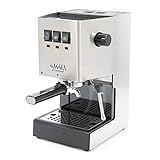



Some espresso machines are appliances, and some are institutions. The Gaggia Classic is an institution — a design lineage stretching back generations of home baristas, and the Evo Pro is its current chapter. It remains what it has always been: a compact, all-business single boiler with a commercial-style 58mm portafilter, a proper steam wand, and almost nothing else. No screens, no presets, no hand-holding. Just the tools, and the expectation that you will learn to use them.
In this review we cover the Classic Evo Pro across its color range — Thunder Black, Polar White, and the Cherry Red of the earlier Classic Pro — alongside the Breville Barista Express, its eternal rival on the other side of the philosophy divide, and the Gaggia E24 edition for buyers hunting the platform at the right price. We have also included Gaggia’s own descaler, because owning a Classic without a descaling routine is how good machines die young.
If you want the broader market context before going deep on one machine, our best home espresso machines for 2026 and our full buying guide are the places to start. Here, we go deep on the Gaggia.
Quick Comparison
| Product | Price | Rating |
|---|---|---|
| Gaggia Descaler (2 Bottles) | $15.00 | 4.8/5 |
| Breville Barista Express | $689.99 | 4.5/5 |
| Gaggia Classic Evo Pro (Thunder Black) | $501.24 | 4.4/5 |
| Gaggia Classic E24 | $453.79 | 4.4/5 |
| Gaggia Classic Pro (Cherry Red) | $549.00 | 4.4/5 |
| Gaggia Classic Evo Pro (Polar White) | $529.99 | 4.4/5 |
Why Trust This Guide
See also: How to Descale an Espresso Machine: Citric Acid vs Vinegar • Best Electric Kettles: Ten Glass, Steel and Gooseneck Picks Compared
Our reviews are grounded in the daily reality of home espresso: pulling shots before work, steaming milk for impatient family members, and maintaining machines through months of hard water and heavy use. We evaluate fundamentals — thermal behavior, build, workflow, serviceability — and we do not invent specifications or experiences we have not had. Where a product is a color variant or consumable, we say exactly that.
The Gaggia Classic Evo Pro, In Depth
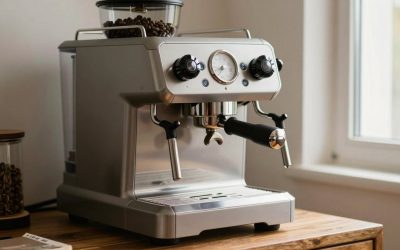
Gaggia Classic Evo Pro (Thunder Black)
The Evo Pro formula is simple: a small, rugged stainless body, a single boiler feeding a commercial-format 58mm portafilter, and a real steam wand. The Evo generation refines the recipe with improvements aimed at longevity and steam usability, but the soul is unchanged — this is a machine that does exactly what you tell it to do, which means it rewards skill and exposes sloppiness. Your grind, dose, and tamp are the recipe; the Gaggia is just the oven.
That honesty is the entire appeal. Because the Classic uses standard 58mm baskets, the aftermarket is enormous: precision baskets, distribution tools, and bottomless portafilters like the ones in our 58mm bottomless portafilter review all bolt straight on. The modding community around this platform is the deepest in home espresso, and a Classic can grow with you for a decade.
The tradeoffs are inherent to single boilers: you brew, then you wait briefly to steam, and temperature management takes practice. If your shots run harsh while you learn, our guide to why espresso turns bitter diagnoses the usual suspects. At $501.24 in Thunder Black, the Evo Pro is the definitive version of the definitive starter-to-enthusiast machine.
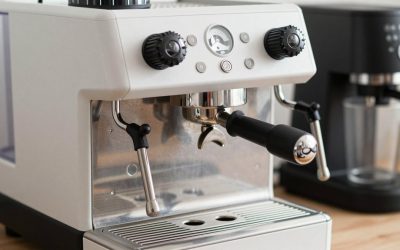
Gaggia Classic Evo Pro (Polar White)
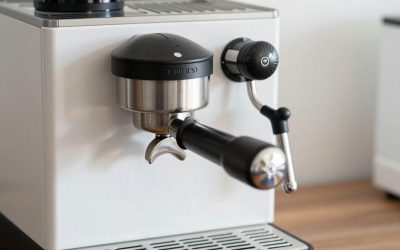
Mechanically this is the same Evo Pro, and everything above applies in full. The Polar White finish at $529.99 deserves its own mention because the Classic spends its life on your counter, and the white-and-steel look reads more like a design object than an appliance. In bright kitchens it is genuinely striking.
The practical note: white panels show coffee splatter and dried drips faster than dark finishes, so this is the colorway for owners who wipe down after every session — which, frankly, is a habit worth building anyway. A quality mat underneath, like those in our drip tray mat review, keeps the station looking intentional.
Gaggia Classic Pro (Cherry Red)
The Cherry Red Classic Pro at $549.00 represents the immediately preceding generation of the platform. The core hardware story is the same — 58mm commercial portafilter, compact stainless chassis, honest manual workflow — and at this point the Pro generation is thoroughly documented, with every quirk and fix mapped by the community.
Choose it if the red finish speaks to you or if you find it priced below the Evo at a given moment. Between Pro and Evo Pro generations, condition and price should drive the decision more than the revision itself; both are unmistakably the same machine in spirit.
Gaggia Classic E24
The E24 edition at $453.79 is the value entry into the Classic platform — same fundamental architecture, brushed stainless finish, and typically the lowest price of the family. For a buyer who wants the Gaggia experience and plans to upgrade baskets and accessories anyway, starting from the cheapest body makes obvious sense.
Pair whichever Classic you choose with a capable burr grinder before anything else. The Classic’s single biggest dependency is grind quality, and our espresso grinder roundup covers options at every budget. A Classic with a great grinder beats a fancier machine with a bad one, every time.
Breville Barista Express
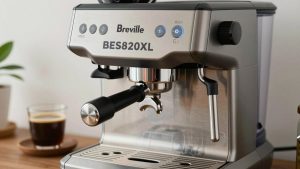
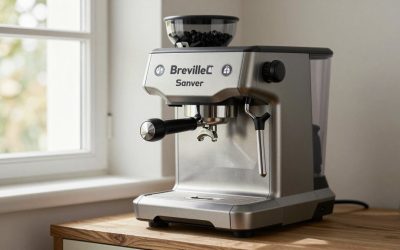
The Barista Express at $689.99 is the Classic’s philosophical opposite: grinder built in, pressure gauge on the front, 54mm workflow tuned for forgiveness rather than fidelity. It is the machine for people who want good espresso this week, not after a semester of practice, and it succeeds at that brilliantly.
Against the Gaggia, you trade the 58mm ecosystem, the mod culture, and the long-horizon serviceability for integration and gentler onboarding. Both are excellent; they are simply answers to different questions. The Express asks how easy espresso can be — the Classic asks how good you can get.
Gaggia Descaler (2 Bottles)
Fifteen dollars of descaling solution is the least glamorous product on this page and arguably the most important. Single-boiler machines like the Classic concentrate all their water chemistry in one small vessel, and scale buildup is the leading cause of failing thermostats, blocked valves, and slow death in these machines.
Gaggia’s own solution is formulated for its boilers, and a twice-yearly routine (more often with hard water) takes twenty minutes. Buying the two-pack with the machine is the cheapest longevity insurance in espresso.
What to Look For in a Classic-Style Single Boiler Machine
If the manual single-boiler category appeals to you, judge any contender on these points:
- Portafilter format — A commercial 58mm standard is the gateway to the entire accessory and basket aftermarket. It is the Classic’s defining advantage and should be yours too.
- Thermal behavior — Single boilers live and die by how predictably they heat. A machine with well-understood temperature rhythms can be mastered; an erratic one never can.
- Steam wand quality — Look for a wand with real articulation and dry steam. Milk texture is half of most people’s drinks, and a toy wand caps your ceiling.
- Parts availability — The Classic thrives because gaskets, baskets, and valves are everywhere. Any machine in this class without a parts pipeline is a future doorstop.
- Community depth — Decades of documented mods, fixes, and recipes are worth more than any warranty. Platform popularity is a feature, not a vanity metric.
- Build honesty — Steel chassis, metal portafilter, mechanical switches. Weight and simplicity age better than electronics in this category.
Tips for Getting the Most Out of a Gaggia Classic
Learn the machine’s thermal rhythm early. After the brew light signals ready, give the group a moment and run a brief blank shot to heat the portafilter and stabilize the path — a warmed group head is the cheapest upgrade there is. Keep your dose and routine fixed while you learn, changing only grind, and the Classic will become astonishingly repeatable within a couple of weeks.
Invest in puck prep before bling. A distribution tool, a proper tamper that fits the basket, and fresh beans will transform your shots more than any cosmetic accessory. When you are ready to diagnose extraction visually, a bottomless portafilter turns the bottom of your basket into a report card — channeling, spritzes, and dead spots all become visible and fixable.
And commit to the boring maintenance: purge and wipe the wand every session, backflush per the manual, descale on schedule with proper solution. The Classics that last twenty years are not the pampered ones — they are the consistently maintained ones. Twenty minutes a month is the entire price of forever.
Frequently Asked Questions
Is the Gaggia Classic Evo Pro good for beginners?
Yes, with one caveat: it is a machine for beginners who want to learn. It will not automate anything for you, but its honest feedback teaches real technique faster than forgiving machines do. Pair it with a capable grinder and expect a couple of weeks of practice before consistently great shots.
What is the difference between the Classic Pro and the Classic Evo Pro?
They are successive generations of the same platform, sharing the compact stainless body, 58mm commercial portafilter, and manual workflow. The Evo generation brings incremental refinements aimed at durability and usability. In practice, buy whichever generation and finish is best priced and in best condition.
Gaggia Classic Evo Pro or Breville Barista Express?
Choose the Gaggia if you value the 58mm ecosystem, long-term serviceability, and the craft of manual espresso. Choose the Breville if you want a built-in grinder and a gentler learning curve. The Gaggia has the higher ceiling; the Breville has the smoother on-ramp.
How often should I descale a Gaggia Classic?
It depends on your water hardness — as a baseline, a couple of times per year with filtered water, and noticeably more often with hard tap water. Use a proper espresso machine descaling solution rather than improvised acids, and follow Gaggia’s procedure so the solution reaches the boiler and valves correctly.