Last updated: October 20, 2026
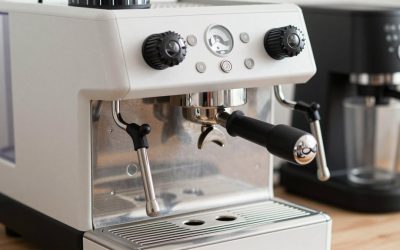
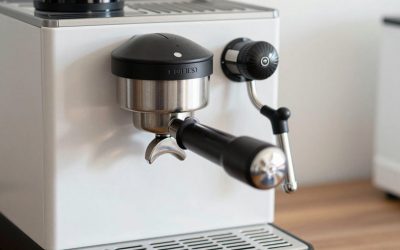
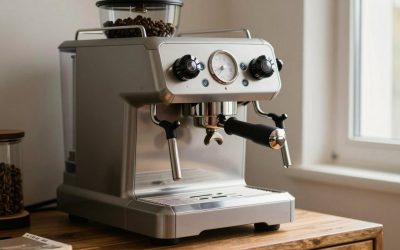
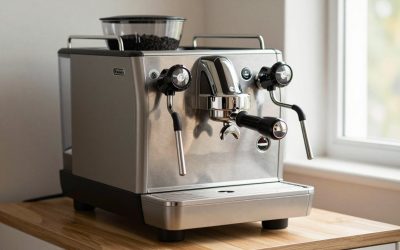
The Profitec Go is a compact single-boiler espresso machine with a 58 mm group, PID temperature control and an externally adjustable pressure valve. It is an excellent choice for an espresso-first household of one or two people who already own, or plan to buy, a good grinder. It is a poor choice if you make several milk drinks back to back, because a single boiler must switch between brew and steam temperatures. Its closest rivals in this guide, from the Gaggia Classic family to the Breville Bambino, cost less and trade away some control. Below is how the Go holds up, who should skip it, and which alternatives are worth a look.
Quick Verdict
- The Go gives home users the control features of a much larger machine: PID, a pressure gauge and an OPV adjustable from outside the case.
- Shot-to-steam switching takes roughly 40 to 50 seconds, and about 20 seconds to come back to brew temperature, so milk drinks are slower than on a dual boiler.
- There is no built-in grinder, so the total setup cost includes a separate burr grinder.
- The original Go and the newer Go 2.0 differ in software and buttons, so confirm which one a listing sells.
- Build and control quality sit in a higher tier than the alternatives below; buy it for the experience, not to save money.
Key Specs
See also: How to Descale an Espresso Machine: Citric Acid vs Vinegar • Best Electric Kettles: Ten Glass, Steel and Gooseneck Picks Compared
| Spec | Detail |
|---|---|
| Boiler | Single brass boiler, 0.3 L per Profitec (some retailers list 0.4 L) |
| Group and portafilter | 58 mm ring group |
| Temperature control | PID; brew adjustable 80 to 100°C (176 to 212°F), steam 120 to 140°C (248 to 284°F) |
| Pressure | Vibration pump, front gauge, OPV adjustable from outside (about 7.5 to 12 bar) |
| Water tank | About 2.8 L per Profitec, 2.65 L per another seller |
| Warm-up | About 6 to 7 minutes claimed; independent checks of the Go 2.0 reported nearer 8 minutes |
| Size | About 210 x 362 x 381 mm without the portafilter |
| Weight | About 12.9 kg (28.4 lb) |
| Power | US units listed at 115 V and 900 W by one source; other sources list 1,200 W, so confirm on the label on the machine |
| Cup clearance | About 3.0 in to the spouts and 4.7 in to the group |
| Grinder | None |
Several numbers above disagree between sources. Boiler volume is listed at 0.3 L by Profitec and 0.4 L by some retailers, and one reviewer says 400 ml is often repeated in error. Tank size shows the same split. Treat the spec table as a guide and check the listing and the machine label for the exact unit you buy, especially for voltage and wattage.
Who It Is For (and Who Should Skip It)
The Go is built for the home barista who thinks about shots as recipes. A PID and a visible gauge let you tune temperature and pressure and repeat a result, which suits someone who changes beans often or wants to dial in new coffee carefully. The 58 mm standard group also means a wide choice of baskets, tampers and portafilters.
It suits one- or two-person households that drink mostly straight espresso, Americanos or the occasional latte. If you pull a shot and steam once or twice per session, the workflow is fine.
Skip it if you serve milk drinks to a crowd, need an integrated grinder, or want to brew and steam at the same time. Also skip it if you want the lowest total outlay: the machine is only half of the setup, because a capable grinder is mandatory for good results. If you want automation, the Breville machines below are more forgiving.
What It Does Well
Temperature control you can see
The PID lets you set brew and steam temperatures and trim an offset, which independent reviewers say is needed to hit a target puck temperature because the machine can stabilize slightly higher on later shots. Brew temperature is adjustable across a wide 80 to 100°C window, wide enough for anything from light roasts to dark.
Pressure you can set and check
The OPV is adjustable from outside the case, in a range reported at about 7.5 to 12 bar, and a large front gauge shows what the pump is doing. The gauge shows pump pressure, not pressure inside the puck, but it is still useful feedback while dialing in grind and dose.
Compact, with a standard group
At 210 mm wide, the Go has a small footprint for a machine with a 58 mm group. Heat-up is quick in practice: sources put time to first shot at roughly 6 to 8 minutes, much faster than large E61-style machines. For a counter that must hold a grinder as well, the narrow width helps. The machine also stays out of the way once warm: a visible shot timer and clear PID readout let you work without a phone app.
Steam is better than the class suggests, with caveats
Coffee Kev calls the steam “surprisingly powerful for a small single-boiler machine,” while Café & Crema describes the Go 2.0 as sufficient but not especially strong, with 300 ml of milk taking about 60 seconds to heat. Both can be true: steam is adequate for one drink at a time, and the wand articulates well, but it does not match a dual boiler or a heat-exchanger.
A clear maintenance story
The Go 2.0 adds an automatic group cleaning cycle and a guided descaling program, and the original has a cleaning reminder. A published parts diagram supports conventional repair, though service runs through a dealer network. Profitec also announced a 2026 parts partnership for North America, intended to keep spares closer to US owners.
Where It Falls Short
Single-boiler milk workflow
Reviewers all return to this limit. The boiler must heat to steam temperature, then cool back for the next shot. Sources give about 40 to 50 seconds to reach steam and about 20 seconds to return to brew temperature, plus purging and a cooling flush. For one latte it is fine. For three, you will be waiting.
Features that depend on the generation
The original Go lacks programmable pre-infusion, has one brew button with a timer that cannot be programmed, and has no dedicated hot water function. The Go 2.0, introduced in June 2026, adds two programmable brew buttons, an OLED display, programmable pre-infusion and hot water through the steam wand. Hardware is largely unchanged: same 58 mm group, same dimensions, same warm-up time. Reviewers describe the 2.0 as software that was previously reserved for Profitec’s more expensive models, not a hardware revolution. US specialty retailers still sold the original at the time of the checks used here, so buyers should read the listing carefully.
Cup clearance and ergonomics
With about 3.0 in between the spouts and the drip tray, tall cups will not fit under a spouted portafilter. Reviewers also mention the water tank lid and the lack of a grab handle on the tank, minor but daily annoyances.
Time-based shots and service model
Brew buttons on the 2.0 stop by time, not by flow, so any grind change shifts the output at the same programmed duration. Warranty and service run through selling dealers, with recommended maintenance every three to four years. That is fine if you buy from a good specialist, less so from a marketplace seller.
How It Compares
| Machine | Portafilter | Grinder | Temperature control | Notable trait |
|---|---|---|---|---|
| Profitec Go | 58 mm | None | PID, adjustable | External OPV, front gauge |
| Breville Barista Express | 54 mm | Built-in conical burr, 16 settings | PID with thermocoil | All-in-one, low-pressure pre-infusion |
| Breville Bambino | 54 mm | None | PID with ThermoJet | About 3-second heat-up |
| Rancilio Silvia | 58 mm | None | Thermostat, no factory PID | 12 oz brass boiler, simple mechanics |
| Gaggia Classic Pro E24 | 58 mm | None | Thermostat, no PID | 3-way solenoid, 9 bar OPV on current units |
| Gaggia Classic Evo Pro | 58 mm | None | Thermostat, no PID | Same platform; boiler material varies by version |
| CASABREWS CM5418 | 51 mm | None | Thermoblock | 20-bar pump, built-in gauge |
The rows show a split: the Go and the two Breville machines offer some form of PID, while the Gaggia and Silvia models rely on simple thermostats. If temperature stability is the main reason you are considering the Go, the Bambino and Barista Express are the closest in that respect, while the Gaggia and Rancilio machines are closest in group size.
Alternatives Worth Considering
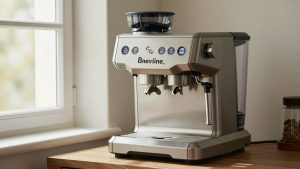
Breville Barista Express – why consider it
As an Amazon Associate we earn from qualifying purchases at no extra cost to you.

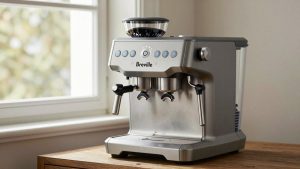
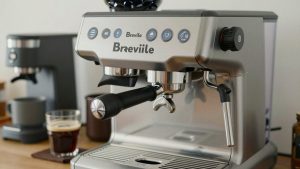
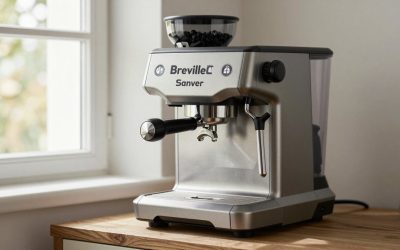
Pick the Barista Express if you want one machine and no separate grinder. It has a 54 mm portafilter, a built-in conical burr grinder with 16 settings and a hopper of about 250 g, a 15 bar pump with low-pressure pre-infusion into 9 bar extraction, and a 67 oz tank. It is more automatic and more forgiving, but the integrated grinder is harder to upgrade and the smaller portafilter limits accessories. The Black Truffle finish is the same machine in a different color. Compared with the Go, it trades manual control for convenience: you grind, dose and brew in one body, but you cannot swap the grinder or change the group size. For a first machine, that bundle is often a better value than a standalone espresso machine plus a good grinder.
Breville Bambino – why consider it

The Bambino is the compact, fast option: its ThermoJet heater reaches extraction temperature in about three seconds, and it pairs a 54 mm portafilter with an 18 g basket and a 47 oz tank. Most sources describe the BES450 wand as manual, while some pages blur it with the Bambino Plus, so check the listing. It has no grinder, and it gives up the Go’s adjustable PID range and external pressure control. It is the better pick for someone who wants fast milk drinks without waiting for a boiler, provided you add a separate grinder and accept a smaller portafilter.
Rancilio Silvia – why consider it

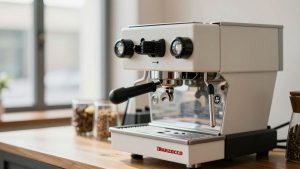
The Silvia is the classic simple 58 mm machine, with a 12 oz brass boiler, a commercial-size group and a 67 oz tank. Coffeedant notes it has a simpler thermostat design with no factory PID, which means more attention to temperature surfing but fewer electronics to fail. Pick it if you prefer a mechanical machine and a lower starting cost than the Go, and plan to learn its quirks. The machine rewards a consistent routine over automation. It shares its 58 mm size with the Go and the Gaggia machines, so baskets, tampers and portafilters are easy to find.
Gaggia Classic Pro E24 – why consider it

The Classic Pro is the standard budget pick for a 58 mm single boiler. It has a 3-way solenoid that leaves a dry puck, a tank of about 2.1 L, and no PID. The E24 revision is described by several sources as bringing a brass boiler and a 9 bar OPV on North American units. A black version with the same name exists in the listings. Choose it for the low entry cost and a large modding community, then add a PID later if you want one. Because it uses the same 58 mm size as the Go, baskets and tools carry over if you upgrade later.
Gaggia Classic Evo Pro – why consider it

The Evo Pro is nearly the same Gaggia platform with the same 58 mm portafilter, 3-way solenoid and roughly 72 oz tank, but sources disagree on its boiler: some describe a coated aluminum boiler, others a brass one in newer E24-labeled units. Retailer listings are inconsistent, so check the exact version before ordering. It is the budget way into 58 mm espresso, but it offers fewer factory controls than the Go. Pick this version only if the listing’s boiler material and model suffix match what you want, since the same platform is sold under several model numbers and finishes.
CASABREWS CM5418 – why consider it

The CM5418 is a very small, entry-level machine with a 20-bar pump, a built-in pressure gauge, a 34 oz tank and a 51 mm portafilter. It uses a thermoblock and a manual steam wand. It is worth a look if budget and counter space are the priority, but baskets and accessories for 51 mm are limited, and it offers far less control than the Go. Its manufacturer page mentions temperature control, but the thermoblock design is simpler than the Go’s brass boiler. The 20-bar figure is the pump’s rated maximum, not the pressure at the puck.
Questions
Is the Profitec Go good for beginners?
It can be, if the beginner is willing to learn dialing in. The PID and gauge help, but a beginner also needs a capable grinder and patience with a manual steam wand. If you want automation, the Barista Express is easier.
How long does the Profitec Go take to warm up?
The manufacturer claims about 7 minutes, and one reviewer puts it at 6 to 7 minutes. Independent notes on the Go 2.0 report closer to 8 minutes to the first shot and about 10 for a stable state.
What grinder should I pair with it?
Any grinder able to dial finely for espresso will do. Because the 58 mm basket is standard, you are not tied to one brand. Budget for the grinder as seriously as for the machine.
Can it make lattes and cappuccinos?
Yes, one at a time. Switching from brew to steam takes roughly 40 to 50 seconds, and returning to brew temperature about 20 seconds. Purge the wand before and after steaming.
What is the difference between the Go and Go 2.0?
The 2.0 adds two programmable brew buttons, an OLED display, programmable pre-infusion, hot water through the wand, a larger drip tray and cleaning programs. Dimensions and the 58 mm group are unchanged.
Is the Go available in the US?
Yes, through US specialty coffee retailers, though the original generation was the model sold there when the Go 2.0 launched in Europe. Check whether a listing is the original or the 2.0.
Update History
- October 20, 2026 – Updated with specification checks and a revised product comparison.
- Check the product page for current specifications and availability before buying.
Sources
- Profitec manufacturer information and blog
- Café & Crema review of the Profitec Go 2.0
- Coffee Kev review of the Profitec Go
- Coffeedant review of the original Profitec Go
- Kaffeemacher article on the Go 2.0
- Retailer specification pages for the Breville Barista Express and Bambino, Rancilio Silvia, Gaggia Classic Pro and Evo Pro, and CASABREWS CM5418