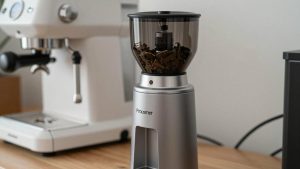
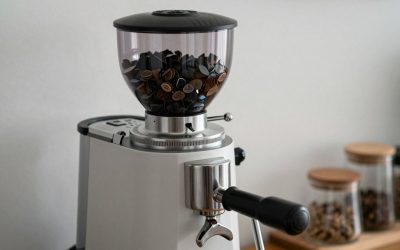
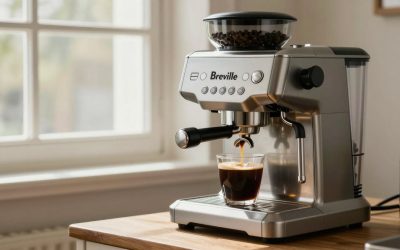
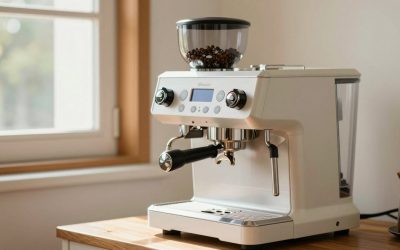
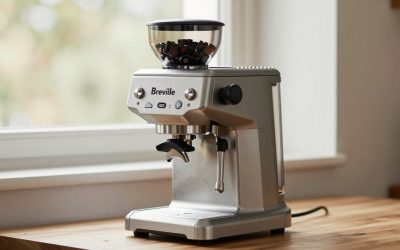
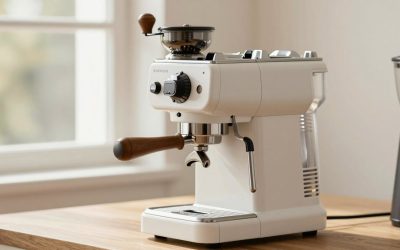
- Top Pick: SHARDOR Electric Burr Coffee Grinder 2.0, Automatic Coffee Bean Grinder for Home Use, Adjustable Burr Mill with 16 Precise Settings for Espresso & French Press, Glossy Black
- Best Value: Hamilton Beach Electric Burr Coffee Grinder with Large 16 oz. Hopper
- Premium Choice: OXO Brew Conical Burr Electric Coffee Bean Grinder – 12 Oz, Silver
Last updated: October 20, 2026
Quick Comparison
| Product | Brand | Price | Rating |
|---|---|---|---|
| IAGREEA Conical Burr Coffee Grinder | IAGREEA | $89.99 | 4.4/5 |
| Ollygrin Burr Coffee Grinder | Ollygrin | $79.99 | 4.6/5 |
| Coffee Grinder | Viesimple | $179.99 | 4.4/5 |
The Grinder Debate That Matters Most for Your Coffee
See also: Best Spice Grinders: Ten Electric Models Compared by Capacity, Bowl Design and Cleanup • 4 Best Flat Burr Coffee Grinders for Consistent Grounds (October 2026) Buying Guide
If there's one upgrade that improves coffee quality more than any other piece of equipment, it's switching from a blade grinder to a burr grinder. The difference isn't subtle — it's the difference between coffee that tastes harsh and inconsistent and coffee that tastes balanced, aromatic, and clearly of the variety you purchased. Understanding why requires understanding how each type of grinder works and what that means for your cup.
How Blade Grinders Work (And Why They Fall Short)
Blade grinders work exactly like a blender: a spinning metal blade chops coffee beans into smaller pieces through impact. The problem is that this creates wildly inconsistent particle sizes — some grounds are powdery fine, others are large chunks, and the friction from the spinning blade heats the coffee, accelerating oxidation of flavor compounds. When you brew this mix, fine particles over-extract (tasting bitter) while coarse particles under-extract (tasting sour and thin) simultaneously. The resulting cup is muddy, harsh, and unpredictable. Blade grinders are cheap for a reason.
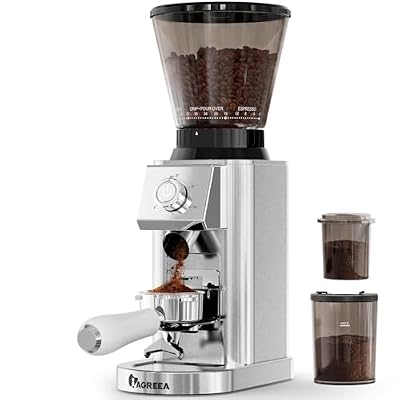
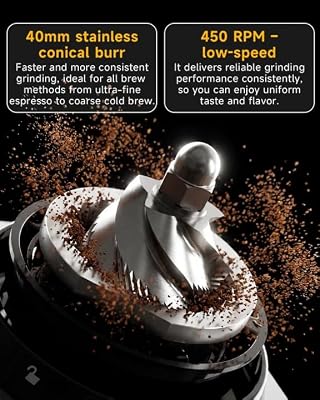
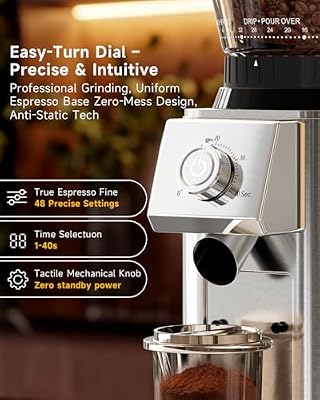
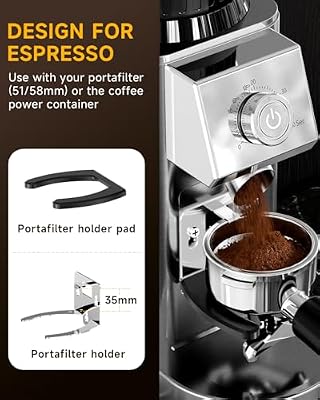
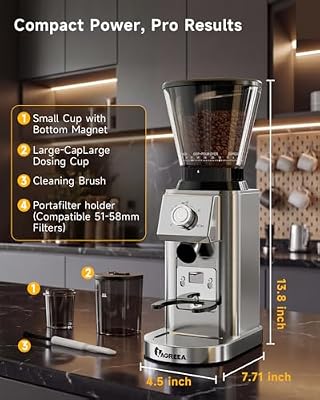
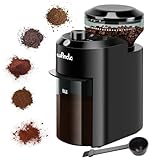
IAGREEA Coffee Grinder for Home Use, Conical Burr Espresso Grinder 48 Grind | 450RPM Low-Speed Anti-Static, Precision Timer For Drip, French Press, Cold Brew, No Mess, Metallic Silver




As an Amazon Associate we earn from qualifying purchases. Product prices and availability are accurate as of the date/time indicated.
As an Amazon Associate we earn from qualifying purchases.


How Burr Grinders Work (And Why They Dominate)
Burr grinders crush coffee between two abrasive surfaces (burrs) that are set at a fixed distance apart. This means every particle passing through exits at the same size — the distance between the burrs. Consistent grind size means every particle extracts at the same rate, producing balanced, predictable coffee without the bitter-sour conflict of blade grinding. Burr grinders also generate much less heat. They come in two main configurations: flat burrs (two parallel discs) and conical burrs (a cone inside a ring). Both produce excellent results; flat burrs tend to produce a slightly more uniform grind, while conical burrs are quieter and generate less retention (coffee stuck inside the grinder).

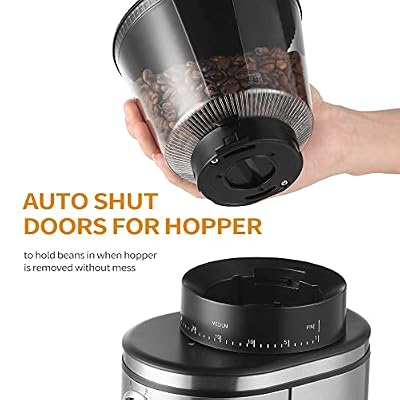
Ollygrin Burr Coffee Grinder, Electric Conical Coffee Bean Grinder With 30 Adjustable Grind Settings For 2-12 Cups, Sliver & Black


As an Amazon Associate we earn from qualifying purchases. Product prices and availability are accurate as of the date/time indicated.
Best Entry-Level Burr Grinder Upgrade
The Baratza Encore is the most recommended entry-level burr grinder in the coffee world. It uses a conical burr set with 40 grind settings, covers everything from French press coarse to drip medium, and is built to last with easily replaceable parts. For espresso, the Baratza Sette 270 is a step up with true stepped-stepless adjustment precise enough for dialing in espresso recipes. Manual hand grinders like the Timemore C3 or 1Zpresso JX Pro are excellent budget alternatives with excellent grind quality for their price.

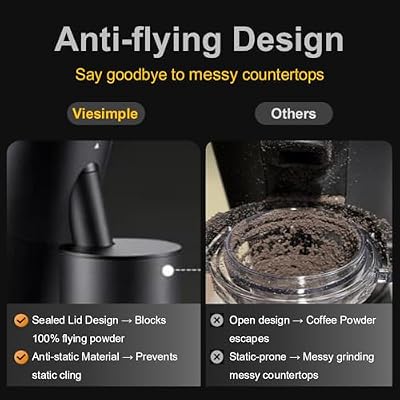
Viesimple Gen 4 Electric Burr Coffee Grinder, Single Dose, Espresso, Black | Magnetic dosing cup, anti-static design and compact quiet workflow help keep daily home brewing cleaner and more consistent.




As an Amazon Associate we earn from qualifying purchases. Product prices and availability are accurate as of the date/time indicated.
Buying Guide: Choosing the Right Burr Grinder
- Brew method: espresso requires finer, more precise adjustment; drip and French press need coarser settings
- Burr type: conical burrs are quieter and produce less retention; flat burrs offer slightly more uniformity
- Budget: even a $50 burr grinder outperforms any blade grinder for coffee quality
- Electric vs manual: electric grinders are faster; manual hand grinders are quieter and more affordable
- Grind settings: more settings give finer adjustment; stepless adjustment offers infinite precision
- Capacity: single-dose grinders waste less coffee; hopper grinders are more convenient for high-volume use
How Grind Consistency Affects Extraction
The core reason burr grinders outperform blade grinders comes down to particle uniformity. A burr grinder crushes beans between two abrasive surfaces set a precise distance apart, so nearly every particle comes out the same size. A blade grinder, by contrast, simply chops beans with a spinning blade, producing a chaotic mix of fine dust and large chunks. This matters because extraction depends on particle size: fine particles give up their flavor quickly while coarse chunks extract slowly. When both exist in the same brew, the fines over-extract into bitterness at the same moment the boulders under-extract into sourness, leaving a muddled, unbalanced cup.
Uniform grounds let water flow and extract evenly, which is the foundation of a clean, repeatable cup. This is especially critical for espresso, where pressurized water will exploit any inconsistency in the puck, but it improves every brew method. Consistency also makes your grinder adjustable in a meaningful way: with a burr grinder you can reliably go finer or coarser to dial in a recipe, and the change behaves predictably. With a blade grinder, “grinding longer” just creates more dust without truly changing the particle distribution, so you can never dial in a method with precision.
Matching Grind Size to Your Brew Method
Different brewing methods demand different grind sizes, and a burr grinder’s adjustability is what lets you serve them all. Espresso needs a fine grind to create resistance against nine bars of pressure over a short extraction. Pour over and drip call for a medium grind that balances flow and contact time. French press and cold brew want a coarse grind because of their long steep times—a fine grind there would over-extract and slip through the filter into the cup. Moka pots sit in between, favoring a medium-fine grind.
Beyond method, grind size is also your primary tool for fine-tuning a brew that tastes off. If your coffee is sour, thin, or weak, it is usually under-extracted, and grinding finer increases extraction to add sweetness and body. If it tastes harsh or bitter, it is over-extracted, and grinding coarser pulls it back into balance. A burr grinder makes these adjustments incrementally and repeatably, which is why investing in one is widely considered the single highest-impact upgrade a home coffee drinker can make—often more impactful than upgrading the brewer itself.
Frequently Asked Questions
Is a burr grinder really worth the extra money?
For most coffee drinkers, yes. The uniform particle size a burr grinder produces directly improves flavor, balance, and consistency across every brew method. Many enthusiasts consider a good grinder a higher-impact upgrade than a more expensive brewer.
Can’t I just grind longer in a blade grinder to get a finer grind?
Grinding longer in a blade grinder mostly creates more fine dust mixed with remaining chunks rather than a uniform fine grind. You cannot reliably control or repeat a grind size, which makes dialing in any brew method difficult.
What is the difference between flat and conical burrs?
Both produce uniform grounds far better than blades. Conical burrs are common in home grinders and are efficient and quieter; flat burrs are often found in higher-end models and can produce a very narrow particle range. For most home users, grind quality and adjustment range matter more than burr shape.
Why does grind size change how my coffee tastes?
Finer grinds extract faster and more fully, adding body and reducing sourness; coarser grinds extract more slowly. Adjusting grind size is the main way to fix coffee that tastes too sour (grind finer) or too bitter (grind coarser).
Do blade grinders have any advantages?
Blade grinders are inexpensive and compact, which makes them an accessible starting point. However, their inconsistent grind limits coffee quality, and most drinkers who care about flavor upgrade to a burr grinder once they taste the difference.
Final Thoughts
The burr vs blade debate has a clear winner: burr grinders produce demonstrably better coffee at every price point above entry level. If you own a blade grinder today and you care about coffee quality, upgrading to even a basic burr grinder is the single highest-impact change you can make. The Baratza Encore remains the benchmark recommendation, but any conical or flat burr grinder will transform your daily cup in ways that a new brewer or premium beans cannot match without consistent grind size.