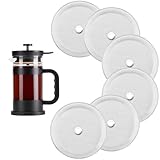
- Top Pick: 6 Packs French Press Filters Replacements, 4 Inch Premium Stainless Steel French Press Screen Replacement for 1000 Ml/ 34 Oz/ 8 Cup French Press Coffee and Tea Makers by ES NATAURA
- Best Value: 8 Pieces French Press Replacement Parts Stainless Steel Set, 6 Pieces 3.6in Universal French Press Screen, Containing Spiral Disk and Cross Disk for 34oz/3.6 Inch Wide French Press Coffee Press
- Premium Choice: BruTrek by Planetary Design Coffee Paddle Stir Stick, Easy Clean Silicone
Last updated: October 20, 2026
Quick Comparison
| Product | Brand | Price | Rating |
|---|---|---|---|
| Bodum 34oz Chambord French Press Coffee Maker | Bodum | $39.95 | 4.6/5 |
| Bodum 51oz Brazil French Press Coffee Maker | Bodum | $29.99 | 4.5/5 |
| Bodum 34 oz Columbia Thermal French Press Coffee Maker | Bodum | $59.99 | 4.5/5 |
Why French Press Coffee Makers Produce Such a Unique Cup
See also: How to Descale an Espresso Machine: Citric Acid vs Vinegar • Best Electric Kettles: Ten Glass, Steel and Gooseneck Picks Compared
The French press is the full-immersion brewing method that produces the richest, most body-forward cup of coffee at home. Unlike filter brewing methods, the French press uses a metal mesh plunger that allows coffee oils and fine particles to remain in the cup — giving you a heavier mouthfeel and more complex flavor than paper-filtered methods. It requires no electricity, no pods, and no paper filters. It's the most sustainable, lowest-cost, and highest-capacity manual brewing method in the home coffee toolkit.
Bodum Chambord French Press Coffee Maker
The Bodum Chambord is the most iconic French press design in the world. Its chrome-plated steel frame, heat-resistant borosilicate glass beaker, and tight-fitting stainless mesh plunger have defined French press aesthetics since 1974. The Chambord is available in 3, 4, 8, and 12-cup sizes. The filter presses cleanly with minimal grounds in the cup. The glass beaker is replaceable separately, extending the product's life indefinitely. For classic French press performance at a fair price, the Chambord is the standard-setter.
As an Amazon Associate we earn from qualifying purchases at no extra cost to you.


Fellow Clara French Press Coffee Maker
The Fellow Clara is the most innovative French press in years. Its dual-wall vacuum-insulated steel body keeps coffee hot for up to an hour — solving the French press's biggest weakness (coffee continuing to steep and over-extract after pressing). The EvenFlow lid controls the pour rate for a cleaner, more consistent cup. The fine-mesh filter dramatically reduces silt compared to standard French press screens. Clara is the premium pick for those who want French press richness with fewer of its traditional drawbacks.
Espro P6 French Press Coffee Maker
The Espro P6 features a patented double micro-filter system that removes 9x more sediment than a standard French press plunger. The result is a cup that retains French press body and oils while dramatically reducing the gritty silt that many drinkers dislike. The 18/10 stainless steel double-wall construction keeps coffee at temperature for 60+ minutes. The sealed filter stops extraction immediately upon pressing, preventing over-steeping. For those who love French press flavor but want filter-like clarity, the Espro P6 is the best solution.
French Press Coffee Maker Buying Guide
- Capacity: French press sizes are labeled in cups but cups are 4 oz (European standard). An "8-cup" French press brews about 34 oz — enough for 3–4 large mugs.
- Material: Glass is classic but fragile; stainless steel is durable and insulating; ceramic is heavy but beautiful.
- Filter quality: Multiple mesh layers reduce sediment dramatically. Single-layer screens leave more silt in the cup.
- Grind size: Use a coarse grind to minimize silt and prevent over-extraction. A burr grinder is strongly recommended.
- Brew time: Standard steep time is 4 minutes. Over-steeping creates bitterness; under-steeping creates sourness.
- Transfer after pressing: Pour all coffee into a carafe after pressing to stop extraction and prevent bitterness.
How French Press Brewing Shapes Flavor
The French press is an immersion brewer, meaning the coffee grounds steep in hot water for the entire brew rather than having water pass through them quickly. This full immersion extracts a rich, heavy-bodied cup with pronounced aromatics. Crucially, the French press uses a metal mesh filter rather than paper, which allows the coffee’s natural oils and tiny fine particles to pass into the cup. Those oils carry much of coffee’s flavor and aroma, which is why French press coffee tastes fuller and more textured than the cleaner cup a paper filter produces.
That same mesh filter is why technique matters. Because fines can slip through, using a coarse, even grind is essential—too fine and the cup turns muddy and gritty with sediment settling at the bottom. A consistent coarse grind from a burr grinder dramatically improves clarity. Steep time also drives extraction: around four minutes is the classic standard for a medium-coarse grind. Steep too long and the coffee turns bitter from over-extraction, which is why many brewers decant the coffee off the grounds promptly once plunged rather than letting it sit in the press.
Choosing and Caring for a French Press
When selecting a French press, material is the first decision. Borosilicate glass is the classic choice—it does not retain flavors and lets you watch the brew—but it is fragile and loses heat faster. Stainless steel and double-walled insulated models are far more durable and keep coffee hot much longer, making them ideal for slow sippers or travel, at the cost of not being able to see inside. Filter quality varies too: a tightly woven, multi-layer mesh filters out more sediment and seals better against the glass, producing a cleaner cup with less grit.
Cleaning is where many French presses fall short of their lifespan. Coffee oils build up on the mesh filter over time, turning rancid and tainting future brews, so the filter assembly should be disassembled and washed thoroughly on a regular basis rather than just rinsed. Knock the spent grounds into the compost or trash rather than the sink, where they clog drains. A quick daily rinse plus a periodic deep clean of the screen keeps the coffee tasting fresh. Check whether your model’s parts are dishwasher-safe, and replace the mesh screen if it becomes bent or clogged, since a damaged filter lets through excess sediment.
Frequently Asked Questions
What grind size is best for a French press?
A coarse, even grind works best. The metal mesh filter lets fine particles through, so a fine grind produces a gritty, muddy cup. A consistent coarse grind from a burr grinder keeps the coffee clean and full-bodied.
How long should I steep French press coffee?
About four minutes is the classic standard for a medium-coarse grind. Steeping much longer over-extracts and turns the coffee bitter. Many brewers decant the coffee off the grounds right after plunging to stop extraction.
Why is my French press coffee gritty or muddy?
Grittiness usually comes from too fine a grind or a worn mesh filter. Use a coarser, more uniform grind and make sure the screen is intact and properly seated. Letting the brew settle briefly before pouring also reduces sediment.
Is French press coffee stronger than drip?
French press coffee is fuller-bodied because its metal filter lets oils and fine particles into the cup, which paper filters trap. Whether it is “stronger” depends on your coffee-to-water ratio, but it generally tastes richer and heavier than paper-filtered drip.
How do I clean a French press properly?
Discard the grounds in the trash or compost, not the sink. Periodically unscrew and wash the mesh filter assembly to remove built-up coffee oils that can turn rancid. A daily rinse plus regular deep cleaning of the screen keeps brews tasting fresh.
Final Thoughts
The Bodum Chambord is the classic French press that every coffee lover should experience at some point. The Fellow Clara is the premium upgrade for those who want temperature retention and reduced silt. The Espro P6 bridges French press and filtered coffee for those who want body without grit. All three offer a rich, authentic coffee experience that pod and drip machines simply cannot replicate.