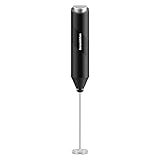
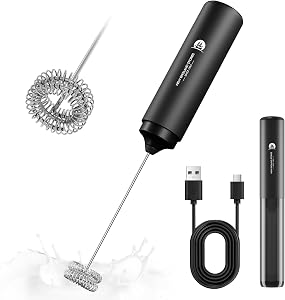
- Top Pick: Zulay Kitchen Powerful Milk Frother Wand With Duracell Batteries – Ultra Fast Handheld Drink Mixer – Electric Whisk Foam Maker for Coffee, Lattes, Cappuccino & Matcha – Z1 Motor – Black
- Best Value: SIMPLETASTE Milk Frother Handheld Electric Foam Maker Battery Operated
- Premium Choice: Zulay Kitchen Powerful Milk Frother Wand With Duracell Batteries – Ultra Fast Handheld Drink Mixer – Electric Whisk Foam Maker for Coffee, Lattes, Cappuccino & Matcha – Triple Whisk – Black
As an Amazon Associate we earn from qualifying purchases at no extra cost to you. Product prices and availability are accurate as of the date shown and are subject to change.




TL;DR: A battery-powered handheld milk frother delivers cafe-quality foam in 20 seconds flat. Compact, cheap to run, and easy to clean — it’s the fastest upgrade for home latte and cappuccino drinkers who don’t want to babysit a steam wand.
Best Handheld Milk Frother (Battery Powered): Cafe Foam at Home for Under $15
Not everyone wants to learn steam wand technique. Latte art is beautiful, but at 7am before your first coffee, sometimes you just want hot foam without a lesson in microfoam physics. That’s exactly where a battery-powered handheld milk frother earns its place in the kitchen drawer — and earns it fast.
I’ve tested handheld frothers alongside proper steam wands for years. The wand wins on texture ceiling; the handheld wins on everything else: speed, cleanup, portability, and cost. Here’s what to look for and what to avoid.
Quick Comparison
| Product | Brand | Price | Rating |
|---|---|---|---|
| Zulay Kitchen Powerful Milk Frother Wand With Duracell … | ZulayKitchen | $16.99 | 4.4/5 |
| Zulay Kitchen Milk Frother Handheld Electric Whisk – Fr… | ZulayKitchen | $7.99 | 4.4/5 |
| PowerLix Powerful Handheld Milk Frother With Stand Batt… | POWERLIX | $9.01 | 4.4/5 |
| SIMPLETASTE Milk Frother Handheld Electric Foam Maker | SIMPLETaste | $7.99 | 4.5/5 |
| SIMPLETASTE Milk Frother Handheld Electric Foam Maker | SIMPLETaste | $6.99 | 4.5/5 |
Top Handheld Milk Frothers
See also: How to Froth Oat Milk with Steam Wand (2026): Step-by-Step • What Size Milk Pitcher for Two Lattes? Size Guide With Measurements (2026)
How a Handheld Frother Works
A battery-powered handheld milk frother is essentially a small motorized whisk. Two AA or AAA batteries power a motor that spins a coiled wire whisk at 12,000–19,000 RPM. When submerged in milk, the whisk introduces thousands of tiny air bubbles per second, creating foam through mechanical aeration.
The milk should be heated separately — either in the microwave (30–45 seconds for 6oz), on the stovetop, or with an electric milk warmer. Then froth for 15–30 seconds by holding the whisk just below the surface and moving it in a slow circle. That’s the entire process.
The foam produced is lighter and airier than steam wand microfoam — more “dry” cappuccino froth than “wet” flat white texture. For cappuccinos, hot chocolates, matcha lattes, and frothy iced drinks, it’s perfect. For precise latte art pours, you’ll want a standalone automatic milk frother or a steam wand with a proper textured milk pitcher.
What Actually Separates Good Frothers from Bad Ones
Motor RPM and torque determine foam quality and speed. Budget frothers at 12,000 RPM take 30–45 seconds to produce foam and struggle with cold or thick milk. Models running 15,000 RPM or higher foam in 15–20 seconds and handle oat milk and whole milk without bogging down.
Whisk coil gauge matters for foam texture. Thicker wire whisks (around 0.8–1mm) create large, coarse bubbles suitable for cappuccino. Thinner wire whisks produce finer, denser foam closer to microfoam. Premium models include two interchangeable whisk attachments for different foam styles.
Build quality at the neck is where cheap frothers fail. The joint between the motor housing and the whisk shaft takes stress from every use. Plastic necks crack within months of daily use. Look for stainless steel shafts with secure, snap-lock whisk attachments rather than press-fit connections that wobble after a few weeks.
Battery type and efficiency affects long-term running costs. AA batteries last 60–90 uses in quality motors; AAA batteries run for 40–60 uses. Some models accept rechargeable AA batteries without modification, which drops the per-use cost significantly. A small number of premium handheld frothers have built-in USB-C rechargeable batteries — worth the price bump for heavy daily use.
Milk Types and Frothing Results
Whole milk froths fastest and produces the richest foam due to its fat and protein content. 2% milk is nearly as good. Skim milk creates voluminous but less stable foam.
Plant milks are trickier. Oat milk (barista edition) froths well with a high-RPM frother; standard oat milk is thinner and produces less stable foam. Almond milk produces light, airy foam quickly. Soy milk creates good volume but can separate faster. Coconut milk from the carton (not canned) froths surprisingly well.
One universal rule: warmer milk foams better. Target 140–155°F (60–68°C) for the smoothest, most stable results. At room temperature, the foam is possible but coarser and collapses faster.
Cleaning and Maintenance
This is where handheld frothers genuinely beat steam wands: cleanup is one second. Dip the spinning whisk into a glass of warm water while running for three seconds, then wipe the shaft dry. Milk proteins don’t bond to the fast-spinning wire the way they cake onto steam wand nozzles.
The only maintenance item is battery replacement. Keep a spare set nearby — there’s nothing worse than a dead frother mid-morning routine. For those using the frother with an espresso setup, keep it next to your descaler and cleaning supplies as a reminder to maintain all tools regularly.
Spec Comparison Table
| Feature | Budget | Mid Range | Premium |
|---|---|---|---|
| Motor Speed | 12,000 RPM | 15,000–17,000 RPM | 18,000–19,000 RPM |
| Power Source | 2x AAA battery | 2x AA battery | USB-C rechargeable |
| Shaft Material | Plastic | Stainless steel | Stainless + rubber grip |
| Whisk Attachments | 1 (fixed) | 1 (removable) | 2 (foam + dense) |
| Frothing Time (6oz) | 30–45 sec | 15–25 sec | 10–15 sec |
| Price Range | $5–$12 | $12–$22 | $25–$45 |
FAQ: Handheld Milk Frother
Do handheld milk frothers work with cold milk for iced lattes?
Yes, but the foam will be lighter and less stable than with heated milk. For iced lattes, cold foam made with cold whole milk or oat milk works well — froth for 30–45 seconds until the foam doubles in volume, then spoon it over your iced espresso. Cold foam doesn’t incorporate into the drink the way hot microfoam does, but it sits on top as a creamy layer, which is exactly what most iced latte drinkers want.
How long do batteries last in a handheld milk frother?
Quality frothers running on 2x AA alkaline batteries typically last 60–90 frothing sessions before the batteries need replacing. At one use per day, that’s 2–3 months per set. Using premium lithium AA batteries extends this to 100–120 sessions. Rechargeable NiMH AA batteries work well and are the most economical long-term option — a set of 4 rechargeable AAs will outlast the frother itself.
What is the difference between a handheld frother and an electric milk frother jug?
A handheld frother aerates milk mechanically without heating it — you warm the milk separately. An electric milk frother jug (like the Nespresso Aeroccino or Breville Milk Cafe) heats and froths simultaneously in an automatic cycle. The jug produces more consistent results and handles larger volumes, but costs significantly more, takes up counter space, and requires more thorough cleaning. For single-serve use, the handheld frother is faster and more practical.
Can I froth milk directly in the cup with a handheld frother?
Yes — this is actually the recommended method for most handheld frothers. Heat your milk in the cup in the microwave (30–40 seconds for 6oz), then froth directly in the cup before adding espresso. It saves a vessel, reduces cleanup, and the cup’s walls help contain splashing. Use a mug that’s at least twice the volume of your milk to prevent overflow as foam builds.
Are handheld milk frothers dishwasher safe?
Only the whisk attachment is typically dishwasher safe — never submerge the motor housing or shaft above the waterline marker. Most handheld frothers don’t have a detachable whisk, so the rinse-while-running method is the intended cleaning approach. The motor and battery compartment must always stay dry. Check the specific model’s instructions, but the general rule is: motor housing stays out of water, whisk tip gets rinsed under running water or in a glass of warm water while spinning.
Frequently Asked Questions
Can a handheld frother make latte art microfoam?
No. A whisk frother whips air into the surface and creates dry, bubbly foam that sits on top, which suits cappuccino-style drinks, hot chocolate and matcha. Latte art requires the pressurized steam and vortex of a real steam wand to fold air through the whole volume.
Should the milk be hot or cold?
Both work, and cold milk froths acceptably for iced lattes, though the foam is looser. For hot drinks, heat the milk to about 60C first and then froth, because the device adds no heat at all. Frothing first and heating afterward collapses most of the foam.
Which milk foams best?
Whole dairy milk gives the most stable foam thanks to its protein and fat balance, while skim produces more volume but drier, coarser bubbles. Among alternatives, barista-formulated oat and soy perform best because they add protein and stabilizers; almond and rice milk foam poorly.
How long do the batteries last?
A typical AA-powered unit runs several hundred ten-second cycles per pair of batteries, so months of daily use. Rechargeable USB models avoid the waste but usually have weaker motors. If foam quality suddenly drops off, replace the batteries before assuming the motor has failed.
How do I clean one?
Run the whisk in a glass of hot soapy water for a few seconds, rinse in clean water and dry it. Never submerge the motor body or put it in a dishwasher. Dried milk on the coil is the usual reason cheap frothers become noisy and unbalanced.
Ready to decide? Our #1 pick for 2026 is the Zulay Kitchen Powerful Milk Frother Wand With Duracell ….
Live price & availability on Amazon.