TL;DR: A good espresso machine descaler removes calcium and mineral buildup that chokes flow, kills temperature stability, and shortens machine life. Use a food-safe descaler every 2-3 months depending on water hardness. Skip vinegar — it leaves residue and can damage seals.
Espresso Machine Descaler: Complete Cleaning Guide for Home Baristas
Scale is the silent killer of espresso machines. Calcium carbonate and magnesium deposits coat heating elements, clog solenoid valves, and narrow group head channels over time. The result: slow shot pulls, inconsistent temperature, and eventually a dead boiler. A quality espresso machine descaler is the most cost-effective maintenance tool in your barista kit.
As an Amazon Associate we earn from qualifying purchases at no extra cost to you. Product prices and availability are accurate as of the date shown and are subject to change.




Quick Comparison
| Product | Brand | Price | Rating |
|---|---|---|---|
| Gaggia RI9380/49 Classic Evo Pro Espresso Machine | — | $499 | 4.4/5 |
| Rancilio Silvia Espresso Machine | Rancilio | $995 | 4.2/5 |
| TIMEMORE Sculptor 078S Flat Burr Coffee Bean Grinder | TIMEMORE | $799 | 4.3/5 |
Top Descaler Products
See also: How to Replace Espresso Machine Water Filter (2026): Step-by-Step • How to Adjust Espresso Machine Brew Temperature (2026): Step-by-Step

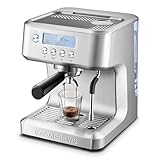
Gaggia RI9380/49 Classic Evo Pro Espresso Machine, Thunder Black, Small




As an Amazon Associate we earn from qualifying purchases. Product prices and availability are accurate as of the date/time indicated.

Rancilio Silvia Espresso Machine, Stainless Steel


As an Amazon Associate we earn from qualifying purchases. Product prices and availability are accurate as of the date/time indicated.

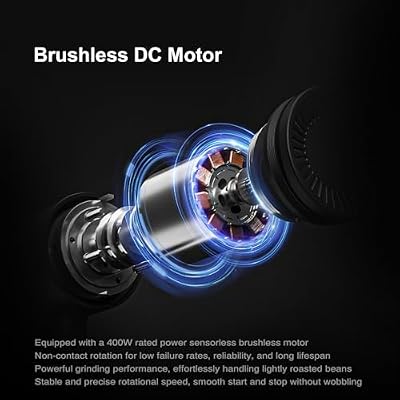
TIMEMORE Sculptor 078S Flat Burr Coffee Bean Grinder, Electric Espresso Grinder with Stepless Coarseness Adjustment, Suitable for Espresso, Pour over, French Press, Cold Brew - Black





As an Amazon Associate we earn from qualifying purchases. Product prices and availability are accurate as of the date/time indicated.
Why Scale Is a Serious Problem
Water hardness varies dramatically by region. In hard-water areas, a machine used daily can accumulate significant scale in as little as 6-8 weeks. Scale acts as an insulator on heating elements — the element must work harder to reach target temperature, drawing more power and wearing faster. On thermoblock machines, scale partially blocks the narrow water path, reducing pressure and extending pre-infusion time unpredictably.
Beyond the machine itself, scale affects cup quality. Partial flow restriction through scale-coated channels means uneven extraction — some coffee grounds get over-extracted while others are barely touched. The result is a bitter, hollow shot with a thin crema.
If you care about dialing in grind size, you should care equally about descaling. An uncalibrated machine makes every grind adjustment unreliable. Read our espresso grind size guide to understand why machine consistency matters so much for extraction.
Descaler Types: What to Use and What to Avoid
Commercial espresso machine descalers use citric acid, lactic acid, or proprietary acid blends at food-safe concentrations. These dissolve calcium carbonate efficiently without attacking rubber gaskets, brass fittings, or stainless components at proper dilutions.
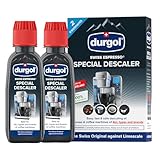
Citric acid-based descalers are the most common and widely compatible. They work well on both thermoblock and boiler machines. Brands like Urnex Dezcal and Durgol use citric acid as the active ingredient.
Lactic acid-based descalers (like Puly Caff and some Nespresso-branded products) are gentler and particularly suited for aluminum components. If your machine uses an aluminum boiler or internal parts, check manufacturer recommendations.
Avoid white vinegar. While acetic acid does dissolve scale, it leaves residue that taints subsequent shots, and repeated use can degrade silicone and rubber seals over time. Most manufacturers explicitly void warranties if descaling is done with vinegar. It’s simply not worth the risk when commercial descalers cost a few dollars per dose.
Descaling Frequency: Reading the Signs
General guidelines based on water hardness:
| Water Hardness | TDS Range | Descaling Frequency |
|---|---|---|
| Soft | 0-100 ppm | Every 4-6 months |
| Moderate | 100-200 ppm | Every 2-3 months |
| Hard | 200-300 ppm | Every 4-6 weeks |
| Very Hard | 300+ ppm | Every 2-4 weeks or use filtered water |
Don’t guess your water hardness — test it. Inexpensive TDS meters give accurate readings in seconds. Our water filter and TDS guide covers how hardness affects both scale buildup and extraction chemistry.
Warning signs your machine needs descaling now:
- Shot pull time has increased without changing grind
- Machine takes longer to reach temperature
- Steam wand pressure is noticeably reduced
- Machine is louder than usual (pump working harder)
- Machine-triggered descale indicator (if equipped)
Step-by-Step Descaling Process
The exact procedure varies by machine model, but the core process is consistent across most home espresso machines:
- Check your manual first. Some machines (Breville, De’Longhi, Jura) have proprietary descale modes. Activating the wrong mode or skipping it can cause issues.
- Empty the water tank completely. Remove any water filters — descaler and filters don’t mix. Most charcoal filters will absorb and neutralize the descaler before it does its job.
- Mix the solution. Follow package ratios precisely. Most commercial descalers call for 1 sachet or 1 oz of powder in 1 liter of water.
- Place a large container (at least 1 liter) under the group head and steam wand.
- Run the descale cycle. Alternate between running solution through the group head (20-30 second bursts) and the steam wand. Let solution soak inside the machine for 5 minutes between bursts to allow acid contact time with scale deposits.
- Rinse thoroughly. Run at least 2 full tanks of fresh water through all pathways. Residual acid in shots is the most common descaling mistake.
- Reinstall the water filter (if used) only after rinsing is complete.
Machine-Specific Notes
Single-boiler machines like the Rancilio Silvia and Gaggia Classic Pro require manual descaling — run solution through both the group head circuit and the steam/hot water circuit separately, as they share the boiler but use different pathways. Heat-exchanger machines and dual-boiler machines often have dedicated descale programs that automate flow routing.
Semi-automatic machines with rotary pumps are more tolerant of scale buildup than vibration pump machines — rotary pumps maintain pressure better under partial restriction. But they still need regular descaling to protect heating elements and solenoid valves.
If you use a precision coffee scale during extraction, you’ll immediately notice improved shot consistency after descaling — flow rate stabilizes and shot timing becomes more predictable. Our precision scale guide covers what to look for when tracking extraction by weight.
Preventing Scale: Proactive Approaches
The best approach is reducing scale formation in the first place:
- Use a water filter: Machine-integrated filters (like the Breville water filter) or inline filters significantly reduce mineral content reaching the boiler.
- Third-wave water recipes: Products like Third Wave Water add only the minerals needed for ideal extraction chemistry (low hardness, correct magnesium/calcium ratio) without excess scale-forming minerals.
- Partially softened water: Pure distilled or RO water is actually too soft for espresso and can cause flat, hollow shots. Aim for 50-100 ppm TDS with appropriate mineral balance.
FAQ
How often should I descale my espresso machine?
Every 2-3 months for most home users with moderate water hardness (100-200 ppm TDS). If you’re in a hard water area or notice symptoms like slower shot pull or reduced steam pressure, descale sooner. Check your water’s TDS with an inexpensive meter to set a precise schedule.
Can I use vinegar instead of a commercial espresso machine descaler?
Not recommended. Vinegar leaves acetic acid residue that taints shots and can degrade rubber seals over time. Most machine warranties explicitly exclude damage from vinegar descaling. Food-safe commercial descalers cost only a few dollars per treatment — the cost savings from vinegar aren’t worth the risk.
How do I know if my espresso machine has scale buildup?
Key signs: shots pulling slower without grind changes, longer heat-up times, reduced steam wand pressure, louder pump noise, or a machine-triggered descale alert. If you’ve gone more than 3 months without descaling in a hard water area, assume buildup exists even without symptoms.
Does descaling affect espresso taste?
Yes — positively. After descaling, flow rate normalizes, temperature stability improves, and extraction becomes more consistent. Many baristas report noticeably brighter, cleaner shots immediately after descaling a machine that had significant buildup. Rinse thoroughly (at least 2 full tanks) to remove all descaler residue before pulling shots.
What is the best espresso machine descaler for home use?
Urnex Dezcal, Durgol Swiss Espresso, and Puly Caff are consistently top-rated for home machines. Choose based on your machine type: Durgol is excellent for aluminum components, Dezcal for most standard machines. Always check your machine manufacturer’s recommendations — some brands (Jura, Nespresso) sell proprietary descalers that are tested with their specific internals.
Frequently Asked Questions
What is the difference between descaling and backflushing?
Descaling removes mineral scale from the boiler and internal water lines using an acid solution. Backflushing removes coffee oils from the group head and three-way valve using an alkaline detergent and a blind basket. They target opposite residues and neither one substitutes for the other.
How often should I descale?
Every one to three months on hard water, or every three to six months on soft or filtered water. If your machine has a scale counter, follow it. Signs you have waited too long include slower flow, longer heat-up times and a pump that rattles and strains.
Can I just use vinegar?
It is not recommended. Vinegar is a weak acid needing long contact time, it leaves a persistent smell in plastic tanks and tubing, and it can attack aluminum boilers and brass fittings. Citric or lactic acid descalers work faster, rinse cleanly and are what manufacturers specify.
Can descaling damage a machine?
It can dislodge large scale flakes that then block a solenoid or the group screen, which is why machines neglected for years sometimes fail immediately after a descale. Descale on a regular schedule rather than as a rescue operation, and flush plenty of clean water afterward.
Does filtered water mean I never descale?
It stretches the interval considerably but does not eliminate the job, since most filters reduce rather than remove hardness. Zero-hardness water brings its own problems, causing corrosion and poor extraction, so aim for moderately soft water around 50 to 100 ppm and still descale annually.
Ready to decide? Our #1 pick for 2026 is the Gaggia RI9380/49 Classic Evo Pro Espresso Machine.
Live price & availability on Amazon.