


TL;DR: The right textured milk pitcher makes or breaks latte art. Sharp rolled lips, precise spout angles, and the correct volume for your cup size are what separate a clean tulip from a sloppy blob. This guide covers what to look for and which pitchers actually deliver.
Textured Milk Pitcher: The Tool That Makes Latte Art Possible
Baristas spend years learning milk texturing. The equipment makes that learning faster or slower. A pitcher with a wide, vague spout turns every latte pour into a guessing game — you cannot place microfoam where you want it because the stream is unpredictable. A well-designed textured milk pitcher with a sharp, precise spout lets the foam follow your hand movement with fidelity. The art reflects technique, not luck.
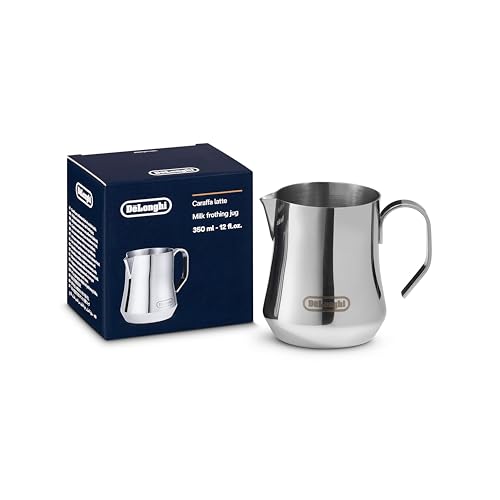
Quick answer: Our top pick in 2026 is the De'Longhi DLSC060 Milk Frothing Jug — our #1 rated choice. See the full ranked comparison, alternatives and buying advice below.
- Quick Comparison
- What “Textured” Means and Why It Matters
- Top Textured Milk Pitchers for Latte Art
- Milk Pitcher Size Guide by Drink
- Spout Shape: The Most Overlooked Spec
- How to Steam Milk Correctly with a Textured Pitcher
- Materials: Stainless Steel vs. Other Options
- FAQ: Textured Milk Pitcher for Latte Art
- About the Author
- Frequently Asked Questions
Quick Comparison
| Product | Brand | Price | Rating |
|---|---|---|---|
| De’Longhi DLSC060 Milk Frothing Jug | — | $19.95 | 4.8/5 |
| Milk Frothing Pitcher 350ml/600ml/900ml/1500ml (12oz/20… | Adorever | $6.97 | 4.7/5 |
| Espresso Milk Frothing Pitcher 20 oz | Apexstone | $12.99 | 4.8/5 |
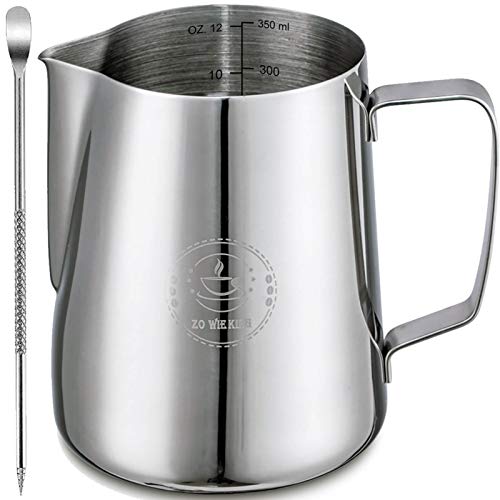
| Milk Frothing Pitcher 20oz | ZOWIEKING | $12.99 | 4.7/5 |
| Milk Frothing Pitcher 12oz | ZOWIEKING | $9.99 | 4.7/5 |
What “Textured” Means and Why It Matters
See also: Best Blind Filters for Backflushing • Best Portafilter Handles Wood
Textured milk refers to steamed milk that has been worked into a uniform, velvety microfoam — bubbles smaller than 1mm, fully integrated with the liquid milk, producing a glossy, paint-like consistency. Achieving this requires three things: a capable steam wand, correct technique, and a pitcher that supports both.
The pitcher’s role is to create the right vortex during steaming and then deliver the textured milk precisely during the pour. A pitcher that is too large creates a vortex too far from the steam tip; too small and you lose the thermal mass needed to control temperature. The spout design controls how the foam releases onto the espresso surface.
Top Textured Milk Pitchers for Latte Art
Milk Pitcher Size Guide by Drink
| Drink | Cup Size | Ideal Pitcher Volume | Milk Fill Level |
|---|---|---|---|
| Cortado / Gibraltar | 4–5oz | 150–300ml | Fill to base of spout |
| Flat white | 5–6oz | 300ml | Fill to base of spout |
| Latte (small) | 8oz | 350–450ml | Just below the spout join |
| Latte (large) | 12oz | 600ml | Just below the spout join |
| Cappuccino | 6oz | 300–350ml | Fill to base of spout |
Spout Shape: The Most Overlooked Spec
There are three main spout styles: round (classic), narrow/pointed (latte art), and wide/tulip (high-volume). Round spouts are forgiving for beginners but limit pour precision at close range. Narrow pointed spouts give the sharpest control for detailed latte art — hearts, rosettas, tulips — because the smaller exit area concentrates flow direction. Wide spouts are better for flat whites and cortados where you want broad foam coverage quickly.
The interior of the spout matters too. A smooth rolled edge (no sharp burrs, no weld seam interruption) lets foam slide cleanly without breaking up. Run your finger inside the spout tip — any rough edge will disturb the microfoam structure right as it hits the cup. Quality pitchers from Rhinowares, Motta, and Acaia have machine-rolled spout tips for this reason.
How to Steam Milk Correctly with a Textured Pitcher
Position the steam tip just below the milk surface, slightly off-center toward the pitcher wall. Start the wand, then lower the pitcher until you hear a gentle “tss tss” paper-tearing sound — that is air incorporation at the right rate. After 2–3 seconds of air incorporation, submerge the tip deeper and let the vortex spin the milk to break up bubbles and integrate foam.
Stop steaming at 60–65°C (140–150°F) — use a thermometer clip on the pitcher side or go by hand feel: when the pitcher becomes too hot to hold for more than 3 seconds, you are close to 65°C. Tap the pitcher on the counter twice, swirl firmly to integrate any remaining large bubbles, and pour immediately. For the complete technique breakdown, see the milk frothing guide.
Materials: Stainless Steel vs. Other Options
Stainless steel is the only material worth considering for steaming pitchers. It conducts heat evenly, tells you temperature through touch, is dishwasher safe, and does not retain milk odors. Avoid plastic pitchers — thermal feedback is gone and surfaces harbor bacteria in micro-scratches. Glass pitchers are fragile and provide poor tactile feedback.
Coated stainless pitchers (Teflon or ceramic interior) theoretically make rinsing easier but reduce tactile temperature feedback and can chip with metal implements. For training and daily use, bare stainless is the professional choice and is what every barista training program uses. Pair your pitcher knowledge with a solid grasp of espresso extraction fundamentals — great milk on a poorly extracted shot fixes nothing.
FAQ: Textured Milk Pitcher for Latte Art
What size milk pitcher is best for making latte art at home?
A 350–450ml pitcher is the most versatile choice for home use. It handles 8oz lattes comfortably, gives enough milk volume to develop a proper vortex during steaming, and is small enough to pour with control. If you regularly make cortados or flat whites, add a 300ml pitcher for those smaller drinks — the smaller volume makes microfoam easier to achieve with less milk.
Why does my latte art blob instead of forming patterns?
The most common cause is foam that is too stiff (too much air incorporated) or too thin (not enough). Stiff foam sinks in blobs; thin foam disperses with no definition. Second most common: pouring too far from the cup surface. Get the spout tip within 1–2cm of the espresso surface before releasing foam. Third: pouring too slowly — foam needs momentum to travel through the espresso crema layer and float on top.
How do I clean a milk pitcher properly after each use?
Rinse immediately after use with cold water — hot water sets milk proteins and makes them much harder to remove. Fill with cold water, swirl, and pour out. For a full clean, use a small brush with hot soapy water once per day. Milk residue left in a pitcher for hours will produce off-flavors in the next drink. A quick cold rinse after every use takes 10 seconds and prevents 90% of cleaning problems.
Does pitcher shape affect how milk steams?
Yes, significantly. Conical-bodied pitchers (narrow at the base, wide at the spout) concentrate the vortex tightly around the steam tip, which accelerates bubble breakdown. Cylindrical pitchers distribute milk mass more evenly and are more forgiving at high fill levels. Most barista-grade pitchers use a conical or tulip shape for this reason. A wider base with a narrowed neck toward the spout is the classic latte art pitcher profile.
What milk works best for latte art texturing?
Whole milk (3.5% fat) textures most easily and produces the richest microfoam due to fat content helping stabilize bubbles. 2% milk works well but produces slightly less dense foam. Oat milk (barista formulation) is the best dairy-free option — it has added oil and stabilizers that mimic whole milk’s steaming behavior. Avoid thin plant milks (rice, almond at standard dilution) — they produce thin, unstable foam with almost no latte art potential. More in the complete milk frothing guide.
Frequently Asked Questions
What is the point of the textured exterior?
The dimpled or hammered surface gives grip when your hands are wet and moderates how fast the metal feels hot, so you can keep hold of the pitcher longer while judging temperature by hand. It also disguises the dents that inevitably accumulate on a working pitcher.
Does the texture change how the milk steams?
No. The interior of any decent pitcher is smooth, and the milk vortex depends on interior shape, spout design and steam wand position. Texture is exterior only. If a pitcher has texture on the inside, avoid it, because it traps residue and makes cleaning harder.
What size and material should I choose?
18/8 or 304 stainless steel is standard, and a heavier gauge holds heat better and resists dents. A 12 oz pitcher serves one latte, 20 oz serves two and 32 oz suits family batches. Fill only to the base of the spout to leave room for expansion.
Does texture make it harder to judge temperature by touch?
Slightly. Because the texture slows heat transfer to your fingers you may steam a few degrees hotter than you would with a smooth pitcher until you recalibrate. Use a thermometer for the first several drinks with a new textured pitcher to relearn the feel.
Is a textured pitcher dishwasher safe?
Stainless pitchers are dishwasher safe, but detergents dull the finish and hot dry cycles bake milk residue into the seams. Rinse immediately after steaming with cold water first, then hot, and wipe the spout. Milk left to dry in the spout is a hygiene issue, not just cosmetic.
Ready to decide? Our #1 pick for 2026 is the De'Longhi DLSC060 Milk Frothing Jug.
Live price & availability on Amazon.