Last updated: October 21, 2026
As an Amazon Associate we earn from qualifying purchases at no extra cost to you.



Check Price on Amazon →


Disclosure: As an Amazon Associate we earn from qualifying purchases. This page contains affiliate links and we may earn a commission at no extra cost to you.
The flat white is deceptively simple: a double shot of espresso under roughly four ounces of steamed milk, finished with the thinnest possible layer of microfoam — a few millimeters of glossy paint, not a cap of fluff. That thin layer is the entire challenge. A cappuccino forgives coarse foam by burying it in depth; a flat white shows every flaw on its bare surface. Making one well at home is a genuine technique milestone.
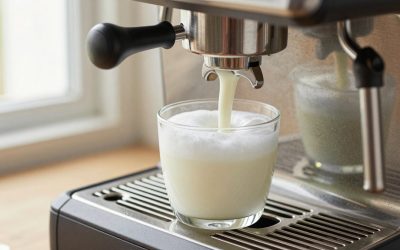
The method, condensed: pull a double shot into a 5–6 oz cup; while it runs, steam cold whole milk in a small pitcher, stretching for only two to three seconds before sinking the wand tip to spin the milk into a whirlpool until the jug is just uncomfortable to hold; tap, swirl hard, and pour immediately with the spout close to the surface so the milk integrates with the crema rather than sitting on top. The result should taste like espresso wearing silk, not milk with coffee in it. Getting the shot right first matters — our espresso ratio guide covers dialing in the double that anchors the drink.
Because the milk window is so narrow, the pitcher you steam in has outsized influence. Below are six jugs particularly suited to flat white volumes, followed by the technique details that make the difference between flat-white-adjacent and the real thing.
Quick Comparison
| Product | Price | Rating |
|---|---|---|
| CAFEMASY Milky White Espresso Pitcher | $13.99 | 4.9/5 |
| 20.3oz/600ml Stainless Steamer Cup | $25.64 | 4.9/5 |
| De’Longhi Matte White 17 oz Pitcher | $29.42 | 4.8/5 |
| 12oz/350ml Stainless Steaming Pitcher | $6.59 | 4.8/5 |
| Amrules 12oz Pitcher with Clear Scale | $8.99 | 4.7/5 |
| watchget 20oz/600ml Steaming Pitcher | $16.99 | 4.7/5 |
Why Trust This Guide
See also: Bloody Mary Recipe: Classic, Spicy, and Easy • Copycat Starbucks Drink Recipes You Can Make at Home
This guide combines standard barista training methodology — the same stretch-and-roll sequence taught behind specialty counters — with gear assessments based on published capacities, materials, and design features. Prices and ratings come directly from current product data; we do not fabricate specifications or performance numbers.
Recommended Gear for Flat Whites
CAFEMASY Milky White Espresso Pitcher
CAFEMASY’s milky-white powder-coated jug brings café aesthetics to the home bench, and the light interior has a practical bonus: milk volume and foam texture are easier to read against a pale surface than against bare steel. When you are learning the flat white’s precise stretch timing, anything that improves visibility helps.
It steams like any good stainless jug underneath the coating. Treat the finish kindly — hand-washing keeps powder coats looking new — and it will stay the prettiest tool at your station.
20.3oz/600ml Stainless Steamer Cup
This 600ml jug is the two-drink option: enough capacity to steam milk for a pair of flat whites in one round, which is the realistic morning scenario in most households. Steaming once and splitting the milk also guarantees both drinks get identical texture — harder to achieve across two separate steams.
For a single flat white, fill discipline matters in a jug this size; measure your 4–5 oz of cold milk rather than eyeballing, or the shallow pool will be hard to stretch evenly. A kitchen scale solves this instantly.
De’Longhi Matte White 17 oz Pitcher
De’Longhi’s 17 oz matte white pitcher splits the size difference: comfortable for one generous flat white, workable for two modest ones. The brand’s spout shaping is consistently good, giving the controlled, narrow stream you need to finish a flat white with a tidy dot or heart rather than a milk flood.
The matte finish and brand pedigree cost a premium over generic jugs of the same capacity. For owners of De’Longhi machines who want a matching station — or anyone who simply values the look — it is a satisfying mid-size choice.
12oz/350ml Stainless Steaming Pitcher
The flat white specialist. A 12 oz jug filled to just under halfway holds almost exactly one flat white’s worth of milk, and the small volume responds instantly to wand position changes — ideal for the drink’s demanding thin-foam spec. This is the size most baristas reach for when making the drink properly, one at a time.
At $6.59 it is also the cheapest meaningful upgrade in this list. If you buy one jug for flat whites, buy this size; our milk pitcher roundup goes deeper on why small jugs teach better technique.
Amrules 12oz Pitcher with Clear Scale
The Amrules jug adds the feature beginners need most: interior volume markings. Flat whites punish guesswork — twenty extra milliliters of milk dilutes the espresso balance the drink is named for — and a visible scale removes that variable while you build instincts.
It is 304 stainless underneath, so daily rinsing is no threat. Between this and the plain 12 oz jug above, choose based on whether you measure by scale markings or by kitchen scale; either discipline works, but have one.
watchget 20oz/600ml Steaming Pitcher
The watchget 600ml rounds out the list as a solid mid-priced two-drink jug. If your machine has a powerful steam boiler, the slightly taller milk column in a 20 oz jug gives the vortex more room to roll, which some home baristas find easier to manage than the quick-tempered shallows of a 12 oz pour.
As with any larger jug, the flat white’s small volume means you should never fill past the bottom third for a single drink. Pair it with a small jug and you have both morning scenarios handled.
What to Look For in Flat White Gear
The flat white’s tight tolerances make gear selection less about luxury and more about control. Prioritize these features.
- Small pitcher capacity — 12 oz jugs match the drink’s 4–5 oz milk dose; oversized jugs make thin, even stretching genuinely harder.
- Sharp, narrow spout — the flat white finish is a close, controlled pour into crema; a precise spout is what keeps the surface unified and art-ready.
- Volume markings or a scale habit — the espresso-to-milk balance is the drink; repeatable milk dosing protects it.
- 304 stainless construction — daily steaming and washing demand food-grade steel that will not corrode or carry flavors.
- A cup sized 5–6 oz — the traditional flat white vessel is small; pouring the right recipe into a 12 oz mug makes a different drink.
- Fresh espresso fundamentals — a capable machine and grinder upstream matter more than any jug; the milk only flatters what the shot provides.
Tips for Getting the Most Out of Your Flat White Technique
Count your stretch. The defining error in home flat whites is over-aeration, and the fix is mechanical: from the moment you open the steam valve with the tip at the surface, count two to three seconds of paper-tearing hiss, then sink the tip and do nothing but spin until temperature. That tiny air dose is all a flat white wants. If your foam still comes out deep, your tip may be lingering at the surface as the milk level drops — chase the level downward. A clean, undamaged tip helps too; see our steam wand tip guide if yours sputters unevenly.
Swirl like you mean it. Between steaming and pouring, the jug needs constant motion — a hard swirl that folds the thin foam back through the liquid milk until the surface shines. Set the jug down to deal with your shot and the foam separates in seconds. Work the espresso first, milk second, never the reverse. An angled pitcher can make both the swirl and the close-quarters pour easier to read.
Pour low, late, and steady. Start with the spout a few centimeters above the cup to let milk dive under the crema, then drop the spout to almost touching as the cup fills, finishing with a small push of white at the center. The signature flat white surface — espresso-colored with a clean white dot or heart — comes from that low finish. Practice in your small glasses if you want to watch the layers integrate as you learn.
Frequently Asked Questions
What is the difference between a flat white and a latte?
Ratio and foam. A flat white is smaller — typically a double shot with around 4 oz of milk — with only a paper-thin microfoam layer, so it tastes noticeably stronger and silkier. A latte runs 8–12 oz of milk with a thicker foam cap. Same ingredients, very different espresso presence.
How much milk do I steam for one flat white?
Start with 4–5 oz of cold milk for a 5–6 oz cup. Milk expands slightly with the flat white’s minimal stretch, and you want just enough to fill the cup with a little left in the jug. Measuring — by scale or by pitcher markings — beats eyeballing until the routine is automatic.
Can I make a flat white without an espresso machine?
You can approximate one. Brew strong concentrated coffee with a moka pot or AeroPress, then heat and texture milk with minimal foam using a frother or whisk. The silky-thin microfoam that defines the drink really wants a steam wand, but a moka-pot version is still a satisfying strong, milky cup.
Why does my flat white foam come out too thick?
You are adding air too long. Foam depth is set in the first seconds of steaming — keep the hissing stretch phase to two or three seconds, then bury the tip and only spin. Over-stretched milk cannot be un-foamed, though a hard swirl before pouring will partially reintegrate a slightly thick batch.