Last updated: October 20, 2026
A flat white is a smaller, stronger-tasting drink than a latte: roughly 5 to 6 ounces of espresso and finely textured milk, against 8 to 12 ounces for a latte with a lot more milk and a thicker, airier top. If you want the coffee to lead, order the flat white. If you want something mellow, sweet and big enough to sip for half an hour, the latte is the better fit. The rest of this guide shows exactly where the two drinks split, with ratios, temperatures and a simple way to make each at home.
Quick Verdict
- Cup size is the clearest tell: a flat white sits around 5 to 6 oz (about 140 to 180 ml), while a US latte is commonly 12 oz (about 360 ml).
- Milk volume differs by about double or more: one guide lists 4 to 5 oz of milk for a flat white and 6 to 10 oz for a latte.
- The flat white keeps the espresso up front because a double shot makes up roughly a third of the cup, against a fifth or less in a latte.
- Caffeine follows the number of shots, not the drink name, so check the shot count before assuming one is stronger.
- At home, the flat white needs a small cup and tightly textured milk; the latte forgives sloppier steaming.
Key Specs
See also: Bloody Mary Recipe: Classic, Spicy, and Easy • Copycat Starbucks Drink Recipes You Can Make at Home
Figures below combine several barista guides and reference entries. Cafes vary, so treat them as typical ranges rather than rules.
| Spec | Flat white | Latte |
|---|---|---|
| Typical cup size | 5 to 6 oz (140 to 180 ml) | 8 to 12 oz (240 to 360 ml) |
| Milk volume (one guide) | 4 to 5 oz (90 to 120 ml) | 6 to 10 oz (150 to 200 ml and up) |
| Espresso | Double shot or double ristretto | One or two standard shots |
| Espresso share of the cup | About one third | About one fifth or less |
| Milk texture | Thin, glossy microfoam mixed through | Velvety layer, usually deeper |
| Foam depth (one guide) | 2 to 3 mm | 5 to 10 mm |
| Serving temperature | 140 to 150 °F (60 to 65 °C) | 150 to 160 °F (65 to 70 °C) |
| Stretch time on a steam wand | About 1 to 3 seconds | About 3 to 5 seconds |
Who It Is For (and Who Should Skip It)
The flat white suits people who already like the taste of espresso and want milk to round it off rather than bury it. It also suits anyone who finds a 12 oz latte too filling, or who enjoys a drink that is finished while it is still hot. If you pick drinks by texture, the flat white is the closest thing to liquid velvet on the menu.
Skip it if you want a long, slow drink, if you add flavored syrups (they get lost in a small cup or turn the drink cloying), or if you take your coffee quite sweet and mild. In those cases a latte, or a wet cappuccino, is the happier choice. Also skip the idea of a flat white in a big mug: one source points out that a 10 to 12 oz drink sold under that name is really a latte.
What It Does Well
Keeps the espresso flavor intact
Because the ratio of milk to coffee is tight, the flat white tastes like coffee first and milk second. Roughly a third of the cup is espresso when you start from a double shot in a 5 to 6 oz serving. That is why people describe it as stronger even when the caffeine is identical to a latte made with the same shots.
Smooth, glossy texture
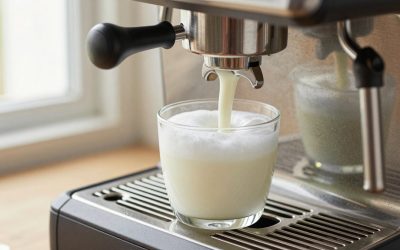
Wikipedia describes the flat white as having a thinner layer of textured milk, ideally with a shinier surface. The microfoam is folded through the whole drink instead of sitting on top as a cap. When it goes right there is no spoonable foam at all, just a uniform, silky body.
Ristretto sweetness
Many cafes pull flat whites as double ristretto: the same dose of coffee with less water, giving roughly half the liquid volume, more concentrated and syrupier. Starbucks switched to two ristretto shots, rather than a double espresso, when it introduced its flat white in the US in 2015. A ristretto base is optional at home, but it is a genuine way to push the drink further from a latte.
Easy to finish at the right temperature
Small drinks cool quickly, but a flat white is gone before that matters. The recommended window is 140 to 150 °F (60 to 65 °C), a range where milk tastes sweetest. Milk reaches peak perceived sweetness around 140 °F, and heating past roughly 160 °F (71 °C) risks scalding, which gives a cooked, flat flavor.
Where It Falls Short
- Less forgiving to make. With so little milk, there is nowhere to hide thick foam or large bubbles. A latte can absorb a few seconds of extra air; a flat white tastes wrong.
- Naming is inconsistent. Cup sizes differ by region and cafe. One source gives Australian cups as 200 ml and New Zealand cups as 175 ml, and chain stores often serve a flat white in a larger size that blurs the line with a latte.
- Origin claims are disputed. Alan Preston says he put “flat white” on the menu at Sydney’s Moors Espresso Bar in 1985, while Wellington barista Fraser McInnes claims he created it in 1989. One history site concludes it probably emerged from several baristas in both countries in the 1980s. Do not trust any café sign that states a single inventor as fact.
- Not much room for flavor add-ons. Syrups and toppings overwhelm a 5 to 6 oz drink quickly.
- A short stretch is hard to judge. Controlling a 1 to 3 second burst of air takes practice, and a few seconds either way changes the drink from a flat white toward a cappuccino.
How It Compares
| Drink | Size | Espresso to milk | Texture | Best for |
|---|---|---|---|---|
| Flat white | 5 to 6 oz | Roughly 1:2 | Thin microfoam through the drink | Coffee-forward, smooth |
| Latte | 8 to 12 oz | 1:3 to 1:5 (Wikipedia range) | Light foam layer on top | Mild, creamy, long sipping |
| Cappuccino | 5 to 6 oz traditionally | Equal parts espresso, milk, foam (approximate) | Thick, dense foam | Airy texture and a strong coffee taste |
| Cortado | About 4 oz | About 1:1 | Lightly steamed milk, minimal foam | Very strong, very small |
| Latte macchiato | 250 to 350 ml | Milk first, espresso poured in | Layered: milk, espresso, foam | Looks and a milky flavor |
The cortado is the main one to watch. It is typically served at 2 oz espresso and 2 oz milk in a 4 oz glass, so it is stronger than a flat white, which has roughly twice as much milk. The latte macchiato is not an espresso macchiato: that drink is a shot with just a spoonful of milk.
Calories and caffeine
Espresso itself adds only a few calories per shot, so the milk drives the difference. USDA-linked figures put a 12 oz whole-milk latte near 190 kcal and a 12 oz cappuccino near 120 kcal. On Starbucks’ own menu page, a Tall flat white is listed at 170 calories, and a Tall flat white carries two ristretto shots against one for a Tall latte. A shot is commonly cited at about 63 mg of caffeine, though other sources use 68 to 75 mg. So the drink with more shots has more caffeine, regardless of its name.
Flat white vs latte at Starbucks
The US chain follows its own recipe: two ristretto shots with steamed whole milk in a flat white, compared with standard espresso in a latte. A Tall flat white and a Tall latte are the same 12 oz, so the difference there is more about coffee concentration than cup size. At that size the flat white has slightly more coffee and a bit less milk. Elsewhere in the world, expect a flat white to be a smaller cup.
Making Each One at Home
Flat white method
- Pull a double shot, or a double ristretto if you want it syrupier, into a pre-warmed cup of about 5 to 6 oz.
- Pour cold milk into the pitcher, filling no higher than where the spout begins.
- Purge the steam wand for about a second, then put the tip just under the surface and aerate for only 1 to 3 seconds.
- Lower the tip about a centimeter and spin the milk into a smooth vortex until the pitcher is hot to touch, about 140 to 150 °F (60 to 65 °C).
- Tap the pitcher on the counter, swirl to polish the surface, and pour within about 20 seconds.
Latte method
- Pull one or two standard shots into a 10 to 12 oz cup.
- Steam a larger volume, adding air for about 3 to 5 seconds, then spin to even out the bubbles.
- Stop at about 150 to 160 °F (65 to 70 °C); stopping at 150 °F on a thermometer is wise because milk coasts up a few degrees.
- Pour in a steady stream, finishing with a thin layer of foam.
No steam wand?
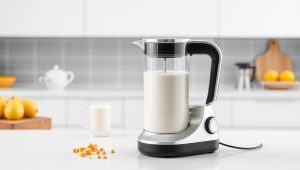
An automatic frother can get you close to a latte. A flat white is harder because the tight microfoam depends on controlled aeration, so on a frother choose the lowest-foam setting, use a small cup and keep the milk volume modest. Expect something between the two drinks rather than a textbook flat white.
Common Mistakes
- Too much air. Over-stretching turns a flat white into a cappuccino.
- A big cup. A 12 oz cup dilutes the shot and gives you a latte by default.
- Overheating. Past 160 °F the milk loses sweetness and picks up a burnt note.
- Letting the milk sit. Textured milk separates, so pour within about 20 seconds.
- Plant milk at full heat. Plant-based milks need less heat; around 130 to 150 °F is suggested for oat milk.
Which Should You Choose? Quick Scenarios
- You want the coffee to come first: order or make the flat white, ideally with a double shot in a 5 to 6 oz cup.
- You want a drink that lasts an hour: pick a latte, because the larger volume stays warm longer and the milder taste holds up.
- You add syrup: choose a latte, since a small flat white is quickly overwhelmed by sweetener.
- You are ordering at a chain: ask for the cup size, because a large flat white and a latte can be close in volume.
- You want something even stronger: try a cortado, which is typically 2 oz of espresso and 2 oz of milk in a 4 oz glass.
Does the milk choice change the answer?
Whole milk is the usual choice for both drinks because its fat and sugar give a sweet, rounded taste. Plant-based milks heat differently: one guide suggests 131 to 140 °F (55 to 60 °C) to avoid curdling, while another gives 130 to 150 °F for oat milk. Because a flat white has so little milk, any off-flavor from a milk that does not texture well is more obvious than in a big latte.
A word on ristretto
Ristretto means the same dose of coffee run with less water in the same time, producing about half the liquid. That concentrated, syrupy shot is why a flat white can taste sweet and bold at once. It is not required for a flat white, and Wikipedia notes that the amount of extracted coffee can be the same as in any other menu drink, around 30 ml, so cafes differ. If you are unsure, ask what shot your cafe uses.
Alternatives Worth Considering
Breville Pro Control Milk Jug – why consider it
As an Amazon Associate we earn from qualifying purchases at no extra cost to you.

If you steam milk on a Breville Barista, Bambino or Oracle machine, this stainless steel jug is the one accessory in the list that directly helps a flat white. Breville lists the capacity at 420 ml (14.2 fl oz). It has a handleless body with a silicone sleeve, a pro spout aimed at latte art, an angled opening for a clearer view, and an exposed base that lets you feel the temperature. That feel matters for the 140 to 150 °F target of a flat white. The caveats: handleless means you hold the heat, a 420 ml size suits a single drink or two rather than a large latte, and if your machine has no steam wand it does nothing for you.
Questions
Is a flat white stronger than a latte?
It tastes stronger because less milk dilutes the espresso. Caffeine depends on the number of shots; a flat white with two shots and a latte with two shots contain about the same.
Can I make a flat white with a regular espresso shot?
Yes. A ristretto is optional. A standard double shot in a 5 to 6 oz cup with finely textured milk is a flat white by most definitions.
Which has more calories, a flat white or a latte?
At the same cup size they are close, with the flat white slightly lower in one comparison. In traditional sizes a flat white has less milk, so it has fewer calories overall.
Is a flat white the same as a small latte?
Not quite. A small latte still has a deeper foam layer and a lighter milk texture. The flat white uses thinner, more integrated microfoam and usually a double shot.
Where did the flat white come from?
Both Australia and New Zealand claim it, with dates in the mid to late 1980s. The honest answer is that no single inventor has been confirmed.
What milk works best?
Whole milk is the standard choice for texture and sweetness. Plant milks work with lower steaming temperatures.
Update History
- October 20, 2026 – Updated with specification checks and a revised product comparison.
- Check the product page for current specifications and availability before buying.
Sources
- Wikipedia entries on the flat white, latte and cappuccino
- Beanbox espresso drink guide
- The Coffee Locator flat white guide
- Starbucks flat white menu page
- Flat White History (Alan Preston) and District Magazine
- Coffee Studies flat white entry
- Home-Barista milk temperature discussion
- Brew Bench Gear steaming guide
- CaffCalc (USDA FoodData Central figures)
- Breville product listing for the Pro Control Jug