Automatic Milk Frother: Best Standalone Frothers for Home Lattes and Cappuccinos
TL;DR — Quick Answer
An automatic milk frother heats and froths milk in 60–90 seconds without a steam wand — ideal for espresso machines without a built-in steam arm. Best budget induction frother: Nespresso Aeroccino 4 (B086H458MP tier). Best mid-range with temperature control: Breville Milk Cafe (B084RT95LQ tier). Best premium with multiple discs: Smeg MFF11 (B0F4X6ZRGX tier). Cold foam and hot foam modes in one unit are worth prioritizing — cold foam for iced lattes is increasingly standard in home coffee setups.
Not every espresso machine includes a steam wand. Entry-level semiautos, many pod machines, and all manual lever machines require a separate milk frothing solution if you want cappuccinos, flat whites, or lattes at home. An automatic milk frother on a stand fills this gap: it heats milk to the correct temperature, incorporates the right amount of air for the texture you want, and does it consistently without any technique required.
This guide covers how automatic frothers work, what separates hot foam from microfoam quality, which units handle non-dairy milks reliably, and the real differences between a $30 frother and a $150 one.
Quick Comparison
| Product | Brand | Price | Rating |
|---|---|---|---|
| Zulay Kitchen Powerful Milk Frother Wand With Duracell … | ZulayKitchen | $16.99 | 4.4/5 |
| SIMPLETASTE Milk Frother | SIMPLETaste | $36.97 | 4.2/5 |
| Instant Pot Milk Frother | InstantPot | $34.99 | 3.7/5 |
| Secura Milk Frother | Secura | $35.03 | 4.2/5 |
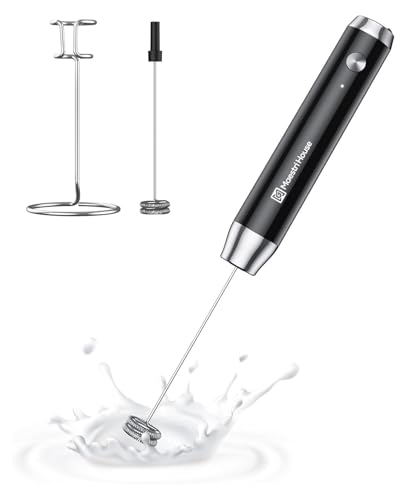
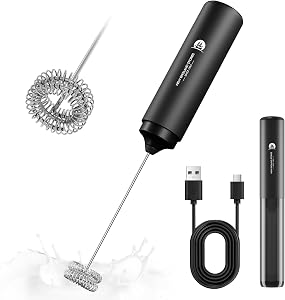
| Maestri House Rechargeable Milk Frother with Stand | MaestriHouse | $24.99 | 4.5/5 |
Top Automatic Milk Frothers at a Glance
See also: How to Choose an Espresso Tamper: Complete Buying Guide (2026) • Best Espresso Machines for Lattes and Cappuccinos
BEST BUDGET FROTHER
Nespresso Aeroccino 4
~$79
BEST MID-RANGE
Breville Milk Cafe BMF600XL
~$99
BEST PREMIUM DESIGN
Smeg MFF11 Milk Frother
~$149
How Automatic Milk Frothers Work
All automatic frothers combine a heating element with a rotating whisk or impeller that spins at high speed, incorporating air into the milk as temperature rises. The key variable is whisk speed relative to milk temperature: fast spinning at lower temperatures produces large, airy foam suited for cappuccino (dry foam). Slower spinning at higher temperatures produces fine, dense microfoam closer to what a steam wand creates — suited for flat whites and lattes. Premium frothers (Breville Milk Cafe, Smeg MFF11) include multiple interchangeable disc attachments for different foam textures. Budget frothers (Aeroccino 3, basic induction models) use a single whisk and rely on milk fill level to vary foam density.
Induction heating — used in Nespresso Aeroccino and most mid-to-premium models — is faster and more even than coil heating, reaching target temperature in 60–75 seconds. Coil-heated budget units take 90–120 seconds and can create hot spots near the bottom that scorch milk proteins if left too long. Temperature targets: cappuccino foam at 60–65°C, latte microfoam at 65–70°C. Avoid exceeding 70°C — above this temperature, milk proteins denature in ways that produce a thinner, less stable foam with off-flavors.
Breville Milk Cafe: Best All-Round Automatic Frother
The Breville Milk Cafe BMF600XL is the best automatic frother for home espresso use at the mid-range price point. It includes three disc attachments: a cappuccino frother (high-volume light foam), a latte frother (dense microfoam), and a flat heating disc for hot chocolate or warm milk with no foam. Temperature control is a dial rather than a single preset — you can target anywhere from 55°C to 75°C, which matters when dialing in non-dairy milks that froth best at specific temperatures (oat milk performs best at 60–62°C; soy milk at 55–60°C before it separates).
The 590ml jug capacity is the largest in its category — enough to froth milk for two large lattes simultaneously, which most frothers cannot do. Stainless steel exterior, induction base, dishwasher-safe jug. The one limitation: no cold foam mode. For cold foam, you need either a separate cold frothing whisk or to use the jug at room temperature with the heating element off, which works but requires manual judgment on timing.
| Spec | Breville Milk Cafe | Nespresso Aeroccino 4 | Smeg MFF11 |
|---|---|---|---|
| Capacity (max froth) | 590ml | 130ml | 250ml |
| Heating type | Induction | Induction | Induction |
| Temperature control | Dial (55–75°C) | 2 presets | 3 presets |
| Disc options | 3 (cappuccino, latte, flat) | 2 whisks included | 2 whisks included |
| Cold foam | Manual (no heat) | Yes (cold mode) | Yes (cold mode) |
| Non-dairy performance | Excellent | Good | Good |
| Dishwasher safe jug | Yes | Yes | Yes |
Non-Dairy Milks in Automatic Frothers
Non-dairy milks froth differently due to varying protein and fat compositions. Oat milk (barista formula) froths closest to whole dairy — stable microfoam at 60–62°C, good texture for latte art. Almond milk produces lighter, more fragile foam that collapses quickly — suitable for cappuccino, poor for latte pours. Soy milk can produce excellent foam but separates above 65°C; keep temperature conservative. Coconut milk (full fat, not canned) froths well but with a distinct flavor that dominates the espresso. For consistent non-dairy results, buy barista-edition versions of oat, soy, or almond milk — they contain added emulsifiers that stabilize foam under heat.
An automatic frother with adjustable temperature (Breville Milk Cafe) gives you meaningful control when switching between dairy and non-dairy. Single-preset frothers set to a fixed temperature optimized for whole milk will overheat soy and underheat coconut. If non-dairy milk is your primary use case, temperature control is worth the extra spend. Pair your frothed milk with a properly pulled shot; read our espresso milk temperature guide for the full science on dairy and non-dairy foam.
Automatic Frother vs. Steam Wand: When to Upgrade
An automatic frother produces consistent foam with zero technique — the same result every time, limited only by the machine’s design. A steam wand requires 2–4 weeks of practice to produce decent microfoam and 3–6 months to produce latte-art-quality texture reliably. The ceiling of a steam wand far exceeds any automatic frother: skilled wand technique produces velvety, perfectly integrated microfoam at precisely controlled temperatures that no automatic unit can match. For home use where you want good lattes without the learning curve, an automatic frother is the correct choice. For home baristas who want to develop real espresso technique and eventually pour latte art, upgrade to a machine with a steam wand — then use our latte art tools guide to build your kit properly.
Frequently Asked Questions
Can an automatic milk frother make microfoam for latte art?
Most automatic frothers produce foam that is too airy and too large-bubbled for latte art. The Breville Milk Cafe with the latte disc comes closest — it produces dense, fine foam that can be poured in simple heart or tulip patterns by practiced users. For true latte art quality (rosettes, phoenixes), a steam wand is required. Automatic frothers are excellent for consistent lattes and cappuccinos without the art aspect.
How do you clean an automatic milk frother?
Rinse the jug and whisk immediately after every use — dried milk proteins bond to metal within minutes and require soaking to remove. Most frother jugs are dishwasher-safe; daily dishwasher cycling is fine. Weekly, run the jug with a small amount of cold water and one drop of dish soap through a froth cycle, then rinse thoroughly. Never submerge the induction base or allow water into the electrical housing.
What is the best milk for frothing in an automatic frother?
Whole dairy milk (3.5% fat) produces the densest, most stable foam with the sweetest flavor. 2% milk froths well with slightly less body. Skim milk produces the largest volume of foam but the least flavor and body. Among non-dairy options, oat milk barista formula is the closest substitute to whole milk in terms of texture and stability.
How much milk do I need for a latte vs. a cappuccino in an automatic frother?
For a standard 8oz latte: 150–180ml of cold milk (produces ~200ml of lightly frothed warm milk). For a cappuccino: 100ml of cold milk (produces ~130–150ml of denser foam for a 5–6oz cappuccino). Always fill to the minimum froth line, not the maximum — underfilling relative to the whisk produces the best foam texture in most frother designs.
Does an automatic milk frother work for cold foam?
Yes, if the frother has a cold mode or can operate without activating the heater. Nespresso Aeroccino 4 has a dedicated cold foam setting. Breville Milk Cafe can froth cold milk by running at low temperature manually. Cold foam requires full-fat or 2% milk chilled to under 5°C for best results; skim milk cold-froths to higher volume but less stable texture.
Related: Espresso Milk Temperature Guide | Latte Art Tools Kit for Beginners | Super Automatic Espresso Machines
Ready to decide? Our #1 pick for 2026 is the Zulay Kitchen Powerful Milk Frother Wand With Duracell ….
Live price & availability on Amazon.