Last updated: September 12, 2026
⚡ Key Takeaways
- Espresso forces hot water through finely ground coffee under roughly 9 bars of pressure in about 25 to 30 seconds.
- Espresso uses one of the finest grinds in all of coffee, finer than table salt and closer to the texture of powdered sugar or fine sand.
- The flow of your shot tells you whether the grind is right.
- For espresso, the type of grinder matters as much as the setting.
If there’s one variable that makes or breaks your shots, it’s the espresso grind size. Get it right and water flows through the puck at the perfect pace, pulling balanced sweetness and rich crema. Get it wrong and you’re stuck with sour, gushing shots or bitter, choked ones. This complete guide explains what grind size really controls, how to find the right setting for your machine, and how to adjust it confidently every time you switch beans.
As an Amazon Associate we earn from qualifying purchases at no extra cost to you. Product prices and availability are accurate as of the date shown and are subject to change.



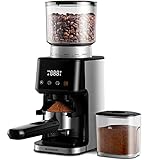
Related: best espresso machines with grinder.
🛒 Best Price Today on Amazon
Prime members get fast, free shipping on everything above, plus member-only deals. New members get a 30-day free trial — cancel anytime.
Quick answer: Our top pick in 2026 is the Espresso — our #1 rated choice. See the full ranked comparison, alternatives and buying advice below.
- Why Grind Size Matters So Much
- How Fine Should Espresso Be?
- Reading Your Shots to Dial In Grind
- The Burr Grinder Difference
- Factors That Change Your Grind Setting
- Stepped vs Stepless Grinders
- Grind Size for Other Brew Methods
- Top-Rated Picks
- Frequently Asked Questions
- Dial In With Confidence
- Related Articles
- Related Guides
Why Grind Size Matters So Much
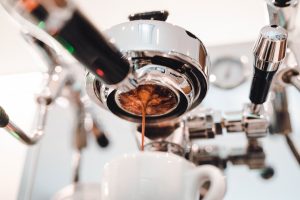
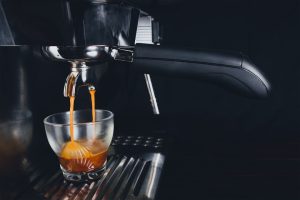
Espresso forces hot water through finely ground coffee under roughly 9 bars of pressure in about 25 to 30 seconds. Grind size determines how much resistance the puck offers to that water. Finer grounds pack together tightly and slow the water down; coarser grounds leave more space and let water rush through.
That speed controls extraction, which is the amount of flavor pulled from the coffee. The right grind gives water enough contact time to extract sweetness and body without dragging out bitterness. It is, without exaggeration, the most important single adjustment in espresso.
How Fine Should Espresso Be?
See also: How Much Coffee Per Cup? The Golden Ratio Explained • Pour Over vs French Press: Which Should You Choose?
Espresso uses one of the finest grinds in all of coffee, finer than table salt and closer to the texture of powdered sugar or fine sand. If you rub it between your fingers it should feel smooth with just a slight grittiness. By comparison, drip coffee is medium (like coarse sand) and French press is coarse (like sea salt).
| Brew Method | Grind Size | Texture Reference |
|---|---|---|
| Espresso | Fine | Powdered sugar / fine sand |
| Moka pot | Fine-medium | Slightly coarser than espresso |
| Drip / pour-over | Medium | Coarse sand |
| French press | Coarse | Sea salt / breadcrumbs |
There’s no single magic number on a grinder dial, because every grinder, machine, and bean is different. The “right” espresso grind is the one that gives you the proper shot time and a balanced taste with your setup.
Reading Your Shots to Dial In Grind
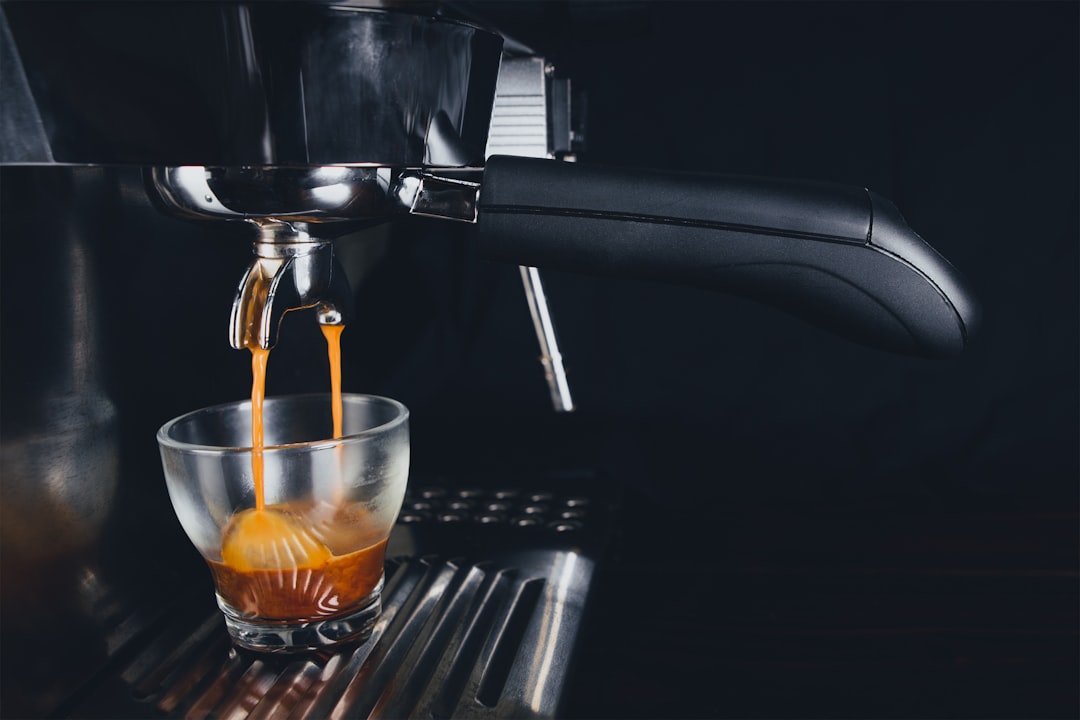
The flow of your shot tells you whether the grind is right. Aim for a 1:2 ratio (for example, 18 g of coffee yielding 36 g of espresso) in 25 to 30 seconds.
- Shot runs too fast and tastes sour: grind is too coarse. Water is racing through and under-extracting. Grind finer.
- Shot runs too slow and tastes bitter: grind is too fine. Water is choking and over-extracting. Grind coarser.
- Shot hits target time and tastes balanced: you’ve found the sweet spot.
Adjust the grind in small steps, just a notch or two at a time, and pull a fresh shot after each change. Big jumps overshoot the ideal setting and waste coffee.
The Burr Grinder Difference
For espresso, the type of grinder matters as much as the setting. Burr grinders crush beans between two abrasive surfaces, producing uniform particles that extract evenly. Blade grinders chop randomly, creating a chaotic mix of dust and chunks that extract unevenly, giving you sour and bitter notes in the same shot.
If you’re serious about espresso, a quality burr grinder is non-negotiable. It also needs to grind fine enough and offer enough adjustment steps in the espresso range, since small changes there make a big difference. Many entry-level grinders are too coarse or too imprecise for espresso, so check that capability before buying.
Why Grind Consistency Matters
Even at the right average setting, an inconsistent grind sabotages your shot. A spread of particle sizes means the fines over-extract while the boulders under-extract, all in the same puck. This is the hidden cause behind shots that taste muddled no matter how you adjust. Consistency is the quiet superpower of a good grinder.
Factors That Change Your Grind Setting
Don’t expect one setting to work forever. Several factors shift the ideal grind:
- Bean freshness. Fresh beans release more gas and need a slightly coarser grind; as a bag ages, you’ll often grind finer to compensate.
- Roast level. Darker roasts are more brittle and porous, often calling for a slightly coarser grind than light roasts.
- Humidity and temperature. Moisture in the air affects how coffee grinds and flows, so you may re-dial on humid days.
- New bag of beans. Every coffee is different. Expect to re-dial your grind whenever you open a new bag.
This is why dialing in is an ongoing practice rather than a one-time setup. The good news is that once you understand the cause-and-effect, re-dialing takes only a couple of shots.
Stepped vs Stepless Grinders
When choosing an espresso grinder, you’ll encounter two adjustment styles, and the difference matters a lot for dialing in.
- Stepped grinders click between fixed settings. They’re easy to return to a known position, but the jumps between steps can be too large for espresso, where tiny changes matter. Some stepped grinders are perfect for espresso; others have steps that are simply too coarse.
- Stepless grinders adjust on a smooth, continuous dial with no clicks. They allow micro-adjustments that are ideal for espresso, letting you fine-tune flow precisely, though it can be harder to repeat an exact setting from memory.
For espresso specifically, finer adjustment resolution is a real advantage. A grinder that offers many small steps, or stepless adjustment, in the espresso range gives you the control to chase that perfect 25-to-30-second shot without overshooting. If a grinder’s steps are so coarse that one click sends you from gushing to choking, dialing in becomes frustrating no matter how good the burrs are.
Grind Size for Other Brew Methods
Espresso is the finest, but understanding the spectrum helps you appreciate why it’s special. A moka pot uses a fine-medium grind, slightly coarser than espresso, because it brews at lower pressure. A French press needs a coarse grind so the metal mesh doesn’t let through silt, while pour-over methods sit in the medium range. A grinder with a wide adjustment range lets you brew all of these from a single device. If you mostly want push-button convenience without dialing grind manually, a super-automatic machine with a built-in grinder adjusts the grind internally for you.
Grind size works hand in hand with the rest of your technique. Once your grind is dialed, refining how you pull the shot and troubleshooting any lingering sourness or bitterness will polish your results further.
Top-Rated Picks


Editor's Pick
Apexstone 53mm Coffee Distributor, Espresso Distribution Tool, Coffee Leveler Compatible with Breville 54mm Portafilter


Dropped $1.09
| Product | Brand | Rating | Reviews | Price |
|---|---|---|---|---|
| Breville BCB100BSS Knock Box, Espresso Machine Access… | — | ★ 4.8 | 5.5k | $69.99 |
| 53mm Coffee Distributor, Espresso Distribution Tool, … | Apexstone | ★ 4.7 | 4.9k | $17.99 |
| 2-Pack Charcoal Breville Filters for Espresso Machine… | Possiave | ★ 4.8 | 2.3k | $7.99 |
| Possiave 12-Pack Charcoal Water Filters Compatible wi… | Possiave | ★ 4.8 | 2.3k | $15.99 |
| LatteGo Milk Container (Carafe) Assembly for Philips … | — | ★ 4.6 | 2.1k | $55.99 |
Frequently Asked Questions
What grind size is best for espresso?
A fine grind, roughly the texture of powdered sugar or fine sand. The exact setting varies by grinder, machine, and bean, so use shot time and taste to find your sweet spot rather than chasing a specific number.
Can I use pre-ground espresso?
You can, but it’s a compromise. Pre-ground coffee goes stale quickly and can’t be adjusted to your machine. For consistently good espresso, grind whole beans fresh right before brewing with a burr grinder.
Why does my espresso taste sour even at a fine grind?
If it’s still sour, your grind may not be fine enough, your shot may be running too fast, or your water may be too cool. Grind a touch finer and confirm your shot is hitting 25 to 30 seconds at a 1:2 ratio.
How often do I need to adjust my grind?
Whenever you open a new bag of beans, and sometimes as a bag ages or on humid days. Within a single bag at stable conditions, your setting should stay fairly consistent once dialed in.
Is a finer grind always stronger?
Finer grinds extract more and slow the shot, which increases intensity up to a point, but past the sweet spot they cause bitterness rather than strength. Balance, not maximum fineness, is the goal.
Dial In With Confidence
Espresso grind size is the lever that controls everything downstream in your shot. Keep it fine, use a quality burr grinder for consistency, and let shot time and taste guide your small adjustments. Grind finer to slow a fast, sour shot; grind coarser to speed up a slow, bitter one. Re-dial with each new bag, and you’ll spend less time frustrated and more time enjoying balanced, sweet espresso pulled exactly to your taste.
Ready to decide? Our #1 pick for 2026 is the Espresso.
Live price & availability on Amazon.