Last updated: October 6, 2026
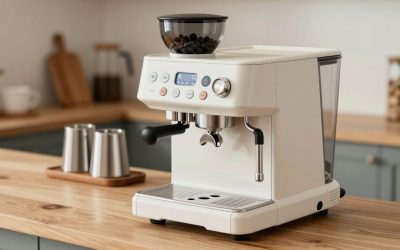
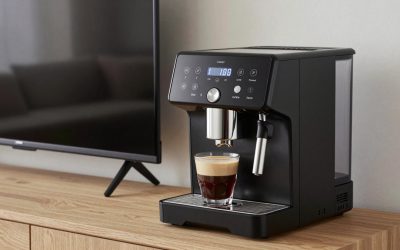
If you have ever weighed a bag of fresh beans against the convenience of a pod machine, an espresso machine with a built-in grinder is the compromise that finally makes both sides happy. In 2026, the “bean-to-cup” and integrated-grinder category has never been stronger. You get the flavor payoff of grinding beans seconds before extraction, without cluttering your counter with a separate standalone grinder or fussing with dosing cups. For most home baristas, a single machine that grinds, doses, tamps (or helps you tamp), extracts, and steams milk is the sweet spot between café-quality results and everyday practicality.
But the category is wide. On one end you have semi-automatic machines like the Breville Barista Express, where a built-in conical burr grinder feeds a real 54mm portafilter and you stay in control of the shot. On the other end sit fully automatic super-automatics like the De’Longhi Magnifica and many Philips models, where you press one button and walk away. In between are hybrids like the De’Longhi La Specialista and the Breville Barista Touch that blend guided automation with hands-on espresso craft. Price tiers stretch from roughly $500 to well over $1,500, so matching the machine to your habits matters more than chasing the most expensive option.
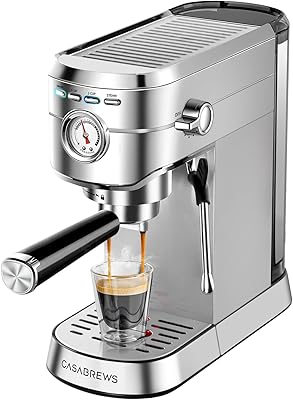

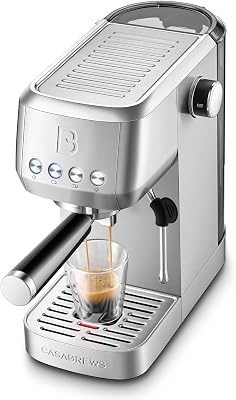


Below we break down five of the best espresso machines with built-in grinders in 2026, compare grind-to-portafilter workflow, pump pressure, milk frothing, and the ever-important trade-off between ease and control, so you can pick the right one for your kitchen and your budget.
As an Amazon Associate we earn from qualifying purchases…
- How Built-In Grinders Change the Espresso Game
- The 5 Best Espresso Machines with Built-In Grinder in 2026
- Breville Barista Express, Pro & Touch: The Semi-Auto Benchmark
- De’Longhi La Specialista & Magnifica: Two Different Philosophies
- Grind, Pressure & Milk: What Actually Matters
- Which One Should You Buy? Our Verdict
- Frequently Asked Questions
- Related Articles
- Related Guides
How Built-In Grinders Change the Espresso Game
The single biggest reason to buy a machine with an integrated grinder is freshness. Ground coffee starts losing aromatic oils within minutes, so grinding on demand directly into the portafilter (or brew chamber) preserves the sweetness and crema that make espresso taste alive. A built-in conical burr grinder also delivers far more consistent particle size than any blade grinder, which is essential because espresso is unforgiving: a grind that is slightly too coarse gushes and tastes sour, while too fine chokes the machine and turns bitter.
Semi-automatic machines expose this dial-in process to you. The Breville Barista Express, for example, grinds directly into a 54mm portafilter so you can adjust dose and grind size, then tamp and pull the shot yourself. Super-automatics like the De’Longhi Magnifica hide the grinder inside the machine and handle dosing and tamping automatically. Neither approach is “better,” they simply sit at different points on the ease-versus-control spectrum. If you want to learn latte art and tweak every variable, lean semi-auto. If you want great coffee at the push of a button before work, lean super-auto. For more on this fundamental split, see our guide on semi-automatic vs super-automatic espresso machines.
The 5 Best Espresso Machines with Built-In Grinder in 2026
See also: 6 Best Pour Over Kettles (October 2026) Top Reviews • Washed vs Natural Coffee Process: Complete Guide (2026)
We chose these five because they represent the strongest options across every price tier and every skill level, from beginner-friendly one-touch machines to prosumer setups that reward practice. Each has a genuinely capable integrated grinder rather than a token add-on, and each has a proven track record for reliability and serviceability.
| Machine | Grinder Type | Milk | Best For | Approx Price |
|---|---|---|---|---|
| Breville Barista Express | Integrated conical burr (54mm portafilter) | Manual steam wand | Beginners who want hands-on control | $700 |
| Breville Barista Pro | Integrated burr, faster ThermoJet heat-up | Manual steam wand | Speed + control upgrade | $850 |
| Breville Barista Touch | Integrated burr, touchscreen guided | Automatic + manual steam wand | Guided latte art at home | $1,000 |
| De’Longhi La Specialista Arte | Integrated conical burr, sensor grinding | Manual steam wand | Semi-auto craft on a budget | $550 |
| De’Longhi Magnifica Evo | Built-in burr (super-automatic) | Automatic LatteCrema / frother | One-touch convenience | $800 |
Breville Barista Express, Pro & Touch: The Semi-Auto Benchmark
Breville (sold as Sage in some markets) essentially defined the all-in-one home espresso category, and the Barista lineup remains the benchmark in 2026. All three share a stainless steel integrated conical burr grinder that doses directly into a 54mm portafilter, a 15-bar Italian pump that delivers the ~9 bars of brewing pressure espresso actually needs, and a powerful steam wand for microfoam.
The Barista Express ($700) is the entry point and still our top all-around pick for beginners who want to learn real espresso. It uses a traditional heat exchanger and takes a little longer to warm up, but the fundamentals are excellent. The Barista Pro ($850) swaps in Breville’s ThermoJet heating system for a roughly three-second heat-up and adds a clearer LCD, making it the pick if you value speed and a slightly more modern feel. The Barista Touch ($1,000) layers a color touchscreen with guided recipes and an automatic steam wand that heats and textures milk to your target temperature, bridging the gap toward one-touch convenience while still letting you go fully manual. If you are torn between these three, our Breville Barista Express vs Pro comparison digs into the daily differences.
De’Longhi La Specialista & Magnifica: Two Different Philosophies
De’Longhi covers both ends of the spectrum. The La Specialista Arte (around $550) is a semi-automatic that competes directly with the Barista Express at a lower price. It features a sensor-grinding system that helps deliver a consistent dose, an integrated conical burr grinder, and a manual steam wand for those who want to practice milk texturing. It is one of the best values in the category for anyone who wants hands-on espresso without the Breville premium.
The Magnifica Evo (around $800) is a true super-automatic bean-to-cup machine. Load whole beans, add water and milk, and it grinds, tamps, brews, and (on LatteCrema models) froths milk automatically at the touch of a button. There is no portafilter and very little to dial in, which is exactly the point: it prioritizes convenience and consistency over craft. Families and offices that want americanos, cappuccinos, and lattes without a learning curve are the ideal buyers. Philips and Gaggia offer comparable super-automatics, and if that is your lane, read our roundup of the best super-automatic espresso machines for beginners.
Grind, Pressure & Milk: What Actually Matters
Three technical factors separate a good machine from a frustrating one. First, grind quality and adjustment range: a conical burr grinder with enough fine-end steps lets you dial espresso in precisely. Machines that grind straight into the portafilter (Breville, La Specialista) give you the most control; super-automatics trade that control for automation. Second, pressure: nearly every machine here advertises 15 bars, but the meaningful number is the ~9 bars at the puck during extraction. All five deliver it; ignore inflated “20-bar” marketing on lesser machines. Third, milk frothing: a manual steam wand (Breville, La Specialista) produces the best latte-art-grade microfoam but requires practice, while automatic frothers (Magnifica LatteCrema, Barista Touch) trade a little texture quality for hands-off consistency.
Match these to your goals. Espresso hobbyists who want to pull and tweak shots should prioritize a manual wand and portafilter access. Convenience seekers should prioritize automatic milk and one-touch recipes. For the milk side specifically, our guide to steaming milk at home walks through technique on manual wands.
Which One Should You Buy? Our Verdict
For most people, the Breville Barista Express remains the best espresso machine with a built-in grinder in 2026: it balances price, control, and quality better than anything else, and it grows with your skills. If you want the same experience but faster and more modern, step up to the Barista Pro. If you crave guided results and easier milk, the Barista Touch is worth the premium. Budget-focused hands-on buyers should look hard at the De’Longhi La Specialista Arte, which delivers semi-auto craft for around $550. And if you never want to think about dialing in a shot, the De’Longhi Magnifica Evo super-automatic gives you café drinks at the push of a button. Whichever tier you choose, an integrated grinder is the upgrade that makes the biggest difference to what is actually in your cup.
- ▸ Amazon Music Unlimited — free trial
- ▸ Start an Audible Premium Plus free trial
Frequently Asked Questions
Are espresso machines with built-in grinders worth it?
Yes, for most home baristas. Grinding fresh beans seconds before extraction preserves aromatic oils and crema, and an all-in-one design saves counter space and money versus buying a separate quality grinder. The main trade-off is that if the grinder ever fails, it is tied to the machine, and a dedicated standalone grinder can outperform an integrated one at the very high end. For everyday use, the convenience and freshness are well worth it.
What is the difference between a bean-to-cup and a semi-automatic machine?
A bean-to-cup (super-automatic) machine like the De’Longhi Magnifica grinds, doses, tamps, brews, and often froths milk automatically at the push of a button, hiding the process from you. A semi-automatic like the Breville Barista Express grinds into a portafilter but leaves tamping, timing, and milk steaming in your hands. Bean-to-cup prioritizes convenience; semi-automatic prioritizes control and the ability to fine-tune every shot.
How much should I spend on an espresso machine with a grinder in 2026?
Plan on at least $500 for a genuinely capable machine with a real burr grinder; the De’Longhi La Specialista Arte sits near this floor. The $700 to $1,000 range, which includes the Breville Barista Express, Pro, and Touch, is the sweet spot for quality and features. Super-automatics with automatic milk systems typically run $800 and up. Spending under $300 usually means a weak grinder and disappointing espresso.
Do these machines have enough pressure for real espresso?
Yes. Every machine in this guide uses a 15-bar pump, and true espresso only requires about 9 bars of pressure at the coffee puck during extraction, which they all deliver. Ignore marketing that touts 20 bars or more as a selling point, since excessive pressure does not improve the shot. What matters far more is grind consistency, correct dose, and proper tamping or the machine’s automated dosing.