Last updated: October 7, 2026
How much caffeine in a cup of coffee depends on the brew method, serving size, coffee-to-water ratio, bean variety, and extraction, but a typical 8-ounce (240 ml) cup of brewed coffee contains about 80–120 mg of caffeine.
That range is wide enough to affect your choice of beans, equipment, and serving size. A small espresso is more concentrated, but a large filter coffee usually contains more total caffeine because it includes substantially more liquid and coffee grounds.
- Caffeine by coffee type and serving size
- Espresso versus brewed coffee: concentration is not total caffeine
- How brew method changes caffeine
- Does dark roast have more caffeine than light roast?
- Arabica, Robusta, and caffeine content
- How much caffeine is appropriate in a day?
- Choosing a coffee setup based on caffeine control
- A simple way to estimate your own cup
- Common mistakes when comparing caffeine
- Related Guides
Caffeine by coffee type and serving size
| Coffee type | Typical serving | Approximate caffeine | What changes the result |
|---|---|---|---|
| Drip or pour-over coffee | 8 fl oz / 240 ml | 80–120 mg | Grind, dose, brew time, and bean type |
| Large filter coffee | 12 fl oz / 355 ml | 120–180 mg | Larger dose and longer drinking volume |
| French press | 8 fl oz / 240 ml | 80–120 mg | Steeping time and coffee-to-water ratio |
| Instant coffee | 8 fl oz / 240 ml | 60–90 mg | Amount of powder used |
| Cold brew, ready to drink | 8 fl oz / 240 ml | 100–200 mg | Concentration and dilution |
| Espresso | 1 fl oz / 30 ml, single shot | 50– on average 75 mg | Dose, yield, bean variety, and extraction |
| Double espresso | 2 fl oz / 60 ml | 100–150 mg | Usually made with roughly twice the coffee dose |
| Decaffeinated coffee | 8 fl oz / 240 ml | 2–15 mg | Decaffeination process and serving size |
These are practical estimates rather than guarantees. Coffee shops and home recipes can fall outside them, particularly when a “cup” means a 12- or 16-ounce mug rather than the traditional 5- or 8-ounce measurement.
Espresso versus brewed coffee: concentration is not total caffeine
See also: How to Descale a Breville Espresso Machine Step by Step • How to Make Iced Coffee at Home (Not Bitter, Not Watery)
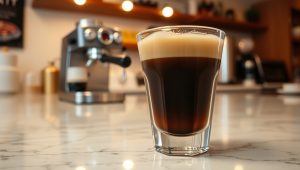
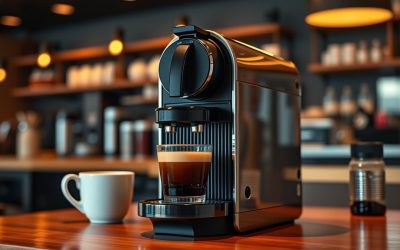
Espresso contains more caffeine per ounce than filter coffee because water passes through a compact bed of finely ground coffee under pressure. A single 30 ml shot may contain roughly 50–75 mg, while an 8-ounce filter coffee may contain 80–120 mg.
In other words, espresso is stronger by volume, but not necessarily higher in caffeine per serving. A 12-ounce mug made with a generous dose can contain considerably more caffeine than a single or even double espresso.
A milk drink does not remove caffeine. A latte made with one shot has approximately the caffeine of that shot; the added milk changes flavor, calories, and volume, not the amount of caffeine. A latte made with two shots generally contains about twice as much.
How brew method changes caffeine
Drip and pour-over
These methods commonly produce 80–120 mg in an 8-ounce serving. The main variables are the amount of coffee, water temperature, contact time, and grind size. Using more grounds usually has a larger effect than changing paper versus metal filtration.
French press
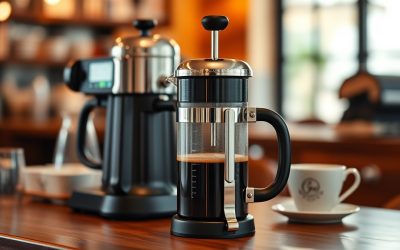
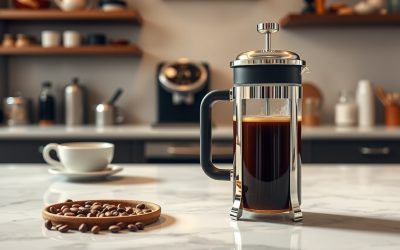
French press coffee often falls in a similar range to drip coffee. Its longer steep and commonly generous coffee dose can push caffeine higher. Leaving the coffee in the press does not keep extracting at the same rate once it has been poured, but a longer brew can increase extraction before serving.
Cold brew
Cold brew is often prepared as a concentrate, so the number on a label or recipe is meaningful only after dilution. For example, 4 ounces of concentrate containing an estimated 180 mg of caffeine, mixed with 4 ounces of water and ice, still contains about 180 mg. The drink is less concentrated by volume, but the caffeine has not disappeared.
Instant coffee
Instant coffee is relatively easy to control because the caffeine depends largely on how much powder you add. A level teaspoon and a heaped tablespoon can produce very different cups. Check the package when available, especially if you are comparing products.
Does dark roast have more caffeine than light roast?
Not in a simple, reliable way. Roasting changes the bean’s mass and density, but it does not create a dramatic difference in caffeine. If you measure coffee by weight, light and dark roasts generally provide comparable caffeine from the same species. If you measure by volume, such as scoops, light-roast beans are denser and a scoop may contain more coffee by weight.
Dark-roast coffee often tastes stronger because roasting produces deeper, more bitter flavors. That perceived intensity should not be treated as a caffeine measurement. For predictable results, weigh the beans or grounds rather than relying on scoop size.
Arabica, Robusta, and caffeine content
Bean species can make a substantial difference. Arabica coffee is the most common choice for specialty and espresso blends and typically contains less caffeine. Robusta, also called Coffea canephora, commonly contains about twice as much caffeine by bean weight, although the exact amount varies by cultivar and growing conditions.
An espresso blend containing Robusta may therefore deliver more caffeine at the same dose than a 100% Arabica blend. Robusta can also contribute a heavier body and more pronounced bitterness, which is why it is often used in some traditional espresso blends.
How much caffeine is appropriate in a day?
For many healthy adults, commonly cited guidance places total daily caffeine at up to about 400 mg, but individual tolerance varies. A 400 mg day could look like:
- One 12-ounce brewed coffee at approximately 150 mg, plus two single espressos at approximately 65 mg each, for about 280 mg total.
- Two 8-ounce brewed coffees at approximately 100 mg each, plus a double espresso at approximately 130 mg, for about 330 mg total.
- Two large cold brews at 180 mg each, totaling about 360 mg before counting tea, soda, energy drinks, chocolate, or supplements.
These calculations are estimates, not a personal target. Caffeine may affect sleep, alertness, anxiety, heart rate, digestion, or comfort differently from person to person. People who are pregnant, sensitive to caffeine, taking relevant medications, or managing a health condition should follow advice from a qualified healthcare professional; pregnancy guidance is often more restrictive, commonly around 200 mg per day.
Choosing a coffee setup based on caffeine control
| Your situation | Useful choice | Why it helps | Practical starting point |
|---|---|---|---|
| You want repeatable, moderate servings | Scale-controlled pour-over or drip brewer | Easy to weigh coffee and water | 15 g coffee to 250 g water, then adjust taste |
| You want a small, intense drink | Espresso machine | Short serving with measurable dose and yield | 18 g grounds for about 36 g espresso |
| You need the lowest caffeine while keeping coffee flavor | Decaffeinated filter coffee | Usually only a small fraction of regular coffee’s caffeine | Use the same brew ratio as regular coffee |
| You drink large iced servings | Dilutable cold-brew system | Concentrate can be measured before adding water | Record concentrate volume and dilution ratio |
| You want convenience and portion control | Instant coffee | Each serving can be made with a consistent powder weight | Use a kitchen scale or the package’s serving measure |
A simple way to estimate your own cup
Start with the coffee dose. A common filter recipe uses 60 grams of coffee per liter of water. An 8-ounce, or approximately 240 ml, serving would therefore use about 14–15 grams of coffee. If that coffee averages roughly 10–12 mg of caffeine per gram, the finished cup might contain approximately 140–180 mg before accounting for differences in bean type and extraction. Real-world brewed coffee often tests lower or higher, which is why published estimates use broad ranges.
For espresso, the dose is easier to track. If a machine uses 18 grams of coffee for a double shot, and the beans are relatively high in caffeine, the resulting drink may land near 100–150 mg. Switching to a single-shot recipe, a lower-caffeine Arabica blend, or half decaf can reduce the total without changing the equipment.
Common mistakes when comparing caffeine
- Comparing a 1-ounce espresso with a 12-ounce coffee without comparing total serving volume.
- Assuming bitter or dark-roasted coffee automatically contains more caffeine.
- Forgetting that cold-brew concentrate must be counted before dilution.
- Using different scoop sizes and treating them as equal doses.
- Counting only coffee while overlooking tea, cola, chocolate, energy drinks, and caffeine-containing supplements.
The most useful rule is to track serving size and coffee dose together. If you want predictable caffeine, choose a recipe you can repeat, weigh the grounds, keep the serving volume consistent, and use decaf or a half-caf blend when you want to preserve the ritual while reducing your total intake.