Last updated: September 18, 2026
A double espresso basket is designed for two shots, but “double” does not indicate one universal size. Depending on the machine, a basket may hold about 14 to 22 grams of ground coffee. The portafilter diameter also varies, with 51 mm, 54 mm, and 58 mm being common measurements.
The Short Answer
Most double espresso baskets hold 16 to 18 grams of coffee. Smaller 51 mm baskets commonly hold 14 to 16 grams, while 54 mm baskets often hold 16 to 18 grams. Standard 58 mm baskets are frequently rated for 18 to 22 grams.
As an Amazon Associate we earn from qualifying purchases at no extra cost to you. Product prices and availability are accurate as of the date shown and are subject to change.


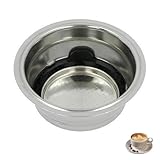

In practical terms, one double basket usually produces two espresso servings totaling about 2 fluid ounces (59 milliliters) before adjusting for crema and extraction style. The actual dose depends on the basket’s internal depth, shape, manufacturer, and whether it is single-wall or dual-wall.
Replacement baskets in common sizes generally cost about $8 to $18. For example, a 54 mm Breville-compatible double basket may sell for around $12.99, a Ninja Luxe Café-compatible stainless steel basket for about $15.99, and a De’Longhi replacement bowl for approximately $13.99. Basic 51 mm stainless steel options can cost about $8 to $10.
Always match the basket to your machine and portafilter. A basket can have the correct diameter but still fail to fit because of its rim, locking tabs, wall height, or hole pattern.
Standard Sizes
See also: How to Season a New Coffee Grinder (2026): Step-by-Step • How to Clean a Moka Pot Safely (2026): Step-by-Step
The measurements below describe common nominal sizes. The stated diameter refers to the basket or portafilter class, not necessarily the exact outside measurement at every point. Internal diameter is usually slightly smaller than the advertised size because of the basket wall and rolled rim.
| Common size | Nominal diameter | Typical basket height | Typical double dose | Best fit |
|---|---|---|---|---|
| 51 mm | 2.01 in (5.1 cm) | 0.79–0.98 in (2.0–2.5 cm) | 14–16 g | Compact and entry-level machines |
| 54 mm | 2.13 in (5.4 cm) | 0.79–1.10 in (2.0–2.8 cm) | 16–18 g | Many Breville and similar home machines |
| 58 mm | 2.28 in (5.8 cm) | 0.79–1.18 in (2.0–3.0 cm) | 18–22 g | Commercial-style and prosumer machines |
A double basket’s outer rim may measure slightly more than its nominal diameter. For instance, a basket sold as 54 mm may have an outside rim near 2.17 inches (5.5 cm), while the usable interior is smaller. The basket also needs enough clearance inside the portafilter, so do not choose by diameter alone.
Basket shape affects capacity as much as width. A straight-sided basket can hold more coffee at the same diameter than a tapered basket of equal height. Deeper baskets may be labeled “double,” “15 g,” “18 g,” or “20 g,” and those labels are more useful than the word “double” by itself.
Single-wall baskets are generally preferred when using freshly ground coffee and a separate grinder. They have one perforated layer and allow the coffee puck to control flow. Dual-wall baskets, sometimes called pressurized baskets, have an additional pressure-generating outlet and are intended to make acceptable crema with pre-ground coffee or less precise grinding.
In addition to diameter and capacity, check the basket’s hole area, rim profile, and total height. A replacement may physically drop into the portafilter but sit too high for the group head. A basket that is too tall can prevent the portafilter from locking or can press against the coffee puck screen.
How to Measure Your Space
- Remove the portafilter basket. Let the machine cool, unlock the portafilter, and lift out the existing basket. Avoid measuring while it is installed because the portafilter rim can hide the basket’s true shape.
- Measure the basket’s outside diameter. Use a ruler or, preferably, calipers across the widest part of the metal rim. Record the measurement in millimeters. A result close to 51, 54, or 58 mm identifies the likely size class.
- Measure the inside diameter. Measure from the inside wall directly across to the opposite inside wall. This is the useful coffee area and will be smaller than the nominal size.
- Measure total height. Place the basket on a flat surface and measure from the bottom to the highest point of the rim. Note whether the bottom is flat, rounded, or stepped.
- Check the rim and locking profile. Look for a rolled lip, retaining ring, notches, or tabs. These details determine whether the basket stays securely in the portafilter.
- Confirm the machine’s recommended dose. Check the manual, model label, or existing basket marking. If the machine calls for 18 grams, an unusually deep 22 g basket may not leave the correct headspace.
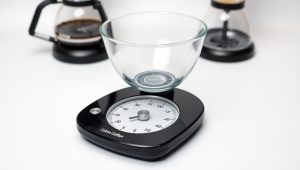
- Test with a scale. Weigh the empty basket, add coffee in 1-gram increments, and stop at the manufacturer’s stated capacity. Do not pack extra coffee simply to fill the basket.
Headspace matters. After tamping, the coffee puck needs room to expand when wet. As a general check, lock in the portafilter without forcing it, then inspect the puck after brewing. A clear shower-screen impression can indicate an overfilled basket, although the impression’s severity varies by machine.
By Room or Use Case
Home kitchen
For everyday home use, a 54 mm or 58 mm double basket is usually the easiest size to live with. A 16 to 18 g basket suits two modest espresso drinks, while an 18 to 20 g basket gives more flexibility for milk drinks such as cappuccinos and lattes. A replacement should match the original machine’s diameter and rim design rather than simply offering the largest stated capacity.
Small or compact espresso machine
Compact machines often use 51 mm baskets and doses around 14 to 16 grams. These baskets are smaller in both diameter and puck area, so coffee may need a slightly finer grind than it would in a wider 58 mm basket for a similar brew time. Confirm the exact model before ordering, since some compact machines use proprietary clips or unusually shallow baskets.
Office coffee station
An office setup benefits from a durable stainless steel basket in the machine’s standard size. A 16 to 18 g double basket is a practical middle ground: it is large enough for a full drink but does not require as much coffee as a 20 to 22 g commercial basket. Keep a spare basket available if several people use the machine throughout the day.
Milk drinks and entertaining
Choose an 18 to 22 g basket if the machine supports it and you regularly prepare large lattes, flat whites, or two drinks at once. More coffee can produce a stronger base, but the machine must have enough clearance for the deeper puck. For entertaining, a second correctly sized basket is more useful than a generic basket that only approximately fits.
Pre-ground coffee or occasional use
A dual-wall basket can be convenient when using supermarket pre-ground coffee or a basic grinder. These baskets often appear in 51 mm, 54 mm, and machine-specific designs. They are not interchangeable simply because the diameter matches, so verify the model compatibility and basket height before buying.
Common Sizing Mistakes
- Assuming every double basket holds 18 grams: A double may mean 14 grams on one machine and 22 grams on another.
- Measuring the portafilter handle instead of the basket: The handle and metal frame can be wider than the basket itself.
- Confusing 54 mm with 58 mm: The difference is only 4 mm on paper, but the baskets are not interchangeable.
- Ignoring basket height: Diameter alone does not confirm that the basket will clear the shower screen.
- Mixing single-wall and dual-wall designs: They produce coffee differently and may require different grinding and tamping methods.
- Buying by machine brand only: One brand may use different basket dimensions across product lines.
- Overfilling to reach a stated dose: Use the dose range appropriate for the basket and leave proper headspace.
FAQ
How many grams of coffee fit in a double basket?
Most hold 16 to 18 grams, but the useful range is approximately 14 to 22 grams. Check the basket marking or machine instructions, then verify the dose with a coffee scale.
Is a 58 mm basket better than a 54 mm basket?
Neither is automatically better. A 58 mm basket offers a wider puck and is common on commercial-style machines, while a 54 mm basket can work very well in a home machine designed for it. The correct size is the one made for your portafilter.
Can I use a 51 mm basket in a 54 mm portafilter?
Usually not. Even a small diameter difference can prevent the basket from seating correctly or allow coffee to bypass the seal. Use the exact compatible size, including the correct rim and height.
How much espresso does a double basket make?
A traditional double is often around 2 fluid ounces (59 ml) of brewed espresso, but modern recipes are commonly measured by beverage weight. An 18 g coffee dose might produce roughly 36 g of espresso, depending on the recipe and machine settings.
Ready to decide? Our #1 pick for 2026 is the 51 mm.
Live price & availability on Amazon.