Last updated: October 20, 2026
As an Amazon Associate we earn from qualifying purchases at no extra cost to you.





Disclosure: As an Amazon Associate we earn from qualifying purchases. This page contains affiliate links and we may earn a commission at no extra cost to you.
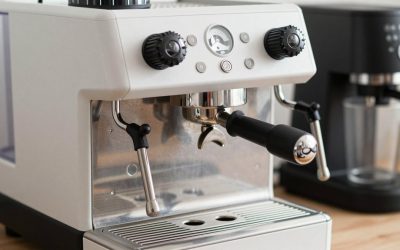
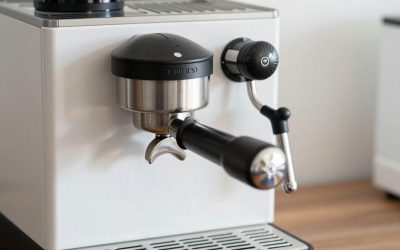
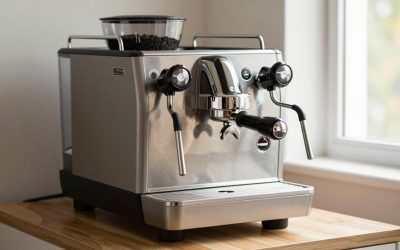
Thermoblock heating is the technology that made fast, compact home espresso possible. Instead of keeping a tank of water hot like a traditional boiler, a thermoblock heats water on demand as it flows through a metal block — which means a machine can be ready in a couple of minutes, sip energy only while brewing, and fit in a fraction of a boiler machine’s footprint. Nearly every compact espresso machine sold today is a thermoblock at heart, and the design’s reputation has climbed steadily as the engineering matured.
The interesting part is how wide the thermoblock world now stretches. At the summit sits the Ascaso Steel DUO — a Spanish-built machine with two dedicated thermoblocks, PID control, and volumetric programming that competes head-on with boiler machines costing more. In the broad middle live excellent compacts like the CASABREWS Ultra and wirsh, plus the $99 stainless machine that has become the category’s entry point. We also cover Breville’s Barista Express, whose fast-heating thermocoil is the design’s close cousin, and — because thermoblocks are repairable — a small connector part that keeps Jura and De’Longhi machines alive for pennies.
For how thermoblocks compare against boilers and heat exchangers across the whole market, our espresso machine buying guide lays out the map; this page goes deep on the fast-heating branch.
Quick Comparison
| Product | Price | Rating |
|---|---|---|
| 4.0mm Thermoblock Water Connector (Jura/De’Longhi) | $7.90 | — |
| Ascaso Steel DUO Dual Thermoblock PID | $1,780.75 | — |
| Compact 20 Bar Stainless Espresso Machine | $99.99 | — |
| CASABREWS Ultra 20 Bar with LCD | $209.99 | — |
| Breville Barista Express BES870XL | $689.99 | — |
| wirsh 20 Bar Semi-Automatic with Touch Controls | $139.99 | — |
Why Trust This Guide
See also: How to Descale an Espresso Machine: Citric Acid vs Vinegar • Best Electric Kettles: Ten Glass, Steel and Gooseneck Picks Compared
We evaluate fast-heating machines on the things the technology is actually judged by — temperature stability shot-to-shot, brew-to-steam transitions, and long-term reliability of the heating path — drawn from daily use patterns rather than spec sheets. Where our knowledge of a specific model is from category expertise rather than extended hands-on time, the framing reflects that, and no numbers here are invented.
Ascaso Steel DUO Dual Thermoblock PID
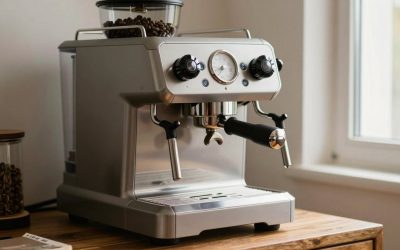
The Steel DUO is the machine that settles the old argument about whether thermoblocks can be taken seriously. Ascaso builds it around two dedicated thermoblocks — one for brew water, one for steam — so you can pull a shot and steam milk simultaneously, the workflow advantage that used to require a dual-boiler machine with a half-hour warm-up. With PID temperature control and programmable volumetric dosing, it brings genuine café workflow to a machine that is ready in minutes rather than half an hour.
Who it suits: the daily latte maker who wants prosumer capability without prosumer warm-up times and energy draw, and who values Ascaso’s distinctive industrial styling. The trade-offs: this is still four-figure money, the thermoblock’s instant-heat character behaves slightly differently from a saturated brass group during long shots, and it deserves a serious grinder beside it — see our espresso grinder picks for partners that do it justice.
Breville Barista Express BES870XL
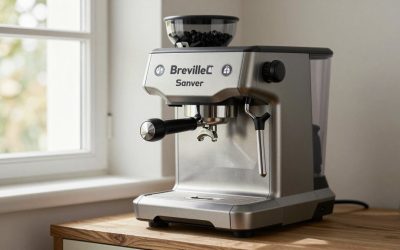
The Barista Express runs on a thermocoil — a sibling design where water heats through coiled tubing in a heated block — and it is the most successful fast-heating espresso machine ever sold. The recipe is familiar but unbeaten: integrated burr grinder, pressure feedback, a steam wand capable of real microfoam, and heat-up measured in seconds rather than minutes. For most households deciding between a compact thermoblock machine and “something more serious,” this is the something.
The honest limits: a single heating path means brew and steam take turns, and the 54mm portafilter sits outside the commercial standard. Neither matters for one or two milk drinks a morning. Our complete Barista Express review covers dialing it in.
CASABREWS Ultra 20 Bar with LCD
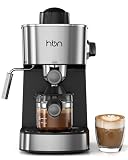
The CASABREWS Ultra is what the budget thermoblock class looks like when a brand reinvests in refinement: an LCD that shows what the machine is doing, a 20 bar pump, and a steam system the listing fairly calls powerful for its tier. The display matters more than it sounds — visibility into temperature state takes the guesswork out of the brew-to-steam transition that defines compact machine workflow.
It suits the buyer who wants a clear step up from bare-bones compacts without leaving the two-hundred-dollar zone: better feedback, better steam, same small footprint. The remaining compromises are the class’s usual — single heating path, light chassis — and they are fair at the price.
wirsh 20 Bar Semi-Automatic with Touch Controls
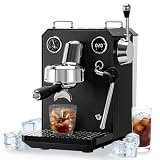
The wirsh stakes out the stylish middle: touch controls in place of clunky switches, a 20 bar pump, and a steam frother, all wrapped in a design that looks more expensive than it is. Touch interfaces on budget machines can be gimmicks; here the value is a cleaner, more deliberate workflow — preset shot buttons encourage the repeatability that budget espresso lives or dies by.
Its compromises track the price — wait between shot and steam, bring your own grinder, replace the included tamper — but as a first machine with a touch of design pride, it is an easy machine to like and live with. Pair it with our guide to fixing bitter espresso and the learning curve shortens noticeably.
Compact 20 Bar Stainless Espresso Machine
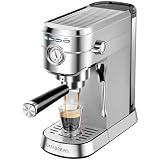
This is the thermoblock concept distilled to its minimum viable form: heat fast, brew at pressure, steam adequately, occupy almost no counter, cost double digits. As the entry point to everything else on this page it is genuinely capable — fed fresh grounds, it makes lattes worth looking forward to — and its limitations are an honest curriculum in why the better machines cost more.
Temperature behavior is the main lesson: small blocks cool and overshoot, so ritual matters. Preheat with a blank shot, keep your cup warm, and the machine rewards you well beyond its price. When you outgrow it, you will know exactly which upgrade you are buying and why.
4.0mm Thermoblock Water Connector (Jura/De’Longhi)
This eight-dollar part earns its place as the page’s reminder that thermoblock machines are repairable appliances, not disposable ones. The small connectors joining a thermoblock to its water lines are classic wear points on Jura ENA-family and De’Longhi machines — heat cycles harden them until a seep or drip appears under the chassis. Swapping the connector is a patient afternoon’s work with a screwdriver and a repair video, and it routinely returns a “dead” machine to years of service.
Check your model’s compatibility before ordering, work slowly around the clips, and you will have performed the most satisfying trick in home espresso: fixing a four-figure appliance for the price of a sandwich.
What to Look For in a Thermoblock Espresso Machine
Fast-heating machines differ in ways the box rarely explains. The real dividing lines:
- Single versus dual thermoblock — One block means brew and steam take turns; two (as on the Ascaso) means café workflow. This is the category’s biggest price-and-capability divider.
- PID temperature control — A PID tames the temperature swings small blocks are prone to. For light and medium roasts it is the feature most worth paying for.
- Brew-to-steam recovery time — The daily-life metric for single-block machines. Faster transitions mean hotter lattes and calmer mornings.
- Steam delivery — A pivoting wand you can position into a pitcher outclasses a fixed frothing nozzle for milk texture, at every price.
- Descaling access and parts — Thermoblocks have narrow waterways that scale faster than boilers. Favor machines with clear descaling routines and findable spare parts.
- Warm-up honesty — “Ready” lights often precede true thermal readiness. Machines whose displays show actual state (like LCD models) make consistency far easier.
Tips for Getting the Most Out of a Thermoblock Espresso Machine
Respect the ready light’s optimism. Thermoblock machines announce readiness when the block is hot, but the portafilter, group, and cup are still cold — and espresso loses heat to every cold surface it meets. Run a blank shot through the empty portafilter before brewing and your shot temperature stabilizes dramatically. This one habit closes most of the gap between compact machines and their bigger siblings.
Descale more often than you think, with more dilute solution than you think. The narrow channels that let a thermoblock heat instantly also collect scale faster than a boiler, and flow that grows slow and sputtery is the early warning. Filtered water stretches the interval; a quarterly gentle descale on hard water keeps the block honest. It is the single habit that most determines whether these machines last three years or ten.
Finally, work with the single-block rhythm instead of fighting it: pull your shot first, then steam, and warm your milk pitcher under the tap while the machine transitions. The shot holds its quality in a warm cup far better than milk holds its texture in a cold one. For deeper technique on extraction itself, our pre-infusion guide and best home machines round-up are the natural next reads.
Frequently Asked Questions
Are thermoblock espresso machines as good as boiler machines?
At the top of the category, genuinely close — a dual-thermoblock machine with PID control delivers stability and workflow that rival boiler machines, with far faster warm-up. Budget single-block machines trade some shot-to-shot consistency for their price and speed, a gap good technique substantially closes.
How long does a thermoblock machine take to heat up?
Typically a couple of minutes to the ready light — the design’s signature advantage over boiler machines that want twenty minutes or more. True thermal stability arrives a few minutes later, which is why preheating the portafilter with a blank shot matters.
Do thermoblock machines need more descaling?
Yes, proportionally — water flows through narrow heated channels where minerals deposit readily, so scale shows up as restricted flow sooner than in a boiler. Filtered water and a regular gentle descale keep the system healthy for years.
Can a thermoblock machine steam milk properly?
Single-block machines steam after brewing, with a pause between, and produce respectable microfoam once you learn the wand. Dual-thermoblock machines like the Ascaso Steel DUO steam and brew simultaneously with notably stronger, drier steam — that is precisely what the second block buys.