Last updated: October 20, 2026
As an Amazon Associate we earn from qualifying purchases at no extra cost to you.




Disclosure: As an Amazon Associate we earn from qualifying purchases. This page contains affiliate links and we may earn a commission at no extra cost to you.
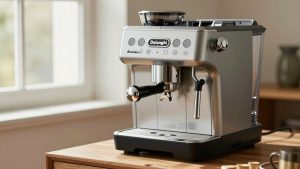
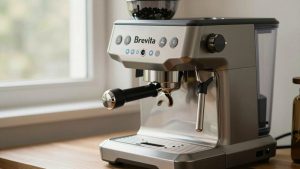
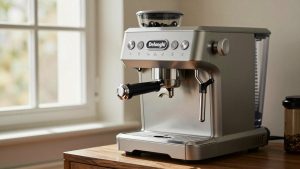
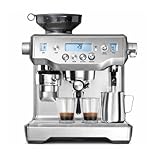
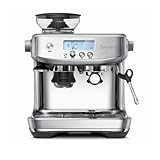
The Breville Dual Boiler BES920 occupies a strange and wonderful position in home espresso: it is the machine that prosumer snobs recommend to people who refuse to spend prosumer money on Italian heritage brands. Two dedicated boilers, PID control everywhere, adjustable pre-infusion, and shot-to-shot consistency that embarrasses machines costing twice as much — all wrapped in Breville’s approachable, appliance-friendly design language.
In this review we look at the BES920 platform through the Dynamic Duo package, which pairs the Dual Boiler with Breville’s Smart Grinder Pro, and we check it against five alternatives that bracket it from both sides: budget dual boilers from Kismile and Gevi that chase the same architecture for a fraction of the price, and Breville’s own Barista Express, Pro, and Touch for buyers deciding how far up the company’s lineup to climb. Our 2026 brand comparison explains where Breville sits against La Marzocco and Rancilio if you are weighing heritage brands too.
If you have been circling the dual boiler decision for months, this is the article we wish existed when we made the jump ourselves.
Quick Comparison
| Product | Price | Rating |
|---|---|---|
| Kismile Dual Boiler with Grinder | $474.99 | 4.8/5 |
| Breville Dynamic Duo (Dual Boiler + Grinder) | $1,699.95 | 4.6/5 |
| Breville Barista Express | $689.99 | 4.5/5 |
| Gevi Dual Boiler 58mm | $359.98 | 4.5/5 |
| Breville Barista Pro | $849.95 | 4.4/5 |
| Breville Barista Touch | $999.95 | 4.3/5 |
Why Trust This Guide
See also: How to Descale an Espresso Machine: Citric Acid vs Vinegar • Best Electric Kettles: Ten Glass, Steel and Gooseneck Picks Compared
We evaluate espresso machines by living with them: hundreds of shots across roast levels, milk texturing under real morning time pressure, and the unglamorous months of cleaning, backflushing, and descaling that reveal how a machine ages. Where our experience with a specific model is shorter, we anchor our assessment in its architecture and the platform’s documented track record rather than inventing detail.
The Breville Dual Boiler Platform
Breville Dynamic Duo (Dual Boiler + Smart Grinder Pro)
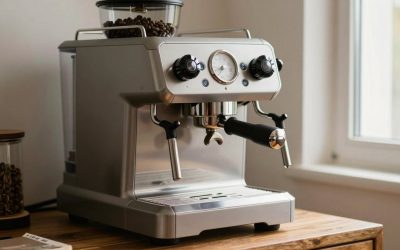
The heart of this package is the Dual Boiler’s architecture: one boiler dedicated to brew water, one to steam, each independently controlled. That means you can pull a shot at a precise temperature while simultaneously steaming milk at full power — the workflow that defines café service, compressed onto a kitchen counter. PID control keeps the brew boiler within a tight band, and the machine exposes adjustable pre-infusion so you can shape how the shot begins. Our pre-infusion guide covers why that single feature elevates this machine above most of its price peers.
In daily use, the BES920 is the most repeatable espresso machine Breville makes. Once dialed, the same dose and grind produce the same shot tomorrow, next week, and next month — and repeatability is the entire game in espresso. The included Smart Grinder Pro is a competent partner with a huge adjustment range, though serious users often graduate to a single-dose grinder later; our single-dose grinder guide maps that upgrade path.
Tradeoffs: the Dynamic Duo costs $1,699.95, occupies serious counter real estate, and the Dual Boiler’s internals eventually want gasket and O-ring service that handy owners do themselves and others outsource. None of that changes the verdict — as a pure shot-quality-per-dollar machine with genuine commercial workflow, the BES920 remains the benchmark of Breville’s range.
The Alternatives
Kismile Dual Boiler with Grinder
The Kismile is the most aggressive value play here: dual boiler architecture, a built-in grinder, and a milk steamer for $474.99 — roughly a quarter of the Dynamic Duo. On paper it offers the same simultaneous brew-and-steam workflow that justifies the Breville’s price, and that alone makes it worth taking seriously for budget-conscious milk-drink households.
Reality check: dual boiler architecture is necessary but not sufficient. Temperature stability, pump quality, steam dryness, and long-term durability are where engineering budgets show, and a new brand at this price is unproven on all four. We see the Kismile as a high-upside gamble for someone who wants the workflow now and accepts appliance-grade longevity, rather than a Dual Boiler replacement.
Breville Barista Express
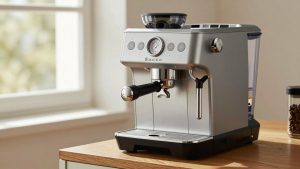
The Barista Express at $689.99 is the single most popular path into real espresso, and against the BES920 it illustrates exactly what the extra thousand dollars buys. The Express is a single-thermal-system machine: it pulls very good shots, then asks you to wait while it transitions to steam. For one or two drinks a morning, that pause is trivial.
Where the Express genuinely competes is learning value. The integrated grinder, pressure gauge, and forgiving workflow teach the fundamentals faster than any other machine we have used, which is why it headlines our best home espresso machines list year after year. Buy it if you are early in the journey; buy the Dual Boiler if you already know this hobby is permanent.
Gevi Dual Boiler 58mm
The Gevi is the other budget dual boiler, at $359.98, and its standout choice is a commercial 58mm portafilter — the same standard used on machines ten times its price. That means real access to the aftermarket of precision baskets, distribution tools, and bottomless portafilters, and it makes the Gevi unusually upgradeable for its bracket.
The same caveats as the Kismile apply: unproven longevity and steam that will not match the Breville’s authority. But for a tinkerer who wants to learn 58mm workflow and puck prep on a dual boiler without committing four figures, the Gevi is one of the most interesting budget machines of the current generation.
Breville Barista Pro
The Barista Pro at $849.95 sits between the Express and the Dual Boiler, swapping the Express’s thermal system for fast thermojet heating and adding an LCD. It is the quickest of Breville’s integrated machines from cold to first shot, and its steam recovers fast enough that the single-system limitation rarely stings in practice.
Against the BES920, the Pro trades ultimate temperature stability and simultaneous brew-and-steam for speed and a smaller footprint. If your mornings are measured in seconds and your drinks are mostly for one, the Pro is arguably the more livable machine. If weekend cappuccino service for the household is your reality, the Dual Boiler wins decisively.
Breville Barista Touch
The Barista Touch at $999.95 takes the Pro’s fast-heating platform and adds a touchscreen with guided drink workflows and automatic milk texturing. It is the machine for households where multiple people of varying skill levels share one espresso maker — the screen meets everyone at their level, and the auto-steam wand produces respectable microfoam unattended.
Purists will prefer the Dual Boiler’s manual control and superior thermal architecture, and they are right on cup-quality grounds. But the Touch answers a different question: what machine will actually get used by everyone in the house? Sometimes the best espresso machine is the one your partner will also operate. Our smart espresso machine review explores this automation tradeoff in depth.
What to Look For in a Dual Boiler Espresso Machine
The dual boiler label gets stamped on wildly different machines. Here is what actually separates them:
- Independent temperature control — Both boilers should be individually regulated, ideally with PID. A steam boiler bleeding heat into the brew path defeats the architecture’s purpose.
- Steam power and dryness — A dedicated steam boiler should texture a pitcher of milk in well under a minute with dry, powerful steam. Wet, sputtering steam waters down milk and signals a weak boiler.
- Pre-infusion control — Adjustable pre-infusion lets you gently saturate the puck before full pressure, taming channeling and harshness. It is the feature that most rewards growing skill.
- Portafilter standard — 58mm commercial sizing opens the full accessory ecosystem; 54mm keeps you in Breville’s world, which is workable but narrower.
- Shot feedback — Pressure gauges, shot timers, and temperature readouts turn troubleshooting from guesswork into diagnosis. Our espresso ratio guide shows how to use that feedback.
- Service reality — Dual boilers have twice the plumbing. Check whether gaskets, valves, and O-rings are user-serviceable and whether parts are actually purchasable before you buy.
Tips for Getting the Most Out of a Dual Boiler Machine
Exploit the architecture: steam while you brew. It sounds obvious, but most new dual boiler owners run the machine sequentially out of single-boiler habit. Start the shot, begin steaming five seconds later, and both finish together — that rhythm cuts a two-drink morning nearly in half and is the entire reason you paid for two boilers. Practice the timing until it is muscle memory.
Use the temperature control as a flavor tool, not a set-and-forget. Darker roasts generally taste smoother brewed a few degrees cooler; lighter roasts open up warmer. Change one variable at a time and taste deliberately. This is where a dual boiler with PID stops being a convenience purchase and becomes an instrument.
And treat water as a component. Two boilers mean two vessels accumulating scale, and descaling a neglected dual boiler is genuinely tedious. Filtered or properly remineralized water from day one extends service intervals dramatically and protects flavor — cheap insurance on a four-figure machine.
Frequently Asked Questions
Is the Breville Dual Boiler BES920 worth it over the Barista Express?
If you make milk drinks daily or pull multiple shots in a session, yes — simultaneous brewing and steaming plus superior temperature stability are transformative. If you drink one americano a day, the Express delivers most of the cup quality for far less, and you can bank the difference toward a better grinder.
Does the Dual Boiler need a separate grinder?
The standalone BES920 does; the Dynamic Duo package bundles Breville’s Smart Grinder Pro, which is a competent match. Either way, espresso demands a burr grinder with fine espresso-range adjustment — the machine cannot compensate for inconsistent grounds.
Are budget dual boilers like Kismile and Gevi actually dual boiler machines?
They advertise dual heating systems and can brew and steam concurrently, which is the defining workflow. What remains unproven is temperature precision, steam strength, and durability over years — areas where established platforms have track records. Treat them as workflow bargains, not Breville equivalents.
How long does a Breville Dual Boiler last?
Maintained owners routinely report many years of daily service, with periodic O-ring and gasket replacement as the main upkeep. Water quality is the biggest variable: scale is the platform’s primary enemy, so filtration or proper water recipes pay for themselves several times over.