Coffee Brewing Timer: Why Shot Timing Precision Matters for Espresso
TL;DR — Quick Answer
A coffee brewing timer tracks your espresso shot from first drip to target yield — the window is typically 25–35 seconds for a standard 1:2 ratio double shot. Even 5 seconds over or under shifts extraction yield by 2–4%, moving the shot out of the 18–22% ideal zone. Best dedicated shot timer: Acaia Lunar scale (B0F4X6ZRGX) with built-in timer. Best standalone: simple lab timer (B0DNZ3SKCN). Best app-based: Espresso Gear Timer paired with any phone.
Espresso extraction is a race between water, pressure, and time. Lock in the right grind, dose, and temperature, and time becomes the final variable — the one that determines whether a well-prepared puck extracts into a balanced shot or misses the mark by a degree of over or under-extraction. A coffee brewing timer isn’t a luxury accessory; it’s the simplest feedback mechanism for knowing whether your shot is reproducible.
As an Amazon Associate we earn from qualifying purchases at no extra cost to you. Product prices and availability are accurate as of the date shown and are subject to change.




This guide covers why shot timing matters, what the numbers mean, how to integrate a timer into your workflow, and which timing tools provide the best feedback for home baristas.
- Quick Comparison
- Recommended Timing Tools
- Why Shot Timing Matters: The Extraction Physics
- Espresso Shot Time Targets: What the Numbers Mean
- Integrating a Timer into Your Espresso Workflow
- Pre-Infusion Timing: A Separate Variable
- Shot Timing vs. Yield Weight: Which Matters More?
- Frequently Asked Questions
- About the Author
Quick Comparison
| Product | Brand | Price | Rating |
|---|---|---|---|
| Cocinare Gooseneck Electric Kettle | Cocinare | $79.99 | 4.4/5 |
| TIMEMORE Sculptor 078S Flat Burr Coffee Bean Grinder | TIMEMORE | $799 | 4.3/5 |
| Rancilio Silvia Espresso Machine | Rancilio | $995 | 4.2/5 |
Recommended Timing Tools
See also: How to Replace Espresso Machine Water Filter (2026): Step-by-Step • How to Adjust Espresso Machine Brew Temperature (2026): Step-by-Step
BEST SCALE + TIMER COMBO
Acaia Lunar Espresso Scale
~$225

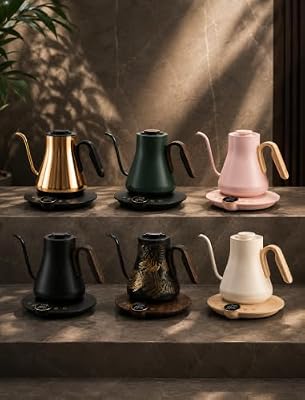
Cocinare Gooseneck Electric Kettle, ±1°F Precise Temperature Control, 1500W Fast Heating, Pour Over Coffee & Tea Kettle with Brew Timer & Keep Warm, Stainless Steel, 0.9L (Delacroix Green)



As an Amazon Associate we earn from qualifying purchases. Product prices and availability are accurate as of the date/time indicated.
BEST BUDGET TIMER
Precision Digital Lab Timer
~$12

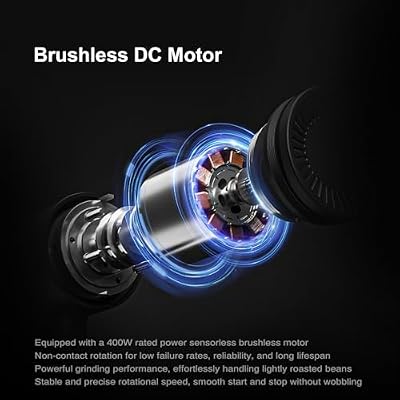
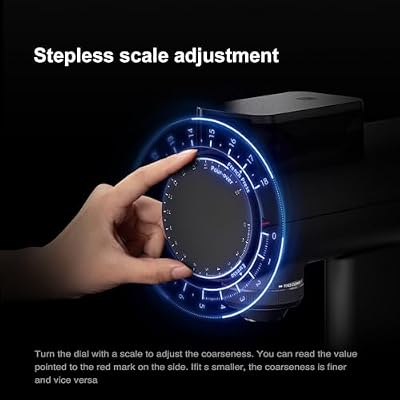
TIMEMORE Sculptor 078S Flat Burr Coffee Bean Grinder, Electric Espresso Grinder with Stepless Coarseness Adjustment, Suitable for Espresso, Pour over, French Press, Cold Brew - Black




As an Amazon Associate we earn from qualifying purchases. Product prices and availability are accurate as of the date/time indicated.
SCALE WITH SHOT TRACKING
Decent Espresso DE Scale
~$99

Rancilio Silvia Espresso Machine, Stainless Steel


As an Amazon Associate we earn from qualifying purchases. Product prices and availability are accurate as of the date/time indicated.
Why Shot Timing Matters: The Extraction Physics
Espresso extraction is not linear — different flavor compounds dissolve at different rates as water passes through the puck. Fruity acids and bright aromatics extract first, in the opening 10–15 seconds. Sweetness and body-building compounds follow through the middle phase. Bitter, astringent polyphenols extract last. A 25–30 second shot captures the first two phases fully while limiting the third. A 20-second shot cuts off before body develops. A 40-second shot runs deep into bitter territory.
Time alone doesn’t determine extraction — grind size, dose, temperature, and pressure all interact. But given a fixed recipe (same grind, same dose, same machine settings), shot time is a highly sensitive indicator of puck resistance. If your shot yesterday was 28 seconds and today it’s running at 40 seconds with everything else identical, your grinder’s burrs have shifted, your tamp pressure was heavier, or your beans have off-gassed differently since the bag was opened. Time is the canary in the coal mine for recipe drift.
Espresso Shot Time Targets: What the Numbers Mean
The industry-standard target for a double espresso at 1:2 brew ratio (18g in, 36g out) is 25–35 seconds, measured from first liquid drop to target yield weight. Some baristas start the clock at pump activation (adding ~5 seconds of pre-infusion); others start at first drip. Establish a consistent measurement point and stick to it — consistency of method matters more than which method you choose.
| Shot Time | Likely Cause | Extraction Effect | Fix |
|---|---|---|---|
| Under 20 sec | Grind too coarse / dose too low | Under-extracted — sour, thin | Grind finer, increase dose |
| 20–25 sec | Slightly fast flow | Slightly under-extracted | Grind finer by 1 step |
| 25–35 sec | Dialed in | Ideal extraction zone | Maintain recipe |
| 35–45 sec | Slightly slow flow | Slightly over-extracted | Coarsen grind by 1 step |
| Over 45 sec | Grind too fine / channeling | Over-extracted or uneven | Coarsen grind, check distribution |
Integrating a Timer into Your Espresso Workflow
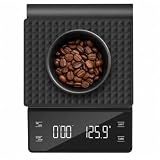
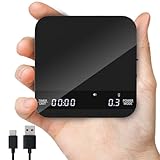
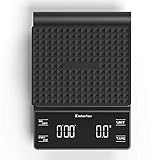
The most practical approach: use an espresso scale with a built-in timer placed under the cup, started at the moment you engage the pump. The Acaia Lunar and similar barista scales display both elapsed time and accumulated yield weight simultaneously — the dual readout lets you track both variables at once and build a complete picture of each shot. When yield hits your target weight (e.g., 36g for a 1:2 double), note the time. Consistently hitting 36g at 28–30 seconds means your recipe is stable.
If a dedicated espresso scale isn’t in the budget, a simple digital countdown timer started at pump activation works fine. The goal is to remove the “I think it was about 30 seconds” guesswork from your workflow. Even a phone timer provides more actionable data than eyeballing shot color. Consistent timing is the first step toward understanding extraction yield and TDS measurements — once you’re timing reliably, adding a refractometer gives you the complete picture.
Pre-Infusion Timing: A Separate Variable
Machines with programmable pre-infusion add a timing layer before the main extraction phase. During pre-infusion, water saturates the puck at low pressure (2–4 bar) before ramping to full 9-bar extraction. This phase typically runs 3–8 seconds and is not counted in the “shot time” for extraction purposes — though it adds to total brew time from pump activation.
If your machine offers pre-infusion control, time each phase separately: pre-infusion duration (start of pump to pressure ramp) and extraction duration (pressure ramp to target yield). A 6-second pre-infusion followed by 28 seconds extraction gives a total of 34 seconds from pump start — but the extraction yield is calculated against the 28-second active phase. Keep notes on both numbers when dialing in new beans. Lighter roasted, denser beans benefit from longer pre-infusion (6–10 seconds); darker roasts need less (2–4 seconds). See the grind size guide for how pre-infusion duration interacts with grind coarseness.
Shot Timing vs. Yield Weight: Which Matters More?
Modern espresso technique prioritizes yield weight over time as the primary target. Stop the shot when the scale hits your target output weight (e.g., 36g for a 1:2 double) — not when a timer hits 30 seconds. Time is a diagnostic: if weight-based stopping produces consistent 27–30 second shots, your recipe is stable. If the same weight target is hitting at 22 seconds one day and 38 seconds another, something in your puck preparation is inconsistent.
This weight-first approach requires a scale under the cup during extraction — a worthwhile investment that fundamentally transforms shot consistency. Pair the scale with a milk thermometer for milk drinks and you’ve built a complete precision feedback system for under $50 in tools. The result: shots that reproduce reliably morning after morning without the daily redialing cycle that frustrates most home baristas.
Frequently Asked Questions
How long should an espresso shot take to pull?
25–35 seconds from first drip to target yield weight for a standard 1:2 double espresso (18g in, 36g out). The exact target depends on your machine, grind, and beans — establish your baseline by measuring consistently rather than chasing a fixed number. What matters is that your recipe reproduces the same time within ±3 seconds shot to shot.
Should I time espresso from pump start or first drip?
Either method works — the key is consistency. Timing from first drip is more common in specialty coffee because it isolates the actual liquid extraction phase from pre-infusion. Timing from pump start is simpler and captures total brew time including pre-infusion. Choose one method and stick with it so your shot records are comparable.
Why does my espresso shot time vary day to day with the same settings?
The most common causes: bean freshness (CO2 off-gassing decreases puck resistance as beans age past their peak), ambient temperature affecting grinder burr gap, humidity affecting particle clumping, or inconsistent distribution and tamping technique. Weigh your dose to 0.1g and use a WDT tool before tamping — these two habits eliminate the majority of shot-to-shot time variance.
Is a longer espresso shot always more extracted?
Not necessarily — a longer shot at the same yield weight means slower flow, which indicates higher puck resistance (finer grind or heavier tamp). Slower flow does extract more per gram of water, but if resistance is due to channeling rather than uniform puck density, extraction will be uneven regardless of time. Time plus yield weight plus taste together give a complete picture; time alone can mislead.
What is the best espresso scale with a built-in timer?
The Acaia Lunar is the benchmark — 0.1g precision, 500ms response time fast enough to catch espresso flow accurately, built-in shot timer, and Bluetooth app integration for shot logging. The Decent Espresso DE Scale and Timemore Black Mirror are strong alternatives at lower price points. Any scale with 0.1g precision and a built-in timer covers the home barista’s needs. A super automatic espresso machine with programmable shot volume is a simpler alternative if you prefer automated consistency over manual precision.
Related: Coffee Extraction Yield and TDS Guide | Espresso Grind Size Guide | Milk Steam Thermometer Guide
Ready to decide? Our #1 pick for 2026 is the Cocinare Gooseneck Electric Kettle.
Live price & availability on Amazon.