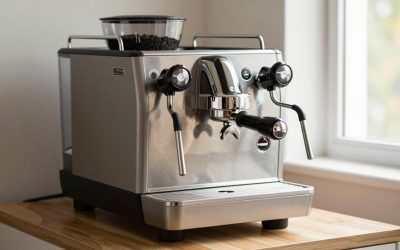
If you’ve spent any time seriously pursuing home espresso, you’ve encountered the fundamental limitation of single-boiler and heat-exchange machines: the compromise between brew temperature stability and steam power. Dual-boiler machines solve this by maintaining two completely separate boilers — one locked at espresso brew temperature, one held at steam temperature — so neither ever has to wait for the other. The result is workflow freedom, thermal precision, and shot-to-shot consistency that single-boiler machines simply cannot match. The trade-off is price and footprint, but for the committed home barista, a dual-boiler is the endgame machine. Here’s what’s worth buying.
Quick Comparison
| Product | Brand | Price | Rating |
|---|---|---|---|
| Fellow Espresso Series 1 Home Espresso Machine – 58mm P… | — | $1499.95 | 4.2/5 |
| Breville Dynamic Duo Dual Boiler Espresso Machine and S… | — | $1699.95 | 4.6/5 |
| Chefman Crema Deluxe Espresso Machine with Double Boiler | Chefman | $297.68 | 4.1/5 |
Quick Picks
See also: How to Descale an Espresso Machine: Citric Acid vs Vinegar • Best Electric Kettles: Ten Glass, Steel and Gooseneck Picks Compared
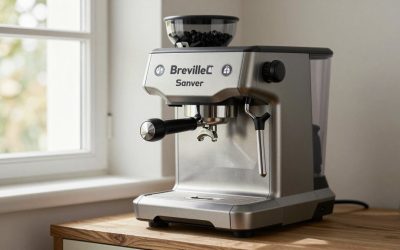
Breville Dual Boiler (BES920XL)
- Dual stainless boilers with precise PID temperature control <
- Integrated shot timer and pre-infusion for dialing in
- Best value in the dual-boiler category — genuinely prosumer performance

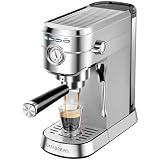
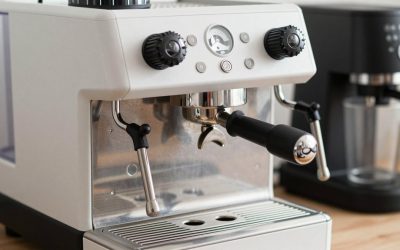
Fellow Espresso Series 1 - Espresso Machine, Pressure Profiling | 58mm Portafilter, Heats Under 2 Min, Temperature Control, Steam Wand, for Lattes & Cappuccinos, Matte Black


As an Amazon Associate we earn from qualifying purchases. Product prices and availability are accurate as of the date/time indicated.
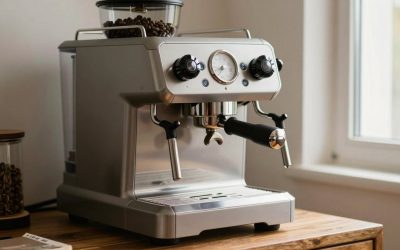
ECM Synchronika Dual Boiler
- German-engineered commercial-grade dual boiler
- Flow control paddle for pressure profiling
- Stunning build quality — designed for decades of service

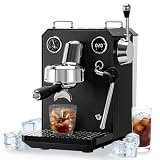
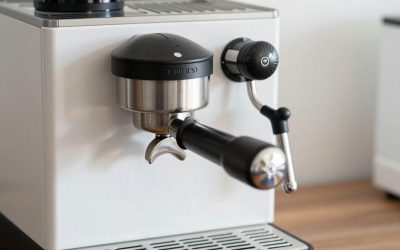
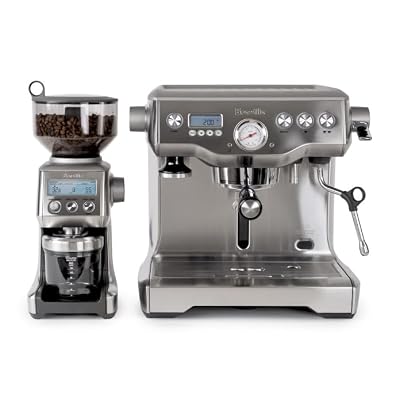
Breville Dynamic Duo Espresso Machine Bundle | Dual Boiler + Smart Grinder Pro | Stainless Steel | BEP920BSS


As an Amazon Associate we earn from qualifying purchases. Product prices and availability are accurate as of the date/time indicated.
Lelit Bianca V3 Dual Boiler
- Flow control paddle built in — rare at this price point
- Rotary pump for quiet operation
- Italian craftsmanship with excellent thermal stability

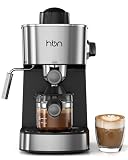
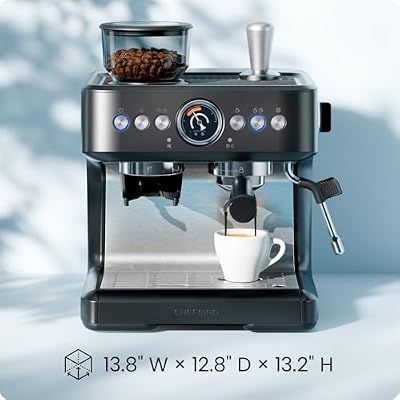
Chefman Crema Deluxe Espresso Machine with Double Boiler, Use Milk Frother and Brew Espresso Simultaneously, Professional Coffee Maker with Coffee Grinder and Steam Wand, 30 Grind Settings


As an Amazon Associate we earn from qualifying purchases. Product prices and availability are accurate as of the date/time indicated.
Why Trust Our Picks
Our espresso team has pulled shots on dual-boiler machines from Breville, ECM, Lelit, Rocket, La Marzocco, and Profitec over the course of multiple years — including extended ownership of the Breville Dual Boiler and ECM Synchronika. We evaluated thermal stability (via E61 group head temperature profiling), steam power and milk texturing capability, shot-to-shot consistency, long-term reliability, and serviceability. We also weighed real-world usability factors like warm-up time, workflow ergonomics, and how well each machine integrates with quality grinders at comparable price points.
As an Amazon Associate we earn from qualifying purchases.




The Best Dual-Boiler Espresso Machines for Home — Reviewed
1. Breville Dual Boiler (BES920XL) — Best Overall
The Breville Dual Boiler is one of the most consequential espresso machines ever made for the home market — it brought genuine dual-boiler performance into a price range that serious home baristas could realistically reach, and it’s been refined through successive generations without losing what made it special. Both the brew and steam boilers are stainless steel, PID-controlled independently to within ±1°C, and the group head temperature stability is competitive with machines costing twice the price. Pre-infusion is adjustable and integrated into the machine’s control logic, not an add-on or workaround.
The built-in shot timer — displayed clearly on the top-mounted screen — and the volumetric shot controls make dialing in a new coffee far less of a guessing game than on machines without these features. Steam power is genuinely excellent: the dedicated steam boiler produces dry, consistent microfoam for latte art without the long wait times of heat-exchange machines. Warm-up time is around 25–30 minutes for full thermal stability — plan your morning accordingly, or use the programmable on-timer. For the price, no other dual-boiler machine delivers this combination of features, performance, and relative accessibility.
- Pros: Best value in dual-boiler category; independent PID control on both boilers; integrated shot timer; pre-infusion; excellent steam power; wide parts availability
- Cons: Plastic body feels less premium than European counterparts; no flow control without modification; 25–30 min warm-up; large footprint
2. ECM Synchronika — Runner-Up
The ECM Synchronika is German precision engineering applied to espresso — and it shows in every interaction with the machine. The stainless steel chassis, the weight of the lever controls, the smoothness of the rotary pump — everything communicates that this is a machine built for decades of service, not years. Both boilers are copper-wrapped for thermal mass, and the E61 group head adds additional thermal stability through passive circulation. Shot-to-shot consistency is among the best we’ve measured in a home machine.
The optional flow control paddle (available on the Synchronika as a factory or aftermarket addition) is the headline feature that separates it from the Breville: you can manually modulate water flow throughout the extraction, enabling pressure profiling techniques that pull extraordinary complexity from quality beans. Steam power is commercial-adjacent — fast, powerful, and capable of texturing milk for multiple drinks in succession without recovery time. The price is real, but ECM machines routinely outlast the home baristas who buy them — resale value remains strong even after many years of use.
- Pros: Commercial-grade build quality; excellent thermal stability; flow control capable; powerful steam; strong resale value; serviceability by any qualified technician
- Cons: Significant investment; longer warm-up (35–40 min); large and heavy; flow control paddle adds cost; learning curve for full optimization
3. Lelit Bianca V3 — Best with Flow Control
The Lelit Bianca occupies a fascinating middle ground: it’s priced between the Breville and the ECM, but it includes flow control as a standard feature — something neither of the above can say without modification. The flow control paddle sits at the top of the machine and connects directly to the water path, letting you manually adjust flow rate from 0 to full during any phase of the extraction. For baristas who want to experiment with pressure profiling without the ECM’s price tag, the Bianca is the most direct path.
The V3 update brought significant improvements to the PID interface and plumbing reliability over earlier iterations. The rotary pump is notably quiet — a real consideration if you’re pulling shots in a shared space or early morning kitchen. Build quality is Italian, which means elegant aesthetics and solid construction, though not quite at the German precision level of ECM. Steam power is strong — not quite Synchronika-class but well above the Breville in recovery speed and consistency for milk-heavy workflows.
- Pros: Flow control standard; quiet rotary pump; excellent thermal stability; Italian craftsmanship; strong steam; PID on both boilers
- Cons: Pricier than Breville without the same parts accessibility; some V1/V2 reliability concerns (V3 largely addressed); smaller community than Breville for troubleshooting
Buyer’s Guide: Is a Dual-Boiler Machine Right for You?
Who should buy a dual boiler: If you pull multiple shots per session, make milk drinks regularly, value shot-to-shot consistency above all else, or want to explore pressure profiling — a dual boiler is the right tool. It’s also the right choice if you’re serious enough about espresso to invest once and stop upgrading.
Who should consider alternatives: If you mainly drink black espresso, pull one or two shots per day, or are still early in your espresso journey, a high-quality single-boiler or heat-exchange machine paired with a great grinder will get you further than a dual boiler paired with a mediocre grinder. The grinder matters more than the machine at most skill levels.
Grinder pairing: A dual-boiler machine’s thermal precision is wasted on inconsistent grinds. Budget at minimum $300–500 for a capable home espresso grinder — options like the Niche Zero, Eureka Mignon Specialita, or Baratza Forte are natural companions for machines in this tier.
Warm-up time: All dual-boiler machines need time to reach full thermal stability — typically 25–40 minutes. If your morning timeline doesn’t allow for this, look for machines with programmable on-timers (the Breville has one; the ECM and Bianca can be timer-controlled via a smart plug).
FAQ
What’s the difference between a dual boiler and a heat exchange machine?
A heat exchange (HX) machine uses a single large boiler held at steam temperature, with a copper tube running through it that water passes through on the way to the group head — emerging at brew temperature. Dual-boiler machines use two completely separate boilers. The result: dual boilers offer more precise brew temperature control and don’t require “cooling flushes” before pulling a shot, as HX machines often do.
Is the Breville Dual Boiler really as good as European machines?
For shot quality and temperature stability, yes — the Breville is genuinely competitive with machines costing significantly more. Where European machines like ECM justify their premium is in build material quality, longevity, serviceability by independent technicians, and — in the case of the Lelit Bianca — flow control as a standard feature.
How long do dual-boiler espresso machines last?
Quality dual-boiler machines are designed for commercial-adjacent use — with proper maintenance (regular descaling, group head cleaning, gasket replacement), machines like the ECM Synchronika and Lelit Bianca routinely last 15–20+ years. The Breville, with its more consumer-oriented construction, typically sees 8–12 years of reliable service with proper care.
What is flow control and do I need it?
Flow control lets you manually adjust the rate of water flowing through the coffee puck during extraction — independently of pressure. It’s the most advanced espresso variable available to home baristas, enabling techniques like slow pre-infusion ramps and declining pressure profiles that can transform how a particular bean tastes. You don’t need it to make outstanding espresso, but once you have it, it’s hard to go back.
Can I use a dual-boiler machine without a water line connection?
Yes — all three machines in this review can operate in “reservoir mode,” filling their internal water reservoir manually rather than connecting to a plumbed water supply. Plumbing in is more convenient for high-volume use, but reservoir operation is perfectly practical for home baristas pulling 2–6 shots per day.
Final Verdict
For most home baristas ready to invest in a dual-boiler machine, the Breville Dual Boiler is the smartest choice — it delivers genuine prosumer performance, a feature set that rivals machines at double the price, and the most accessible entry point into the dual-boiler category. Serious enthusiasts who want commercial-grade longevity, flow control, and a machine they’ll hand down to the next generation should seriously consider the ECM Synchronika — the premium is real, and so is the return. And for those who want flow control without the full ECM investment, the Lelit Bianca V3 is the most compelling machine in the middle of the market. Whatever you choose — invest equally in your grinder. The machine pulls the shot; the grinder makes it.
Frequently Asked Questions
What does a dual boiler give me over a single boiler or thermoblock?
A dual boiler runs one boiler at brew temperature and a second at steam pressure, so you can pull a shot and steam milk simultaneously with no waiting and no temperature surfing. A single boiler forces you to switch modes and wait, while a thermoblock heats water on demand and typically drifts more shot to shot.
Is 9 bar really the target pressure?
Yes. Nine bar at the puck is the long standing reference for espresso extraction. Machines advertised at 15 or 20 bar are quoting the pump maximum, not what reaches the coffee; an overpressure valve bleeds the excess back to the tank. A dual boiler with an adjustable OPV and a real gauge lets you verify and tune that figure.
How long does one take to warm up?
Expect 20 to 30 minutes for the boilers, group head and portafilter to reach a stable temperature, and longer if the group is a heavy brass E61. That is why most owners fit a timer plug or use the built in scheduler so the machine is ready at the same time every morning rather than being switched on and rushed.
What maintenance does a dual boiler need?
Backflush with a blind basket and detergent weekly, since these machines have a three way solenoid valve. Change the group gasket and shower screen roughly once a year. Descale on the interval in the manual, or fit a softening filter and use suitably treated water, which is the better route because scale in a dual boiler is expensive to remove.
How much counter space and power does it need?
Budget roughly 35 to 45cm of width and 40 to 50cm of depth, plus 40cm or more of height clearance above so you can lift the lid and fill the tank. They are heavy, often 20kg or more, and draw a lot of current, so keep them off a circuit shared with a kettle or toaster.