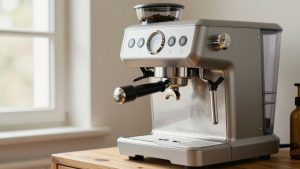
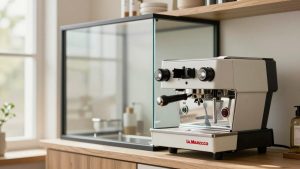
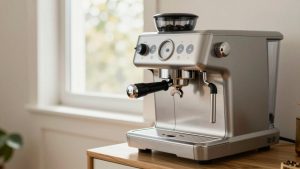
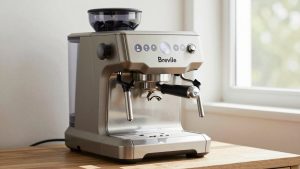
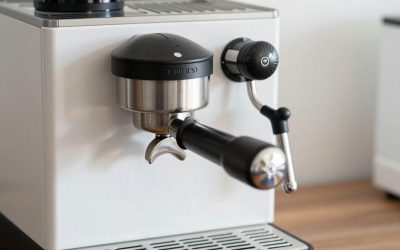
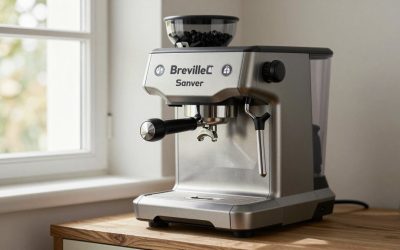
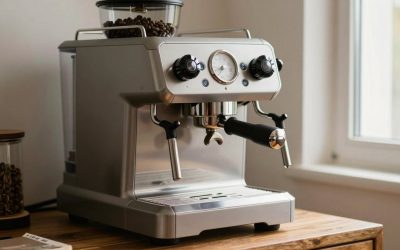
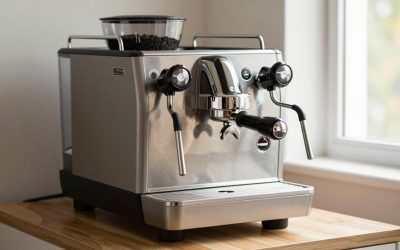
- Top Pick: CASABREWS CM5418 Compact Espresso Machine with Milk Frothing Steam Wand
- Best Value: AMZCHEF Compact Espresso Machine 20 Bar, Americano, Latte & Cappuccino
- Premium Choice: AIRMSEN 20 Bar Espresso Machine with Automatic Milk Frother, Cappuccino & Latte Coffee Maker with Quick Brew Dual Boiler (1350W + 1000W), Stainless Steel, 60oz Water Tank, Touchscreen
Last updated: October 21, 2026
As an Amazon Associate we earn from qualifying purchases at no extra cost to you.




Disclosure: As an Amazon Associate we earn from qualifying purchases. This page contains affiliate links and we may earn a commission at no extra cost to you.
“Under $1000” is the most interesting bracket in home espresso, because it contains two completely different shopping trips. At the top of the range live serious semi-automatics like the Breville Barista Express — machines with real grinders and real steam that can produce café-quality drinks for years. At the bottom live sixty-dollar machines that promise cappuccino for the price of a dinner out. Both are legitimate purchases; the mistake is not knowing which trip you are on.
This guide covers the spread honestly. We look at the Barista Express as the bracket’s benchmark — the machine that, for most people, is the best thing you can buy below four figures — and then work down through the budget tier: a compact 20 bar stainless machine at $99, Chefman’s digital CraftBrew, two sub-$70 pump machines, and a steam-driven HBN that we include with clear eyes about what steam pressure can and cannot do. Along the way we explain what each step up the price ladder actually buys, because in this category the answer is specific and learnable.
If you have not yet settled on a budget at all, our espresso machine buying guide explains the landscape from first principles, and our best home espresso machines round-up ranks picks at every price.
Quick Comparison
| Product | Price | Rating |
|---|---|---|
| Professional Home Espresso Maker, Fast Heating | $59.99 | — |
| 20 Bar Semi-Automatic with Steam Frother | $67.00 | — |
| Compact 20 Bar Stainless Espresso Machine | $99.99 | — |
| Chefman CraftBrew 15-Bar Digital | $74.99 | — |
| HBN 3.5 Bar Cappuccino & Latte Maker | $64.99 | — |
| Breville Barista Express BES870XL | $689.99 | — |
Why Trust This Guide
See also: How to Descale an Espresso Machine: Citric Acid vs Vinegar • Best Electric Kettles: Ten Glass, Steel and Gooseneck Picks Compared
We evaluate budget espresso gear with the same standards as premium machines — shot quality, steam capability, repeatability, and how the machine survives months of daily use — and we are blunt about the corners each price point cuts. We never invent specifications, and where a machine’s pitch outruns its physics, we say so directly.
Breville Barista Express BES870XL
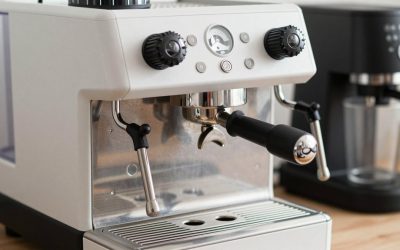
The Barista Express is the reason this bracket exists. At $689.99 it bundles a genuine conical burr grinder, a 54mm portafilter, pressure feedback on a gauge, and a steam wand strong enough for proper microfoam — the complete toolkit for learning espresso as a craft. It is the most recommended first “real” machine in the hobby, and that consensus is earned: shots from a dialed-in Barista Express stand comparison with café espresso, and the integrated grinder removes the hidden extra purchase that haunts every cheaper machine on this page.
Who should buy it: anyone who knows espresso will be a daily habit and wants one purchase that lasts the better part of a decade. Who should not: the buyer who wants coffee with zero ceremony — this machine rewards ten attentive minutes each morning and punishes neglect with sour shots. Our full Barista Express review walks through dialing it in step by step.
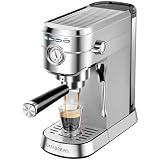
Compact 20 Bar Stainless Espresso Machine
This compact stainless machine is the strongest value of the budget tier. A 20 bar pump gives it ample working pressure for true espresso extraction, the steam frother is capable of decent milk texture with practice, and the slim stainless body fits kitchens where every centimeter is contested. For under a hundred dollars, the formula is right: real pump, real portafilter, real steam.
What the price omits is everything around the shot — temperature stability between brewing and steaming takes patience, the included plastic tamper deserves immediate replacement, and you must bring your own grinder or buy good pre-ground. Paired with fresh grounds and modest expectations, it makes genuinely enjoyable lattes; our espresso grinder guide covers the companion purchase that matters most.
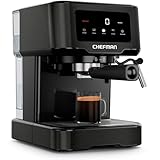
Chefman CraftBrew 15-Bar Digital
The Chefman CraftBrew brings a digital control panel to the sub-$80 tier, which is rarer than it should be. Clear controls take guesswork out of shot timing for beginners, the 15 bar pump is fully sufficient for espresso (machines actually brew at far lower pressure than their pump maximum), and the steam wand makes latte practice possible from day one. Chefman is also a known small-appliance brand with real customer support, which is not nothing at this price.
The compromises are the usual ones: a lightweight body that vibrates with the pump, a small water tank, and steam that asks you to wait between shot and milk. As a first machine for a student kitchen or a low-commitment trial of the hobby, it is an easy recommendation.
20 Bar Semi-Automatic with Steam Frother
At $67 this semi-automatic makes the same essential promise as machines costing twice as much: pump-driven extraction and a manual steam frother in one compact unit. That it delivers a credible shot at all at this price is a quiet triumph of commodity manufacturing. Treat it as what it is — an entry ticket, not a destination. The portafilter is light, temperature control is approximate, and consistency shot-to-shot demands ritual: flush the group, time your shots, and accept that some mornings will mystify you.
For the right buyer — curious, budget-bound, willing to tinker — it teaches the fundamentals that make a later upgrade meaningful. A bottomless portafilter, where compatible sizes exist, is the classic next step for seeing extraction problems directly.
Professional Home Espresso Maker, Fast Heating
The cheapest pump machine here leans on fast heating as its signature: minimal warm-up between switch-on and first shot, which suits the one-cup-and-out-the-door morning. The cappuccino-focused pitch is fair — with practice, its frother produces milk good enough for a daily latte, and the compact footprint disappears on a counter.
Expectations matter most at this price. Build materials are light, the drip tray fills fast, and longevity is the honest question mark — these machines are best understood as one-to-three-year appliances that let you discover whether espresso deserves a bigger place in your budget. Many readers’ upgrade stories start with exactly this purchase.
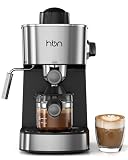
HBN 3.5 Bar Cappuccino & Latte Maker
The HBN is a different species, and we include it so you can recognize the difference: at 3.5 bar it is a steam-driven machine, not a pump machine. Steam pressure brews a strong, moka-pot-adjacent coffee rather than true espresso — you will not get the syrupy body or dense crema a 15–20 bar pump produces. What it offers instead is simplicity: a 2–4 cup stainless brewer that makes strong coffee and froths milk with very little to learn or break.
Choose it knowingly — as a countertop cappuccino-style maker for someone who likes strong milk drinks and has no interest in the espresso hobby — and it serves honestly. Choose it expecting espresso and you will be disappointed within the week.
What to Look For in an Espresso Machine Under $1000
The bracket rewards buyers who know which features are real and which are marketing:
- Pump versus steam-driven — True espresso needs a pump. Bar ratings of 15–20 indicate a pump machine; ratings around 3–5 bar mean steam-driven, a different drink entirely.
- Grinder plan — Above $500, integrated grinders appear (as on the Barista Express). Below that, budget for a separate grinder or accept pre-ground’s ceiling.
- Steam capability — If milk drinks are the goal, a real wand you can position beats a fixed frothing nozzle. Check which one a listing actually shows.
- Portafilter heft — A heavier metal portafilter holds temperature and signals a machine built with the shot in mind, not just the spec sheet.
- Temperature recovery — Cheap machines need rest between shot and steam. If you make multiple milk drinks back-to-back, spend up the ladder.
- Brand support and parts — Gaskets and baskets wear. A known brand with reachable support is worth a modest premium at every tier.
Tips for Getting the Most Out of an Espresso Machine Under $1000
Spend your first upgrade dollars on inputs, not machines. Fresh beans ground minutes before brewing improve a $99 machine more than a $300 machine upgrade does — grind freshness is the highest-leverage variable in espresso, full stop. If the budget is tight, a good hand grinder plus a cheap pump machine beats an expensive machine fed stale pre-ground every time.
Learn one routine and repeat it ruthlessly. Same dose, same tamp pressure, same shot timing, changed one variable at a time — budget machines amplify inconsistency, so your technique has to supply the stability the hardware lacks. Run a blank shot of hot water through the empty portafilter first to preheat the metal; it is the single cheapest fix for sour first shots on light machines.
And maintain proactively, because budget machines do not forgive neglect. Rinse the basket after every session, wipe and purge the steam wand the moment milk is done, and descale on a calendar rather than waiting for symptoms. The difference between a budget machine that dies at one year and one that thrives at three is almost entirely the owner’s habits.
Frequently Asked Questions
What is the best espresso machine under $1000 for most people?
The Breville Barista Express remains the consensus pick: integrated grinder, real steam wand, and shot quality that rewards skill without demanding it on day one. It costs more than the budget tier but replaces two purchases and lasts years longer.
Can a cheap espresso machine under $100 make real espresso?
Pump-driven models can — a 15–20 bar pump extracts genuine espresso when fed fresh, properly ground coffee. The limitations are consistency, temperature stability, and durability rather than the fundamental drink. Steam-driven machines under $100 make strong coffee, not true espresso.
Do I need 20 bars of pressure for good espresso?
No. Espresso is classically brewed around 9 bars at the coffee; pump ratings of 15 or 20 bar describe the pump’s maximum, not the brewing pressure. Treat high bar numbers as confirmation a machine is pump-driven rather than as a quality score.
Is it better to buy a cheap machine and a good grinder, or an expensive machine alone?
The cheap-machine-good-grinder combination wins on taste almost every time. Espresso is unforgiving of uneven grounds, and no machine can fix what the grinder ruined. If you must choose where the money goes, the grinder is the better half of the investment.