Last updated: October 20, 2026
As an Amazon Associate we earn from qualifying purchases at no extra cost to you.





Walk into the world of espresso machine brands and three names dominate the home-barista conversation: Breville, De’Longhi, and Gaggia. All three build machines that can pull genuinely excellent shots, yet they take strikingly different paths to get there. Breville packs its machines with integrated grinders, PID temperature control, and guided workflows. De’Longhi covers the widest price spread, from entry-level pump machines to full bean-to-cup automation. Gaggia leans on decades of Italian espresso heritage and commercial-style components that reward upgrades and tinkering. This guide compares the three brands head to head — design philosophy, build quality, ease of use, milk systems, and long-term ownership — so you can match the right brand to the way you actually make coffee.
🛒 Best Price Today on Amazon
Prime members get fast, free shipping on everything above, plus member-only deals. New members get a 30-day free trial — cancel anytime.
- Quick Comparison
- Breville: Feature-Rich Machines for the Hands-On Home Barista
- De’Longhi: The Budget-Friendly Volume Champion
- Gaggia: Italian Heritage and the Modder’s Favorite
- Breville vs De’Longhi vs Gaggia: Head-to-Head Comparison
- Which Espresso Machine Brand Should You Choose?
- Frequently Asked Questions
- About the Author
- Related Articles
Quick Comparison
| Product | Brand | Price | Rating |
|---|---|---|---|
| 5 Pcs 51mm Espresso Accessories Kit Coffee Tamping Mat … | Acellegic | $16.99 | 5/5 |
| 28PCS 51mm Espresso Accessories Kit | DigNew | $55.99 | 5/5 |
| Y-Step 51mm Espresso Accessories Kit | Y-Step | $29.59 | 5/5 |
| 29PCS Espresso Accessories Kit | DigNew | $43.99 | 5/5 |
Breville: Feature-Rich Machines for the Hands-On Home Barista
See also: How to Descale an Espresso Machine: Citric Acid vs Vinegar • Best Electric Kettles: Ten Glass, Steel and Gooseneck Picks Compared
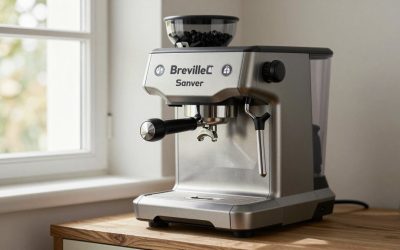
Breville (sold as Sage in Europe) built its reputation by asking a simple question: what if one countertop machine handled grinding, dosing, temperature stability, and steaming without prosumer prices? The result is a lineup defined by integration — machines like the Barista Express combine a conical burr grinder, PID-controlled thermocoil, and a powerful steam wand in one footprint. Digital controls, shot timers, and pressure gauges give you feedback most competitors hide, which makes Breville the easiest brand to learn real barista technique on.
The trade-off is complexity: more electronics and integrated parts mean more things that can eventually need service, and repairs are less DIY-friendly than on a simple Italian single-boiler. But for sheer capability per dollar, Breville is hard to argue with. We break down the full lineup model by model in our Breville espresso machines review.
De’Longhi: The Budget-Friendly Volume Champion
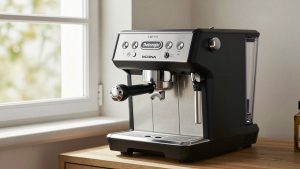
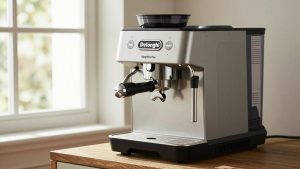
De’Longhi is the brand most people meet first, and that is by design. The Italian giant covers everything from compact entry-level pump machines like the Stilosa and Dedica to the Magnifica and Eletta super-automatic ranges that grind, dose, brew, and froth at the push of a button. The strength of the brand is accessibility: forgiving pressurized portafilters that produce crema from supermarket beans, compact footprints, and prices that undercut comparable Breville models at almost every tier.
Serious hobbyists eventually bump into the ceiling — pressurized baskets mask the feedback you need to truly dial in a shot, and steam power on the cheaper models is modest. But as a first machine, a kitchen workhorse, or a convenience-first super-automatic, De’Longhi is excellent value. See our hands-on picks in the De’Longhi espresso machines review, and if push-button convenience tempts you, read our semi-automatic vs super-automatic comparison before deciding.
Gaggia: Italian Heritage and the Modder’s Favorite
Gaggia’s founder patented the lever group that created modern crema-topped espresso, and that heritage shows in the brand’s design philosophy: simple, robust, commercial-inspired machines. The Gaggia Classic line is the icon — a compact single boiler with a commercial-style 58mm portafilter, a three-way solenoid valve, and a chassis that owners routinely keep alive for decades. It is also the most upgrade-friendly machine in this comparison, with a thriving community of PID kits, steam wand swaps, and spring mods.
On the super-automatic side, Gaggia shares DNA with sister brand Philips/Saeco and offers strong bean-to-cup options. The brand demands more from you than Breville or De’Longhi — no built-in grinder, fewer guardrails, a learning curve — but it rewards that effort with shot quality and longevity per dollar that is hard to beat. Our full Gaggia espresso machines review covers the Classic and its siblings in detail.
Breville vs De’Longhi vs Gaggia: Head-to-Head Comparison
| Category | Breville | De’Longhi | Gaggia |
|---|---|---|---|
| Design philosophy | All-in-one, tech-forward, guided workflow | Accessible, convenience-first, huge range | Traditional, commercial-inspired, minimal electronics |
| Best for | Learners who want feedback and features | Beginners and super-automatic shoppers | Enthusiasts, tinkerers, longevity seekers |
| Ease of use | High — gauges, timers, presets | Highest — pressurized baskets, one-touch autos | Moderate — manual workflow, real learning curve |
| Shot quality ceiling | High with the stock setup | Moderate on entry models, good on autos | Very high, especially upgraded |
| Milk steaming | Strong wands, some auto-texturing models | Varies — modest on budget, panarello common | Capable; classic wand upgrades popular |
| Built-in grinder options | Yes, on many models | Yes, on super-automatics | Super-automatics only |
| Upgrade/mod friendliness | Limited | Limited | Excellent — large mod community |
| Typical price positioning | Mid-range | Budget to mid-range | Mid-range |
Which Espresso Machine Brand Should You Choose?
Choose Breville if you want one box that does everything well and teaches you as you go — it is the fastest route from beginner to confident home barista. Choose De’Longhi if budget or convenience leads your decision, or if a super-automatic that handles the whole process appeals more than the craft. Choose Gaggia if you care about shot quality ceiling and long-term ownership, do not mind buying a separate grinder, and like the idea of a machine you can improve over time — pair it with one of our recommended espresso grinders.
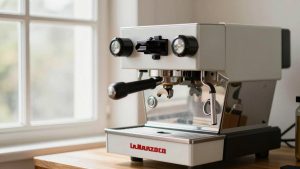
None of these is the “wrong” answer; they are different answers to different lifestyles. If you are still mapping the wider landscape, our espresso machine buying guide walks through boiler types, sizes, and budgets step by step, our best home espresso machines roundup ranks specific models across brands, and our look at premium brands like La Marzocco, Rancilio, and Rocket covers the prosumer tier above this comparison. Short on counter space? Don’t miss our compact espresso machines guide.
Frequently Asked Questions
Is Breville better than De’Longhi?
For shot quality and learning proper technique, Breville’s non-pressurized baskets, PID temperature control, and built-in grinders give it the edge. For price, simplicity, and super-automatic convenience, De’Longhi wins. They are aimed at different buyers more than they are direct rivals.
Why do enthusiasts love the Gaggia Classic so much?
It combines a commercial-style 58mm portafilter, a three-way solenoid valve, simple repairable internals, and a famously durable chassis at a mid-range price. It is also the most modded espresso machine in existence, so it can grow with your skills instead of being replaced by them.
Which brand lasts the longest?
Gaggia’s simple single-boiler machines are the easiest to keep running for decades because nearly every part is replaceable. Breville and De’Longhi machines are reliable but lean on integrated electronics, which makes out-of-warranty repair less practical. With any brand, regular descaling and cleaning is the biggest factor in lifespan.
Do any of these brands make machines with built-in grinders?
Yes. Breville offers the widest choice of semi-automatics with integrated burr grinders. De’Longhi and Gaggia build grinders into their super-automatic ranges, while their traditional semi-automatic machines expect a separate grinder.
Are these brands good enough, or should I buy prosumer?
All three can produce café-quality espresso in practiced hands. Prosumer brands add dual boilers, rotary pumps, and heavier build — meaningful upgrades for high-volume or milk-heavy households, but not prerequisites for excellent coffee at home.