Last updated: September 18, 2026
The Short Answer
For most single-serve espresso machines, a water tank between 0.6 and 1.2 liters (20 to 41 fluid ounces) is the practical sweet spot. A 0.6- to 0.7-liter reservoir suits one person who makes one to three espresso drinks a day, while a 1.0- to 1.2-liter tank is more comfortable for couples, frequent coffee drinkers, or households making larger lungo, Americano, or milk-based drinks.
Tank capacity matters, but so does the machine’s overall size and the way the reservoir is removed. A slim machine can have a tall rear tank that needs several extra inches of clearance above or behind it. Before buying, measure the counter footprint, cabinet clearance, and available space for lifting out the tank. Replacement reservoirs also need to match the exact machine family; a similarly sized tank is not necessarily interchangeable.
As an Amazon Associate we earn from qualifying purchases at no extra cost to you. Product prices and availability are accurate as of the date shown and are subject to change.


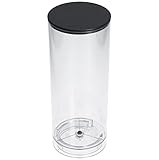
As a quick rule, allow at least 2 inches of side clearance, 4 inches behind the machine if the tank lifts or pulls out from the rear, and enough open vertical space to remove the reservoir without hitting upper cabinets.
Standard Sizes
See also: How to Replace Espresso Machine Water Filter (2026): Step-by-Step • How to Adjust Espresso Machine Brew Temperature (2026): Step-by-Step
Espresso machine reservoirs are usually described by water capacity rather than their outside measurements. Still, capacity strongly affects the machine’s footprint, height, and refilling routine. The table below uses published dimensions for representative compact capsule and single-serve espresso machines. Dimensions are for the complete machine, not only the removable tank.
| Tank Capacity | Best For | Representative Machine Size | Machine Dimensions (Inches) | Machine Dimensions (Centimeters) |
|---|---|---|---|---|
| 0.6 L / 20.3 fl oz | One espresso drinker; tight counters | Compact Essenza Mini-style machine | 4.3 W × 8.1 D × 12.8 H | 10.9 W × 20.6 D × 32.5 H |
| 0.7 L / 23.7 fl oz | One to two daily users; small apartment kitchens | Compact Inissia-style machine | 4.7 W × 9.0 D × 12.6 H | 11.9 W × 22.9 D × 32.0 H |
| 0.7 L / 23.7 fl oz | Frequent espresso drinker wanting a narrow profile | Pixie-style machine | 4.4 W × 9.3 D × 12.8 H | 11.2 W × 23.6 D × 32.5 H |
| 1.1 L / 37.2 fl oz | Couples; coffee and espresso drinks through the day | Vertuo Next-style machine | 5.5 W × 14.2 D × 12.4 H | 14.0 W × 36.1 D × 31.5 H |
| 1.2 L / 40.6 fl oz | Families; larger coffee formats; less frequent refilling | Vertuo Plus-style machine | 5.6 W × 16.2 D × 12.8 H | 14.2 W × 41.1 D × 32.5 H |
A 0.6-liter tank holds roughly 20 fluid ounces, but do not assume that means 20 ounces of finished coffee. Water is used for brewing and, depending on the machine, for rinsing or priming. A 1.2-liter reservoir generally cuts refilling frequency in half compared with a 0.6-liter model, but it can add depth or height to the appliance.
Replacement tank pricing is usually modest compared with replacing a whole machine. Expect basic plastic reservoirs to cost approximately $18 to $30. For example, a 0.7-liter replacement tank for an Inissia-style machine may be around $19.99, while replacement reservoirs for compact Essenza Mini or Vertuo Next machines often fall near $25.99 to $29.99. Verify the model number, tank shape, lid design, valve position, and attachment points before ordering.
How to Measure Your Space
- Measure counter width. Use a tape measure to find the usable left-to-right space. Record the number in inches and centimeters. For a compact 4.3-inch-wide machine, reserve at least 8 to 9 inches total so your hand can operate the lever and remove the tank comfortably.
- Measure counter depth from the wall forward. This is especially important for larger coffee systems. A machine that is 14.2 inches deep should ideally sit on a counter with at least 17 to 18 inches of clear depth, including room for the cord and rear clearance.
- Measure from countertop to the underside of upper cabinets. Many machines are 12 to 13 inches tall, but a top- or rear-lifting tank may need another 4 to 7 inches to be removed and filled. A 17- to 20-inch cabinet opening is usually more workable than a tight 14-inch gap.
- Check how the reservoir comes off. Look at the machine manual or product images. Some tanks lift straight up; others slide backward, rotate, or detach from the side. A rear tank can be awkward against a backsplash even when the machine itself fits.
- Plan for filling access. If you fill the reservoir under a faucet, measure the clearance beneath that faucet. If you fill it with a pitcher, make sure the tank opening is accessible without moving the machine every day.
- Account for drip tray access. The front drip tray needs room to slide out. Leave 3 to 4 inches of clear space in front of the machine, particularly on shallow counters or coffee carts.
- Confirm outlet location and cord path. Most countertop espresso machines use a standard 120-volt outlet and commonly draw around 1,200 to 1,500 watts while heating. Avoid pinching the cord behind the tank or forcing the machine too close to the wall.
By Room or Use Case
Small Apartment Kitchen
Choose a 0.6- or 0.7-liter tank if counter space is the main limitation. Compact machines around 4.3 to 4.7 inches wide fit neatly beside a toaster or on a narrow counter section. The tradeoff is more frequent filling, especially if you make Americanos or use hot water for rinsing. This size works best when the sink is nearby and the machine is used mainly for espresso or double espresso drinks.
Home Coffee Bar
A 0.7- to 1.1-liter reservoir is often the most balanced choice for a dedicated coffee station. It provides enough water for repeated drinks without creating the deep footprint of a larger system. Aim for a coffee bar surface at least 18 inches deep and leave enough overhead room to remove the tank. If the station has shelves above it, a side-access or front-access reservoir can be easier to live with than a tall rear-lift design.
Family Kitchen
For two or more regular users, a 1.1- to 1.2-liter water tank reduces daily interruptions. This capacity is particularly useful if some household members prefer larger coffee servings. Expect machines in this group to be about 14 to 16 inches deep. Put them on a full-depth counter rather than a narrow utility shelf, and avoid placing them where cabinet doors or refrigerator handles block access to the tank.
Office, Studio, or Guest Suite
Choose a 0.7-liter tank for light shared use and a 1.1-liter tank for a small office with several coffee drinkers. In a guest suite, compact size often matters more than maximum capacity. A removable tank is useful because it can be emptied between guests or during periods when the machine is not in use. Keep the machine close to a sink when possible; carrying a full 1.2-liter tank across a room increases the chance of spills.
Common Sizing Mistakes
Buying by capacity alone. A larger reservoir sounds convenient, but it may come with a machine that is 5 to 7 inches deeper than a compact model. Always compare full appliance dimensions.
Measuring only the counter footprint. The machine may fit under cabinets but still leave no room to lift out the tank. Measure vertical removal clearance, not just appliance height.
Ignoring the tank’s direction of travel. Rear-removable reservoirs need wall clearance. Side-mounted tanks need open space next to the machine. A rotating tank needs clearance through its full swing path.
Ordering a “universal” replacement tank. Water tanks are typically model-specific. A reservoir intended for a Vertuo Plus-style machine will not automatically fit a Vertuo Next-style model, even if both hold about 1 liter.
Leaving water in an oversized tank too long. A larger tank is convenient, but fresh water is preferable. If you only make one small espresso every few days, a compact tank that is emptied and refilled regularly may be the better choice.
FAQ
What size water tank is best for an espresso machine?
For one person, 0.6 to 0.7 liters is usually enough. For two regular users, look for 1.0 to 1.2 liters. Choose the larger size if you often make coffee, lungos, Americanos, or several drinks back-to-back.
How much clearance does an espresso machine water tank need?
Allow at least 2 inches at the sides and about 4 inches behind a machine with a rear tank. For top-lifting tanks, leave enough space above the machine to raise the reservoir fully; 4 to 7 inches above the appliance is a useful starting point.
Can I use a replacement water tank from a different espresso machine?
Usually no. Tanks differ in shape, valve placement, seals, lid fit, and locking tabs. Match the replacement part to your machine’s exact model designation, not just its brand or stated capacity.
How often should I refill and change the water in the tank?
Refill as needed, and replace standing water regularly rather than continually topping it off. If the machine is used daily, emptying and refilling the reservoir each day is a simple routine. In 2026, many compact machines still rely on manual removable reservoirs, so easy access remains an important size and placement consideration.
Ready to decide? Our #1 pick for 2026 is the 0.6 L / 20.3 fl oz.
Live price & availability on Amazon.