Last updated: October 20, 2026
For most RV and camper-van owners, the CIARRA Bloombox is the best starting point: its listing is the only one here that names travel, camping and RV use, and it is a compact 15-bar machine that takes up little counter space. Whichever machine you pick, an espresso maker is a power-hungry appliance, usually in the range of 1,000 watts or more, so the real RV question is whether your shore power, generator or inverter can run it. If you have full hookups and want café-style results, the Breville Barista Express is the upgrade, with its built-in grinder.
Quick List
- CASABREWS CM5418 – best for a compact pump machine with a pressure gauge
- Breville Barista Express BES870 – best for full-hookup rigs and serious espresso
- Mr. Coffee 4-Shot Steam Espresso Machine – best for the simplest, lowest-fuss setup
- AERCANA 20 Bar – best for a compact machine with a removable tank
- CIARRA Bloombox – best for travel, camping and tight cabinets
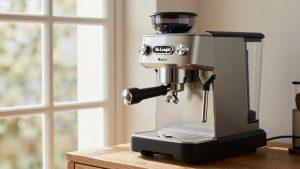
- De’Longhi Classic Matte Black – best for a familiar brand and easy presets
Which One Is Right for You?
See also: How to Descale an Espresso Machine: Citric Acid vs Vinegar • Best Electric Kettles: Ten Glass, Steel and Gooseneck Picks Compared
| If you… | Choose |
|---|---|
| camp, travel light or have very little cabinet space | CIARRA Bloombox |
| have 30-amp or 50-amp hookups and want a built-in grinder | Breville Barista Express BES870 |
| want one pressure gauge to help you dial in | CASABREWS CM5418 |
| want the simplest controls and a glass carafe | Mr. Coffee 4-Shot Steam |
| want a removable tank that is easy to fill and empty | AERCANA 20 Bar |
| prefer a well-known brand and simple presets | De’Longhi Classic Matte Black |
In an RV, power and storage decide more than espresso specs do. Start by checking the wattage on the rating label, compare it with what your outlet, generator or inverter can supply, and then think about where the machine will travel while you drive.

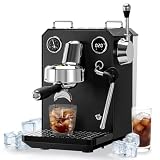
CASABREWS CM5418 Compact Espresso Machine with Milk Frothing Steam Wand | Stainless Steel, 20-Bar Pump, Built-in Pressure Gauge, Powerful Steam Wand for Cappuccino Latte for Home, 34oz Water Tank
Included for '6 Best Espresso Machines for RV and Camper Vans (October 2026) Buying Guide' because the listing specifies Stainless Steel and 20-Bar Pump, details this guide uses to compare options.
View on Amazon
Breville BES870BTR Barista Express Espresso Machine, Black Truffle | Craft café-quality espresso shots, lattes and cappuccinos at home with this manual coffee maker with built-in grinder
Included for '6 Best Espresso Machines for RV and Camper Vans (October 2026) Buying Guide' because the listing specifies Black Truffle and Craft café-quality espresso shots, details this guide uses to compare options.
View on Amazon
Mr. Coffee® 4-Shot Steam Espresso Machine, Cappuccino Maker, and Latte Maker with Glass Carafe
Included for '6 Best Espresso Machines for RV and Camper Vans (October 2026) Buying Guide' because the listing specifies Cappuccino Maker and and Latte Maker with Glass Carafe, details this guide uses to compare options.
View on Amazon
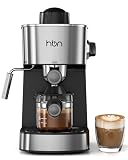
AERCANA Espresso Machine 20 Bar, Compact Espresso Coffee Machine with Milk Frother, Stainless Steel Coffee Maker with 34oz Removable Water Tank, Cappuccino Machine for Home, Office, Latte (Silver)
Included for '6 Best Espresso Machines for RV and Camper Vans (October 2026) Buying Guide' because the listing specifies Compact Espresso Coffee Machine with Milk Frother and Stainless Steel Coffee Maker with 34oz Removable Water Tank, details this guide uses to compare options.
View on Amazon
CIARRA Bloombox Compact Espresso Coffee Maker, 15 Bar Rich Flavor Brew Espresso Coffee Machine for Travel Camping RV Office Home, Easy to use, 6.1oz Stainless Steel Water Tank
Included for '6 Best Espresso Machines for RV and Camper Vans (October 2026) Buying Guide' because the listing specifies Easy to use and 6.1oz Stainless Steel Water Tank, details this guide uses to compare options.
View on Amazon
De’Longhi Classic Matte Black Espresso Machine, Easy-to-Use Milk Frother | #1 Worldwide Espresso Machine Maker, Rapid Heat-Up, Preset Single & Double Espresso, Frother, Compact Design
Included for '6 Best Espresso Machines for RV and Camper Vans (October 2026) Buying Guide' because the listing specifies Easy-to-Use Milk Frother and #1 Worldwide Espresso Machine Maker, details this guide uses to compare options.
View on AmazonAll 6 Picks in Detail
1. CASABREWS CM5418 – Best for a compact pump machine with a pressure gauge
As an Amazon Associate we earn from qualifying purchases at no extra cost to you.

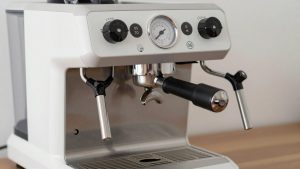
The CM5418 is a compact stainless-steel espresso machine with a 20-bar pump, a built-in pressure gauge and a steam wand for milk. The gauge is the standout feature for beginners, since it shows whether the shot is being pulled in the right range and helps you learn how grind size changes pressure. It suits RV owners who want real espresso and milk drinks in a small footprint. The listing title does not state the wattage or tank volume, so check the rating label and product page before you plug it into a generator.
- Pump: 20 bar, per the listing
- Gauge: built-in pressure gauge
- Milk: steam wand
- Body: stainless steel
- Wattage and tank size: confirm on listing
Pros
- Pressure gauge helps with learning
- Steam wand for lattes and cappuccinos
Cons
- Wattage is not stated in the title
- No built-in grinder listed
Compared with the AERCANA, it is the one with the gauge, while AERCANA highlights its removable tank.
Who should skip it: anyone who wants a machine with a grinder built in, or anyone who cannot spare cabinet space for a separate grinder.
RV tip: keep the portafilter and tank separate from the body while driving, and wrap the unit in a towel so that the steel does not scuff a cabinet.
Fit in a rig: a pump machine of this class usually sits comfortably on a standard RV counter, but allow headroom above it for lifting the tank and for steam to rise. Because the steam wand is exposed, keep it away from cabinet fronts and curtains while it is hot. Pair it with a compact hand or electric burr grinder so that the setup stays tidy, and consider a small mat to catch drips on a sloping counter.
2. Breville Barista Express BES870 – Best for full-hookup rigs and serious espresso

The Barista Express BES870 is a semi-automatic machine with a built-in conical burr grinder, a 15-bar Italian pump, a 54 mm portafilter and a steam wand, according to the manufacturer’s published specifications. It draws about 1,600 watts, so it belongs in an RV only if you have a 30-amp or 50-amp hookup, a suitably large generator or a heavy-duty inverter. It is also large and heavy by RV standards, with a tank of about 2 liters. It suits owners of bigger rigs who want café-style results and are willing to give it a permanent counter spot.
- Grinder: built-in conical burr, per the manufacturer
- Pump: 15 bar
- Portafilter: 54 mm
- Power: about 1,600 W per the manufacturer; confirm on the rating label
- Tank: about 2 L (67 oz); confirm on listing
Pros
- Grinder and machine in one footprint
- Highest quality ceiling in this group
Cons
- High power draw, challenging for small inverters
- Large and heavy for a van or small camper
Next to the CASABREWS, it replaces the separate grinder but needs far more power and space.
Who should skip it: van dwellers, boondockers and anyone running on a small battery bank.
RV tip: secure it with a non-slip mat and bracing on every drive, and empty the tank and bean hopper before moving, since the weight of water and beans adds up.
Fit in a rig: before buying, measure the counter depth and the clearance under upper cabinets, because this machine is tall with the hopper in place. At roughly 1,600 W it uses a large share of a 15-amp circuit by itself, so run it alone and keep microwaves, kettles and heaters off at the same time. If you boondock, it is better treated as a home machine that you enjoy at full-hookup sites.
3. Mr. Coffee 4-Shot Steam Espresso Machine – Best for the simplest, lowest-fuss setup

This Mr. Coffee machine is a steam-driven espresso, cappuccino and latte maker with a glass carafe, designed to make up to four shots at a time. Steam-driven machines work without a pump and generally run at lower pressure than pump machines, so the result is closer to strong coffee than to café espresso. It suits people who want a basic, uncomplicated machine and are happy with milky drinks. The listing does not state wattage, so confirm it before use on a generator.
- Type: steam-driven, per the listing
- Capacity: up to 4 shots
- Vessel: glass carafe
- Milk: steam wand or frother; confirm on listing
- Wattage: confirm on listing
Pros
- Simple operation
- Makes several shots in one batch
Cons
- Lower pressure than pump machines
- Glass carafe can break on rough roads
Compared with the CIARRA, it is simpler and bulkier, while the CIARRA is built for travel.
Who should skip it: anyone who wants real crema and café-style shots.
RV tip: pack the carafe separately in a padded drawer, because glass is the first thing to break in a moving rig.
Fit in a rig: steam-driven machines are often simpler in construction than pump machines, with fewer parts to jostle loose on a vehicle that bounces over rough roads. Expect a stronger, thinner coffee that works best when blended with plenty of hot milk. Always follow the manufacturer’s instructions for opening the lid, as pressure builds inside the boiler and must be released first.
4. AERCANA 20 Bar – Best for a compact machine with a removable tank

The AERCANA is a compact stainless-steel machine with a 20-bar pump, a milk frother and a 34 oz removable water tank, according to the listing. A removable tank is practical in an RV, where you can fill it at a sink and empty it before travel. It suits small-kitchen owners who want a pump machine with a steam arm for milk. As with similar compact machines, wattage is not stated in the title, so check the label.
- Pump: 20 bar, per the listing
- Tank: 34 oz, removable
- Milk: frother
- Body: stainless steel
- Wattage: confirm on listing
Pros
- Removable tank is easy to fill and empty
- Compact stainless body
Cons
- No built-in grinder listed
- Wattage is not in the title
Next to the CASABREWS, it stresses the tank over a gauge, while the CASABREWS is the learning-friendly one.
Who should skip it: readers who want a built-in grinder or a pressure gauge.
RV tip: empty the tank before driving, because 34 oz of water weighs a little over 2 pounds and slops around in a cabinet.
Fit in a rig: the removable tank means you can carry it to a faucet at a campground rather than hauling a jug to the machine. Keep a small funnel or a lidded pitcher to avoid spills when filling in tight spaces. As the machine is compact, check that the frother arm clears the underside of your upper cabinets before you commit to a spot.
5. CIARRA Bloombox – Best for travel, camping and tight cabinets

The Bloombox is a compact 15-bar espresso machine, and its listing names travel, camping, RV, office and home use. That makes it the best match for small spaces and mobile life. A smaller body usually means a smaller tank and a lighter machine, but the listing title does not state the tank size, wattage or milk system, so confirm those on the product page. It suits van dwellers and campers who want real espresso in a small footprint.
- Pump: 15 bar, per the listing
- Size: compact
- Intended use: travel, camping, RV, office, home
- Wattage and tank: confirm on listing
- Milk system: confirm on listing
Pros
- Designed for small spaces and travel
- Explicit RV and camping use in the listing
Cons
- Tank size and wattage need checking
- Smaller capacity than full-size machines
Compared with the AERCANA, it is the more travel-oriented option, while the AERCANA gives a stated 34 oz tank.
Who should skip it: large-family rigs that serve many drinks at once.
RV tip: check the machine’s rated wattage against your inverter before the trip, not at the campsite.
Fit in a rig: the compact build makes it a candidate for a van drawer or a bench seat storage bay, as long as it is well padded. Because the listing leaves the tank and milk system to the product page, read those specifications before relying on it for milk drinks. Pair it with a small grinder and a compact tamper and you can travel with an entire setup in a single bin.
6. De’Longhi Classic Matte Black – Best for a familiar brand and easy presets

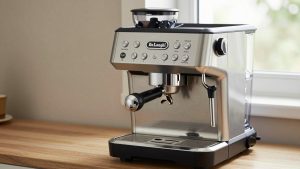
The De’Longhi Classic is a matte black espresso machine with an easy-to-use milk frother, rapid heat-up and preset shot options, per the listing. It suits RV owners who want a recognizable brand and simple operation, with shot presets that reduce guesswork. The listing does not state the pump pressure, tank size or wattage, so confirm those before relying on a small inverter. Compact enough for most RV counters, it is a sensible choice for a couple.
- Brand: De’Longhi
- Finish: matte black
- Milk: easy-to-use frother
- Feature: rapid heat-up, preset shots
- Pump pressure, tank and wattage: confirm on listing
Pros
- Simple presets and quick heat-up
- Familiar brand
Cons
- Key specs not stated in the title
- No built-in grinder listed
Compared with the Mr. Coffee, it is a more conventional espresso machine, while Mr. Coffee is steam-driven.
Who should skip it: anyone who needs a verified tank size or low wattage from the title alone.
RV tip: run a rinse cycle after each trip to clear any road dust, and descale on schedule.
Fit in a rig: preset buttons mean there is less to adjust while a rig is parked on a slight slope, and rapid heat-up keeps generator run time short. Leave a gap behind the machine for ventilation and cord routing, and do not run the cord across a walking path in a small interior. Before the first trip, read the manual for the exact preset volumes and the recommended descaling interval, and run the machine once at home with water only so that you know how it sounds and behaves when it is working normally.
Specs Compared
| Pick | Pump / type | Tank | Milk system | Grinder | Wattage |
|---|---|---|---|---|---|
| CASABREWS CM5418 | 20 bar pump, pressure gauge | Confirm on listing | Steam wand | None stated | Confirm on listing |
| Breville Barista Express BES870 | 15 bar pump | About 2 L (67 oz), confirm | Steam wand | Built-in conical burr | About 1,600 W (manufacturer) |
| Mr. Coffee 4-Shot Steam | Steam-driven | Confirm on listing | Confirm on listing | None stated | Confirm on listing |
| AERCANA 20 Bar | 20 bar pump | 34 oz, removable | Frother | None stated | Confirm on listing |
| CIARRA Bloombox | 15 bar pump | Confirm on listing | Confirm on listing | None stated | Confirm on listing |
| De’Longhi Classic Matte Black | Confirm on listing | Confirm on listing | Frother | None stated | Confirm on listing |
How We Chose These
This guide is based on research of product listings and manufacturer specifications. Each machine was compared on stated pump type and pressure, tank size, milk system, grinder and compact size, and on how well it suits a small mobile kitchen. We gave extra weight to listings that mention travel or RV use and to machines with a removable tank, and we flagged power draw because it is the main constraint in a camper. Values the listing does not state, including most wattages, are marked confirm on listing instead of assumed. The picks were limited to machines that a reader can actually weigh against a camper’s power and space limits.
What to Look For
Power draw and your electrical system
Espresso machines use a heating element, and most small pump machines draw roughly 1,000 to 1,600 watts while heating. Divide watts by volts to get amps: a 1,500 W machine on 120 V draws 12.5 A. A typical household-style 15 A outlet circuit should carry about 12 A continuously, and a 30-amp RV service supplies 3,600 W in total for everything, including air conditioning, so you may need to switch other loads off. Check the rating label on the machine, not just the listing, and use a heavy-gauge extension cord only if it is rated for the load.
Plug the machine straight into a wall outlet if possible, because a thin extension cord adds heat and voltage drop at 12 A or more. If you must use one, choose a heavy-gauge cord rated for the full load and keep it uncoiled. Do not share a circuit with a microwave, toaster or space heater. If a breaker trips, reduce the load instead of resetting it repeatedly. Also check the plug and cord after each use: warm plugs, discolored prongs or a cord that feels hot are signs of overload or a poor connection, and the machine should be unplugged and the outlet inspected before using it again.
Inverters, batteries and generators
If you run from batteries, you need an inverter rated well above the machine’s wattage. A worked example: a 1,500 W machine on a 12 V system pulls about 125 A at the battery, and closer to 140 A once inverter losses are included, which calls for thick cables and a sizeable lithium bank. Pure sine wave inverters are the safer choice for machines with pumps and electronics. With a generator, size it for the machine’s wattage plus a margin, and use a ground-fault outlet where the manual calls for it. Run the generator outside, well away from windows and vents, and never inside a van or garage, because exhaust contains carbon monoxide.
Size, weight and securing the machine while driving
Measure the cabinet or counter before buying, including height for lifting the water tank. Store the machine in a padded cabinet or strap it down so it cannot slide. Empty the water tank, remove the portafilter and drip tray, and never leave hot water in the machine on the road. Glass carafes and glass parts should travel wrapped and separate. A simple rule: if you can shake the machine and hear something rattle, it will rattle on the road, so fix it in place with foam or towels.
Water and tank handling
Use fresh water from your potable tank or bottled water, not water from the gray tank. A removable tank is easy to fill and empty. Mineral-heavy water builds up scale fast, so descale regularly and consider a filter. Do not run the pump dry, because it can damage the pump. Prime it by running water through the group head and steam wand after every refill, and carry a spare filter cartridge if your machine uses one. Hard campground water is a common cause of scale, so a travel-size descaler packet is worth keeping in the drawer.
Steam wands and safety
A steam wand reaches temperatures well above boiling and can scald. Purge it before and after use, wipe it right away and keep children clear. Do not leave a hot machine unattended in a moving vehicle, and unplug it after use.
Questions
Can you run an espresso machine on an RV inverter?
Yes, if the inverter is rated well above the machine’s wattage and your battery bank can supply the current. Check the rating label and size the system with a margin.
How many watts does an espresso machine use?
Many small pump machines draw roughly 1,000 to 1,600 watts when heating, and the Breville Barista Express is listed by its manufacturer at about 1,600 watts. Confirm the exact figure on each machine’s label.
Is a steam-driven machine good enough?
It can make strong coffee for milk drinks, but it runs at lower pressure than a pump machine and produces little crema. If you want café-style espresso, choose a pump machine.
Should you travel with water in the tank?
No. Empty the tank before driving to reduce weight, prevent spills and avoid stagnant water. Refill with fresh water when you arrive.
Do you need a separate grinder?
Only the Breville is listed with a built-in grinder, which adds size and power draw. For the others, plan on a compact burr grinder or good pre-ground coffee.
Can you use these on a generator at a campsite?
Generally yes if the generator’s running watts exceed the machine’s draw with margin. Check the generator’s manual and the campsite’s generator quiet hours.
Update History
- October 20, 2026 – Initial publication; product set drawn from current catalog listings.
- Check the product page for current specifications and availability before buying.
Sources
- Retailer listing titles and specification fields for each machine
- Manufacturer specification pages for Breville, De’Longhi, CASABREWS, AERCANA, CIARRA and Mr. Coffee where available
- General electrical references for converting watts, volts and amps