Last updated: October 22, 2026
For most home espresso machines, citric acid is the more common and often gentler choice for descaling, while white vinegar can work in a pinch but leaves a strong smell and is discouraged by many manufacturers. Either way, the safest rule is to read your machine’s manual first and follow its descaling method and warnings. This guide draws on published specifications, manufacturer documentation and general knowledge to walk through the process, the trade-offs between the two acids and what to do when something goes wrong.
- Why descaling matters
- Citric acid versus vinegar
- Before you start: prerequisites
- Step-by-step descaling
- Rinsing properly
- What can go wrong
- Worked example: setting a descaling schedule
- Choosing between the two: a quick decision guide
- Reducing scale in the first place
- Capsule and special machines
- When to stop and call service
- Related guides
- Frequently asked questions
Why descaling matters
Tap water carries dissolved calcium and magnesium. When water is heated, those minerals can settle as limescale on heating elements, in narrow tubing and around valves. The result is slower flow, cooler brew temperatures, louder pump noise and, eventually, a blockage or failed component.
Scale also affects taste. Shots can come out flat or inconsistent because the machine cannot hold temperature as well. Regular descaling keeps the water path clear and can help extend the working life of the machine, though it cannot fix a part that is already worn out.
Citric acid versus vinegar
See also: Best Electric Kettles: Ten Glass, Steel and Gooseneck Picks Compared • 6 Best Espresso Machines for RV and Camper Vans (October 2026) Buying Guide
| Factor | Citric acid | White vinegar |
|---|---|---|
| Scale removal | Dissolves limescale effectively at suitable strengths | Works, often more slowly on heavy scale |
| Odor | Mild | Strong, can linger |
| Rinsing | Usually easier | Needs more rinse cycles |
| Seals and metals | Generally considered gentler when rinsed well | May affect rubber and some metals with repeated use |
| Availability | Powder sold as descaler or food additive | Found in most kitchens |
| Manufacturer view | Often accepted, sometimes preferred | Frequently discouraged |
Commercial descalers are often built around citric acid or similar acids with extra additives. If your manufacturer sells or recommends a specific product, that is usually the safest choice, particularly while the machine is under warranty.
Before you start: prerequisites
- Unplug the machine and let it cool fully.
- Read the descaling section of the manual, including any mention of vinegar or citric acid.
- Empty the drip tray, portafilter and any used-capsule container.
- Remove any water filter cartridge if the manual says to do so.
- Gather a descaler, a large container to catch discharged liquid and fresh water for rinsing.
- Wear gloves and eye protection if you are handling concentrated acid.
Some machines, especially those with aluminum or special boilers, have restrictions. When the manual is unavailable, search the manufacturer’s website using the model number.
Step-by-step descaling
- Prepare the solution. For citric acid, a common starting point is a few teaspoons of powder dissolved in a liter of warm water, but follow your manual or the descaler’s directions for strength.
- Pour the solution into the water tank, up to the level the manual recommends.
- Place a large container under the group head and another under the steam wand.
- Run a portion of the solution through the group head, then pause and let it sit for the time the instructions allow, often fifteen to twenty minutes.
- Run some through the steam wand and hot water outlet if your machine has them.
- Repeat the run-and-rest cycle until the tank is nearly empty.
- Rinse thoroughly with fresh water, as described in the next section.
If you use vinegar, the steps are similar, but the manual may want a lower strength, a shorter contact time and extra rinsing. Treat that as a last resort rather than a first choice.
Rinsing properly
Rinsing is where many people cut corners. Fill the tank with fresh water and run it through the group head, steam wand and hot water outlet until it is empty. Do this at least two or three times, and more after vinegar. Smell and taste a small sample of the final water. Any sour or sharp note means traces remain. Wipe the tank, drip tray and portafilter and refit any filter cartridge afterwards.
What can go wrong
Using too strong a solution, or leaving acid in the machine for too long, can attack seals and metal parts. Skipping rinses leaves a sour taste that can persist for several brews. Descaling a hot, plugged-in machine adds a burn risk. If the machine runs but flow barely improves, scale may be too heavy for a single treatment, and a second cycle can help.
Never mix descalers with bleach or other cleaners, because some combinations release hazardous fumes. Keep acids away from children and pets, and ventilate the room.
Worked example: setting a descaling schedule
Suppose a household makes four espressos a day and the tap water is described as hard on a local water report. A reasonable plan is to descale about every two months, check the boiler flow monthly and shorten the interval if the machine slows down. If the household installs a filter or switches to softer water, the interval can stretch. These figures are assumptions for illustration, so replace them with your manual’s guidance.
Choosing between the two: a quick decision guide
- If the manual names a descaler, use it, especially during the warranty period.
- If the manual allows citric acid, choose it over vinegar for easier rinsing and less odor.
- If the manual forbids both, use only the manufacturer’s product.
- If the machine has heavy visible scale, plan for two shorter cycles instead of one very strong one.
- If you only have vinegar, check that the manual does not prohibit it, use it diluted and rinse extra carefully.
The cheapest option is not always the best value. A mild, correct solution used regularly tends to protect the machine better than a harsh one used rarely.
Reducing scale in the first place
Water choice has a large effect on how often you descale. Filtered or softened water slows buildup, while very hard tap water speeds it up. Many machines accept a filter cartridge in the tank, and replacing it on schedule keeps it effective. Avoid using distilled water unless the manual allows it, since some machines rely on mineral content to sense the water level.
Empty the tank if the machine will sit unused for several days, and refill with fresh water. Standing water encourages odors and biofilm as well as scale. Wipe the tank and drip tray regularly, and descale on a calendar reminder rather than waiting for a warning light.
Capsule and special machines
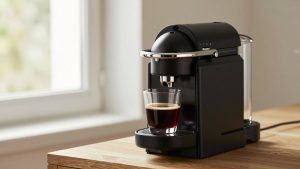
Capsule machines often include a dedicated descaling mode and a recommended solution, so follow the model’s instructions closely. If you are shopping, a guide to espresso capsule machines explains how those styles differ. Other pump models, such as a programmable espresso maker, also build up scale, so the same regular schedule applies to them.
When to stop and call service
Stop and contact the manufacturer or a technician if you see leaks, hear grinding from the pump, notice a burning smell or find that flow has not recovered after two cycles. Do not force parts open or use power tools on a clogged machine. A professional can inspect heating elements and valves safely.
Related guides
- Espresso Machines For Lattes With Powerful Steam Wand
- Espresso Cup Sets Demitasse
- Dual Coffee Makers
Frequently asked questions
Is citric acid better than vinegar for descaling an espresso machine?
For many machines citric acid is the more common choice, because it dissolves limescale well, has little odor and rinses out more easily than vinegar. Vinegar can work on simple machines but has a strong smell, may linger in the water path and is discouraged by many manufacturers. Always check your manual first, since some brands specify their own descaling solution and warn against homemade ones.
How often should an espresso machine be descaled?
It depends on your water hardness and how much you brew. Machines used daily with hard water may need descaling every one to three months, while soft or filtered water can stretch the interval. Many machines show a descale reminder, and the manual usually gives a schedule. Visible white scale, slower flow or louder pumping are signs you may be overdue.
Can vinegar damage an espresso machine?
It can in some cases. Acetic acid may affect rubber seals, gaskets and certain metals over repeated use, and some manufacturers say it can affect warranty coverage. The smell and taste can also linger if rinsing is incomplete. If your manual advises against vinegar, use the recommended descaler or a citric acid solution only if the maker allows it.
How should an espresso machine be rinsed after descaling?
Fill the tank with fresh water and run it through the group head, steam wand and hot water outlet until the tank is empty. Repeat at least two or three times. Smell the water for any sharp odor and taste a small sample from the final run. If any sour or chemical note remains, rinse again until the water tastes clean.
Can a capsule espresso machine be descaled the same way?
The general idea is the same, but capsule machines often have specific descaling programs. Many require a particular cycle, such as holding buttons or running a set amount of solution. Follow the manual for your model, use the recommended descaler and remove any capsule and the used-capsule container before starting.