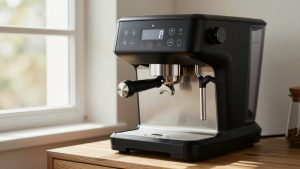
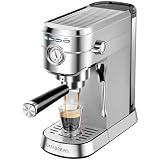
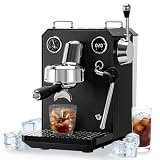
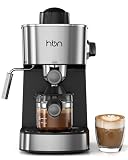
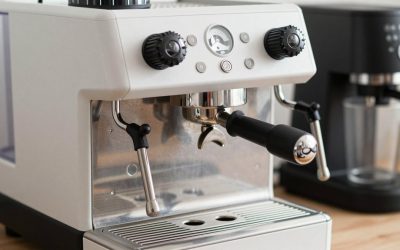
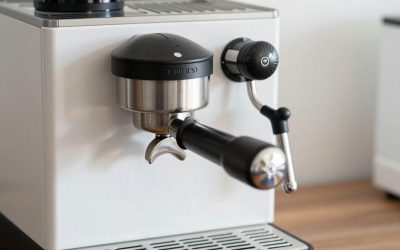
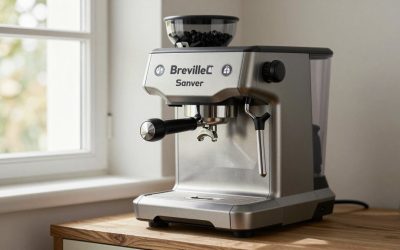
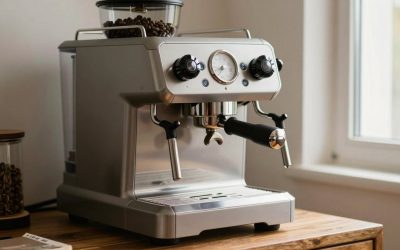
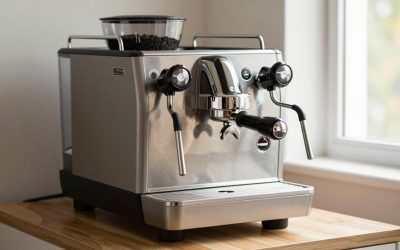
- Top Pick: Smeg ECF02 Italian Espresso Machine – Manual 15-Bar Coffee Maker, Made in Italy – Retro Design with Steam Wand (Cream)
- Best Value: Smeg EGF03 Semi-Automatic Espresso Machine with Built-In Grinder, Dual Thermoblock, 50’s Retro Style – Cream (120 V)
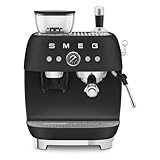
- Premium Choice: Smeg BCC12FBMUS Automatic Espresso Machine with Steam Stick 8 Coffee Drinks Thermoblock Heating System Built-in Coffee Grinder Aesthetic Style All Black
Last updated: October 20, 2026
As an Amazon Associate we earn from qualifying purchases at no extra cost to you.




Disclosure: As an Amazon Associate we earn from qualifying purchases. This page contains affiliate links and we may earn a commission at no extra cost to you.
Smeg occupies a unique corner of the kitchen world: the Italian brand that made appliances fashion objects. Its 50s-retro design language — rounded enamel curves, chrome accents, colors that belong on a Vespa — has conquered toasters and kettles, and the espresso machines carry the same DNA. But a thousand-dollar espresso machine has to be more than beautiful, and that is the question this review answers: do Smeg’s semi-automatic machines brew as well as they pose?
We look at two current Smeg semi-automatics — the EGF03 with its built-in grinder and dual thermoblock heating, and the grinderless matte black sibling — and we pressure-test them against four machines that frame the decision honestly: the Breville Barista Express that dominates this price-adjacent territory, the feature-stacked Ninja Luxe Café Premier, and two budget options from CHULUX and Kismile for buyers who love the look but not the invoice.
Style-first buyers deserve straight answers about substance, and that is what follows. For the wider field, our best home espresso machines for 2026 roundup and buying guide provide the full map.
Quick Comparison
| Product | Price | Rating |
|---|---|---|
| Breville Barista Express | $689.99 | 4.5/5 |
| Smeg EGF03 with Built-In Grinder | $999.95 | 4.4/5 |
| Smeg Semi-Automatic (Matte Black) | $999.95 | 4.4/5 |
| CHULUX Slim Espresso Machine | $99.99 | 4.4/5 |
| Kismile 20-Bar with Grinder | $339.01 | 4.4/5 |
| Ninja Luxe Café Premier 3-in-1 | $599.00 | 4.3/5 |
Why Trust This Guide
See also: How to Descale an Espresso Machine: Citric Acid vs Vinegar • Best Electric Kettles: Ten Glass, Steel and Gooseneck Picks Compared
We test espresso machines as daily drivers, not photo props: repeated shots across roast styles, milk steaming under weekday pressure, and the cleaning routines that reveal how a machine ages on a real counter. Design matters and we say so when it does, but our verdicts rest on what lands in the cup, and we keep claims within what we have observed or what a machine’s architecture reliably implies.
The Smeg Machines
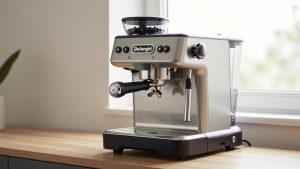
Smeg EGF03 with Built-In Grinder
The EGF03 at $999.95 is the complete expression of Smeg’s espresso ambition: a semi-automatic with an integrated grinder and dual thermoblock heating wrapped in that unmistakable 50s silhouette. The dual thermoblock arrangement is the quietly serious spec — separate heating paths mean the machine can move between brewing and steaming without the long thermal pauses that plague single-element designs, a workflow benefit usually associated with much plainer-looking machines.
In use, the EGF03 delivers a genuinely competent semi-automatic experience: grind, dose, tamp, brew, steam — real workflow, real crema, and real room to improve as your technique does. The grinder-on-board format makes it a one-box counter solution, and the build has the dense, enameled solidity Smeg is known for. This is not a style shell around a toy; it is a legitimate machine that happens to be gorgeous.
The tradeoff is straightforward: at $999.95 you are paying a design premium over functionally comparable machines, and hard-nosed spec shoppers will find more brewing hardware per dollar elsewhere — our brand comparison shows exactly where. But no rival will draw compliments from every guest who enters the kitchen. That is worth something, and only you know how much.
Smeg Semi-Automatic (Matte Black)
The matte black semi-automatic, also $999.95, is the EGF03’s moodier sibling for buyers whose kitchens run dark and modern rather than pastel and playful. The matte finish photographs beautifully, hides fingerprints better than gloss, and gives the retro curves a contemporary edge — it is the Smeg for people who want the shape without the candy color.
Configuration-wise, plan your counter around it as a brew-focused station and pair it with a quality standalone grinder if your variant does not include one — freshly ground beans are non-negotiable at this level of machine. The same value calculus applies as the EGF03: you are buying excellent, characterful hardware at a price where some rivals offer more raw capability and far less charisma.
The Alternatives
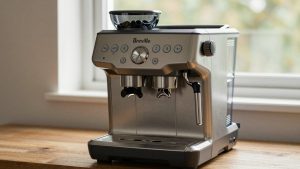
Breville Barista Express
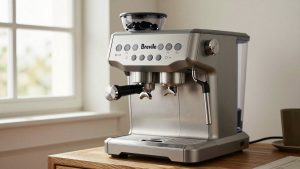
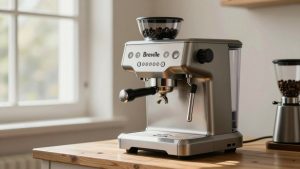
The Barista Express at $689.99 is the machine every style-first buyer should at least consider before signing off on the Smeg. It bundles a proven conical burr grinder, a forgiving 54mm brew system, a pressure gauge, and a capable steam wand — the most complete espresso education per dollar in the category, which is why it has anchored our recommendations for years.
What it lacks is the romance. Brushed stainless competence photographs like an appliance, not an icon. If your decision is purely about coffee and learning, the Breville wins on price and feature density; if your kitchen is a curated space and the machine is part of the décor, the three-hundred-dollar gap is the cost of the artwork.
Ninja Luxe Café Premier 3-in-1
The Ninja Luxe Café Premier at $599.00 is the feature-density play: espresso, drip coffee, and rapid cold brew from one machine with a built-in grinder. For households where one person wants espresso, another wants a morning pot, and summer demands cold drinks, its flexibility is genuinely unmatched at the price.
The compromise is focus. Multi-format machines make engineering tradeoffs that single-purpose espresso machines do not, and the Ninja’s aesthetic is modern appliance, not heirloom. But as a practical family machine that quietly does the most jobs, it is the value sleeper of this comparison — and if cold drinks are your weakness, our smart espresso machine review covers more tech-forward multitaskers.
Kismile 20-Bar with Grinder
The Kismile at $339.01 offers the same one-box promise as the EGF03 — grinder, espresso, milk frothing — at a third of the price. For a first machine, a rental kitchen, or an office corner, it is a sensible way to learn whether the semi-automatic workflow suits you before committing serious money.
Expect the budget realities: more temperature wander between shots, slower steam, and componentry built to a price rather than a legacy. Treated as an apprenticeship machine rather than a destination, it earns its keep — and if you outgrow it, the skills transfer directly upmarket.
CHULUX Slim Espresso Machine
The CHULUX Slim at $99.99 is the minimum viable espresso machine: a narrow-footprint 20-bar unit with a manual milk frother that makes espresso-style drinks in the smallest kitchens for the smallest budgets. As a dorm machine, a starter experiment, or a gift that introduces someone to the hobby, it is entirely defensible.
It is not a Smeg rival and does not pretend to be — thermal consistency and steam power are a class below everything above it on this page. Buy it as a toe in the water; pair it with a handheld frother from our electric milk frother review if milk drinks are the goal, and upgrade when the bug bites.
What to Look For in a Retro-Style Espresso Machine
Style-led machines deserve substance-led scrutiny. Check these before the colorway seduces you:
- Heating architecture — Dual thermoblock or dual-path heating means brewing and steaming without long waits. Single-element machines hide their compromises behind pretty panels.
- Real semi-automatic workflow — A proper portafilter, real tamping, and manual shot control mean the machine can grow with your skill. Pod-style internals in retro shells cannot.
- Grinder situation — Built-in saves space; standalone upgrades better. Either way, budget for freshly ground beans or the prettiest machine will brew mediocrity.
- Steam capability — A wand with genuine pressure and articulation is what separates café-style milk from warm foam disappointment.
- Surface practicality — Enamel and matte finishes wear differently around drips and fingerprints. A machine you display must also be a machine you can wipe down in ten seconds.
- Price-to-hardware honesty — Know exactly what portion of the price is design premium, and decide consciously that the look is worth it to you. It often is — just decide on purpose.
Tips for Getting the Most Out of a Retro Espresso Machine
Treat the machine as a station, not a sculpture. Give it a dedicated zone with a tamping area, a knock box, and a mat to protect both counter and finish — our drip tray mat review covers inexpensive options that keep a display-worthy setup actually displayable. A beautiful machine surrounded by chaos defeats its own purpose, and a tidy station genuinely improves workflow consistency.
Feed it like a serious machine, because it is one. Fresh whole beans, ground moments before brewing, at a setting dialed for your basket — this matters exactly as much on a Smeg as on any prosumer machine. If your variant lacks a grinder, make the standalone grinder your first accessory purchase, not your eventual one.
And maintain the finish along with the internals. Wipe enamel and chrome after each session before coffee oils bake on, purge the steam wand immediately after milk, and follow the descaling schedule for your water hardness. Retro machines are often kept for a decade or more because they never stop looking current — protect that longevity from day one.
Frequently Asked Questions
Are Smeg espresso machines good, or just good-looking?
The current semi-automatics are legitimately capable machines — real portafilter workflow, serious heating architecture in the EGF03, and solid build quality. You do pay a design premium over plainer rivals with comparable hardware, but you are not buying an empty shell. They brew like they mean it.
Is the Smeg EGF03 worth $1,000?
If the design matters to you, yes — it is the rare machine that satisfies both the barista and the interior designer in a household. If you are optimizing purely for espresso capability per dollar, a Barista Express plus a grinder upgrade delivers more performance headroom for less money.
Do Smeg machines work with any coffee beans?
Yes — they are standard semi-automatic machines, so any fresh whole bean works once you dial the grind. Medium roasts are the most forgiving starting point; lighter roasts demand more precision from grind and temperature, as they do on every machine in this class.
What is the best cheaper alternative to a Smeg espresso machine?
For pure capability, the Breville Barista Express is the default answer. For one-box convenience on a budget, the Kismile gets you a grinder and frother for around a third of the Smeg’s price. Neither will turn heads the way the Smeg does — that part has no cheap substitute.