As an Amazon Associate we earn from qualifying purchases at no extra cost to you. Product prices and availability are accurate as of the date shown and are subject to change.


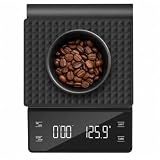



Coffee Scale Precision: Best Espresso Scales for Dialing In Your Shot
TL;DR — Quick Answer
A coffee scale with precision reads to 0.1g and responds fast enough to catch a 36g yield before it overruns to 38g. Best budget 0.1g scale: Timemore Black Mirror Basic (B086H458MP tier). Best mid-range with timer: Acaia Pearl S (B084RT95LQ tier). Best premium flow-rate display: Acaia Lunar (B0F4X6ZRGX). You need 0.1g resolution and under 500ms response time for espresso; 1g resolution is fine for pour-over and batch brew. Do not skip the scale — dose and yield control is the single highest-leverage change most home baristas can make.
Espresso is the least forgiving brew method for measurement errors. A 1g variance in your dry dose shifts your brew ratio by 5–8% on a standard 18g in / 36g out double shot. A 2g yield overrun on a fast-extracting bean moves your TDS from 9% to under 8% — the difference between a balanced shot and a watery, under-extracted disappointment. A coffee scale with precision eliminates both variables simultaneously: weigh your dose going in, weigh your yield coming out, stop the pump at target weight.
This guide covers resolution vs. response time (they’re both critical, for different reasons), which scale features actually matter for espresso vs. pour-over, and the exact specs to look for at each price tier.
- Quick Comparison
- Top Precision Coffee Scales at a Glance
- Resolution vs. Response Time: Two Different Specs You Need
- Acaia Lunar: Best Precision Scale for Espresso
- Using a Scale to Dial In Espresso: The Workflow
- Scale Placement for Espresso Machines with Low Clearance
- Frequently Asked Questions
- About the Author
Quick Comparison
| Product | Brand | Price | Rating |
|---|---|---|---|
| MAXUS Digital Pocket Gram Scale 500g x 0.01g High Preci… | Maxusprecisionscale | $8.98 | 4.6/5 |
| Greater Goods Digital Espresso and Coffee Scale – 750 x… | GreaterGoods | $16.99 | 4.6/5 |
| KitchenTour Coffee Scale with Timer 3kg/0.1g High Preci… | KKitchenTour | $21.59 | 4.4/5 |
| Maestri House S2 Espresso Coffee Scale with Timer | MaestriHouse | $29.45 | 4.4/5 |
| Maestri House S2 Espresso Coffee Scale with Timer | MaestriHouse | $31.99 | 4.4/5 |
Top Precision Coffee Scales at a Glance
See also: How to Season a New Coffee Grinder (2026): Step-by-Step • How to Clean a Moka Pot Safely (2026): Step-by-Step
BEST BUDGET ESPRESSO
Timemore Black Mirror Basic
~$39
BEST MID-RANGE
Acaia Pearl S
~$179
BEST PREMIUM FLOW RATE
Acaia Lunar 2021
~$229
Resolution vs. Response Time: Two Different Specs You Need
Resolution is how small a weight change the scale can detect — 0.1g vs. 1g. For espresso, 0.1g resolution is required. An 18.0g dose vs. an 18.9g dose changes your brew ratio meaningfully at standard 1:2 ratios; 1g scales cannot distinguish these. For pour-over and batch brew, 1g resolution is sufficient and cheaper.
Response time (also called update rate) is how quickly the display reflects a weight change — typically 50ms to 500ms. Slow scales (500ms+) show you a reading that’s already 0.5–1 seconds behind reality. When you’re stopping pump flow at a 36g target with a 1–2g/second flow rate, a 500ms lag means you overshoot by 1–2g consistently. Espresso-specific scales target 50–200ms response time; general kitchen scales run 500–1000ms and are unsuitable for shot timing. The Acaia Lunar and Pearl S both operate at ~80ms. The Timemore Black Mirror Basic is slower at ~300ms — still workable, but requires stopping the pump 0.5–1g early to account for in-flight liquid.
Acaia Lunar: Best Precision Scale for Espresso
The Acaia Lunar is the benchmark espresso scale. At 160 × 160mm it fits under standard 58mm portafilter drip trays; at 285g it doesn’t tip the drip tray. The 2021 version added real-time flow rate display — a data point that shows grams-per-second of espresso flowing into the cup, which lets you identify channeling events (sudden flow rate spikes) and pre-infusion behavior without a flow meter. Battery life is 4–5 hours of active use, rechargeable via USB-C. The Lunar pairs with the Acaia app for shot logging, which is genuinely useful when dialing in a new bean across multiple sessions.
The case for spending $229 on a scale: if you’re pulling two shots daily for a year, that’s 730 shots. Eliminating 1g of yield variance per shot compounds across every bag of beans you’ll ever buy. Pair the Lunar with a consistent grind-size workflow and your shot-to-shot consistency will plateau at a level that’s difficult to exceed with any other single equipment upgrade.
| Spec | Acaia Lunar 2021 | Acaia Pearl S | Timemore Basic |
|---|---|---|---|
| Resolution | 0.1g | 0.1g | 0.1g |
| Response time | ~80ms | ~80ms | ~300ms |
| Flow rate display | Yes | No | No |
| Built-in timer | Yes | Yes | Yes |
| Max capacity | 2kg | 2kg | 2kg |
| Platform size | 160×160mm | 180×180mm | 155×155mm |
| Water resistance | IPX5 | IPX5 | None |
| Price | ~$229 | ~$179 | ~$39 |
Using a Scale to Dial In Espresso: The Workflow
A precision scale belongs in every step of your espresso workflow, not just the yield measurement. Weigh your beans before grinding — not after. Grinders retain 0.3–2g of ground coffee inside the burr chamber (retention); if you weigh post-grind into the portafilter, you’re measuring the previous shot’s retained coffee plus your new dose, which introduces variance. Weigh beans in, note the grinder output difference over several shots to characterize your grinder’s retention, then compensate by inputting 0.3–0.5g more than your target dose. This technique — common in competition prep — reduces dose variance to under 0.1g reliably.
For yield: place the scale and cup under the grouphead before locking in the portafilter. Tare. Start pump. Stop at your target yield (36g for a 1:2 ratio from 18g). Record shot time — target 25–35 seconds for most espresso recipes. Combine scale data with a dedicated brewing timer for complete extraction logging. If yield hits target before 25 seconds, grind finer. If shot runs past 35 seconds, grind coarser. The scale makes these adjustments data-driven rather than guesswork.
Scale Placement for Espresso Machines with Low Clearance
Many home espresso machines — particularly E61 group machines and compact semiautos — have limited vertical clearance between the drip tray and the portafilter spouts. Standard scale + cup combinations can exceed this clearance, preventing the portafilter from locking. The Acaia Lunar at 12mm profile height is the thinnest purpose-built espresso scale; competitor alternatives include the Felicita Arc (11mm) and the Difluid Microbalance (8mm). If your machine has a removable drip tray, removing it and placing the scale directly on the drip tray body is a common workaround. Measure your machine’s clearance before buying — subtract the cup height and you’ll know the maximum scale profile that fits. Read our espresso puck prep guide for other workflow optimizations that pair well with scale-based dialing.
Frequently Asked Questions
What precision does a coffee scale need for espresso?
0.1g resolution minimum, with a response time under 500ms. Resolution below 0.1g (some scales offer 0.01g) is unnecessary for espresso — shot-to-shot grinding variance typically exceeds 0.05g anyway. Response time matters more than resolution for live yield measurement; prioritize fast response over ultra-fine resolution if you have to choose.
Can I use a kitchen scale for espresso instead of a coffee scale?
For weighing dry dose before grinding — yes, any 0.1g kitchen scale works fine. For live yield measurement during extraction, no: kitchen scales typically update at 500–1000ms, causing 1–3g of overshoot at normal espresso flow rates. Buy a dedicated espresso scale for under-the-portafilter use.
Is an Acaia scale worth the premium over cheaper alternatives?
For serious home baristas pulling shots daily, yes — the 80ms response time, waterproofing, and app integration are genuinely useful. For occasional espresso drinkers or those still learning to dial in, the Timemore Black Mirror Basic at $39 provides 0.1g resolution and a built-in timer that covers 90% of use cases at 17% of the Acaia price.
Do I need a scale for pour-over coffee too?
Yes, but the requirements are different. Pour-over needs 0.1–1g resolution (1g is fine for most methods) and a response time of 500ms or less — any decent kitchen scale qualifies. The built-in timer is useful for pour-over bloom timing. Many espresso-focused scales double as excellent pour-over scales; the reverse is not true.
How do I prevent my coffee scale from getting water damage?
IPX5-rated scales (Acaia Lunar, Pearl S) handle direct espresso drips and steam condensation without damage. Non-rated scales should be protected with a silicone mat over the platform when not in active use, and the scale should be positioned to avoid grouphead drip paths. Never submerge or rinse any scale regardless of IP rating.
Related: Espresso Grind Size Guide | Coffee Brewing Timer Precision | Espresso Puck Screen & WDT Tools
Ready to decide? Our #1 pick for 2026 is the MAXUS Digital Pocket Gram Scale 500g x 0.01g High Preci….
Live price & availability on Amazon.